Taj Mahal History and UNESCO Heritage of India
Taj Mahal stands as the ultimate symbol of Mughal architectural grandeur and eternal love, commissioned by Emperor Shah Jahan as the mausoleum for his beloved wife Mumtaz Mahal. Completed in 1648 after 22 years of construction involving 20,000 artisans, this white marble masterpiece blends Persian, Islamic and Indian architectural traditions into perfect symmetry on the Yamuna River banks in Agra.
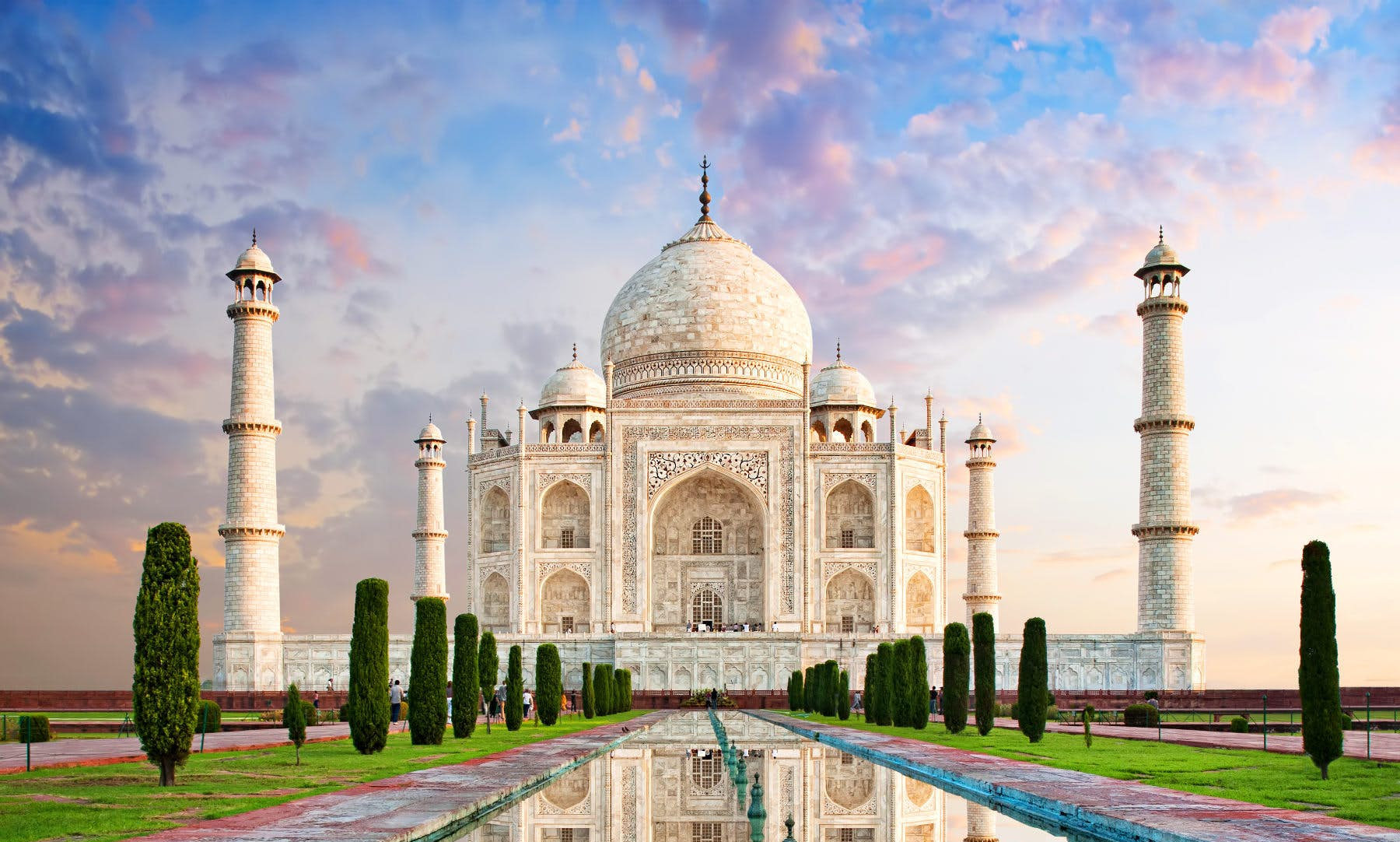
Recognized as a UNESCO World Heritage Site in 1983, the Taj Mahal complex spans 42 acres featuring the central mausoleum, mosque, guest house, gardens and reflecting pools representing paradise. Changing colors from dawn pink to moonlight white, it attracts 8 million visitors annually embodying Shah Jahan’s grief transformed into humanity’s greatest monument of love.
Overview Table of Taj Mahal
| Aspect | Details |
|---|---|
| Location | Agra, Uttar Pradesh, Yamuna River banks |
| Commissioned By | Shah Jahan, Mughal Emperor |
| Dedicated To | Mumtaz Mahal (Arjumand Banu Begum) |
| Construction Period | 1632-1653 CE (22 years) |
| Chief Architect | Ustad Ahmad Lahori |
| Cost | ₹32 million (1653) = ~$1 billion today |
| Materials | White Makrana marble, 28 semi-precious stones |
| Height | 73m (240 ft) including dome and minarets |
| UNESCO Status | World Heritage Site (1983) |
Shah Jahan and Mumtaz Mahal: Love Behind the Monument
Imperial Romance and Tragedy
Shah Jahan (Prince Khurram) married Arjumand Banu Begum (Mumtaz Mahal) in 1612 after five-year courtship. Beloved third wife accompanied 17 military campaigns, bore 14 children. Died 1631 during childbirth at Burhanpur aged 39 – Shah Jahan’s grief reportedly turned hair white overnight.
Temporary tomb at Burhanpur, then Agra burial. Shah Jahan vowed unparalleled mausoleum – site acquired from Raja Jai Singh I in exchange for Delhi palace. Construction began 1632 fulfilling deathbed promise to Mumtaz.
Mughal Golden Age Context
Shah Jahan’s reign (1628-1658) marked Mughal architecture zenith – Red Fort Delhi, Jama Masjid, Shalimar Gardens Lahore. Taj represented peak synthesis of Persian domes, Timurid symmetry, Indian decorative arts under most prosperous emperor before Aurangzeb’s succession wars.
Construction: 22 Years, 20,000 Artisans
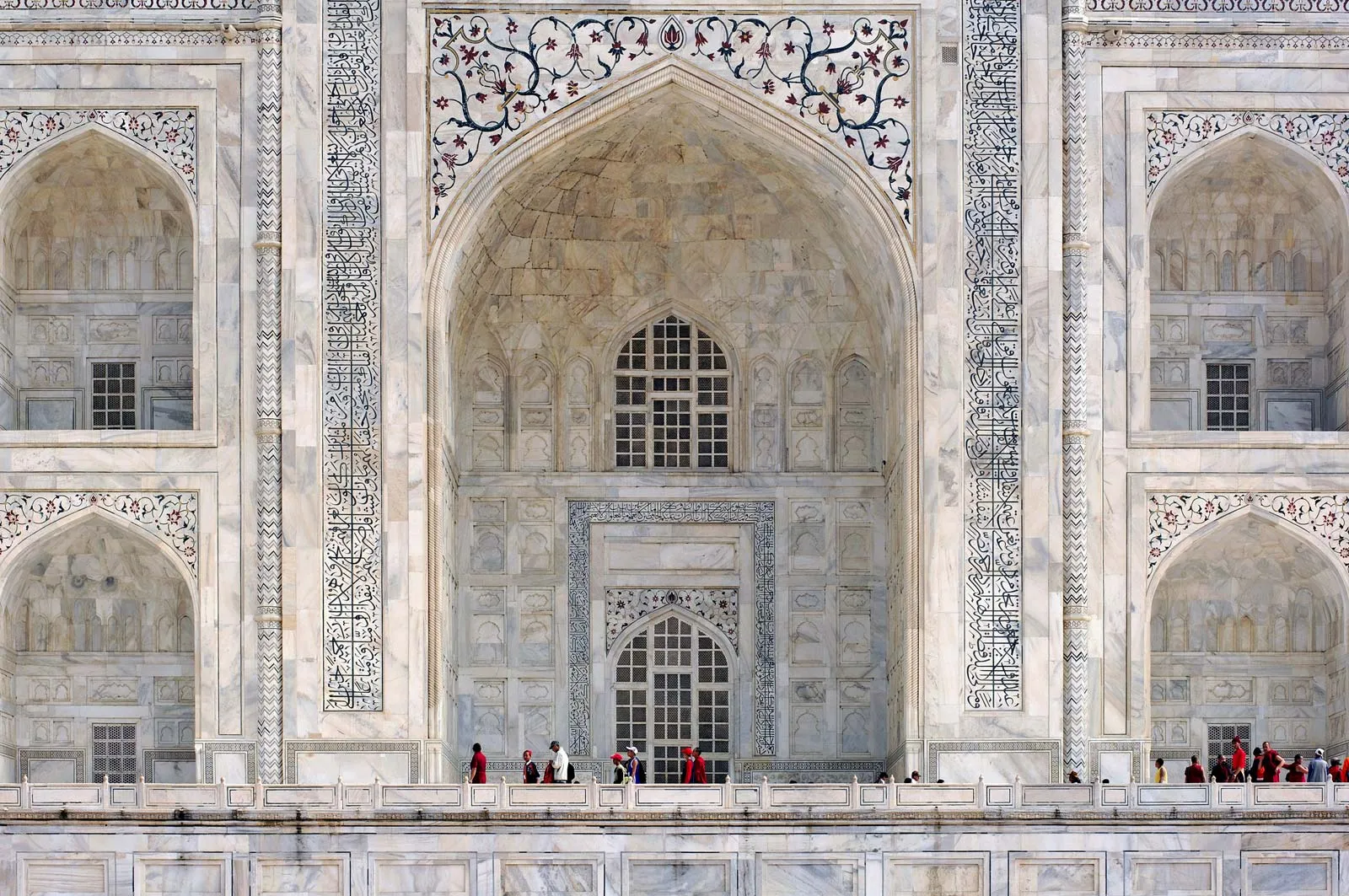
Architectural Board and Master Plan
Ustad Ahmad Lahori led 37-member architectural council including Persian, Central Asian, Indian masters. Mir Abdul Karim (mason supervisor), Amanat Khan Shirazi (calligrapher), Chiranjilal (chief sculptor) coordinated diverse specialists creating unified vision.
1,000 elephants transported 20,000 Makrana marble blocks 250 miles from Rajasthan quarries. Semi-precious stones (lapis lazuli, jasper, carnelian, jade) inlaid using Florentine pietra dura technique imported from Italy.
Phase-by-Phase Timeline
1632-35: Massive foundation/platform (456×300 ft, 20 ft high) using bricks, lime concrete. 1636-38: Marble mausoleum walls. 1643: Dome completion marked by Urs ceremony. 1648: Mausoleum finished. 1653: Mosque, guest house, gardens completed.
Architectural Layout: Paradise on Earth
Charbagh Garden Paradise
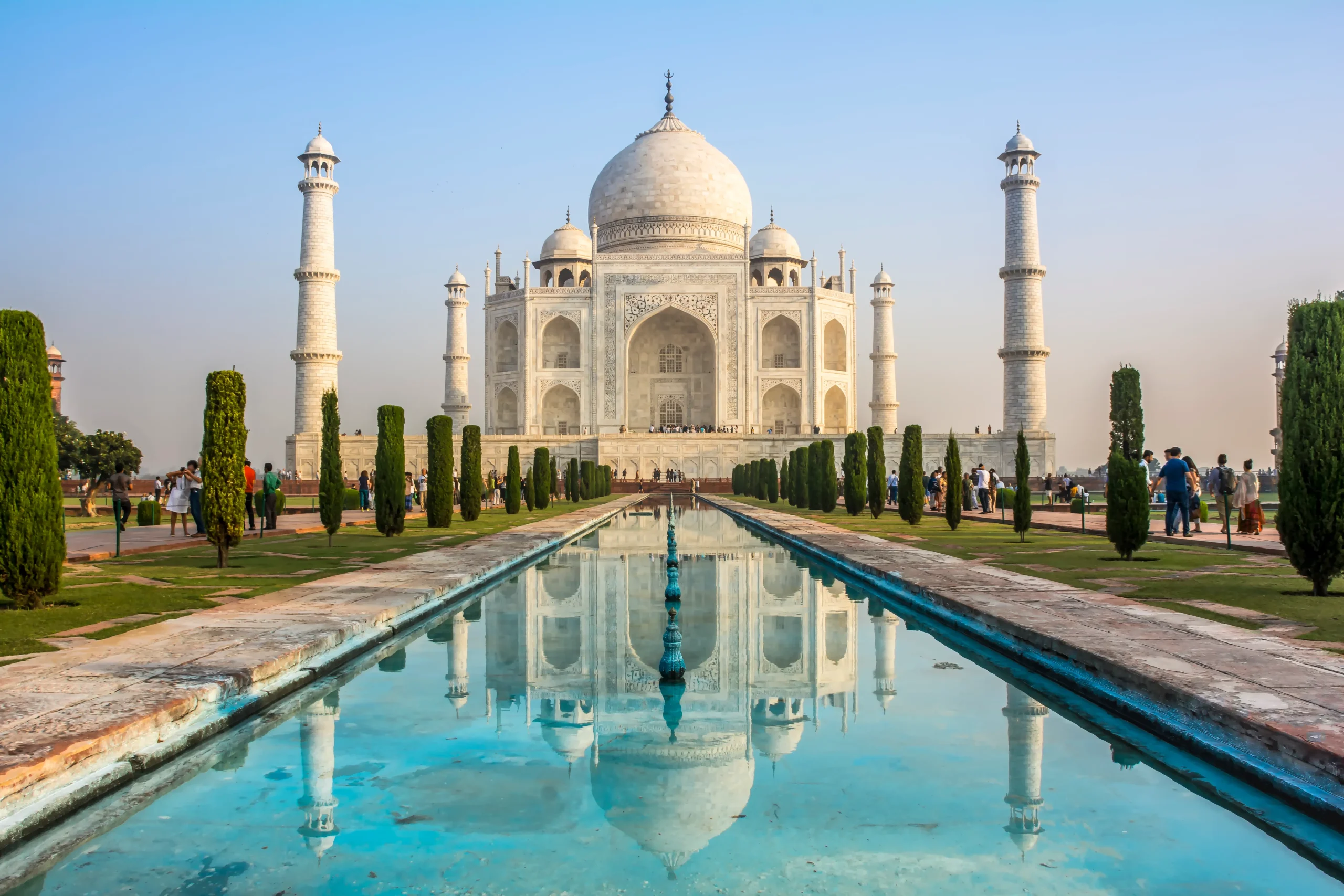
42-acre complex follows Timurid charbagh (four-part) garden symbolizing Quran’s paradise. Central mausoleum elevated on platform surrounded by water channels, fountains, cypress trees representing four rivers of paradise flowing east-west, north-south.
Symmetrical Mausoleum Design
Octagonal mausoleum perfectly symmetrical on all four axes. Four identical minarets (40m) frame central dome (35m diameter). Main dome flanked by four smaller domes creates rhythmic skyline. Iwan-style portals lead to vaulted chambers.
Pietra Dura and Calligraphy Masterpieces
Semi-Precious Stone Inlay
28 gemstone types (lapis lazuli from Afghanistan, turquoise from Tibet, jade from China, sapphire from Sri Lanka) form floral/botanical motifs using pietra dura. 43 different flowers identified across facade – each stone precisely cut, never replicated identically.
Quranic Calligraphy Program
Amanat Khan Shirazi’s thuluth script quotes Quran verses on mercy, paradise around doorways, arches (signed twice). Larger letters bottom, progressively smaller upward create optical illusion of uniform size from ground level.
Interior Chambers and Cenotaphs
False Tombs and True Burials
Central chamber contains two identical cenotaphs – Mumtaz (north), Shah Jahan (south/west) violating perfect symmetry (sole intentional asymmetry). False tombs – actual burials in vaulted chamber below reached by staircase behind south wall.
Octagonal chamber surrounded by eight smaller chambers creates acoustic resonance amplifying prayer calls. Lattice screens (jalis) filter light creating jewel-box illumination.
Optical Illusions and Engineering Genius
Color-Changing Marble Effect
Makrana marble changes hues – pink dawn, white noon, golden sunset, silver moonlight. Translucent quality allows light penetration creating inner glow. Minarets lean slightly outward preventing earthquake damage to main dome.
Perfectly Aligned Reflections
Dome designed for perfect reflection in water channels. Minarets positioned so earthquake damage falls away from mausoleum. Foundation wells filled with iron filler counteracted Yamuna soil subsidence.
Complex Components: Mosque and Guest House
Functional Symmetry
West: Jama Masjid (Friday mosque) for worshippers. East: Mihman Khana (guest house) identical to mosque maintaining visual balance for non-Muslims. Both feature red sandstone, white marble domes mirroring mausoleum proportions.
Main Gateway (Darwaza)
55m high pishtaq gateway with iwan arch flanked by minarets. Calligraphy announces “Paradise on Earth.” Moon gate creates frame-within-frame effect focusing attention on mausoleum receding into distance.
Shah Jahan’s Fate: Imprisoned Gazer
Aurangzeb’s Treachery
1658 succession war – Shah Jahan defeated by son Aurangzeb, imprisoned Agra Fort 8 years. Final years gazing Taj Mahal across Yamuna through diamond-studded window (Musa Masjid). Died 1666 buried beside Mumtaz.
European Discovery and Legends
French traveler Tavernier (1665) first described to Europe. British looted silver doors (now horse-shoe shaped openings). Legends of Shah Jahan planning black Taj on Yamuna opposite side (unproven).
UNESCO Heritage and Conservation
1983 World Heritage Inscription
UNESCO criterion (i): “jewel of Muslim art in India;” architectural masterpiece representing Mughal culmination. Annual 8 million visitors challenge preservation – pollution yellowing marble since 1990s.
Modern Protection Measures
ASI mud pack treatment removes discoloration. Vehicle-free zone (500m radius). Night viewing (full moon) limited tickets. Yamuna restoration prevents flooding. Carbon footprint reduction for climate change protection.
Cultural Impact: Symbol of Eternal Love
Global Romantic Icon
Symbolizes undying love across cultures – appears on Indian ₹20 note, postage stamps worldwide. UNESCO “New Seven Wonders” 2007. Bollywood wedding backdrops, marriage proposals daily at Diana bench.
Architectural Legacy
Influenced British Viceroy’s House (Rashtrapati Bhavan), modern Indian memorials. Pietra dura revived Jaipur workshops. Perfect symmetry template for landscape architects worldwide.
Frequently Asked Questions About Taj Mahal
1. Who built Taj Mahal and why?
Shah Jahan built 1632-1653 as mausoleum for beloved wife Mumtaz Mahal died childbirth 1631 – greatest monument of eternal love in history.
2. How long took Taj Mahal construction?
22 years total – mausoleum 1632-1648 (16 years), complex completed 1653. 20,000 artisans from India, Persia, Ottoman Empire, Europe coordinated by Ustad Ahmad Lahori.
3. What materials used Taj Mahal?
1,000 elephants transported Makrana white marble (Rajasthan), 28 semi-precious stones (lapis lazuli Afghanistan, jade China) using Florentine pietra dura inlay technique.
4. Why Taj Mahal changes color?
Translucent Makrana marble reflects sunlight – pink dawn, white noon, golden sunset, silver moonlight creating chameleon effect mesmerizing visitors daily.
5. Where Shah Jahan Mumtaz Mahal buried?
False cenotaphs main chamber – actual tombs vaulted crypt below ground accessed south staircase. Shah Jahan buried beside Mumtaz 1666 (sole asymmetry).
6. What is Taj Mahal architectural style?
Mughal synthesis – Persian domes/iwans, Timurid symmetry, Indian jali screens, pietra dura inlay creating perfectly symmetrical paradise garden complex.
7. How much cost Taj Mahal construction?
₹32 million (1653) = ~$1 billion today. Funded by Mughal treasury’s peak prosperity – silver doors alone worth crores (now missing).
8. Who was chief architect Taj Mahal?
Ustad Ahmad Lahori led 37-member council. Amanat Khan Shirazi (calligrapher), Mir Abdul Karim (mason supervisor), Chiranjilal (sculptor).
9. Why UNESCO World Heritage Site?
1983 inscription – “jewel Muslim art India,” architectural masterpiece, perfect symmetry, pietra dura, charbagh garden representing paradise on earth.
10. What happened Shah Jahan after Taj completion?
1658 imprisoned Agra Fort by son Aurangzeb, spent final 8 years gazing Taj Mahal across Yamuna through diamond window. Died 1666 buried beside Mumtaz.
11. Are black Taj Mahal legends true?
Unproven folklore – Shah Jahan planned matching black marble Taj opposite side for himself. Aurangzeb supposedly destroyed foundations (no archaeological evidence).
12. Why Taj Mahal yellowing now?
Air pollution (Mathura refineries, vehicles) reacts with marble. ASI mud packs, vehicle-free zone (500m), pollution controls ongoing since 1996 Supreme Court orders.
13. What Quranic verses Taj Mahal calligraphy?
Amanat Khan’s thuluth script quotes mercy/paradise verses around doors, arches. Letters increase size upward creating optical uniformity illusion from ground.
14. How many gardens Taj Mahal complex?
Charbagh (four-part) paradise garden with 300 fountains, water channels symbolizing four Quran rivers. Cypress trees represent Islamic cypress of immortality.
15. What missing Taj Mahal original features?
Silver doors (looted), gold finial, pearl screens around cenotaphs, jeweled railings, extensive pearl inlays – restored modern replicas where possible.
16. Best time visit Taj Mahal?
October-March cool weather. Full moon nights (5 nights/month) limited tickets for magical white glow. Sunrise avoids crowds, pollution haze.
17. How Taj Mahal protected earthquakes?
Minarets lean slightly outward – fall away from dome during tremors. Deep foundation wells with iron filler counteracts Yamuna soil subsidence.
18. What pietra dura technique Taj Mahal?
Florentine inlay – 28 gemstones cut precise shapes pressed into marble grooves creating 3D floral/botanical designs never exactly replicated.
19. Who discovered Taj Mahal Europe?
French traveler Jean-Baptiste Tavernier 1665 first detailed description. British looted treasures 18th century before Lord Curzon restoration 1908.
20. Taj Mahal legacy modern India?
₹20 note, postage stamps worldwide, New7Wonders, marriage symbol globally. Influences modern memorials, landscape design, pietra dura revival Jaipur.
Conclusion
The Taj Mahal stands as one of the most powerful symbols of love, artistry, and architectural excellence in Indian history. Built by Emperor Shah Jahan, it reflects the refined aesthetics of Mughal architecture, where symmetry, balance, and intricate craftsmanship come together in perfect harmony. The use of white marble, detailed inlay work, and carefully planned gardens shows a deep understanding of design and symbolism.
As a UNESCO World Heritage Site, the Taj Mahal is not only a monument of personal devotion but also a global cultural treasure. It represents India’s rich historical legacy and its contribution to world architecture. Centuries after its construction, the Taj Mahal continues to inspire millions, reminding the world of the timeless beauty that can emerge from human emotion and artistic vision.