[india_weather]

Basant Panchami: The Festival of Knowledge, Spring, and Goddess Saraswati
In late January or early February, the mustard fields of north India are in full yellow flower, and on one particular morning the towns follow suit. People wear yellow, kites go up from the rooftops and plates of yellow rice and boondi appear in homes. This is Basant Panchami, which falls on the fifth day of the bright half of the Hindu month of Magha and is the first big festival of spring.
The name explains itself. Basant (also spelled Vasant) means spring, and Panchami means the fifth day. The festival marks the point when the winter starts to loosen its grip and warmth begins to return.
When is Basant Panchami?
Because the festival follows the Hindu lunar calendar, its date on the Western calendar moves each year, usually somewhere between mid-January and mid-February. In 2027 it falls on Thursday, 11 February. Panchami tithi timings can differ slightly between panchangs, so check your local calendar for the puja muhurat.
Who is Goddess Saraswati and why is this her day?
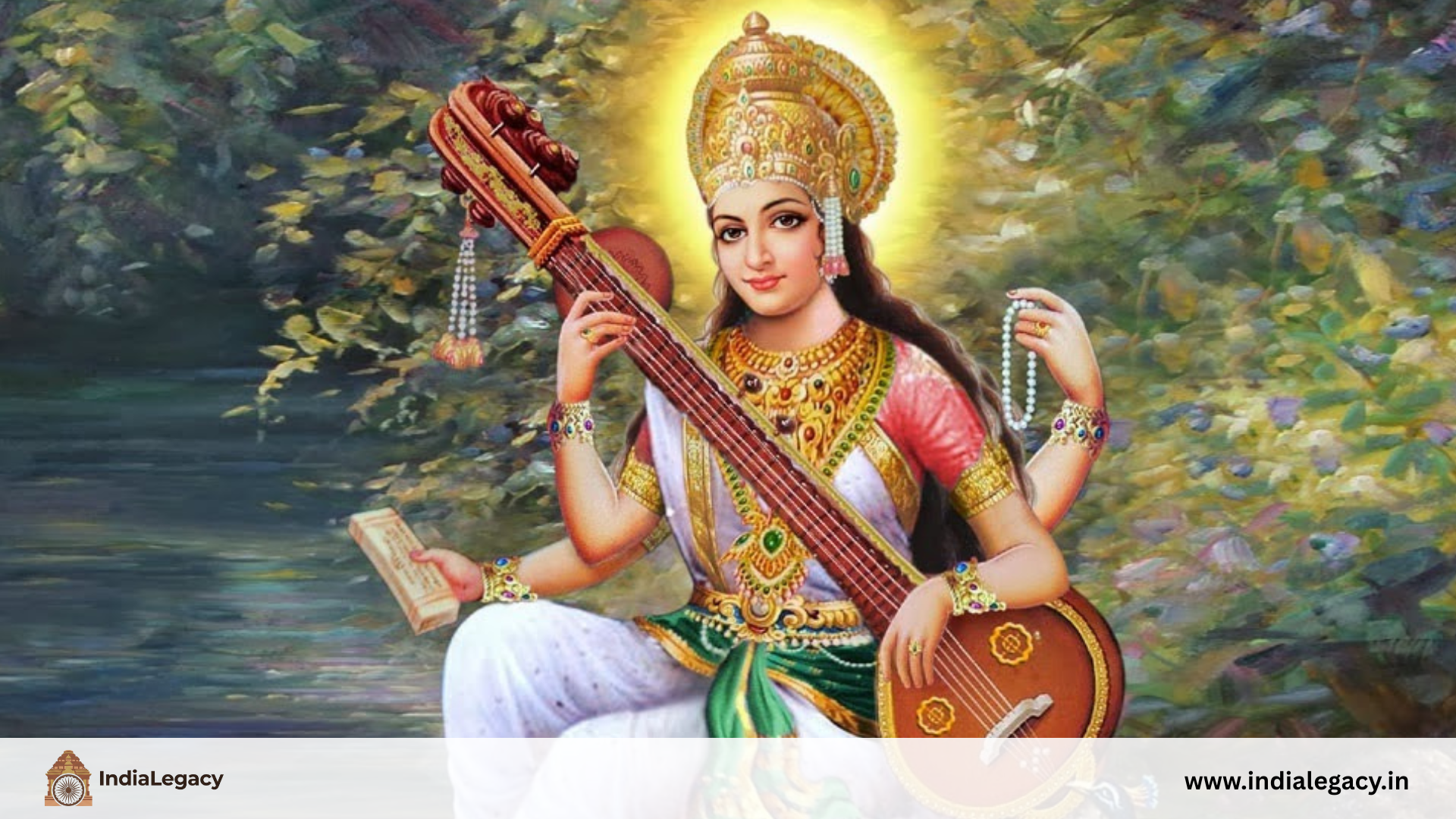
In Bengal, Bihar, Odisha and parts of Uttar Pradesh, Basant Panchami is better known as Saraswati Puja. Saraswati is the goddess of learning, music, poetry, art and speech. She is usually shown dressed in white, seated on a white lotus or with a swan, holding a veena and a book.
Tradition holds that this is the day she was born, which is why students, writers, artists and musicians pray to her on Basant Panchami. Many families also choose this day to start a small child’s education. An elder or priest holds the child’s hand and guides them to write their first letters, on a slate or in a plate of rice. In Bengal this ceremony is called hate khori; similar first-letter rituals elsewhere are known as akshar abhyasam or vidyarambham. Parents believe Saraswati’s blessing on this day helps the child take to learning.
The story behind Basant Panchami
The best known legend comes from the Puranas. When Brahma created the world, everything was silent: no sound, no music, no words. Something felt missing.
Brahma sprinkled water from his kamandalu, and from it rose a woman holding a veena. When she played, the world had sound for the first time. Birds sang, rivers murmured, and human speech began. Brahma named her Saraswati, “the flowing one”, and gave her charge of knowledge and music. Basant Panchami remembers that moment.
The day also matters in Sikh tradition. Guru Gobind Singh Ji is remembered for celebrating Basant, and gurudwaras in Punjab mark the day with special kirtan and processions, often followed by kite flying in the evening.
Why yellow on Basant Panchami?
Walk through any north Indian town on Basant Panchami and the colour is the first thing you notice. Women wear yellow saris and suits, men wear yellow kurtas, marigolds hang across doorways, rice is coloured with turmeric or saffron, and even sweets are dyed yellow.
The reason comes from the fields. This is when mustard flowers open across Punjab, Haryana and the plains of north India, turning whole districts yellow. Yellow is also linked with energy, wisdom and learning, so wearing it on this day honours the season and Saraswati at the same time.
How Basant Panchami is celebrated across India
West Bengal
In Bengal, Saraswati Puja ranks just behind Durga Puja for many families. Schools and colleges set up their own pandals, and for many girls it is the first day they wear a sari, usually a yellow one. Students place their textbooks at the goddess’s feet and do not study that day. The idea is that Saraswati rests in the books, so you leave them alone.
Punjab and Haryana
Here the day is all about kites. Rooftops fill up in the afternoon, and the sky is crowded with patang and the cries of people cutting each other’s strings. Sweet yellow rice and meethi khichdi are cooked in many homes. If you know Punjab’s winter festivals, Basant follows a few weeks after Lohri and Makar Sankranti.
Bihar and Uttar Pradesh
Families perform Saraswati Puja at home, and schools and neighbourhood committees set up idols. In some farming families the day is also treated as an auspicious time to begin work in the fields for the coming season.
Rajasthan, Maharashtra and Gujarat
In Rajasthan, people wear jasmine garlands and offer food to Saraswati at temples. In parts of Maharashtra and Gujarat, newly married couples dress in yellow and visit temples together to pray for a good life ahead.
Traditional foods of Basant Panchami
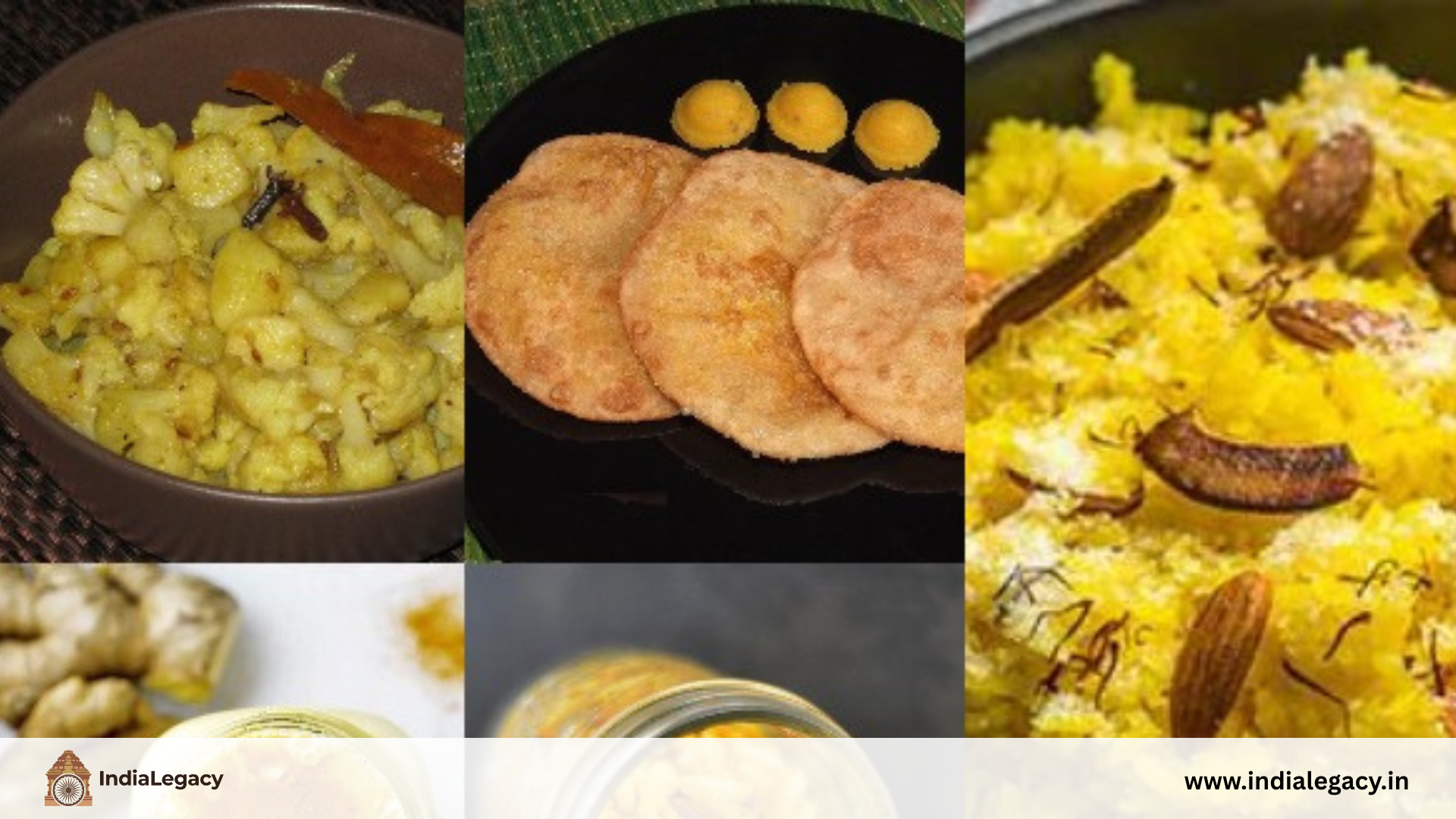
The yellow theme carries into the kitchen. Dishes you are likely to find include:
- Kesari bhaat, sweet saffron rice cooked with cardamom, ghee and raisins
- Boondi laddoo, small golden sweets offered to Saraswati and shared with children
- Rajbhog, a large Bengali chhena sweet stuffed with dry fruits and coloured yellow
- Meethi khichdi, a sweet rice and lentil dish popular in Punjab
- Makki ki roti, yellow corn flatbread served with sarson ka saag in rural north India
Makki ki roti and sarson ka saag are winter staples across the region; our guide to North Indian food covers where they come from and how they are made.
Basant Panchami in schools and homes today
You do not need to be religious to enjoy Basant Panchami. Schools hold Saraswati Puja and cultural programmes, music teachers often hold special sessions, and some libraries run reading days for children.
It is also a quiet festival. There are no firecrackers and no long fast to break. What you get is yellow flowers, the smell of ghee and rice, and the sense that the cold months are nearly over. If you want to try one thing at home this year, make kesari bhaat and keep a small plate of boondi and fruit beside a book or instrument you use every day.
Read Next
- Lohri and Makar Sankranti: The Harvest Festivals That Still Shape Life in India
- Navratri: The Nine Nights of the Divine Feminine
- Diwali: Festival of Lights, Legends, Rituals, and Modern Celebrations
Frequently Asked Questions
Is Basant Panchami the same as Vasant Panchami?
Yes. Basant and Vasant are two spellings of the same word, meaning spring. Both names refer to the same festival.
Can students study on Basant Panchami?
In many parts of India, especially Bengal, students do not open their books on this day. The belief is that Saraswati is present in the books and should be left to rest.
What is offered to Goddess Saraswati?
Common offerings include kesari bhaat, boondi laddoo, yellow flowers and fresh fruit. In Bengal, small berries called kul (Indian jujube) are also placed before the idol, and many people do not eat kul until it has been offered to Saraswati.
Sources and Further Reading
- Ministry of Culture, Government of India, Festivals of India archive
- Sahapedia, Regional Celebrations of Vasant Panchami
- Bhattacharya, D. K., Hindu Festivals and Rites, Rupa Publications