[india_weather]
Navratri: The Nine Nights of the Divine Feminine
On the first morning of Navratri, many homes in north India sow barley in a small pot of earth beside the family shrine, and by the ninth day the green shoots are a hand high. Navratri, the “nine nights” of the Goddess, falls every autumn in September or October in the Hindu month of Ashvin. In Gujarat it means all-night garba, in Bengal it means Durga Puja pandals, and in Tamil homes it means a staircase of dolls called golu. The ten-day cycle ends with Vijayadashami, better known in much of India as Dussehra.
In 2026, Navratri fell on 12-20 October, with Vijayadashami on 20 October. The exact dates move each year because they follow the lunar calendar, so check a panchang for the coming year.
What does Navratri celebrate?
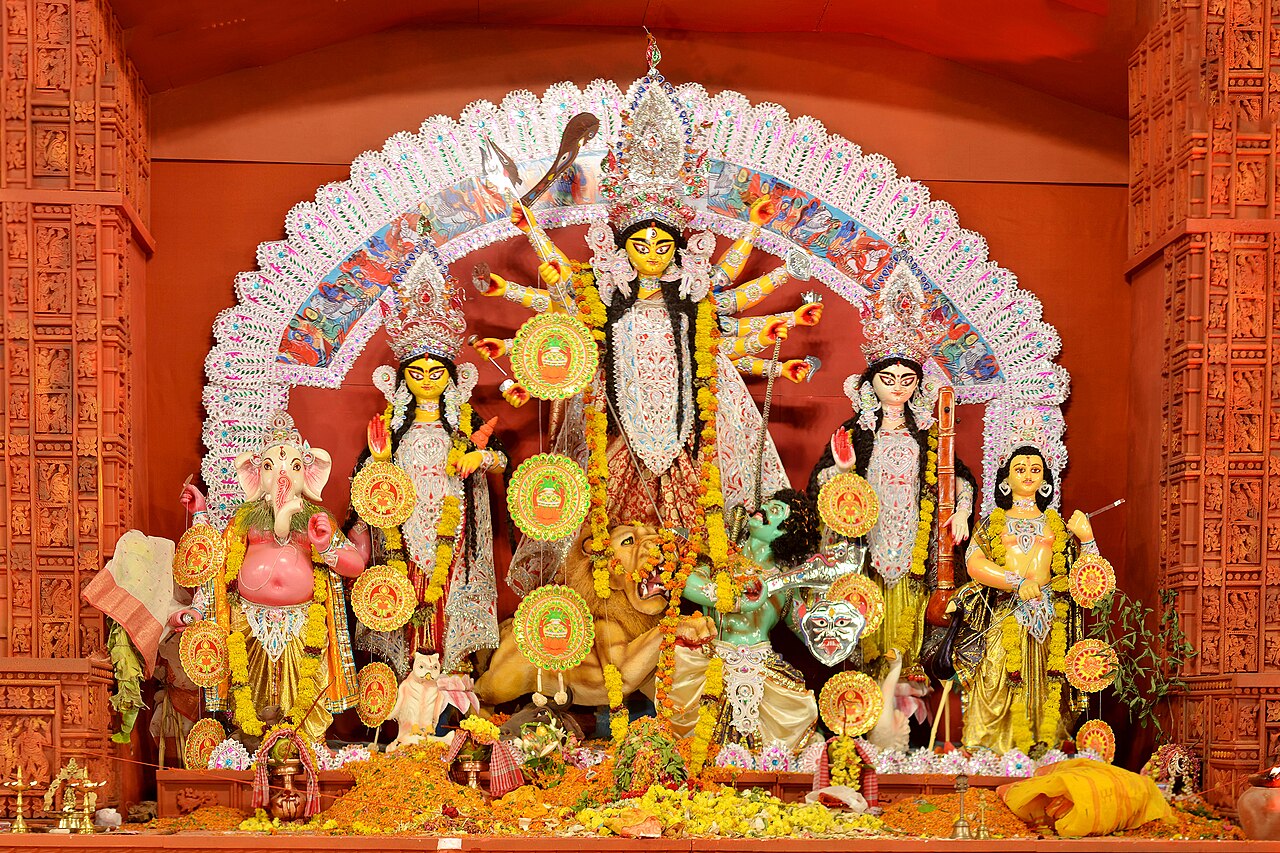
The festival honours Durga, the mother goddess who killed the buffalo demon Mahishasura. The best-known version of the story comes from the Devi Mahatmya, part of the Markandeya Purana. In it, the gods are unable to defeat Mahishasura, so they pool their powers to create Durga. In the popular telling she fights him for nine nights and kills him on the tenth day.
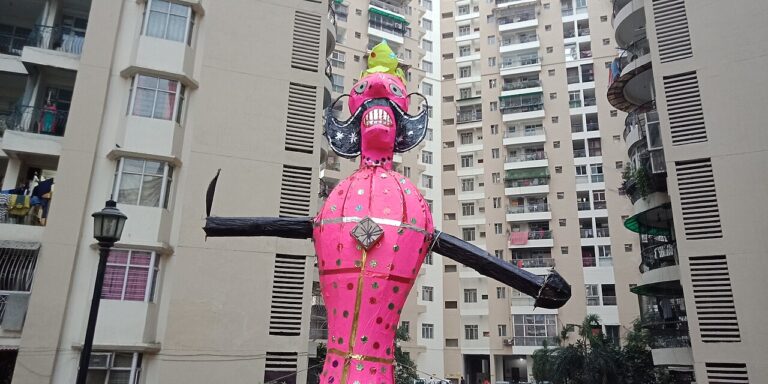
Each of the nine nights is dedicated to a different form of the Goddess, known together as the Navadurga. In parts of north India, Vijayadashami also marks Rama’s victory over Ravana, which is why Ramlila performances run through the nine nights and Ravana’s effigy is burned on the tenth day.
The festival also marks a change of season. It arrives just after the monsoon, when the air begins to cool and, in a farming India, when the kharif harvest was ripening in the fields. The nine nights became a time to give thanks for the crop and to ask the Goddess for strength.
Sharad Navratri and Chaitra Navratri
There are actually two major Navratris in the year. The autumn one, Sharad Navratri, is the one most people mean. The spring one, Chaitra Navratri, falls in March or April and ends with Ram Navami, the birthday of Rama. Fasting and the worship of the nine forms are common to both.
The nine forms of Durga worshipped in Navratri
Each day belongs to one form of the Goddess, always in the same order.
- Day 1: Shailaputri, the daughter of the mountain, riding Nandi the bull
- Day 2: Brahmacharini, the ascetic, honoured for her penance
- Day 3: Chandraghanta, who wears a bell-shaped crescent moon on her forehead
- Day 4: Kushmanda, said to have created the universe with her smile
- Day 5: Skandamata, mother of the war god Kartikeya (Skanda)
- Day 6: Katyayani, born to the sage Katyayana to slay Mahishasura
- Day 7: Kalaratri, the fierce dark form who destroys ignorance and evil
- Day 8: Mahagauri, the pure white form, worshipped for peace
- Day 9: Siddhidatri, the giver of spiritual powers
How Navratri is celebrated across India
Few Indian festivals change as much from one state to the next. If you travel during Navratri, you will see quite different festivals under the same name.
Gujarat: garba and dandiya raas
In Gujarat the festival is one long dance. Every evening people gather in open grounds and housing society courtyards for garba, circling a lamp or an earthen pot (the garbo) that stands for the Goddess, and for dandiya raas, danced with pairs of decorated sticks. Women wear chaniya cholis and men wear kediyus with dhotis or churidars. The dancing goes on well past midnight on all nine nights.
West Bengal: Durga Puja
In West Bengal, Odisha and Assam the festival is Durga Puja, the biggest event of the year. Pandals go up across Kolkata weeks ahead, each trying to outdo the others in design. Clay images of Durga with her children Lakshmi, Saraswati, Ganesha and Kartikeya are installed, families wear new clothes, eat bhog at the pandals and spend the last days going from one pandal to the next. On Vijayadashami, married women smear each other with sindoor before the images are taken for immersion.
Tamil Nadu, Karnataka and Andhra Pradesh: golu
In the south, families set up golu (bombe habba in Karnataka, bommala koluvu in Andhra Pradesh), a display of dolls and figurines arranged on an odd number of steps that tell stories from the Puranas. Women visit each other’s homes, exchange coconuts, betel leaves and small gifts, and sing bhajans together. The ninth day is kept as Ayudha Puja, when tools, books and vehicles are worshipped.
In Karnataka, Mysuru holds its famous Dasara, a royal festival that goes back to the Vijayanagara kings and ends with a procession of decorated elephants through the city.
North India: fasting and Kanya Puja
Across north India, Navratri is above all a time of fasting and temple visits. Many families eat only sattvic food for the nine days. On the eighth or ninth day they invite young girls into their homes and worship them as forms of Durga in a ritual called Kanya Puja (or Kanjak).
What to eat during the Navratri fast
A Navratri fast is usually less about not eating than about eating differently. Wheat and rice are avoided, and onion and garlic are not used. Instead the kitchen switches to foods allowed during a vrat.
Typical dishes are kuttu ki puri made with buckwheat flour, sabudana khichdi cooked with peanuts and green chillies, and singhare ke atte ka halwa made from water chestnut flour. Rock salt (sendha namak) replaces ordinary table salt. Fruit, milk, curd and dry fruits are all allowed.
On the eighth or ninth day the fast is broken with a full meal of puri, halwa and kala chana. This is first offered to the girls at Kanya Puja and then shared by the family.
The nine colours of Navratri
In Maharashtra and increasingly elsewhere, many people wear a set colour on each day of Navratri. The order changes every year because it is tied to the weekday on which the festival starts. The colour list given for 2026 was:
- Day 1 (12 October): yellow
- Day 2 (13 October): green
- Day 3 (14 October): grey
- Day 4 (15 October): orange
- Day 5 (16 October): white
- Day 6 (17 October): red
- Day 7 (18 October): royal blue
- Day 8 (19 October): pink
- Day 9 (20 October): purple
Navratri and the place of women in the festival
For nine nights a year, worship is centred on the Goddess. Little girls of five, six or seven are honoured as her living form, and women lead much of the ritual, from the aarti to the garba to the final immersion. In a country where women’s safety and voice are still argued over, many people find that worth thinking about.
Navratri is one of a cycle of seasonal festivals in the Hindu year. In spring, Basant Panchami honours Saraswati, while in January Lohri and Makar Sankranti mark the winter harvest.
Read Next
- Dussehra: The Victory of Good Over Evil
- Vaishno Devi Yatra: Complete Guide to the Sacred Pilgrimage in Jammu
- Diwali: Festival of Lights, Legends, Rituals, and Modern Celebrations
Frequently Asked Questions
What is the difference between Navratri and Durga Puja?
They fall at the same time and honour the same goddess. Navratri is the name used across most of India for the nine nights, while Durga Puja is the Bengali, Odia and Assamese form of the festival, focused mainly on its last days.
Do you have to fast for all nine days?
No. Fasting is a personal choice. Some people fast for all nine days on sattvic food, while others fast only on the first day and on the eighth and ninth days.
What age are the girls invited for Kanya Puja?
Usually between two and ten. Their feet are washed, they are given a meal of puri, halwa and chana, and they go home with small gifts.
Sources and Further Reading
- Devdutt Pattanaik, Devi: The Mother Goddess, Vakils Feffer and Simons
- Sahapedia, articles on the traditions of Navratri