[india_weather]
Sardar Vallabhbhai Patel: The Iron Man Who Held India Together
When India became independent on 15 August 1947, the map was full of holes. Around 565 princely states, from giant Hyderabad and Kashmir to tiny chiefdoms in Kathiawar, had treaties with a British Crown that was about to walk away, and each could in theory stay independent, join India or join Pakistan. Sardar Vallabhbhai Patel, a seventy-two year old lawyer from Gujarat in poor health, was the man given the job of bringing them in. Within a few years, almost all of them were part of the Indian Union.
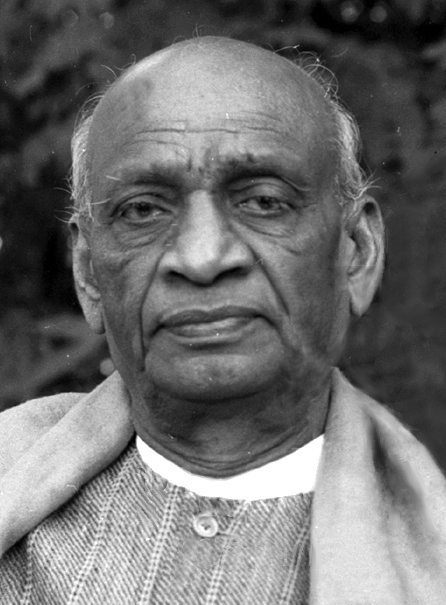
Early life of Sardar Vallabhbhai Patel
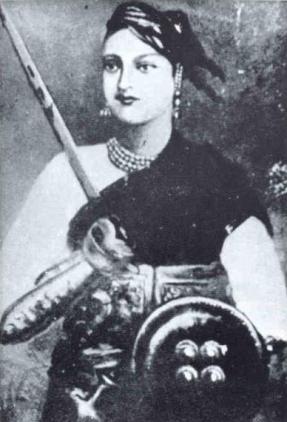
Vallabhbhai Patel was born on 31 October 1875 in Nadiad, Gujarat, into a Patidar farming family. He was the fourth of six children. According to family tradition, his father Jhaverbhai had fought in the army of Rani Lakshmibai during the 1857 uprising, and the boy grew up on stories from that time.
Money was tight. He studied law largely from borrowed books, passed the district pleader’s examination and began practising in the small courts of Gujarat. His reputation as a sharp, well-prepared courtroom lawyer grew slowly but steadily.
In 1910, at thirty five, he sailed to London and studied at the Middle Temple. He returned in 1913 as a barrister and set up in Ahmedabad, where within a few years he was among the highest earning lawyers in the city.
How Patel joined Gandhi
Politics did not interest him at first. When he first met Mahatma Gandhi at a meeting of the Gujarat Sabha, he was polite but distant. He kept wearing English suits and playing bridge at the Gujarat Club.
The Kheda Satyagraha of 1918 changed that. Farmers in Kheda district had lost much of their harvest and could not pay their land revenue, and the government refused to grant relief. Gandhi launched a civil disobedience campaign, and Patel took charge of the daily organisation on the ground. The campaign won its point and the collection of revenue from the poorer farmers was suspended.
After Kheda, Patel left his law practice, gave up his English clothes and took to the khadi kurta of the freedom movement. He never returned to the courts.
Bardoli and the title Sardar
In 1928 the farmers of Bardoli taluka in Gujarat refused to pay a sharply increased land tax, and Patel led the campaign. He went from village to village, kept the movement non-violent and handled the negotiations with the government himself.
The increase was rolled back. The people of Bardoli gave him the title Sardar, meaning chief, and the name stayed with him for the rest of his life. Bardoli is still taught as one of the most successful peasant movements of the freedom struggle.
Prison years and Congress organisation
Through the 1930s and early 1940s Patel was in and out of British jails. He was arrested during the Salt Satyagraha of 1930, again during the Individual Satyagraha of 1940, and once more during the Quit India movement of 1942. That last imprisonment ran until 1945.
Inside the Congress, he was the organiser. He managed the party’s finances, built up its structure across the provinces and was the person workers turned to when something had to be done. This organisational grip is a big part of why he was so effective after 1947.
In 1946, when the Congress had to choose a president, most provincial committees backed Patel. The president would lead the interim government, so the choice effectively decided who would become Prime Minister. Gandhi asked Patel to step aside for Jawaharlal Nehru, and he did, without public complaint. He and Nehru then worked together for the next four years, often disagreeing in private.
Home Minister and the integration of the princely states
At independence Patel became Deputy Prime Minister and Home Minister. He also took charge of the States Ministry, the department that dealt with the princes, with V.P. Menon as his chief official.
The problem looked close to impossible. Some rulers wanted independence, some leaned towards Pakistan, others wanted special terms, and a few were already facing revolts from their own subjects.
Patel dealt with each case on its own terms. Smaller states were offered privy purses and generous settlements in return for signing the Instrument of Accession. He met many rulers personally, often over dinner at his official bungalow at 1 Aurangzeb Road in Delhi. He was patient and courteous, but he left them in no doubt that joining India honourably now was better than facing the consequences later. By 15 August 1947 itself, the great majority of states had signed.
Junagadh, Hyderabad and Kashmir
Three states held out.
Junagadh’s Nawab announced accession to Pakistan, even though the state had a Hindu majority and was surrounded by Indian territory. Patel arranged a plebiscite, the people voted overwhelmingly for India, and the Nawab left for Karachi.
Hyderabad was the largest and richest princely state, a mostly Hindu population ruled by a Muslim Nizam who wanted independence. Patel negotiated for about a year. When talks broke down and the Razakars, the Nizam’s paramilitary force, began attacking villages, he authorised Operation Polo in September 1948. The Indian Army moved in, and within five days Hyderabad was part of India.
Kashmir, the third case, was not settled in Patel’s lifetime and is still contested today.
The final years
Patel’s health was failing by the end of the 1940s, and he had already suffered a serious heart attack. In the Constituent Assembly he had chaired the advisory committee on fundamental rights and minorities, and as Home Minister he defended the all-India services, the IAS and IPS that succeeded the old ICS and IP. That is why civil servants still remember him as the founder of their services.
He died in Bombay on 15 December 1950, aged seventy five. In just over three years in office he had overseen the integration of more than five hundred princely states and set up much of the administrative machinery of independent India.
Why is Patel called the Iron Man of India?
The nickname is often said to have come from Lord Mountbatten, and it stuck because it fit. Patel was firm, practical and showed little interest in personal credit, so long as the work was done.
The Statue of Unity at Kevadia in Gujarat, unveiled in October 2018, is 182 metres tall and the tallest statue in the world. It shows Patel in a plain dhoti and shawl, looking out over the Narmada. Since 2014, his birthday on 31 October has been observed as Rashtriya Ekta Diwas, or National Unity Day. If you want to read his own words on integration, the published volumes of his correspondence are the best place to start.
Read Next
- Indian Freedom Struggle: Timeline, Movements and Leaders
- Bhagat Singh: The Life, Beliefs, and Legacy of a Young Revolutionary
- Chaudhary Charan Singh: The Farmer Prime Minister Who Ended Zamindari
Frequently Asked Questions
What is Rashtriya Ekta Diwas?
It is National Unity Day, observed on 31 October, Patel’s birthday, since 2014. Schools and government offices hold a unity pledge and “Run for Unity” events.
Did Sardar Patel receive the Bharat Ratna?
Yes, posthumously, in 1991.
Who helped Patel integrate the princely states?
His closest aide was V.P. Menon, secretary of the States Ministry, who handled much of the detailed negotiation with the princes and later wrote the standard account of the process.
How tall is the Statue of Unity?
It is 182 metres tall, which makes it the tallest statue in the world. It stands near the Sardar Sarovar Dam on the Narmada at Kevadia, Gujarat.
Sources and Further Reading
- Krishna, Balraj, India’s Bismarck, Sardar Vallabhbhai Patel, Indus Source Books
- Guha, Ramachandra, India After Gandhi, Picador India
- Menon, V.P., The Story of the Integration of the Indian States, Orient Longman
- Sardar Patel Memorial Trust, Sardar Patel Correspondence, ten volumes, Navajivan Publishing House