[india_weather]

The Legacy of Indian Cricket: History, Legends, and What the Game Means to India
Walk through almost any Indian city on a Sunday morning and you will find boys playing in narrow lanes with a taped tennis ball and a stump made of bricks. When India plays, offices go quiet, wedding guests check the score between rituals, and strangers on a train argue about the batting order. Indian cricket history explains how a game brought by British sailors became the one thing a country of a billion people reliably watches together.
How cricket reached India
The earliest recorded cricket in India was played in 1721 by British sailors at Cambay in Gujarat. For the next century or so the game stayed inside British cantonments and clubs, and Indians were kept out.
The first Indians to take it up seriously were the Parsis of Bombay, who formed the Oriental Cricket Club in 1848. Hindu and Muslim clubs followed, and in 1912 the Bombay Quadrangular began, with teams of Parsis, Hindus, Muslims and Europeans. It was organised along religious lines, which later drew strong criticism, but it was the first big cricket competition in India that Indians owned and followed in large numbers.
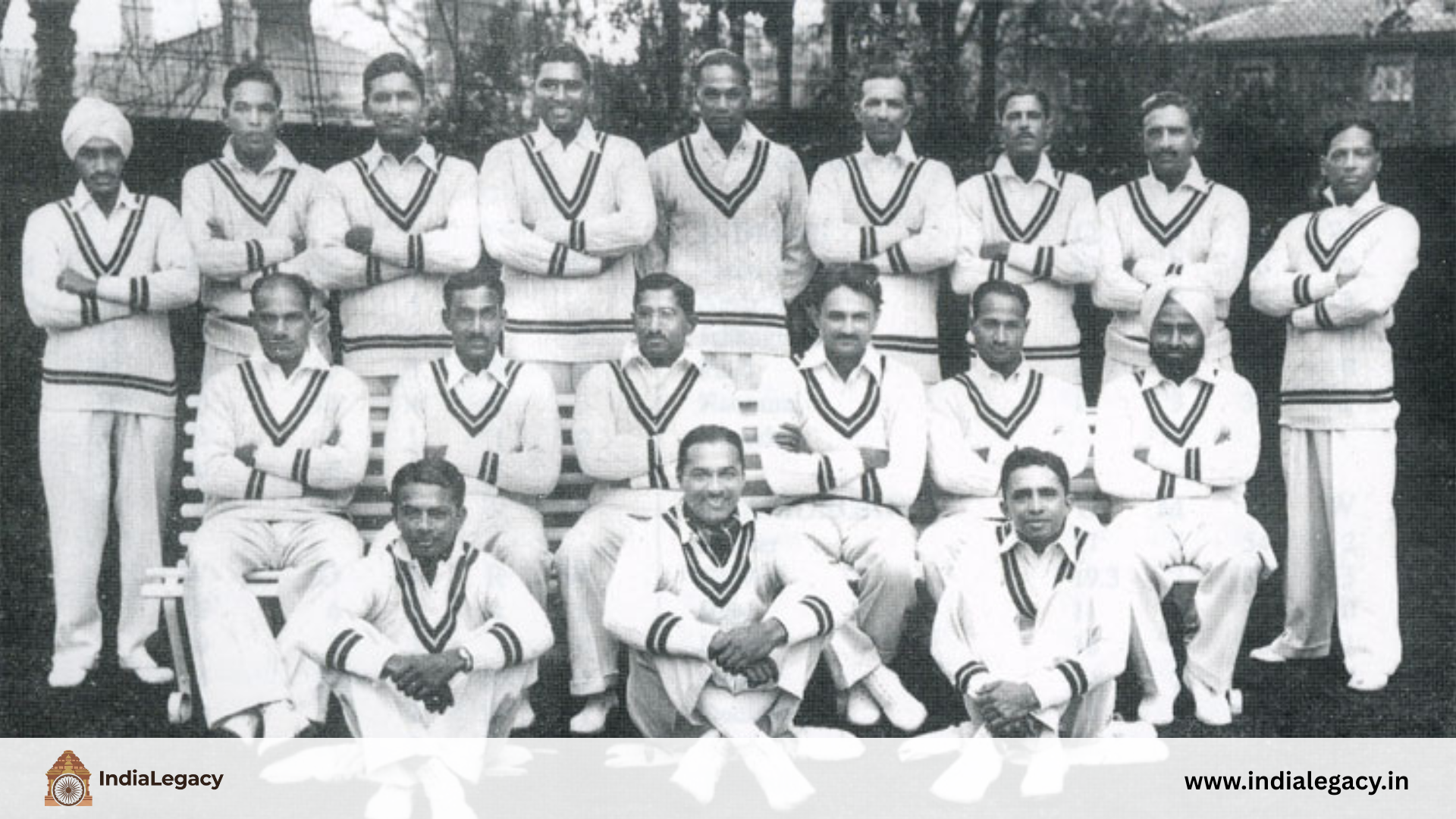
India played its first official Test match against England at Lord’s in June 1932, with CK Nayudu as captain. India lost, but it was now a Test-playing nation.
The early years after Independence
For the first two decades after 1947, India had plenty of passion and not much success abroad. Vinoo Mankad, Polly Umrigar and the elegant Vijay Hazare were the first real heroes. India won its first Test in 1952, against England at Madras (now Chennai), twenty years after that debut at Lord’s.
The breakthrough came in 1971. Under Ajit Wadekar, India won Test series in the West Indies and then in England in the same year. Much of the work was done by the spin quartet of Bishan Singh Bedi, BS Chandrasekhar, Erapalli Prasanna and S Venkataraghavan, who gave Indian cricket a style the world recognised.
1983: the World Cup that changed Indian cricket history
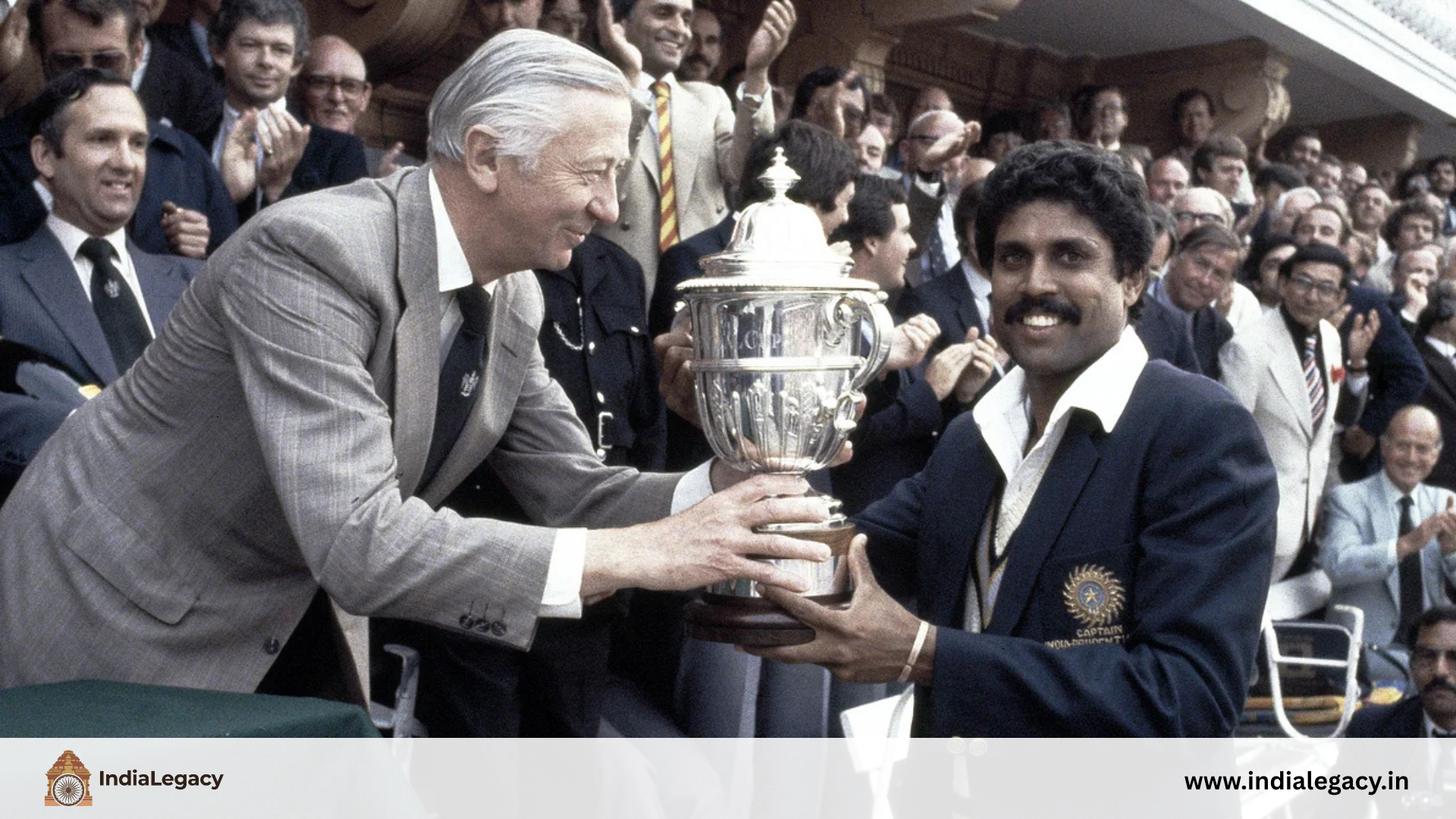
On 25 June 1983, Kapil Dev’s side walked out at Lord’s for the World Cup final against the West Indies, who had won the first two World Cups and were expected to win a third. India were bowled out for 183, a total few thought would be enough.
Then Mohinder Amarnath and Madan Lal took three wickets each, and the West Indies were all out for 140. Amarnath was named man of the match. India were world champions.
The win landed at the moment television was spreading across India, and a generation of children watched it on black and white sets. Cricket stopped being a colonial leftover and became India’s own. Many people date the game’s hold on the country, and the later flood of money into it, to that June evening.
The Sachin era
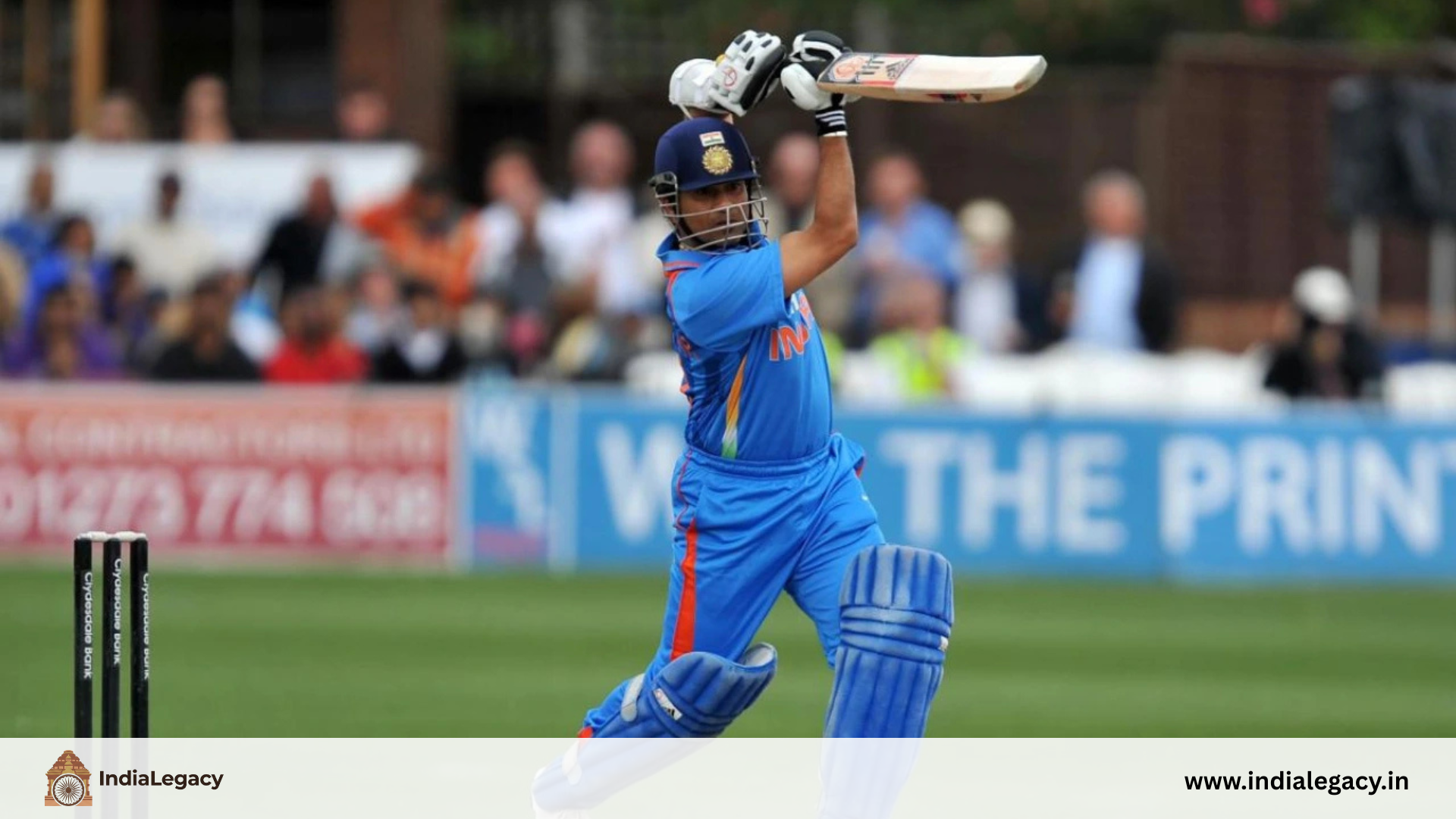
Sachin Tendulkar made his international debut in 1989, aged sixteen, and played for the next twenty four years. His 100 international centuries remain the record.
Around him grew a group of players who changed the team. Sourav Ganguly, the combative captain, waved his shirt from the Lord’s balcony after India won the NatWest Trophy final. Rahul Dravid, nicknamed the Wall, made his wicket the hardest one in world cricket to take. VVS Laxman’s 281 against Australia at Kolkata in 2001 turned a follow-on into a famous win, and Anil Kumble took all ten wickets in an innings against Pakistan in 1999.
They did not win everything, but they changed how India played. Under Ganguly, India stopped losing meekly abroad, and that toughness was what the next captain built on.
2007, 2011 and 2013: Dhoni’s trophies
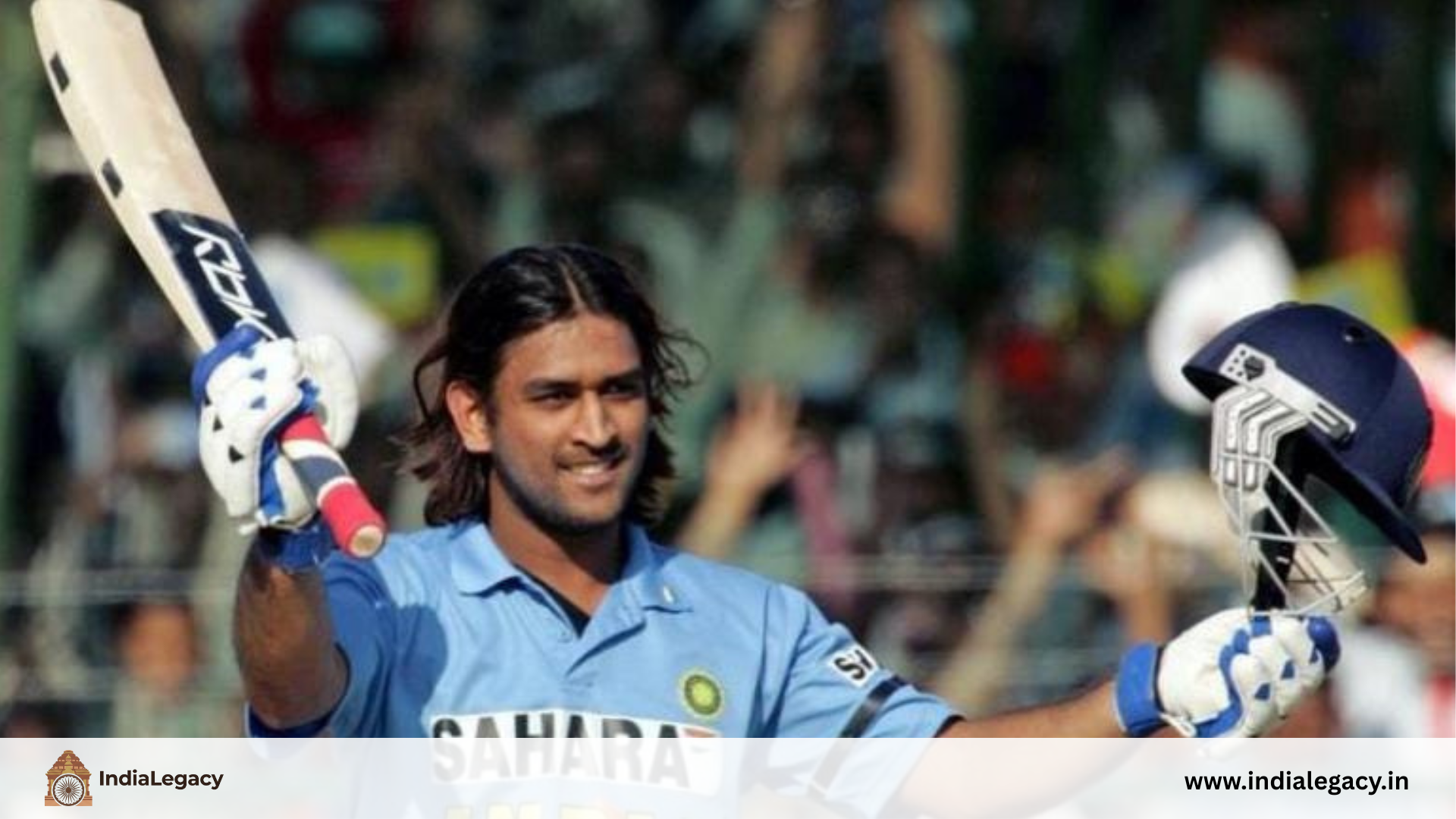
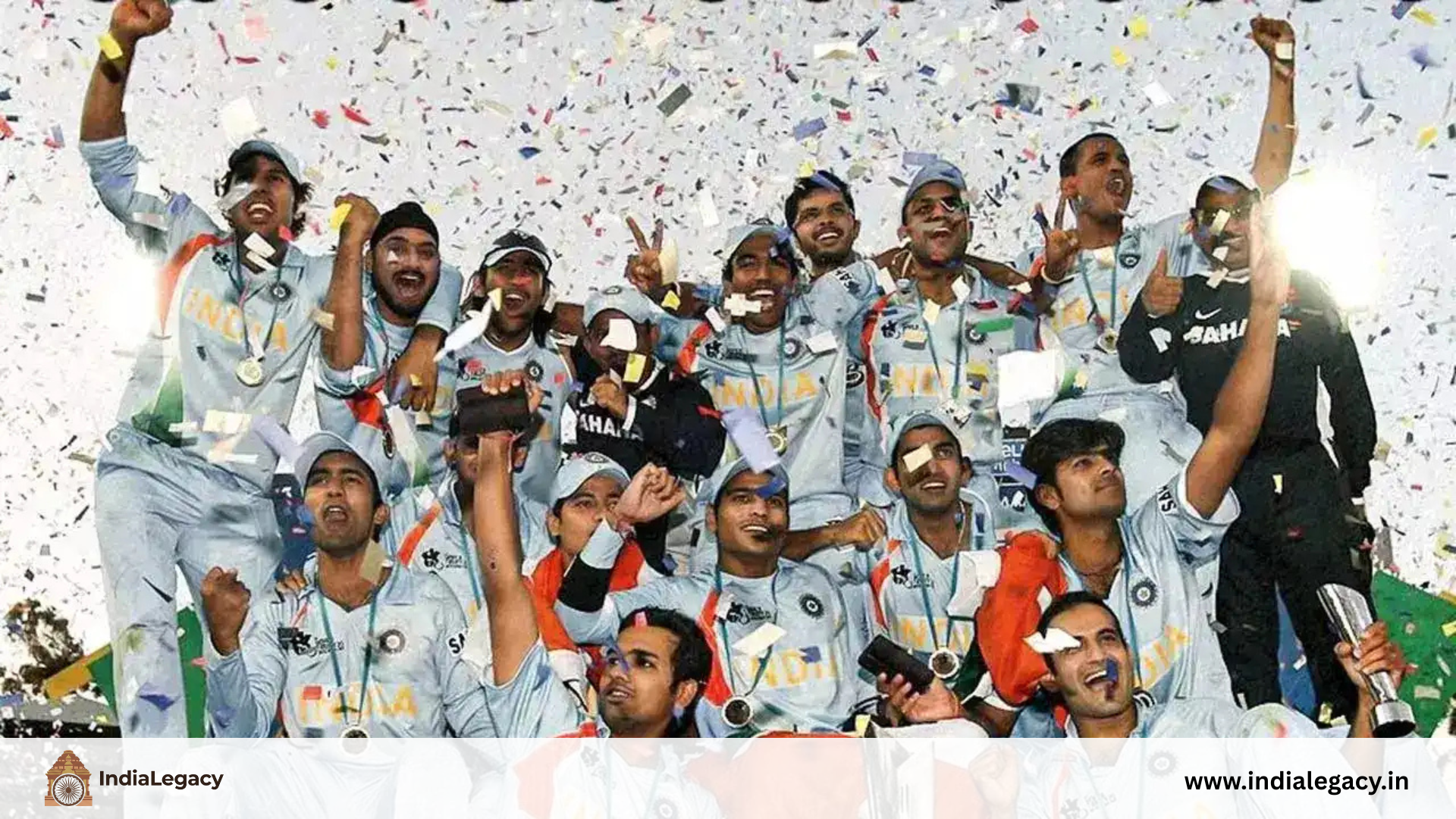
MS Dhoni, from Ranchi, brought a calm that Indian teams had rarely shown in big finals. His young side won the first ICC T20 World Cup in 2007, beating Pakistan in a tight final in Johannesburg. On 2 April 2011 at the Wankhede Stadium, he finished the 50-over World Cup final against Sri Lanka with a six, and in 2013 he added the Champions Trophy in England.
That made Dhoni the only captain to win all three ICC white-ball trophies. For many younger fans, his captaincy, unhurried and hard to read, is still the model of how to lead under pressure.
The Kohli and Rohit years
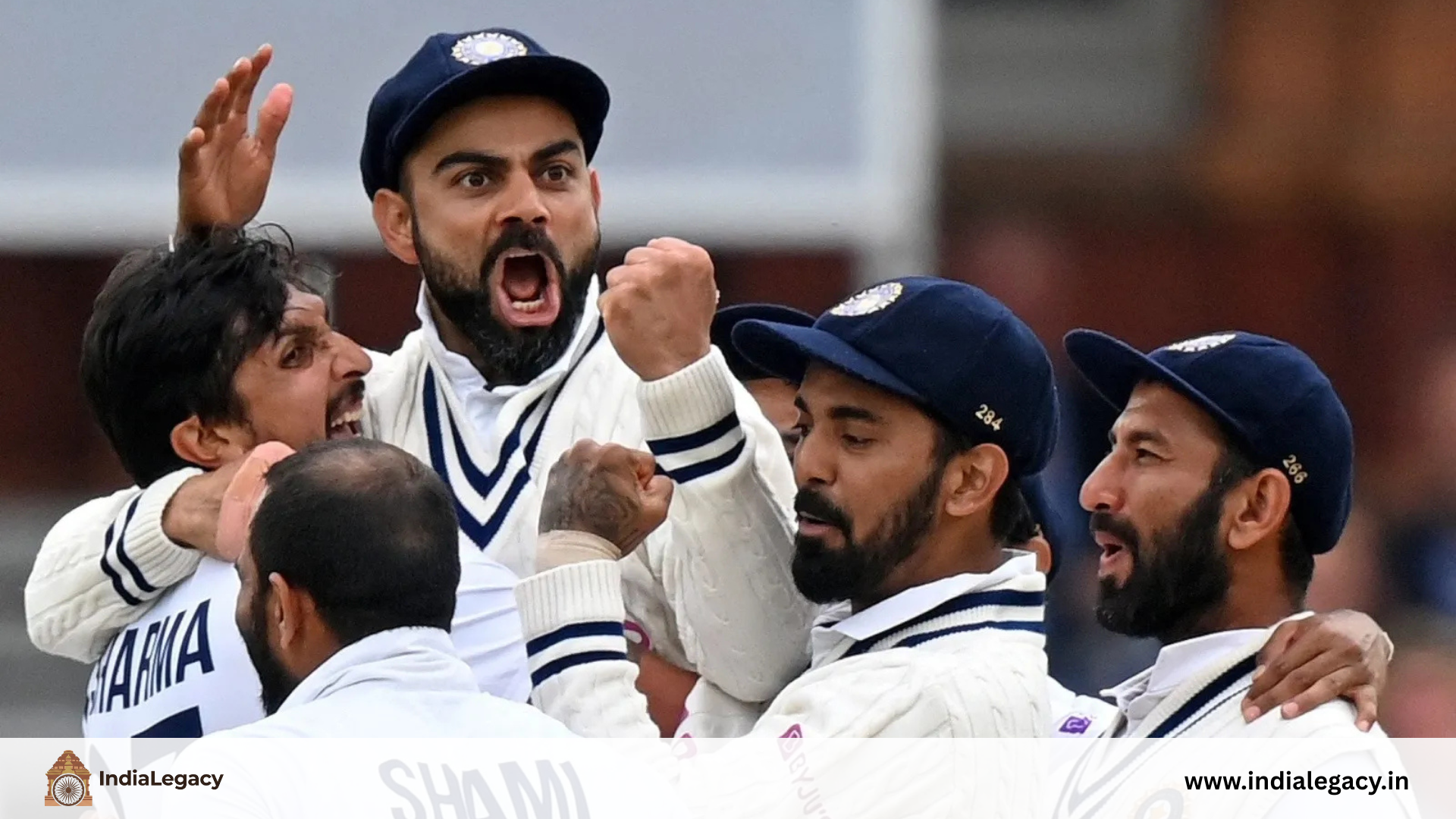
Virat Kohli raised the team’s standards of fitness and intensity. Under his captaincy India became the number one Test side in the world, and his record in run chases in ODI cricket is among the best the format has seen.
Rohit Sharma, who holds the record of three double centuries in ODIs, then led India to the 2024 T20 World Cup, ending an eleven-year wait for an ICC trophy, and to the Champions Trophy in 2025. Hardik Pandya gave India the pace-bowling all-rounder it had looked for since Kapil Dev, and Jasprit Bumrah became widely regarded as the best fast bowler in the world. In 2026 India won the T20 World Cup again, this time on home soil, beating New Zealand in the final.
The rise of Indian women’s cricket
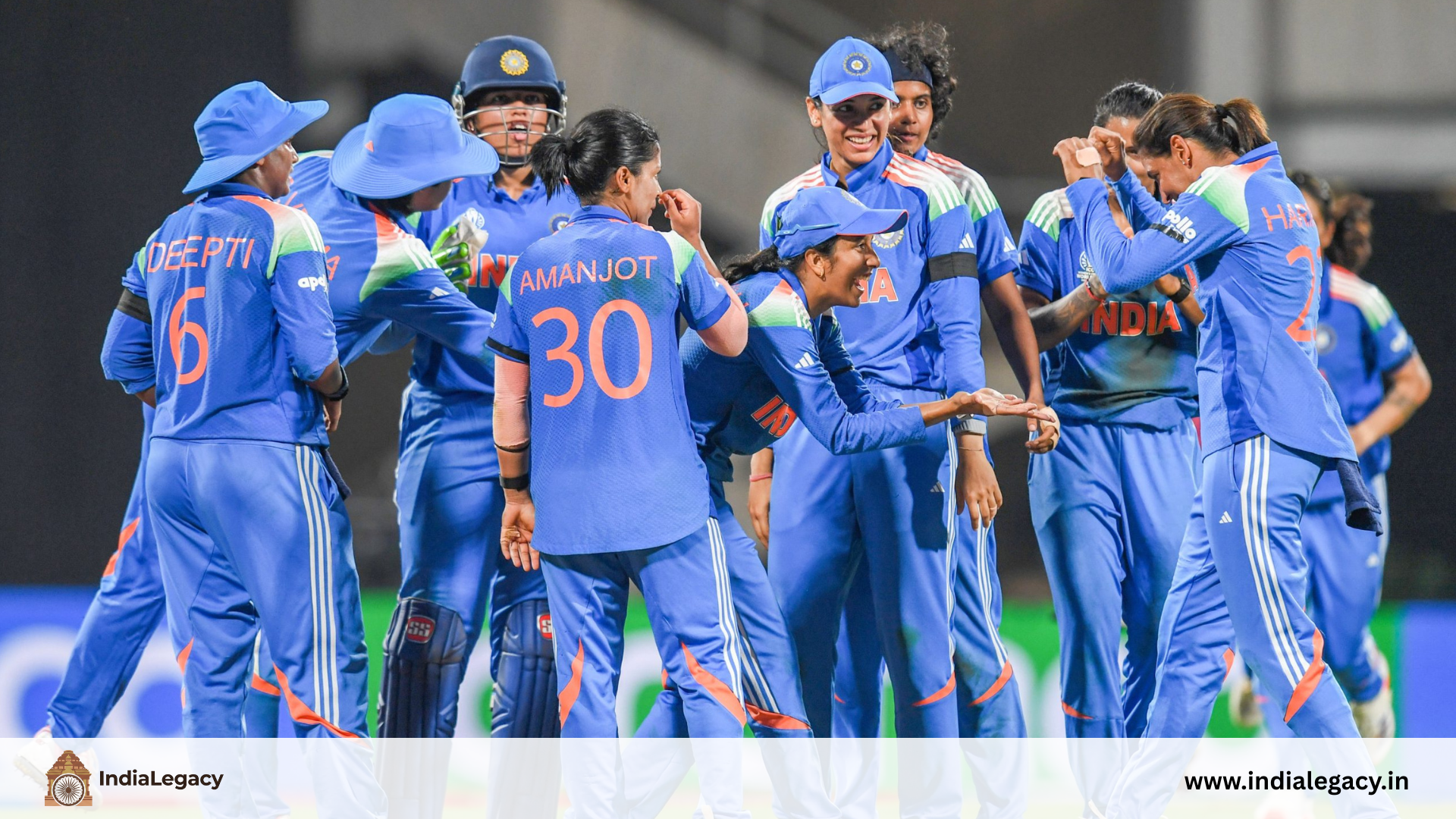
For decades, India’s women played with little money or attention. Mithali Raj built the batting with more than seven thousand ODI runs, and Jhulan Goswami became the leading wicket-taker in women’s ODI cricket. The 2017 World Cup final at Lord’s, which India lost narrowly to England, was the first time much of the country watched a women’s match closely.
In the semi-final of that tournament, Harmanpreet Kaur scored an unbeaten 171 against Australia, one of the finest innings by any Indian batter. Smriti Mandhana became a household name, and the Women’s Premier League, launched in 2023, gave players proper pay for the first time.
The big breakthrough came on 2 November 2025, when India beat South Africa by 52 runs to win the Women’s ODI World Cup for the first time. Shafali Verma was player of the match in the final, and Deepti Sharma was player of the tournament.
What the IPL changed
The Indian Premier League began in 2008, and within ten years it was the richest and most watched cricket league in the world. Players everywhere now want an IPL contract.
It also gave small-town India a stage. Rinku Singh from Aligarh, Kuldeep Yadav from Kanpur, Umran Malik from Jammu and Yashasvi Jaiswal, who once lived in a tent at Mumbai’s Azad Maidan, all became national names through the league. For thousands of families who once could not afford a proper bat, cricket became a real career.
What cricket means to India
Statistics only tell part of it. There is the boy in a Bihar village watching highlights on a shared phone, the girl in Baramulla signing up for a summer coaching camp, and the grandfather who can tell you exactly where he was when Kapil lifted the trophy in 1983. In a country divided by language, region and religion, an India match is one of the few things almost everyone follows at the same time.
Nearly a century after that first Test at Lord’s, the best place to see this for yourself is still a packed stadium in Kolkata, Mumbai or Chennai on a match day, ideally from the cheaper stands where the noise is loudest.
Read Next
- Urban Lifestyle in India: Life in Delhi, Mumbai, Bengaluru, and Other Metros
- Rural Lifestyle in India: Village Life, Farming, and Community Structure
- Pravasi Bharatiya Divas: The Day India Celebrates Its Global Diaspora
Frequently Asked Questions
How many ICC trophies has India won?
The men’s team has won the ODI World Cup twice (1983 and 2011), the T20 World Cup three times (2007, 2024 and 2026), and the Champions Trophy in 2013 and 2025, plus a shared title with Sri Lanka in 2002. The women’s team won its first ICC senior trophy, the ODI World Cup, in 2025.
Who is considered the greatest Indian batter of all time?
Most fans and experts put Sachin Tendulkar first for his 100 international centuries and his runs in every condition. Virat Kohli is often called the best chaser in ODI cricket, and Sunil Gavaskar was India’s first great opener, the first batter in the world to reach 10,000 Test runs.
Who founded the IPL?
The Board of Control for Cricket in India (BCCI) launched the Indian Premier League in April 2008. Lalit Modi was its founding chairman.
By how much did India lose its first Test?
India lost the 1932 Lord’s Test, played from 25 to 28 June, by 158 runs.
Sources and Further Reading
- Ramachandra Guha, A Corner of a Foreign Field: The Indian History of a British Sport, Picador India
- Board of Control for Cricket in India (BCCI), official records and match archives
- ESPNcricinfo, Statsguru database
- Boria Majumdar, Eleven Gods and a Billion Indians, Simon and Schuster