[india_weather]
Pravasi Bharatiya Divas: The Day India Celebrates Its Global Diaspora
On 9 January 1915, a forty five year old lawyer stepped off a ship in Bombay after twenty one years in South Africa. His name was Mohandas Karamchand Gandhi. India now marks that date every year as Pravasi Bharatiya Divas, the day dedicated to the Indian diaspora, an estimated 32 million people of Indian origin living in more than 200 countries.

It is one of the largest overseas communities in the world, often ranked alongside the Chinese diaspora, and the government increasingly treats it as one of India’s main sources of soft power. Here is what the day is, how it began, how the convention works and who counts as a pravasi Bharatiya.
What is Pravasi Bharatiya Divas?
Pravasi Bharatiya Divas, or Overseas Indian Day, is an official observance of the Government of India. It recognises what the diaspora has contributed to India’s development and to the countries where its members now live. The event is organised by the Ministry of External Affairs through its overseas Indian affairs division.
The observance began in 2003. It grew out of the work of the High Level Committee on the Indian Diaspora, set up in 2000 and chaired by the jurist and parliamentarian L.M. Singhvi, with J.C. Sharma and others among its members. Its report ran to nearly 600 pages and was the first attempt to map the whole Indian diaspora, country by country.
Why is Pravasi Bharatiya Divas held on 9 January?
The date honours Gandhi’s return from South Africa in 1915. He had gone there in 1893 as a young lawyer on a legal assignment and stayed for twenty one years, working for the Indian community and leading its first mass civil disobedience campaigns against racial laws. The man who came back was very different from the one who had left Bombay.
He brought home ideas, methods and organising experience that he went on to use in the Indian freedom struggle. By choosing his homecoming, the government signalled that it saw overseas Indians as a source of ideas and energy for the country, and that remittances were only part of what they could offer.
How the convention works
The main Pravasi Bharatiya Divas convention runs for three days and is held in a different Indian city each time. Since 2015 it has been held every two years. In the years in between, smaller conferences take place in countries with large Indian communities.
The main convention brings together thousands of delegates from around the world. The Prime Minister addresses the gathering, ministers hold sessions on investment, culture and cooperation, and on the closing day the President of India presents the Pravasi Bharatiya Samman Awards.
Host cities so far have included New Delhi, Mumbai, Chennai, Hyderabad, Jaipur, Kochi, Bengaluru, Varanasi and Indore. The 2025 convention was held in Bhubaneswar.
The chief guest
Each convention is inaugurated by a chief guest of Indian origin who has risen to high office abroad. Past chief guests have included heads of state and government from Mauritius, Guyana, Trinidad and Tobago, Fiji, Suriname and other countries with large populations of Indian descent. The tradition reminds delegates how far people of Indian origin have risen in public life in their adopted countries.
The Pravasi Bharatiya Samman Award
The Pravasi Bharatiya Samman is the highest honour the Government of India confers on non-resident Indians and people of Indian origin. It is presented by the President at the closing ceremony of each convention.
The award recognises distinguished work in a wide range of fields, from science and business to public service, education and community welfare. Recipients over the years have included scientists, business leaders, doctors, humanitarian workers, artists and politicians. The Ministry of External Affairs publishes the full list of awardees for each year, which is the best place to check a particular name.
Who is a pravasi Bharatiya?
Indian law and policy use three main categories.
Non-Resident Indians (NRIs) are Indian citizens who live outside India. For tax purposes, the test is how many days a person spends in India in a financial year, with a threshold of roughly half the year.
Persons of Indian Origin (PIOs) are foreign citizens whose ancestors were Indian. The old PIO card was merged into the OCI scheme in 2015.
Overseas Citizens of India (OCIs) hold a status introduced in 2005 for foreign citizens of Indian origin. It gives a lifelong visa and the right to live and work in India, though not the right to vote or hold most public offices.
Between them, these categories cover almost every member of the Indian diaspora.
Where does the Indian diaspora live?
The largest communities are in the United States (around 4.5 million), the United Arab Emirates (around 3.5 million) and Saudi Arabia (around 2.5 million). Large populations also live in Malaysia, the United Kingdom, Canada, South Africa, Sri Lanka, Nepal and Australia.
Each community has its own history. In Malaysia, Fiji, Mauritius, South Africa and the Caribbean, many are descendants of indentured labourers taken from India under British rule in the nineteenth century, after slavery was abolished in the British Empire. The communities in North America and the Gulf are mostly the result of twentieth century migration for education and work. A Tamil family in Durban and a software engineer in Seattle are both pravasi Bharatiya, but their ties to India look very different.
Why the diaspora matters to India
Overseas Indians send home more than 100 billion dollars in remittances a year, more than any other diaspora. For states like Kerala, money sent from the Gulf has shaped household incomes for decades.
Indians abroad also hold some of the most visible jobs in global business and politics. Sundar Pichai runs Alphabet, Satya Nadella runs Microsoft and Arvind Krishna runs IBM. Rishi Sunak was Prime Minister of the United Kingdom, Kamala Harris was Vice President of the United States and Antonio Costa was Prime Minister of Portugal.
The quieter contribution is cultural. Indian cinema, music, food, yoga and classical dance have travelled the world largely through the diaspora. A child in Toronto learning Bharatanatyam on Saturdays, or a family in California making dosa for Sunday breakfast, keeps those traditions going far from India.
Read Next
- Indian Freedom Struggle: Timeline, Movements and Leaders
- National Mathematics Day: The Life and Legacy of Srinivasa Ramanujan
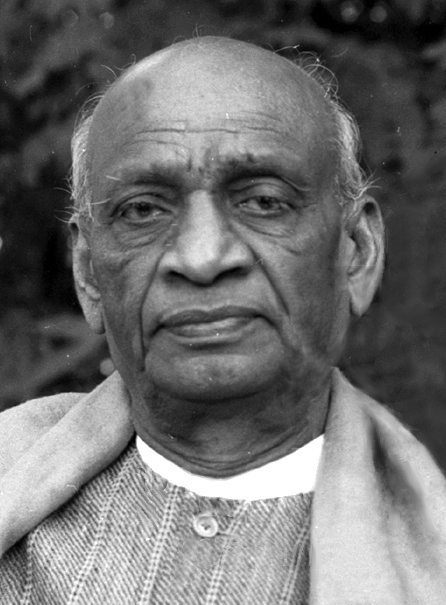
- Sardar Vallabhbhai Patel: The Iron Man Who Held India Together
Frequently Asked Questions
Where was the first Pravasi Bharatiya Divas held?
The first Pravasi Bharatiya Divas was held in New Delhi in January 2003.
Is Pravasi Bharatiya Divas a public holiday?
No. It is an official observance, and offices and schools stay open as usual.
Can an OCI card holder vote in India?
No. OCI holders can live and work in India and travel without a visa, but they cannot vote, contest elections or hold most constitutional posts.
How can someone attend the convention?
Delegates register through the official Pravasi Bharatiya Divas portal run by the Ministry of External Affairs, usually a few months before the event. Registration details for each edition are announced there.
Sources and Further Reading
- Ministry of External Affairs, Government of India, website (Pravasi Bharatiya Divas pages)
- Report of the High Level Committee on the Indian Diaspora
- Judith Brown, Global South Asians, Cambridge University Press