Sundarbans Forest West Bengal: History and Natural Heritage of India
Sundarbans represents the world’s largest contiguous mangrove forest spanning the Ganges-Brahmaputra Delta across India and Bangladesh, renowned as the only mangrove habitat for Royal Bengal Tigers and home to unparalleled biodiversity in dynamic tidal ecosystems. Covering 10,000 sq km, this UNESCO World Heritage Site features impenetrable sundari trees, intricate tidal channels and unique species adapted to extreme salinity fluctuations.
Named after sundari (Heritiera fomes) mangroves or “beautiful forest” (Sundar-ban), Sundarbans shields 4.4 million people from cyclones while facing rising seas, tiger-human conflicts and climate vulnerability. From ancient settlements to British forest management, this living delta embodies nature’s resilience and humanity’s delicate coexistence with wilderness.
Overview Table of Sundarbans
| Aspect | Details |
|---|---|
| Location | West Bengal (India) & Khulna (Bangladesh) Ganges Delta |
| Area | 10,000 sq km (India: 4,262 sq km) |
| UNESCO Status | World Heritage Site (1987), Biosphere Reserve (1989) |
| Flagship Species | Royal Bengal Tiger (96 in India) |
| Forest Type | Mangrove ecosystem (sundari dominant) |
| Human Population | 4.4 million fringe dwellers | Core Zones | Sundarbans National Park (1,330 sq km) |
| Threats | Climate change, cyclones, tiger conflicts |
Geological Formation: Living Delta
Ganges-Brahmaputra Sediment Miracle
Sundarbans formed 10,000 years ago from Himalayan sediments deposited Ganges, Brahmaputra, Meghna rivers creating world’s largest delta (105,000 sq km). Daily tides deposit 2.5 cm silt building 160 islands constantly reshaped erosion/accretion cycles.
Mangroves colonize new mudflats within years – pneumatophores (breathing roots) stabilize soil, trapping sediments creating elevated land. Dynamic geology means 40% area changes every 25 years – oldest islands central region.
Tidal Dynamics and Salinity Gradient
Twice-daily tides (5-10m amplitude) create world’s most complex tidal channels (260 km crisscrossing). Salinity varies 0.1-30 ppt creating zonation – freshwater north, brackish center, hypersaline south coast.
Flora: Mangrove Biodiversity Hotspot
Dominance of Four Mangrove Species
35 true mangrove species dominated sundari (Heritiera fomes 60% canopy), gewa (Excoecaria agallocha), goran (Ceriops decandra), keora (Sonneratia apetala). Salt-excreting leaves, aerial roots, viviparous seeds uniquely adapted tidal extremes.
60+ honey-producing floral species sustain 500 beehives yielding famous “patali” honey. Nipa palms create coastal fringe trapping ocean sediments.
Ecological Engineering Role
Mangroves dissipate cyclone wave energy 40-70%, stabilize 1,600 km coastline protecting 54 million delta residents. Carbon sequestration 4x tropical rainforests per hectare – blue carbon powerhouse.
Fauna: Royal Bengal Tiger Kingdom
96 Man-Eating Tigers
Sundarbans hosts India’s largest tiger population (96 adults) – highest density anywhere (4-5 per 100 sq km). Saltwater adaptation unique – drink brackish water, hunt estuarine crocs, swim 30 km hunting.
World’s only man-eating tiger population kills 50-100 humans yearly – “tiger widows” phenomenon. Maneaters develop human taste during cyclones/floods.
Unique Mangrove Specialists
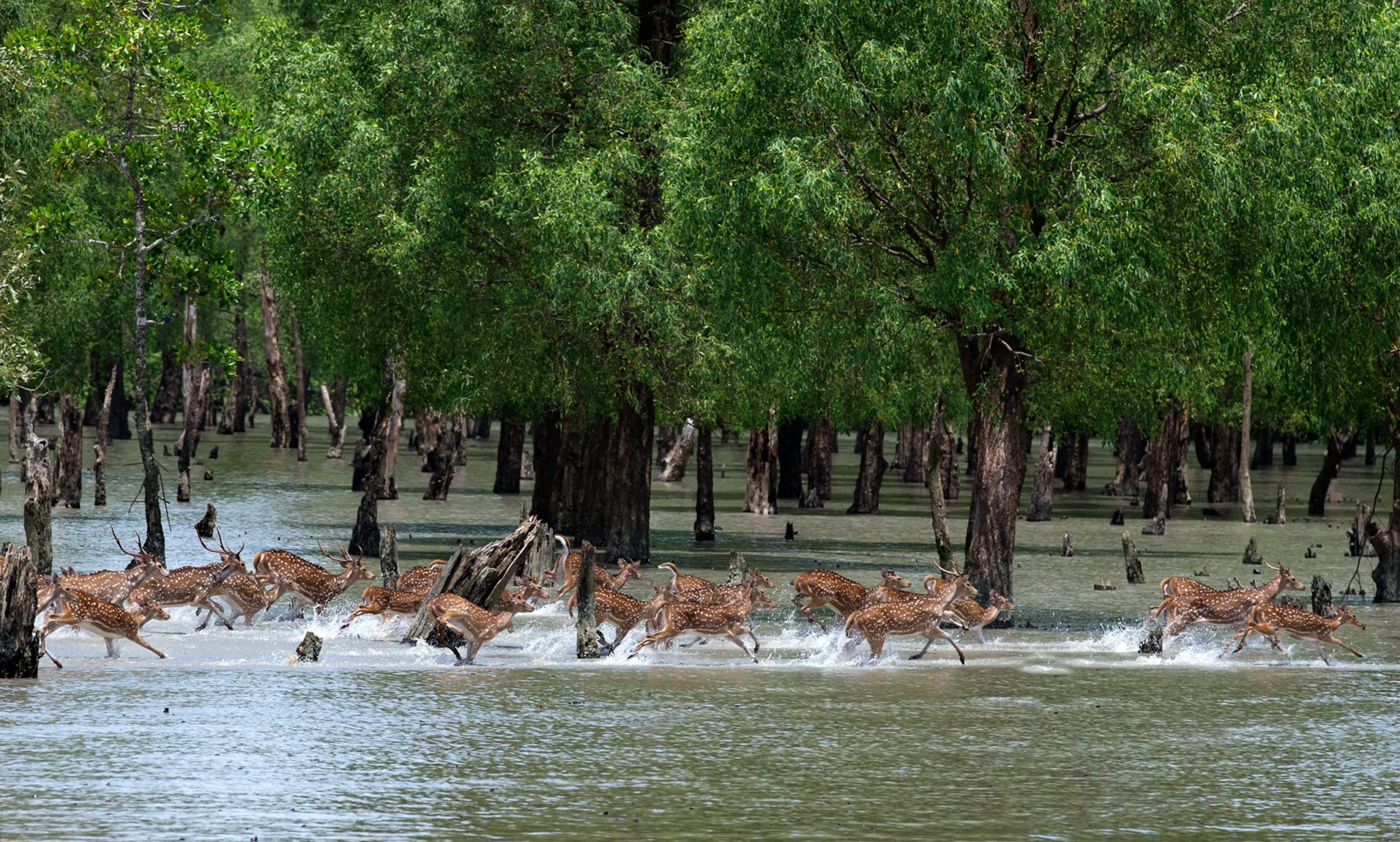
Chital deer (25,000), barking deer, wild boar, rhesus macaque, estuarine crocs (300), river terrapins, otters, Gangetic dolphins (190). 260 bird species including masked finfoot, mangrove pitta, cotton pygmy goose.
Human History: Ancient Settlements to British Forests
Mauryan Era Origins
Human presence traced Mauryan period (4th-2nd BCE) – Chand Sadagar ruins Netidhopani suggest urban settlements before mangrove expansion. Medieval Kapilmuni excavations reveal 11th century ports trading spices, timber.
Mughal era (16th-18th CE) zamindars leased forest tracts rice cultivation – Daniel Hamilton 1903 pioneered cooperative settlements Gosaba, Rangabelia islands.
British Forest Management
1757 East India Company acquired Sundarbans zamindari rights – mapped 1764, Forest Division established 1879. 1875 Forest Act reserved mangroves protecting timber supply Calcutta shipyards. Systematic compartments created 1893 management plan.
Protected Areas Network
Sundarbans National Park (India)
Core zone 1,330 sq km established 1973 Project Tiger reserve, National Park 1984. Buffer 1,854 sq km includes 54 Forest Blocks, transition zone 885 sq km fringe villages. Strict No-Go zones protect core tiger habitat.
Sajnekhali Watchtower, Sudhanyakhali, Netidhopani Forest Offices serve eco-tourism hubs.
Bangladesh Sundarbans (60% area)
6,017 sq km three Wildlife Sanctuaries (East, South, West). Kotka Beach, Hiron Point, Karamjal camps attract tourists. Joint India-Bangladesh tiger monitoring since 2018.
Threats and Conservation Challenges
Climate Change Existential Crisis
Sea level rise 3-8mm/year threatens 40% forest submergence by 2050 – salinity increasing kills freshwater species. Cyclones Sidr (2007: 3,400 dead), Aila (2009: 190 dead), Amphan (2020: 100 dead) intensify.
Mangrove migration fails keep pace erosion – predicted 17% forest loss next 50 years.
Tiger-Human Conflicts
96 tigers kill 50-100 humans yearly entering villages during floods. “Tiger Project” electric fencing, compensation schemes reduce conflicts. Honey collectors (mouals) face tiger/croc attacks yearly.
Ecotourism and Local Livelihoods
Sustainable Forest Economy
54,000 forest-dependent families collect honey (120 tons/year), crabs, fish legally. Prawn seed collection banned 2018 protecting juveniles. Eco-development committees manage crab fattening ponds, alternative livelihoods.
Boat Safaris and Nature Camps
Sajnekhali, Gosaba camps offer responsible tourism – 50,000 visitors/year generate ₹10 crore revenue funding conservation. Strict No-Go zones, waste management, trained guides protect fragile ecosystem.
Cultural and Literary Significance
Bonbibi Worship
Forest goddess Bonbibi protects honey collectors from tiger spirit Dakshin Ray – syncretic Hindu-Muslim folk deity worshipped shrines throughout Sundarbans. Annual Bonbibi Mela attracts thousands.
Duvare (offerings) ceremonies precede forest entry – folk deity system regulates human-wildlife coexistence.
Literature and Cinema
Amitav Ghosh “Hungry Tide” trilogy captures Sundarbans existential beauty/threats. Bengali folk songs (bhatiyali), Sundari tree poems celebrate delta life. Oscar-winning documentaries showcase tiger conservation.
Frequently Asked Questions About Sundarbans
1. Where located Sundarbans Forest?
World’s largest mangrove forest Ganges-Brahmaputra Delta spanning West Bengal (India) & Khulna (Bangladesh) – 10,000 sq km tidal wilderness.
2. Why called Sundarbans name origin?
“Sundar-ban” (beautiful forest) or sundari (Heritiera fomes) mangroves dominating canopy – “sea forest” (samudra-ban) alternative etymology.
3. How many tigers Sundarbans India?
96 Royal Bengal Tigers (2022 census) – highest density anywhere (4-5/100 sq km) uniquely adapted saltwater drinking, estuarine hunting.
4. Sundarbans UNESCO status?
1987 World Heritage Site, 1989 Biosphere Reserve – India National Park (1984), Bangladesh three Wildlife Sanctuaries (1977).
5. What threats facing Sundarbans?
Sea level rise (17% loss predicted 2050), cyclones (Sidr/Aila/Amphan), tiger conflicts (50-100 human deaths/year), salinity killing freshwater species.
6. Sundarbans National Park area?
Core 1,330 sq km Project Tiger reserve surrounded 1,854 sq km buffer, 885 sq km transition zone fringe villages.
7. Famous Sundarbans animals besides tigers?
Estuarine crocs (300), Gangetic dolphins (190), chital deer (25,000), barking deer, otters, masked finfoot, mangrove pitta birds.
8. How visit Sundarbans India?
Sajnekhali/Gosaba boat safaris – 50,000 tourists/year; strict No-Go zones, waste management protect fragile ecosystem.
9. Who Bonbibi Sundarbans?
Forest goddess protects honey collectors from tiger spirit Dakshin Ray – syncretic Hindu-Muslim deity worshipped duvare ceremonies.
10. Sundarbans carbon sequestration?
Blue carbon powerhouse – 4x tropical rainforests per hectare trapping Himalayan sediments while dissipating cyclone energy 40-70%.
11. How many people live Sundarbans?
4.4 million fringe dwellers dependent forest economy – honey (120 tons/year), crabs, fish sustain livelihoods.
12. Sundarbans cyclones impact?
Mangroves reduce wind speed 40%, wave height 70% protecting 54 million delta lives – Sidr (2007) dissipated crossing forest.
13. Best time visit Sundarbans?
October-March dry season; winter migratory birds; avoid monsoon (flooded trails) and summer (extreme heat).
14. Sundarbans honey famous why?
Patali honey from 60+ floral species including sundari, gewa – 120 tons/year collected traditional mouals (honey gatherers).
15. Climate change Sundarbans prediction?
40% forest submergence by 2050, salinity doubling, tiger habitat loss – mangrove migration fails match sea rise pace.
16. Sundarbans India Bangladesh cooperation?
Joint tiger monitoring 2018, transboundary conservation, shared research addressing common delta threats.
17. How many islands Sundarbans?
160 islands constantly reshaped tides – 40% area changes every 25 years through erosion/accretion dynamics.
18. Sundarbans entry permits fees?
₹100 Indians/₹800 foreigners; boat safari ₹2,500/person; Sajnekhali/Gosaba camps regulated tourism.
19. Famous Sundarbans literature?
Amitav Ghosh “Hungry Tide” trilogy captures existential beauty/threats; Bengali bhatiyali songs celebrate delta life.
20. Sundarbans global significance?
Climate canary warning 1 billion coastal dwellers; tiger conservation model; blue carbon sequestration powerhouse.
Conclusion: Mangrove Tiger Paradise Facing Apocalypse
Sundarbans transcends mangrove forest status – represents humanity-nature frontier where Royal Bengal Tigers hunt world’s largest delta amid rising seas threatening annihilation. Dynamic tidal landscape constantly reshapes through erosion/accretion while mangroves dissipate cyclone fury protecting 54 million delta lives.
As climate canary, Sundarbans warns accelerating sea rise, salinity intrusion, biodiversity collapse confronting 1 billion coastal dwellers globally. Bonbibi’s forest realm teaches coexistence lessons – tiger conservation success demonstrates nature rebounds protection while human encroachment accelerates apocalypse. This living delta demands urgent global intervention preserving tiger kingdom for future generations.