Vaishno Devi: A Complete Spiritual Journey Through Faith, Devotion, and the Himalayas
Mata Vaishno Devi Temple is one of India’s most sacred pilgrimage destinations, nestled in the Trikuta Mountains of Jammu and Kashmir. Every year, over 1 crore devotees undertake the Vaishno Devi Yatra 2026 with unwavering faith, believing that one does not go to Mata Rani by choice, but by her divine calling. Whether you’re planning to trek the traditional 13km route from Katra or book a Vaishno Devi helicopter ticket, this complete guide covers everything you need for a blessed and comfortable yatra.
For generations, devotees have believed that one does not go to Mata Vaishno Devi by choice but by her invitation. This belief, rooted in legend and personal experience, makes the pilgrimage deeply emotional and spiritually fulfilling.
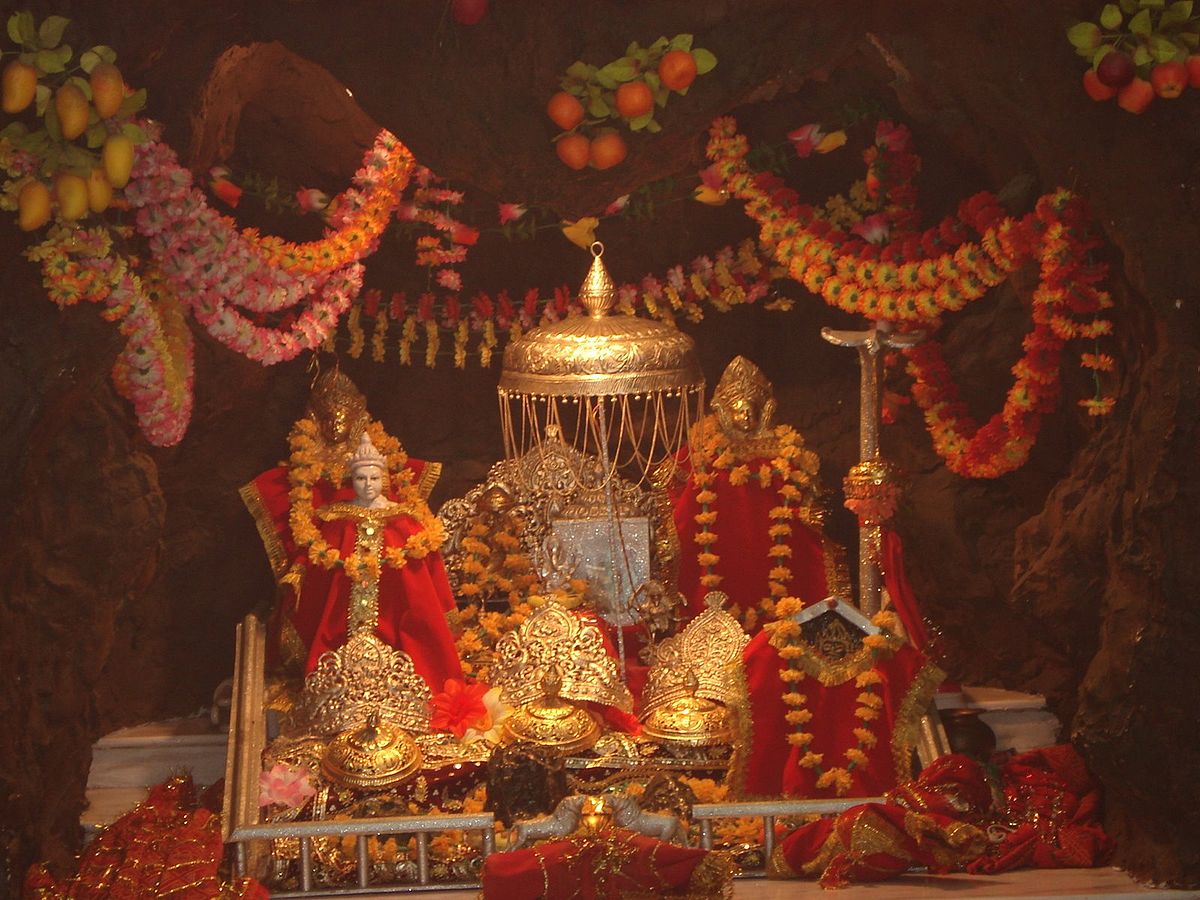
Overview Table of Vaishno Devi
| Aspect | Details |
|---|---|
| Sacred Site | Vaishno Devi Shrine |
| Location | Trikuta Mountains, Jammu and Kashmir, India |
| Main Deity | Mata Vaishno Devi (Manifestation of Divine Feminine Power) |
| Altitude | Approx. 5,200 feet above sea level |
| Yatra Distance | About 12–13 km from Katra to Bhawan |
| Key Sacred Spots | Banganga, Charan Paduka, Ardhkuwari Cave, Bhairav Temple |
| Best Time to Visit | March to October; Navratri is considered most auspicious |
| Managed By | Shri Mata Vaishno Devi Shrine Board |
| Spiritual Significance | Fulfillment of wishes, inner purification, spiritual growth |
Who Is Mata Vaishno Devi? The Divine Shakti
Mata Vaishno Devi, also known as Mata Rani, Vaishnavi, and Trikuta, is worshipped as the supreme manifestation of divine feminine energy (Shakti). She embodies the combined powers of three goddesses—Maha Lakshmi (prosperity), Maha Kali (strength), and Maha Saraswati (wisdom). Inside the holy cave shrine, three sacred rock formations called Pindis naturally represent these three divine forms, making Vaishno Devi darshan deeply powerful and transformative.
According to Hindu tradition and mythology, Mata Vaishno Devi chose the Trikuta Mountains as her eternal sacred abode after defeating the demon Bhairavnath and granting him salvation. Devotees believe she listens to every prayer with compassion and blesses her followers with spiritual fulfillment and wish fulfillment.
The Legend of Vaishno Devi and Bhairav Nath
The most celebrated legend tells the story of Bhairavnath, a tantric who pursued Mata Vaishnavi with impure intentions. To protect her sanctity and devotion, the Goddess fled into a cave within the Trikuta Hills. After a prolonged chase, she revealed her supreme divine form (Mahakali) and defeated him. Realizing his grave mistake, Bhairavnath repented sincerely, and the compassionate Goddess forgave him and granted him moksha (salvation).
This is why visiting the Bhairav Temple (Bhairon Nath Temple) located 2.5 km uphill from the main Bhawan is considered essential to complete the Vaishno Devi Yatra. The pilgrimage is believed incomplete without paying respects at both shrines.
Geographical Setting of the Shrine
India is home to many ancient and architecturally significant temples. If you are interested in exploring other UNESCO-recognized temple masterpieces, you may also read our detailed guide on the Brihadeeswarar Temple of Tamil Nadu, built by the Chola dynasty and renowned for its grand Dravidian architecture.
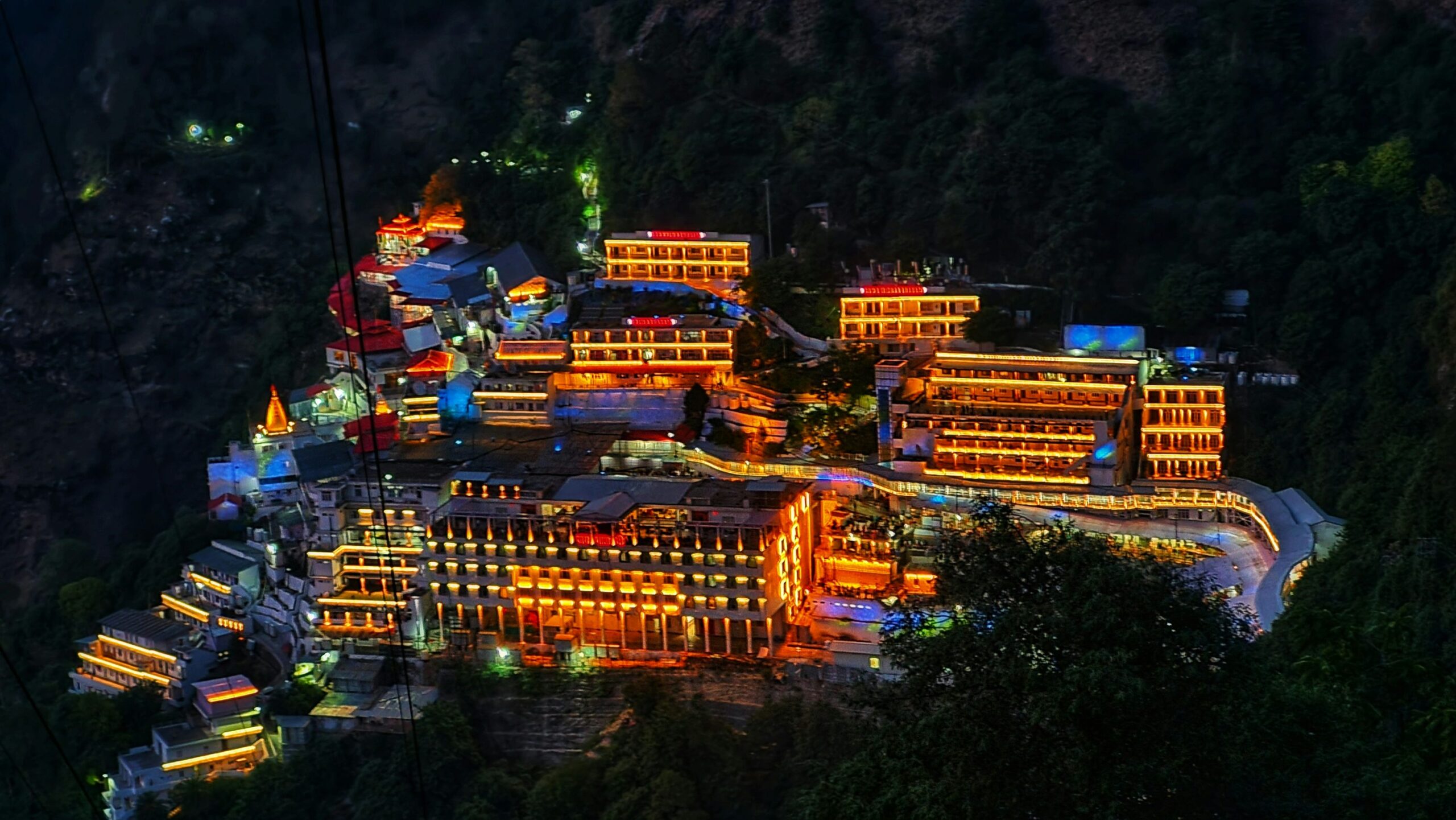
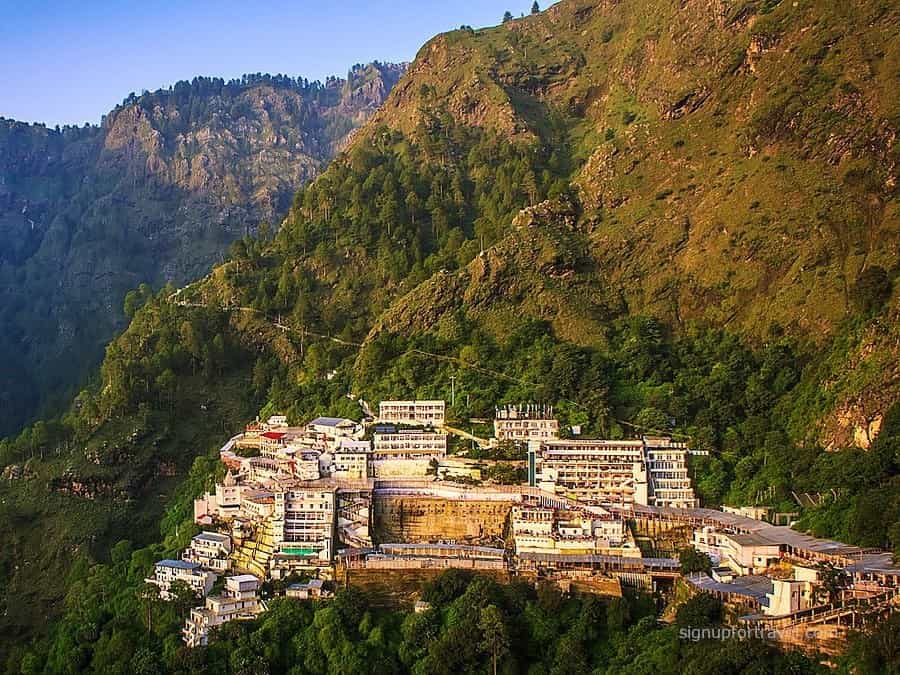
The shrine is located at an altitude of approximately 5,200 feet in the Trikuta range. The region is surrounded by forested hills, winding paths, and fresh mountain air, creating a serene atmosphere that enhances spiritual reflection.
Inside the holy cave are three naturally formed rock structures known as Pindis, which represent the three divine forms of Mata Vaishno Devi.
Vaishno Devi Yatra Route: From Katra to Bhawan
The spiritual journey begins from Katra, the base camp town where all pilgrims must complete mandatory online yatra registration. The traditional trek from Katra to Vaishno Devi Bhawan spans approximately 13 kilometers and typically takes 5-8 hours for the uphill climb and 3-6 hours for descent, depending on individual fitness levels.
Throughout the journey, the air resonates with devotional chants of “Jai Mata Di”, creating an atmosphere charged with collective spiritual energy. The well-lit, paved pathway operates 24/7, with facilities including food stalls, rest points, medical aid stations, clean toilets, and drinking water points managed by the Shrine Board.
Important Stops Along the Vaishno Devi Trek Route
- Katra – Base camp and yatra registration point (altitude: 2,500 ft)
- Banganga – Sacred water stream; first holy dip point (1 km from Katra)
- Charan Paduka – Sacred footprints of Mata Rani (3.5 km from Katra)
- Ardhkuwari Cave – Meditation cave where Mata spent 9 months (6 km from Katra)
- Sanjichhat – Helicopter landing point; 2.5 km remaining to Bhawan
- Vaishno Devi Bhawan – Main holy cave shrine (13 km from Katra)
- Bhairav Temple – Final darshan point for yatra completion (2.5 km from Bhawan)
Vaishno Devi Helicopter Booking: Complete Guide
For devotees seeking a faster, more comfortable journey—especially senior citizens, families with young children, or those with limited time—the Vaishno Devi helicopter service offers an excellent alternative to the 13km trek. The helicopter operates between Katra and Sanjichhat, covering the distance in just 8 minutes.
Vaishno Devi Helicopter Ticket Price
- One-way helicopter fare: ₹2,320 per person
- Round-trip helicopter fare: ₹4,640 per person
- Children below 2 years: Free (must sit on lap)
- Flight duration: Approximately 8 minutes
- Remaining trek from Sanjichhat to Bhawan: 2.5 km (30-45 minutes walk)
How to Book Vaishno Devi Helicopter Tickets Online
- Visit the official website: www.maavaishnodevi.org
- Bookings open 60 days in advance at 10:00 AM sharp
- Minimum booking window: 4 days before travel date
- Maximum 5 passengers per booking
- Valid Yatra Registration Parchi required
- 100% refund for weather-related cancellations
- No postponement/preponing allowed once booked
Current (Same-Day) Helicopter Booking at Katra
If you couldn’t book online, limited same-day helicopter tickets are available at the SMVDSB counter at Niharika Bhawan, Katra. However, during peak periods (Navratri, New Year), queues start as early as 1:00 AM with tickets selling out within minutes of counter opening at 6:30 AM.
Spiritual Significance of Vaishno Devi Yatra
The Vaishno Devi pilgrimage is far more than a religious visit—it represents life’s spiritual journey itself. The physical challenges of the 13km uphill trek symbolize overcoming obstacles and ego, while reaching the holy cave shrine represents spiritual fulfillment, divine grace, and ultimate surrender to the divine mother.
Countless devotees report profound experiences: deep inner peace, emotional healing, clarity of purpose, and fulfillment of long-held wishes after completing the yatra. Many describe feeling a magnetic pull or receiving signs and dreams that they interpret as Mata’s divine calling to visit her sacred abode.
Best Time to Visit Vaishno Devi
While the Vaishno Devi shrine remains open 365 days with 24×7 darshan facility, choosing the right season enhances your pilgrimage experience significantly.
Seasonal Guide for Vaishno Devi Yatra
- March to June (Spring/Summer): Pleasant weather, clear skies, ideal trekking conditions. Temperature: 15°C-25°C. This is peak tourist season with moderate crowds.
- July to September (Monsoon): Heavy rainfall can make the trek slippery. Landslides occasionally disrupt travel. Not recommended for first-time visitors.
- October to November (Autumn): Perfect weather, breathtaking mountain views, comfortable temperatures (10°C-20°C). Post-monsoon freshness.
- December to February (Winter): Cold weather with occasional snowfall. Temperature: -5°C to 10°C. Fewer crowds, peaceful atmosphere, but requires warm clothing.
- Navratri (March/September-October): Most auspicious time with special celebrations, grand aarti ceremonies, and maximum spiritual energy. Expect heavy crowds—advance helicopter booking essential.
Banganga: The Sacred Beginning of Your Vaishno Devi Journey
Banganga is the first major spiritual stop on the Vaishno Devi trek, located approximately 1 km from Katra base camp. According to legend, when Mata Vaishno Devi felt thirsty during her journey, she struck an arrow (ban) into the ground, causing a sacred stream to flow miraculously—hence the name Banganga.
Devotees traditionally take a purifying holy bath or wash their hands and feet in the cool waters of Banganga before commencing the uphill trek. The surrounding area features small temples and langars (community kitchens) offering free meals to pilgrims. The peaceful sound of flowing water amid the mountain setting creates an ideal atmosphere for meditation and spiritual preparation.
Charan Paduka: Sacred Footprints of Mata Rani
Charan Paduka, located 3.5 km from Katra, is among the most revered spots on the Vaishno Devi yatra route. This site is believed to bear the divine footprints (charan) of Mata Vaishno Devi herself. According to mythology, this is where the Goddess paused, looked back, and realized Bhairavnath was still pursuing her.
The rock formation displaying the sacred footprints draws thousands of devotees daily who bow down, offer flowers, and pray for strength and blessings before continuing their ascent. Many pilgrims perform parikrama (circumambulation) around the footprint area as a mark of devotion.
Ardhkuwari Cave: The Meditation Abode of Mata Vaishnavi
Ardhkuwari Cave, situated approximately 6 km from Katra at the midpoint of the trek, holds immense spiritual importance in Vaishno Devi mythology. It is believed that Mata Vaishnavi meditated in this narrow cave for nine months while hiding from Bhairavnath. The cave entrance is extremely narrow—resembling a womb—requiring pilgrims to crawl through on their knees.
Many devotees report experiencing profound peace, introspection, and a sense of rebirth while passing through this sacred cave. The Shrine Board has developed Ardhkuwari with facilities for rest, food, and accommodation, making it an ideal overnight stop for pilgrims who wish to complete the journey in two days.
Garav Joon: The Path of Humility and Ego Dissolution
Garav Joon represents one of the most spiritually symbolic sections of the Vaishno Devi Yatra. The name translates to “pride passage,” and according to belief, Mata Vaishno Devi created this deliberately narrow and low pathway to teach devotees the essential virtue of humility.
Pilgrims can pass through Garav Joon only by bowing their heads low, symbolizing the surrender of ego and pride before the divine mother. This physical act of bowing serves as a powerful metaphor: true devotion blooms only when the ego dissolves. Walking through Garav Joon reminds yatris that material achievements, social status, and worldly pride must be left behind on the path to spiritual realization.
Bhairav Dev Temple: Essential Final Stop of the Yatra
Bhairav Dev (Bhairon Nath) Temple is located 2.5 km uphill from the main Vaishno Devi Bhawan at a higher altitude. According to sacred legend, after his defeat by Mata’s divine Mahakali form, Bhairavnath sincerely repented for his wrongdoing. The compassionate Goddess forgave him, granted him moksha (liberation), and blessed him with the boon that no pilgrimage to her shrine would be complete without darshan at his temple.
Therefore, visiting Bhairav Temple is considered mandatory to conclude the Vaishno Devi Yatra properly. Most pilgrims complete Bhawan darshan first, then trek uphill to Bhairav Temple. For convenience, a ropeway service operates between Bhawan and Bhairav Temple (₹100 round-trip), especially helpful for elderly devotees or those exhausted from the main trek.
The temple also offers spectacular panoramic views of the surrounding Trikuta mountain ranges and valleys, adding to the spiritual experience.
Facilities and Infrastructure Managed by SMVDSB in 2026
The Shri Mata Vaishno Devi Shrine Board (SMVDSB) has established world-class infrastructure and facilities to ensure a safe, comfortable, and spiritually fulfilling pilgrimage experience for millions of annual visitors.
Yatra Facilities Available:
- Accommodation: Dharamshalas, Bhawans, guesthouses in Katra and at Bhawan with online booking
- Transportation: Battery-operated vehicles, ponies, palkis (palanquins), and pitthoo (porter) services
- Helicopter Service: Katra to Sanjichhat (8 minutes), reducing 10.5 km trek
- Ropeway: Bhawan to Bhairav Temple (saves 2.5 km uphill trek)
- Medical Facilities: 24/7 first-aid centers, ambulances, oxygen support, dispensaries
- Food & Water: Multiple food courts, community kitchens (langars), packaged drinking water
- Safety & Security: CCTV surveillance, police checkpoints, well-lit pathways, crowd management
- Cloak Rooms: Smart lockers at Bhawan and Katra for storing luggage
- VIP Darshan: Special Darshan tickets available for senior citizens and specially-abled
- Sadhana Kaksh: Newly introduced meditation hall at Bhawan for peaceful contemplation
Transportation Options: Reaching Katra Base Camp
By Air to Jammu Airport
The nearest airport is Jammu (Satwari Airport / Jammu Civil Enclave), located approximately 50 km from Katra. Regular flights connect Jammu to Delhi, Mumbai, Bangalore, and other major cities. From Jammu Airport, taxis and buses take 1.5-2 hours to reach Katra (fixed taxi fares regulated by Shrine Board).
By Train to Shri Mata Vaishno Devi Katra Railway Station
Shri Mata Vaishno Devi Katra Railway Station (station code: SVDK) is well-connected with direct trains from Delhi, Mumbai, Kolkata, Chennai, and other major cities. The railway station is located just 2-3 km from the yatra start point. Prepaid autos and cycle-rickshaws are available outside the station.
By Road to Katra
Katra is well-connected by National Highway 44. Regular government and private buses operate from Jammu (50 km, 1-2 hours), Udhampur, Pathankot, and other nearby cities. Many devotees also prefer hiring taxis or driving their own vehicles. Ample parking facilities are available in Katra (managed by Shrine Board with nominal charges).
Essential Travel Tips for Vaishno Devi Yatra 2026
- Complete Online Registration: Mandatory yatra registration (Yatra Parchi) at www.maavaishnodevi.org before starting the trek
- Travel Light: Carry only essentials—heavy luggage makes the 13km trek extremely difficult
- Wear Comfortable Footwear: Sports shoes or trekking shoes with good grip are essential
- Layer Your Clothing: Weather changes rapidly; carry a light jacket even in summer
- Stay Hydrated: Drink adequate water throughout the trek; avoid dehydration at high altitude
- Start Early: Begin your trek early morning (5-6 AM) to avoid afternoon crowds and heat
- Carry Valid ID: Original government-issued photo ID required for all pilgrims
- Book Accommodation in Advance: During peak season, Katra hotels fill up quickly
- Respect Queue Discipline: Follow darshan queue rules; no VIP culture except officially designated categories
- Avoid Touts and Agents: Book all services only through official SMVDSB counters or website
- Keep Emergency Contacts: Note Shrine Board helpline numbers: 01991-234142, 234144
- Inform Family: Share your yatra schedule and estimated return time with family members
Vaishno Devi Aarti Timings and Rituals
The sacred aarti at Vaishno Devi Bhawan is performed twice daily and is considered the most auspicious time for darshan. The ritual involves bathing the holy Pindis with milk, water, honey, ghee, and sugar (Panchamrit), followed by adorning them with sarees and flowers.
Aarti Schedule:
- Morning Aarti: Before sunrise (approximately 5:00-6:00 AM)
- Evening Aarti: After sunset (approximately 7:00-8:00 PM)
- Duration: Approximately 2 hours for complete ritual
After the aarti inside the sanctum sanctorum, the sacred Jyoti (flame) is brought to the cave entrance where all waiting pilgrims can witness it. Devotees receive prasad and holy water (Charanamrit) distributed by priests.
What to Offer at Vaishno Devi Temple
Traditional offerings (bhog) to Mata Vaishno Devi include:
- Red chunari (sacred cloth/scarf)
- Coconut
- Dry fruits (almonds, cashews, raisins)
- Fresh flowers (roses, marigolds)
- Incense sticks and camphor
- Sweets (peda, ladoo)
Note: Due to cave sanctity and crowd management, some items may have restrictions. Check latest SMVDSB guidelines before carrying offerings.
Natural Cave Darshan Reopened
In a significant development for devotees, the historic natural holy cave at Vaishno Devi shrine has been reopened during January-February 2026 when pilgrim footfall is comparatively lower. This provides a rare opportunity to experience darshan in the cave’s original ancient form, as during the rest of the year pilgrims use the newly constructed sanctum sanctorum due to heavy crowds.
The reopening on Makar Sankranti was marked with special Vedic rituals and prayers. According to SMVDSB officials, this reflects the Shrine Board’s commitment to preserving spiritual heritage and traditions while ensuring pilgrim safety and comfort.
Vaishno Devi Yatra Advisory
Based on recent updates from SMVDSB for the increasing pilgrim influx during 2026:
- Mandatory Online Registration: All pilgrims must register online before starting the yatra
- Limited Stay Duration: During peak periods, maximum stay duration limits may be enforced
- Travel Advisory: Check weather forecasts before starting; yatra may be temporarily suspended during extreme weather
- Health Precautions: Pilgrims with heart conditions, breathing difficulties should consult doctors before undertaking the trek
- Security Screening: Mandatory security checks and baggage scanning at Banganga checkpoint
- Prohibited Items: Weapons, alcohol, tobacco products, leather items, and non-vegetarian food not allowed
Frequently Asked Questions (FAQs) About Vaishno Devi Yatra
1. How far is Vaishno Devi from Katra?
The trek distance is around 13 km from Katra base camp to Vaishno Devi Bhawan. It usually takes 5–8 hours uphill and 3–6 hours while returning, depending on pace and weather.
2. What is the Vaishno Devi helicopter ticket price in 2026?
₹2,320 one-way and ₹4,640 round-trip. The 8-minute helicopter ride operates between Katra and Sanjichhat, leaving only a 2.5 km walk to Bhawan.
3. How to book Vaishno Devi helicopter tickets online?
Bookings are done through the official Shrine Board website www.maavaishnodevi.org. Tickets open 60 days in advance at 10:00 AM and require a valid Yatra Registration Parchi.
4. What is the best time to visit Vaishno Devi?
March to October offers pleasant weather for trekking. Navratri is highly auspicious but crowded, while December to February is quieter with cold conditions and occasional snowfall.
5. Is Vaishno Devi darshan open 24 hours?
Yes, the shrine remains open 24×7 throughout the year. Pilgrims can begin the yatra and have darshan at any time, day or night.
6. Can senior citizens visit Vaishno Devi?
Yes. Senior citizens can use helicopter services, battery cars, palkis, or ponies. Special facilities, including priority darshan, are available for elderly and differently-abled pilgrims.
7. Is online registration mandatory for Vaishno Devi Yatra?
Yes, Yatra Registration is compulsory. Pilgrims must register online at www.maavaishnodevi.org or offline at the registration counters in Katra before starting the trek.
8. What are the Vaishno Devi aarti timings?
Morning aarti is held before sunrise (around 5:00–6:00 AM) and evening aarti after sunset (around 7:00–8:00 PM). Each aarti lasts roughly two hours.
9. Is visiting Bhairav Temple compulsory?
According to belief, the yatra is incomplete without Bhairav Ji darshan. The temple is 2.5 km uphill from Bhawan, and a ropeway service (₹100 round-trip) is available.
10. What should I carry for Vaishno Devi trek?
Carry comfortable shoes, light warm clothes, photo ID, yatra slip, water bottle, energy snacks, basic medicines, mobile charger, and some cash for small expenses.
11. Are there accommodation facilities at Vaishno Devi?
Yes. The Shrine Board runs multiple guesthouses and bhawans at Katra and near Bhawan. Online booking is available and advance reservation is advised during peak seasons.
12. Can we do Vaishno Devi Yatra during pregnancy?
Pregnant women should consult a doctor before planning the yatra. If medically fit, helicopter or palanquin services can help reduce physical strain.
13. What items are not allowed in Vaishno Devi?
Weapons, alcohol, tobacco, leather items, non-veg food, crackers, and inflammable objects are strictly prohibited. Security checks are done at the Banganga checkpoint.
14. How much does Vaishno Devi Yatra cost per person?
A basic yatra costs around ₹2,000–3,000. With helicopter services it may go up to ₹6,000–8,000, while luxury packages can exceed ₹10,000 per person.
15. Is there mobile network connectivity during the trek?
Yes. Networks like Jio, Airtel, and BSNL provide fairly good coverage from Katra to Bhawan, allowing pilgrims to stay connected.
16. How is Vaishno Devi different from other Hindu pilgrimages?
Vaishno Devi is unique because it combines physical endurance with deep spiritual symbolism, where the trek itself represents surrender, faith, and inner purification.
Conclusion: A Divine Journey of Faith, Devotion, and Inner Transformation
Vaishno Devi is far more than a religious tourist destination—it represents a profound spiritual pilgrimage that strengthens faith, tests physical and mental endurance, and nurtures deep inner peace. Every step toward the sacred shrine is a step toward self-realization, humility, and divine grace.
Whether you choose the traditional 13km trek through the scenic Trikuta Mountains or opt for the convenient helicopter service, the journey to Mata Rani’s abode leaves an indelible spiritual imprint on your heart. The divine calling, the collective devotional energy of millions of pilgrims chanting “Jai Mata Di,” and the ultimate darshan of the three sacred Pindis—all combine to create an experience that transcends ordinary pilgrimage.
For the millions who visit annually, Vaishno Devi Yatra is a transformative journey that reminds us that faith, patience, surrender, and devotion hold the power to overcome all obstacles and transform lives. In the serene strength of the Trikuta Mountains, Mata Vaishno Devi continues to shower her divine blessings upon all who seek her with a pure heart and sincere devotion.
Jai Mata Di! 🙏