Delhi Sultanate History: Dynasties, Rulers and Administration
Delhi Sultanate (1206-1526 CE) marked the beginning of Muslim political dominance in northern India, transforming the subcontinent’s political, cultural and architectural landscape for three centuries. Established by Turkish slave generals following Muhammad Ghori’s victories, five dynasties ruled from Delhi, blending Persian administration with Indian traditions.
The Delhi Sultanate marked India’s transition from the classical age of empires like the Gupta Empire History: Golden Age of Ancient India Explained to medieval political systems.
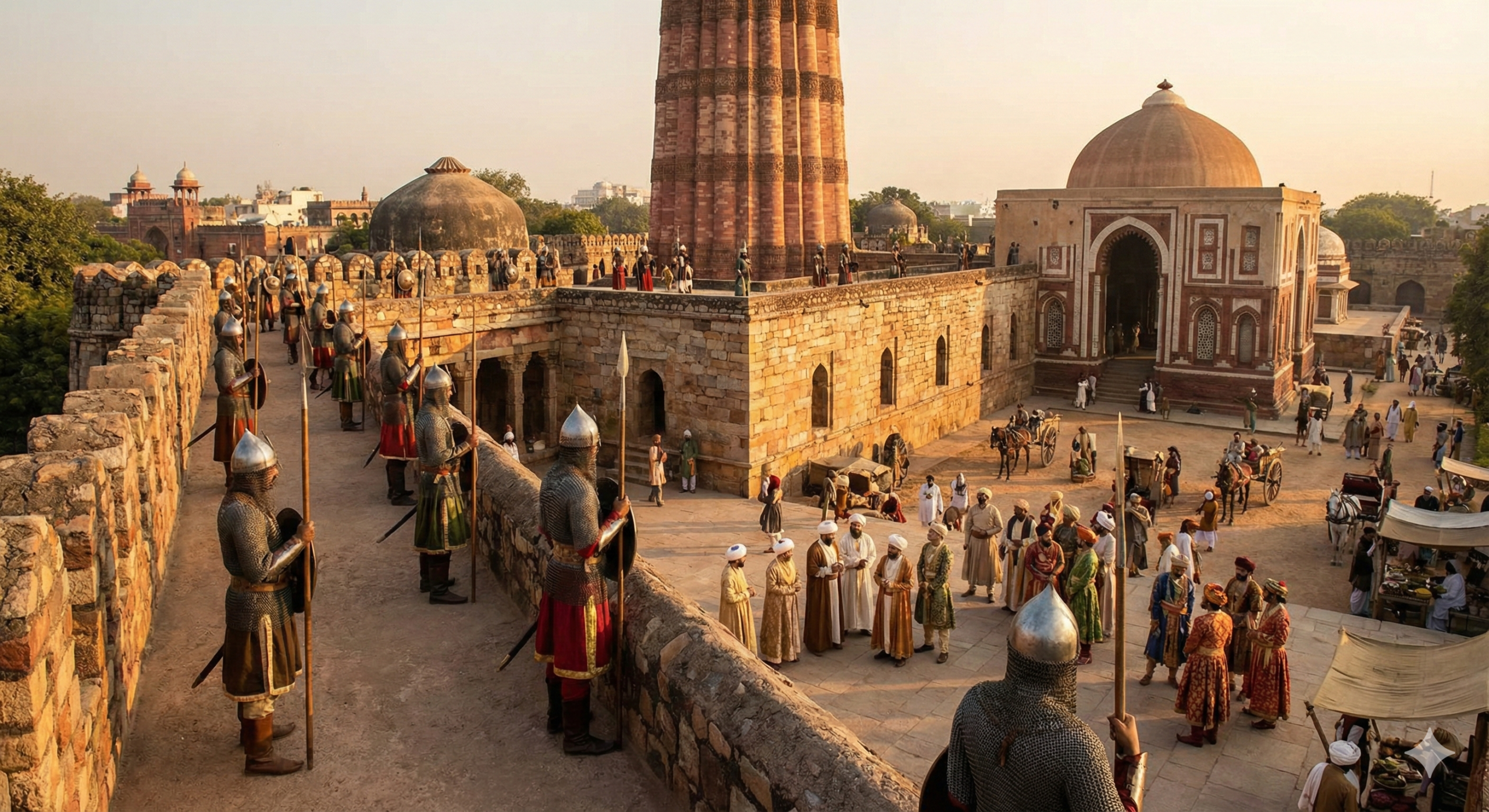
From Qutb-ud-din Aibak’s foundation through Tughlaq experiments to Lodi decline, the Sultanate faced Mongol invasions, internal rebellions and southern Hindu resistance while creating Indo-Islamic architecture, Urdu language and centralized bureaucracy that influenced Mughal Empire.
Five Dynasties of the Delhi Sultanate
The Delhi Sultanate was ruled by five major dynasties between 1206 and 1526, each contributing differently to medieval Indian administration and culture.
| Aspect | Details |
|---|---|
| Time Period | 1206-1526 CE (320 years) |
| Dynasties | Mamluk/Slave (1206-90), Khilji (1290-1320), Tughlaq (1320-1414), Sayyid (1414-51), Lodi (1451-1526) |
| Capitals | Delhi (main), Daulatabad, Lahore, Agra | Greatest Extent | Under Alauddin Khilji & Muhammad Tughlaq (Deccan to Bengal) |
| Key Rulers | Qutb-ud-din Aibak, Iltutmish, Alauddin Khilji, Muhammad Tughlaq, Firoz Shah |
| Major Threats | Mongol invasions, Vijayanagara, Bahmani, Rajput rebellions |
| Architecture | Qutb Minar, Alai Darwaza, Tughlaqabad, Siri Fort |
| Legacy | Indo-Islamic culture, Persian administration, Urdu language |
Foundation: Muhammad Ghori to Qutb-ud-din Aibak
Prithviraj Chauhan Defeat (1192)
Muhammad Ghori’s Second Battle of Tarain victory over Prithviraj Chauhan opened northern India to Turkish conquest. Ghori appointed loyal slave generals (mamluks) as governors, creating military fiefdoms across Punjab, Doab, Rajasthan.
After Ghori’s 1206 assassination, Qutb-ud-din Aibak declared independence in Delhi, formally establishing Sultanate. Aibak began Qutb Minar construction honoring mentor Ghori, destroyed 27 Hindu/Jain temples for Quwwat-ul-Islam mosque foundation.
Early Challenges: Internal Rivalries
Aibak died 1210 falling from horse during polo. Slave generals fought succession wars until Iltutmish consolidated power, defeating rivals like Qubacha (Sindh) and Yildiz (Ghazni), gaining Abbasid Caliph’s investiture legitimizing rule.
Mamluk Dynasty (1206-1290): Slave Kings Era
Iltutmish: True Sultanate Founder
Iltutmish (1211-36) created Turkish “Chahalgani” noble group (40 slaves), introduced silver tanka/gold dinar coins, built Hauz Khas reservoir. Defeated Mongols at Tarain (1221), completed Qutb Minar third storey.
Daughter Razia Sultana (1236-40) first female Muslim ruler faced noble rebellion, assassinated. Successors Balban, Nasiruddin weakened by factionalism, Mongol pressure.
Balban: Iron and Blood Policy
Ghiyas-ud-din Balban (1266-87) crushed Chahalgani, created spy network, “blood and iron” policy against Mongols/Meos. Persianized court culture, claimed divine right theory distancing from Caliph.
Khilji Revolution (1290-1320): Jalal-ud-din to Alauddin
Khilji Coup and Southern Expansion
Jalal-ud-din Khilji overthrew Balban’s son in 1290 bloodless coup. Nephew Alauddin Khilji (1296-1316) assassinated uncle, seized throne. Conquered Gujarat (1299), Ranthambore (1301), Chittor (1303), Malwa, Devagiri establishing Deccan supremacy.
Alauddin’s Market Reforms
Alauddin created four markets (Delhi, grain, cloth, horses/slaves) with price controls, strict measurement, espionage preventing hoarding. Soldiers paid cash salaries eliminating iqta corruption. Standing army of 475,000 maintained through descriptive rolls/horse branding.
Tughlaq Dynasty (1320-1414): Experiment and Collapse
Ghiyas-ud-din & Muhammad Tughlaq
Ghiyas-ud-din Tughlaq (1320-25) built Tughlaqabad Fort. Son Muhammad Tughlaq (1325-51) brilliant but impractical – shifted capital Delhi-Daulatabad (1327) causing mass deaths, token currency disaster, failed Karachil/Tamil Nadu expeditions bankrupting treasury.
Firoz Shah: Welfare State
Firoz Shah Tughlaq (1351-88) built 1,200 gardens, 200 towns, canals (Yamuna-Sutlej), hospitals, free schools. Jizya imposed on Brahmins, slavery institutionalized. Hereditary succession weakened central authority.
Sayyid & Lodi Dynasties (1414-1526): Decline Phase
The First Battle of Panipat, detailed in Battle of Panipat History: Causes, Battles and Impact on India, ended the Delhi Sultanate and reshaped Indian history.
Timur’s Devastation (1398)
Timur sacked Delhi killing 100,000, destroying irrigation creating power vacuum. Weak Sayyid rulers (1414-51) controlled only Delhi environs facing Rajput/Hindu resurgence.
Lodi Afghan Revival
Bahlul Lodi (1451-89) revived Sultanate as Afghan confederacy. Sikandar Lodi (1489-1517) built Agra, shifted capital there. Ibrahim Lodi’s (1519-26) oppression sparked Rajput rebellion leading to Babur’s First Battle of Panipat (1526) ending Sultanate.
Administration: Iqta and Centralization
This centralized administrative structure allowed the Delhi Sultanate to maintain control over vast territories during the medieval period.
Iqta Land Revenue System
Sultans granted iqta (land assignments) to nobles/military officers collecting revenue, maintaining troops in exchange. Alauddin attempted centralization through cash salaries but iqta persisted. Muqtis (iqta holders) became hereditary creating centrifugal forces.
Revenue and Judicial System
Land revenue 1/2 produce under kharaj (non-Muslims), 1/3 under zabt (measurement). Sher-i-Shikar (military expeditions), jizya, zakat, customs duties funded administration. Qazis applied Sharia, sultans maintained secular authority over religious scholars.
Military Organization: Cavalry Dominance
Turkish Horse Archer Tactics
Sultanate army emphasized cavalry (25,000-50,000 horses), Turkish bowmen using hit-run tactics against Rajput elephant corps. Alauddin maintained 475,000 standing force through horse branding, descriptive rolls preventing fraud.
Mongol Defense Strategy
Repeated Mongol invasions (1221-1327) forced permanent frontier defenses along Indus. Alauddin decisively defeated at Jaran-Manjur (1299-1300) establishing reputation as Mongol barrier protecting India.
Indo-Islamic Architecture Revolution
Slave Dynasty: Qutb Complex
Qutb Minar (73m world’s tallest brick minaret), Quwwat-ul-Islam Mosque (using 27 temple pillars), Iltutmish tomb introduced true arches, domes to India blending Persian technique with Indian trabeate construction.
Khilji-Tughlaq Fortifications
Alauddin’s Siri Fort, Tughlaqabad (largest fort 6.5×3.75km), sloping walls, massive gates. Jami Masjid Delhi largest mosque till Jama Masjid. Firoz Shah Kotla, Hauz Khas Madrasa combined utility with beauty.
Cultural Influence of the Delhi Sultanate
The Delhi Sultanate played a major role in shaping the cultural and social fabric of medieval India through architecture, religion, and language.
Urbanization and Persian Influence
Delhi became world’s second largest city (400,000-600,000) after Hangzhou. Persian became court language, Arabic scholarship flourished. Amir Khusrau invented sitar, tabla, synthesized Hindustani music.
Agricultural and Trade Economy
Canals (Yamuna-Sutlej under Firoz), crop rotation increased productivity. International trade flourished – Arabian horses, Chinese porcelain, Egyptian paper imported; Indian textiles, spices exported generating customs revenue.
Religion: Sufism and Bhakti Response
Sufi Saints and Chishti Order
Chishti saints like Qutb-ud-din Bakhtiar Kaki, Nizamuddin Auliya popularized Islam through music, charity creating syncretic culture. Sufi khanqahs became cultural centers bridging Hindu-Muslim communities.
Bhakti Movement Resistance
Ramananda, Kabir, Namdev promoted personal devotion challenging caste, religious orthodoxy. Sultanate’s jizya, temple destructions (27 under Aibak) spurred Hindu revivalism culminating in Vijayanagara foundation.
Decline and Mughal Transition
The defeat of the Lodi dynasty paved the way for the rise of the Mughal Empire: Power, Art, and Architecture under Babur.
Fragmentation After Tughlaqs
Timur’s 1398 sack destroyed economy, irrigation. Regional sultanates (Bengal, Gujarat, Malwa, Jaunpur) declared independence. Lodi Afghan tribal confederacy temporarily revived but lacked legitimacy.
Panipat 1526: End of Era
Ibrahim Lodi’s defeat by Babur’s 12,000 troops using cannon, matchlock, tulughma tactics against 100,000 ended Sultanate. Babur claimed Timurid-Mongol legacy establishing Mughal dynasty building on Sultanate foundations.
Legacy: Foundation of Mughal India
Administrative and Cultural Synthesis
Sultanate created centralized revenue system (zabt), cavalry-based army, Persian bureaucracy Mughals refined. Indo-Islamic architecture template perfected by Shah Jahan. Urdu evolved from Persian-Hindi synthesis.
Religious Pluralism Model
320 years forced Hindu-Muslim coexistence creating composite culture. Sufi-Bhakti interaction produced Kabir, Guru Nanak philosophies. Jizya abolition under Akbar built on Sultanate’s pragmatic secularism.
Frequently Asked Questions About Delhi Sultanate
1. Who founded Delhi Sultanate?
Qutb-ud-din Aibak established Sultanate 1206 after Muhammad Ghori’s death, beginning Mamluk dynasty as independent Turkish slave king ruling from Delhi.
2. What are five Delhi Sultanate dynasties?
Mamluk/Slave (1206-90), Khilji (1290-1320), Tughlaq (1320-1414), Sayyid (1414-51), Lodi (1451-1526) – 320 years Turkish-Afghan rule.
3. Who was greatest Sultanate ruler?
Alauddin Khilji (1296-1316) conquered Deccan, defeated Mongols, implemented market reforms, maintained 475,000 army through innovative administration.
4. What is significance of Qutb Minar?
73m tallest brick minaret built by Aibak/Iltutmish symbolizes Sultanate foundation, Indo-Islamic architecture beginning using 27 destroyed temple materials.
5. Why did Muhammad Tughlaq fail?
Capital shift Delhi-Daulatabad killed thousands, token currency counterfeited, Karachil expedition bankrupted treasury – brilliant but impractical policies.
6. What were Alauddin’s market reforms?
Four regulated markets (grain, cloth, horses, slaves) with price controls, measurement standards, spy network preventing hoarding – soldiers paid cash salaries.
7. How did Sultanate defend against Mongols?
Alauddin decisively defeated at Jaran-Manjur (1299-1300), permanent Indus frontier garrisons, cavalry superiority repelled 20+ invasions 1221-1327.
8. What is iqta system?
Land grants to nobles (muqtis) collecting revenue, maintaining troops – Alauddin attempted abolition through cash salaries but system persisted causing decentralization.
9. Who was Razia Sultana?
Iltutmish’s daughter ruled 1236-40 as first female Muslim monarch, overthrown by Turkish nobles rejecting female sovereignty despite administrative competence.
10. What destroyed Delhi Sultanate?
Timur’s 1398 sack, weak successors, regional sultanates independence (Bengal, Gujarat), Lodi oppression led to Babur’s Panipat 1526 victory establishing Mughals.
11. What is Indo-Islamic architecture?
Persian arches/domes + Indian trabeate construction – Qutb complex, Alai Darwaza, Tughlaqabad Fort, madrasas blended styles creating Mughal template.
12. Who were Chishti Sufi saints?
Qutb-ud-din Bakhtiar Kaki, Nizamuddin Auliya popularized Islam through music, charity creating syncretic Hindu-Muslim culture in Sultanate cities.
13. What were Sultanate coins?
Silver tanka (Iltutmish), gold dinar standardized currency; Alauddin’s token bronze-silver experiment failed due to counterfeiting.
14. Why did Timur sack Delhi?
1398 invasion seeking plunder, Bayqara rebellion pretext; killed 100,000, destroyed irrigation creating century-long economic devastation.
15. What was Balban’s policy?
“Blood and iron” crushing nobles, spy network, divine right theory distancing from Caliph, Persian court culture establishing royal supremacy.
16. How large was Sultanate army?
Alauddin maintained 475,000 cavalry/infantry through horse branding, descriptive rolls; iqta holders contributed troops during campaigns.
17. What was Firoz Shah’s contribution?
1,200 gardens, 200 towns, canals, hospitals, free schools; jizya on Brahmins, slavery institutionalized – welfare state policies.
18. Who ended Delhi Sultanate?
Babur defeated Ibrahim Lodi at Panipat 1526 using cannon, matchlocks, tulughma tactics against 100,000 establishing Mughal dynasty.
19. What was Chahalgani?
Iltutmish’s 40 Turkish slave nobles controlling administration; Balban destroyed group consolidating personal power through Persian nobles.
20. Sultanate’s legacy for Mughals?
Centralized revenue (zabt), cavalry army, Persian bureaucracy, Indo-Islamic architecture, Sufi-Bhakti culture Mughals refined into empire lasting till 1857.
Conclusion
The Delhi Sultanate laid the political and cultural foundation of medieval India and prepared the ground for future empires.