Vijayanagara Empire History: Rise, Rulers and Cultural Legacy
Vijayanagara Empire (1336-1646 CE) stands as South India’s greatest medieval Hindu empire, created as a bulwark against Islamic invasions from the north while becoming a beacon of art, architecture, literature and administration. Founded by brothers Harihara I and Bukka Raya under sage Vidyaranya, it flourished across Karnataka, Andhra, Tamil Nadu and Kerala for three centuries.
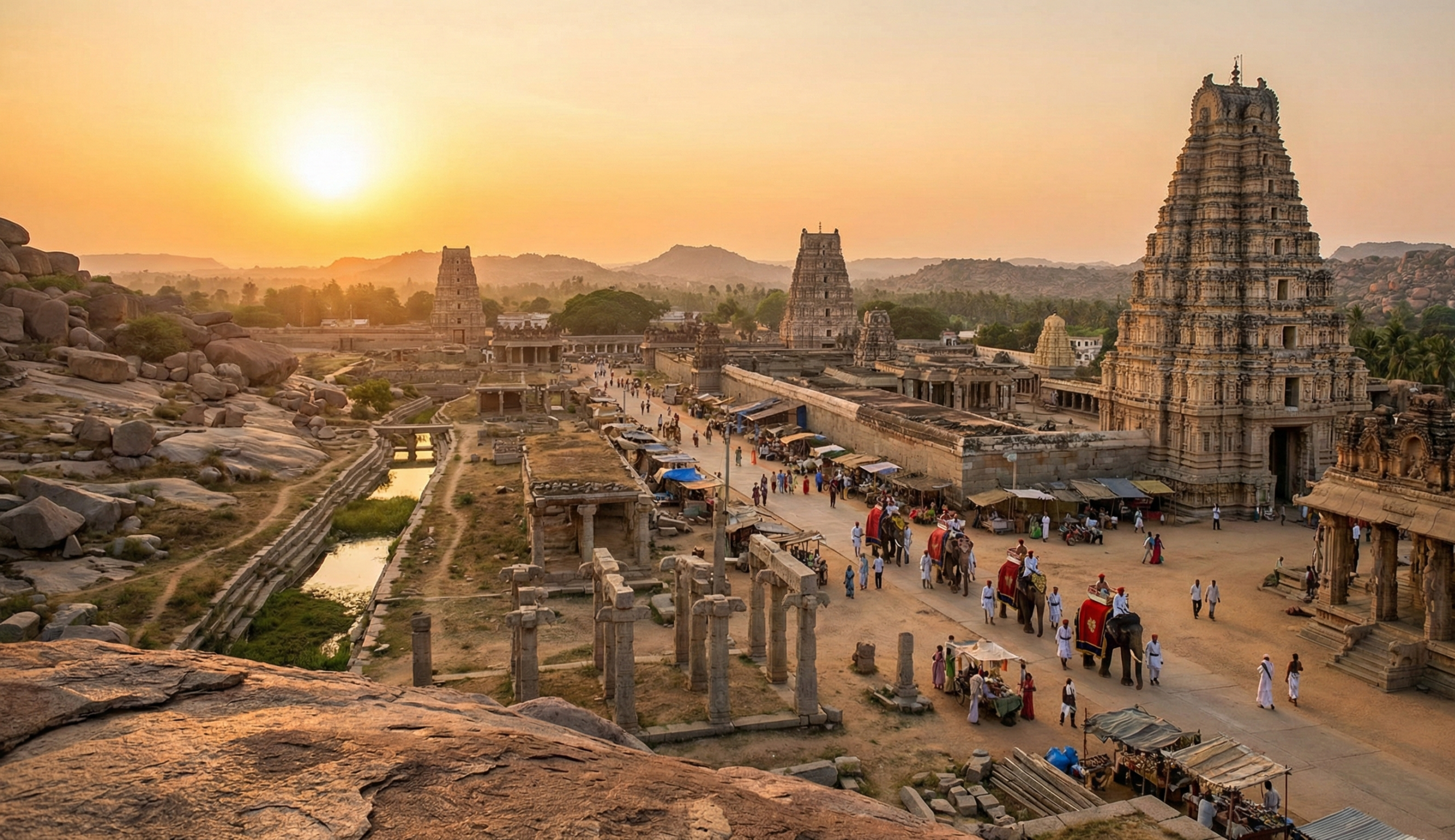
At its zenith under Krishnadevaraya (1509-1529), Vijayanagara rivaled contemporary European powers in wealth, military strength and cultural achievements. Hampi’s magnificent ruins – UNESCO World Heritage Site – testify to this golden age when South Indian culture reached unparalleled splendor amidst constant warfare.
Overview Table of Vijayanagara Empire
| Aspect | Details |
|---|---|
| Time Period | 1336-1646 CE (310 years) |
| Founders | Harihara I & Bukka Raya I (Sangama Dynasty) |
| Capital | Vijayanagara (modern Hampi, Karnataka) |
| Greatest Ruler | Krishnadevaraya (1509-1529) |
| Territorial Extent | Entire South India (Karnataka to Tamil Nadu) |
| Dynasties | Sangama, Saluva, Tuluva, Aravidu |
| Key Battles | Talatadri (1370), Raichur Doab (1520), Talikota (1565) |
| Architecture | Dravidian style – Virupaksha, Vitthala temples, Hazara Rama |
| Legacy | Hampi ruins, Telugu/P Telugu literature golden age |
Birth of Vijayanagara: Response to Islamic Invasions
Delhi Sultanate Threatens South India
By 14th century, Delhi Sultanate’s raids under Alauddin Khilji and Muhammad bin Tughlaq reached deep into South India, subjugating Hoysala, Kakatiya and Yadava kingdoms. Devastated Hindu temples and fragmented local resistance created desperate need for unified defense.
In this crisis, brothers Harihara I and Bukka Raya I – former Hoysala feudatories converted to Islam then reconverted by sage Vidyaranya – established Vijayanagara kingdom in 1336 CE on Tungabhadra river’s southern bank, strategically defensible location.
Early Consolidation Under Sangama Dynasty
Harihara captured northern Karnataka while Bukka expanded into Telugu country. By 1377, Vijayanagara controlled entire Deccan river basins from Krishna to Kaveri, establishing fourfold army (infantry, cavalry, elephants, navy) and nayaka (feudatory) system rewarding military service with land grants.
Four Dynasties: 300 Years of Glory
Sangama Dynasty (1336-1485): Foundation
Sangama rulers like Devaraya I (1406-22) built irrigation tanks, defeated Gajapati Odisha forces at Kondavidu, imported Turkish horses and Muslim archers revolutionizing cavalry tactics. Devaraya II constructed Vidyasankara temple at Sringeri honoring their guru.
Saluva & Tuluva Dynasties (1485-1570): Golden Age
Saluva Narasimha seized throne in 1485. Greatest ruler Krishnadevaraya (Tuluva, 1509-29) defeated Bijapur at Raichur Doab (1520), Gajapatis at Udayagiri, captured Kondavidu fortress. His court boasted Ashtadiggajas (eight poets) including Allasani Peddana.
Aravidu Dynasty (1570-1646): Last Stand
After catastrophic Battle of Talikota (1565), Aravidu rulers like Venkatapati Raya II shifted capital to Penukonda, Chandragiri. Empire fragmented into nayaka principalities (Madurai, Tanjore, Gingee, Ikkeri) continuing Vijayanagara traditions until Maratha/Nizam conquests.
Krishnadevaraya: Empire’s Greatest Sovereign
Military Conquests and Diplomacy
Krishna’s Raichur Doab victory (1520) against Bijapur showcased Portuguese matchlock guns and war elephants. He married Portuguese princess, established factories at Bhatkal. Conquered Odisha up to Simhachalam, forcing Gajapati Prataparudra surrender with Konark treasures tribute.
Golden Age of Administration
Krishnadevaraya personally supervised irrigation, agriculture, maintained 100-room Amatyamahapradhana council. Portuguese traveler Domingo Paes described Hampi as world’s most splendid city – 90-mile ramparts, 4,000 temples, bazaars glittering with diamonds.
Vijayanagara Administration: Nayaka System
This decentralized administrative structure helped the Vijayanagara Empire effectively govern a vast territory across South India.
Central and Provincial Governance
King headed Mahapradhana council of eight ministers (finance, military, justice, etc.). Empire divided into six provinces (Rajyas) governed by governors, subdivided into districts with amaranayakas collecting revenue, maintaining troops in exchange for land (amaram) grants.
Judicial and Revenue Systems
Rajadharma governed justice – fines, corporal punishment, rarely capital punishment. Land revenue 1/6th produce, collected as gold (varaha, pagoda coins), supported by extensive irrigation networks, granaries ensuring famine relief and military readiness.
Hampi: The Resplendent Capital
The architectural brilliance of the empire is best preserved in Hampi: History and Heritage of India, which showcases the ruins, temples, and urban planning of the Vijayanagara capital.
Urban Planning and Fortifications
Hampi spanned 26 sq km across Tungabhadra river – Royal Center (citadel), Sacred Center (temples), Urban Core (bazaars). 7-mile Sacred Zone contained Virupaksha, Vitthala, Hazara Rama temples. Massive granite ramparts, aqueducts, stepped tanks demonstrated hydraulic engineering mastery.
Signature Architecture: Dravidian Grandeur
Vijayanagara perfected Dravidian style – towering gopurams, kalyana mandapas (marriage halls), pillared halls. Vitthala Temple’s musical pillars, stone chariot, Ranganatha reclining idol represent architectural zenith. Hazara Rama temple’s Ramayana reliefs formed king’s private worship space.
Economy: Agricultural Powerhouse and Trade Hub
Irrigation and Agricultural Surplus
Anicuts (dams), tanks, canals irrigated rice, sugarcane, cotton, spices across river valleys. Spike in agricultural productivity supported 2 million urban population. Krishnadevaraya personally inspected irrigation works, rewarding efficient officers.
International Trade and Currency
Ports at Bhatkal, Honavar, Mangalore exported cotton textiles, spices, gems to Portugal, Arabia, Southeast Asia. Gold pagoda coins (varaha) circulated internationally. Portuguese factories supplied horses, Arabian horses exchanged for Vijayanagara textiles.
Military Organization: Defending South India
Fourfold Army and Nayankara System
Standing army of 800,000 infantry, 24,000 cavalry, 1,000 elephants commanded by nayakas responsible for fixed troop contingents. Portuguese gunners, Turkish archers supplemented traditional forces. Riverine navy controlled eastern seaboard.
Key Battles Preserving Hindu South
Talatadri (1370) defeated Madurai Sultanate. Raichur Doab (1520) victory peak. Battle of Talikota (1565) saw five Deccan Sultanates unite, destroying Hampi though empire survived another 80 years under Aravidus.
Religion and Cultural Patronage
Vaishnavism, Shaivism and Srivaishnavism
Kings patronized all sects – Virupaksha (Shiva) state deity, Venkateshwara (Tirupati) received massive grants. Ramanuja’s Srivaishnava philosophy flourished. Mahanavami festival nine-day Dasara celebration attracted foreign ambassadors, merchants.
Literary Golden Age: Ashtadiggajas
Krishnadevaraya’s court hosted Eight Elephants of Literature: Allasani Peddana (Manucharitram), Tenali Ramakrishna (wit), Nandi Thimmana. Telugu literature peaked alongside Kannada, Tamil, Sanskrit works. Amuktamalyada epic detailed Andhra cuisine, agriculture.
Battle of Talikota: Tragic Turning Point
The fall of the Vijayanagara Empire reshaped power dynamics across medieval India, similar to political transitions discussed in Delhi Sultanate History: Dynasties, Rulers and Administration.
Deccan Sultanates Alliance (1565)
Bijapur, Golconda, Ahmadnagar, Bidar, Berar Sultanates united under Ali Adil Shah I defeated Ramaraya at Rakshasa-Tangadi. Vijayanagara army panicked when Muslim troops turned against Hindu king, leading to catastrophic rout.
Hampi Destruction and Empire’s Survival
Three-month sack devastated Hampi – temples desecrated, palaces burned, irrigation destroyed. Aravidu dynasty continued from Penukonda (1570), Chandragiri (1592), until Maratha incursions and Mughal pressure fragmented empire into Nayak kingdoms by 1646.
Art and Architecture: Dravidian Pinnacle
Vijayanagara architecture continued and refined earlier South Indian traditions established during the Chola Dynasty: Masters of the Indian Ocean.
Temple Complexes and Royal Palace
Virupaksha Temple expanded continuously 7th-17th centuries. Vitthala Temple’s stone chariot, musical pillars architectural marvels. Queen’s Bath, Lotus Mahal, Elephant Stables showcase secular architecture. Hazara Rama’s 1,000 Ramayana panels unique narrative sculpture.
Mahanavami Platform and Festivals
60x40m granite platform hosted Dasara celebrations – military parades, dance, wrestling watched by king from golden throne. Nine-day festival symbolized cosmic order renewal, empire’s martial prowess, cultural richness.
Legacy: Nayaka Kingdoms and Cultural Continuity
Nayaka Successor States
Madurai, Thanjavur, Gingee, Keladi, Ikkeri Nayaks continued Vijayanagara traditions – Dravidian architecture, Telugu patronage, irrigation works. Thanjavur Maratha kingdom preserved administrative genius into 19th century.
Hampi: Eternal Symbol of Glory
UNESCO-listed Hampi ruins preserve empire’s memory – Vitthala chariot wheels turn (optical illusion), Achyutaraya Temple hidden gorge, Sanapur Lake aqueducts. Portuguese/Dutch travelers’ accounts confirm contemporary splendor matching contemporary descriptions of Rome, Cairo.
Frequently Asked Questions About Vijayanagara Empire
1. Who founded Vijayanagara Empire?
Harihara I & Bukka Raya I established empire in 1336 CE under sage Vidyaranya’s guidance as bulwark against Delhi Sultanate invasions ravaging South India.
2. Who was greatest Vijayanagara ruler?
Krishnadevaraya (1509-1529) defeated Deccan Sultanates, Gajapatis; patronized Ashtadiggajas; Portuguese travelers called Hampi world’s most splendid city under his reign.
3. What caused Battle of Talikota (1565)?
Five Deccan Sultanates (Bijapur, Golconda etc.) allied against Vijayanagara’s dominance; Ramaraya’s defeat and Hampi sack marked empire’s decline though Aravidus ruled 80 more years.
4. What is significance of Hampi ruins?
UNESCO World Heritage Site preserves Royal Center, Sacred Center, Vitthala Temple stone chariot, Hazara Rama Ramayana panels – Dravidian architecture pinnacle attracting 4M tourists yearly.
5. What were Vijayanagara’s four dynasties?
Sangama (1336-85 foundation), Saluva (1485-1505 usurpation), Tuluva (1505-70 golden age), Aravidu (1570-1646 post-Talikota survival) spanned 310 years Hindu resistance.
6. How did Vijayanagara economy thrive?
Irrigation tanks/canals produced rice/sugarcane surpluses; Bhatkal ports exported textiles/spices to Portugal/Arabia; gold pagoda coins facilitated international trade.
7. Who were Ashtadiggajas?
Krishnadevaraya’s eight court poets – Allasani Peddana, Tenali Ramakrishna, Nandi Thimmana – created Telugu literature golden age including Amuktamalyada epic.
8. What architectural style defined Vijayanagara?
Dravidian style perfected – towering gopurams, kalyana mandapas, musical pillars (Vitthala), stone chariot, 1,000-panel Ramayana friezes (Hazara Rama Temple).
9. What was Nayankara system?
Nayakas received amaram land grants for maintaining troops/revenue; created powerful feudatories (Madurai/Thanjavur Nayaks) surviving empire as independent kingdoms.
10. Why was Mahanavami festival important?
Nine-day Dasara celebrated on 60m granite platform with military parades, dance, wrestling; symbolized king’s divine authority, empire’s martial prowess before foreign ambassadors.
11. How did Vijayanagara defeat Sultanates?
Raichur Doab (1520) victory used Portuguese matchlocks/Turkish archers with war elephants; superior logistics, irrigation-fed granaries sustained long campaigns.
12. What religion did Vijayanagara patronize?
Vaishnavism (Tirupati), Shaivism (Virupaksha) both supported; Srivaishnava philosophy flourished alongside Jaina/Lingayat traditions in tolerant religious policy.
13. Who was Vidyaranya’s role?
Shirangam Shankaracharya reconverted Harihara-Bukka from Islam, crowned them 1336 establishing Vijayanagara as Hindu dharmic state defending South against Sultanates.
14. What destroyed Hampi in 1565?
Three-month sack by Deccan alliance after Talikota; temples desecrated, irrigation destroyed, palaces burned – though many structures survived remarkably intact.
15. What were Vijayanagara coins?
Gold pagodas (varaha), silver tar, copper kasu circulated internationally; elephant/rama designs symbolized royal authority and Hindu identity.
16. How large was Vijayanagara army?
800,000 infantry, 24,000 cavalry, 1,000 elephants, river navy; nayankara system ensured rapid mobilization from feudatories during Sultanate wars.
17. What Portuguese role in Vijayanagara?
Supplied matchlock guns, Arabian horses; Krishnadevaraya married Portuguese princess; factories at Bhatkal exported textiles for military technology transfer.
18. Which foreign travelers visited Hampi?
Domingo Paes, Fernao Nuniz (Portuguese), Nicolo Conti (Italian), Abdur Razzaq (Persian) described Hampi as surpassing Rome in splendor during Krishnadevaraya’s reign.
19. What succeeded Vijayanagara Empire?
Nayaka kingdoms (Madurai, Thanjavur, Gingee, Ikkeri) continued traditions; Mysore Wodeyars trace lineage; Maratha Tanjore preserved administration till British times.
20. Why called South India’s glory?
Preserved Hindu culture 300 years against Sultanates; Dravidian architecture pinnacle; Telugu literature golden age; economic prosperity rivaled Europe; Hampi eternal testament.
Conclusion
The Vijayanagara Empire remains a symbol of South India’s cultural strength and architectural brilliance.