[india_weather]

Chola Dynasty History: Powerful South Indian Empire
Chola Dynasty (848-1279 CE) ruled southern India as a maritime superpower, creating the largest empire in Indian history through naval conquests across Bay of Bengal to Southeast Asia. From Vijayalaya’s foundation to Rajendra I’s overseas campaigns, Cholas built Brihadeeswarar Temple, perfected bronze sculpture, and dominated Indian Ocean trade for four centuries.
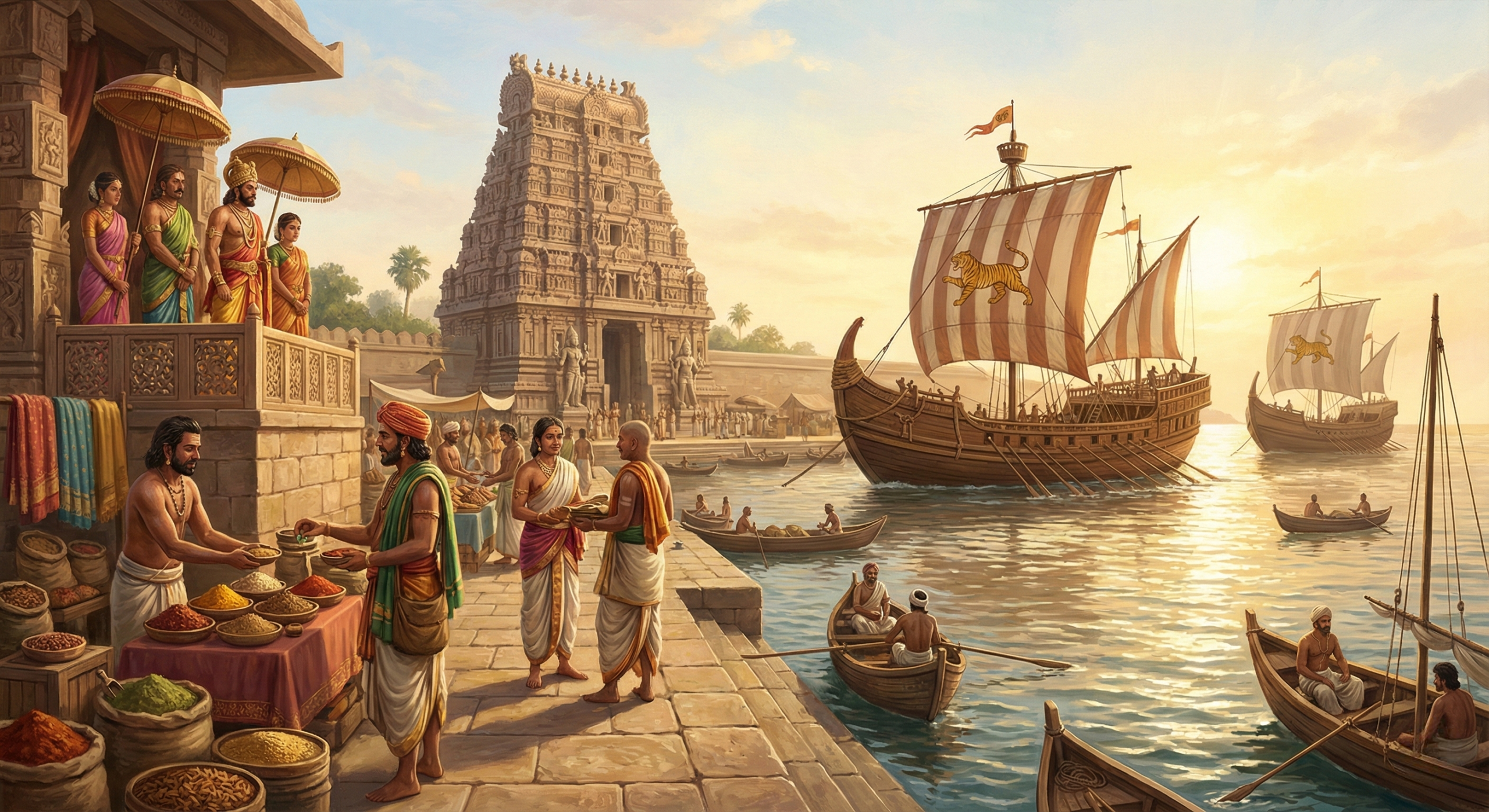
Rajendra Chola I’s navy conquered Srivijaya (1025), establishing Chola thalassocracy from Sri Lanka to Sumatra, while Raja Raja I revolutionized temple architecture and administration that influenced entire South India.
Overview Table of Chola Dynasty
| Aspect | Details |
|---|---|
| Time Period | 848-1279 CE (431 years) |
| Greatest Extent | Sri Lanka, Maldives, Srivijaya (Indonesia), Andaman Islands |
| Key Rulers | Vijayalaya, Rajaraja I, Rajendra I, Kulothunga I |
| Capitals | Thanjavur, Gangaikonda Cholapuram |
| Naval Conquests | 14 Srivijaya ports (1025), Lakshadweep, Maldives |
| Architecture | Brihadeeswarar Temple, Gangaikonda Cholapuram, Airavateswara |
| Administration | Ur, Sabha village assemblies, Kurram revenue units |
| Legacy | Dravidian architecture, Tamil literature, maritime trade |
Foundation: Vijayalaya to Rajaraja I
Vijayalaya Conquers Thanjavur (848)
Vijayalaya Chola seized Thanjavur from Muttaraiyar feudatories of Pallavas, establishing capital and Nataraja temple. Successors Aditya I defeated Pallavas (903), Pandyas, conquered Kongu, expanded to Trichy-Tirupur.
Rajaraja I: The Great Builder (985-1014)
Rajaraja I conquered Kerala, northern Sri Lanka (Anuradhapura), defeated Chalukyas at Koppam (992), Chera navy at Kandalur (994). Built monumental Brihadeeswarar Temple (1009) single 80-ton granite capstone.
Imperial Zenith: Rajendra Chola I
Gangaikonda Cholapuram Naval Empire (1014-1044)
Rajendra I launched greatest naval expedition conquering 14 Srivijaya ports (Kadaram, Malay peninsula), Andaman Islands, bringing back Ganges water. Defeated Mahipala Bengal (1023), Chola navy dominated Coromandel coast to Sumatra.
Naval Power: Chola Thalassocracy
Indian Ocean Dominance
Chola navy (500-1000 ships) controlled Bay of Bengal trade routes, defeated Srivijaya piracy monopoly, and established colonies in Maldives and Lakshadweep for cowries currency.
Their maritime dominance influenced later South Indian powers such as the Vijayanagara Empire, which adopted similar trade and naval strategies.
Sri Lanka Conquest
Rajaraja I captured Anuradhapura (993), Rajendra ruled Polonnaruwa 17 years; Chola bronze Buddha images remain in Sri Lanka testifying cultural synthesis.
Administration: Village Republics
Uttaramerur Inscriptions
Detailed village self-governance system allowed Sabha assemblies to elect qualified members based on land ownership, age, and education. This decentralized administration is regarded as one of the most advanced systems of governance in Medieval India overview.
Revenue System
Kadamai land tax (1/6th produce), temple economy (10% state revenue), brahmadeya grants to scholars, devadana temple lands managed by committees.
Dravidian Architecture Revolution
Brihadeeswarar Temple Complex
Rajaraja I’s Brihadeeswarar Temple introduced large-scale vimana construction and granite engineering, setting a benchmark for South Indian Temples architecture that continued for centuries.
Three Great Living Chola Temples
Brihadeeswarar (Thanjavur), Gangaikonda Cholapuram, and Airavateswara (Darasuram) together represent the evolution of Dravidian temple design.
Art, Literature & Cultural Contributions
Bronze Chola Masterpieces
Chola bronzes such as Nataraja perfected lost-wax technique and became cultural exports across Southeast Asia, symbolizing artistic excellence.
Tamil Literature
Shaiva bhakti hymns of Nayanmars were compiled, strengthening Tamil identity and temple-centered culture.
Frequently Asked Questions About Chola Dynasty
1. Who founded the Chola Dynasty?
Vijayalaya Chola founded the Imperial Chola Dynasty in 848 CE after capturing Thanjavur.
2. What made the Cholas a naval power?
Their large fleet, control over Bay of Bengal trade routes, and overseas expeditions to Southeast Asia made them a dominant maritime empire.
3. Which Chola ruler conquered Southeast Asia?
Rajendra Chola I led naval campaigns against Srivijaya and expanded Chola influence overseas.
4. Why is Brihadeeswarar Temple important?
It represents peak Dravidian architecture and engineering, built entirely of granite with a massive vimana.
5. How did the Chola Dynasty decline?
Internal conflicts, Pandya resurgence, and Hoysala interference weakened the empire, leading to its fall in 1279.
Conclusion
The Chola Dynasty stands as one of India’s greatest empires, remembered for its naval supremacy, administrative innovation, architectural brilliance, and cultural legacy that shaped South Indian civilization for centuries.