Kailasa Temple Ellora: The Incredible Monolithic Temple of India
Kailasa Temple at Ellora Caves (Cave 16) represents one of the world’s greatest architectural marvels – a complete Hindu temple complex carved from a single monolithic basalt rock using top-down excavation technique. Dedicated to Lord Shiva, this Rashtrakuta masterpiece dwarfs surrounding structures and defies engineering logic even by modern standards.
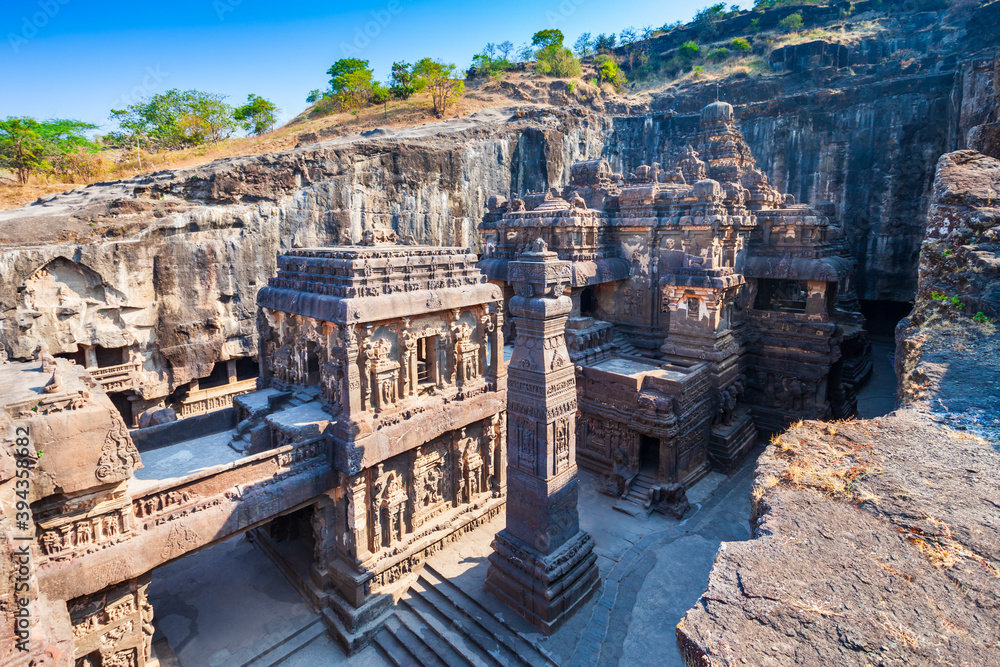
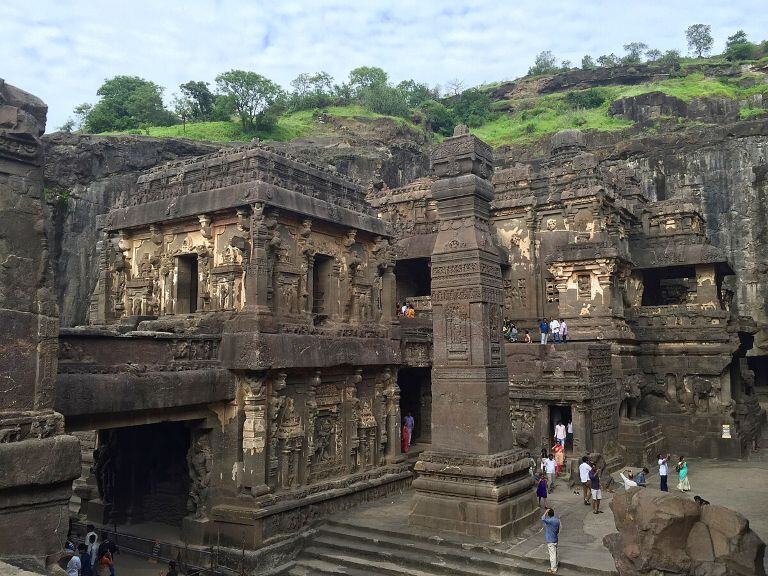
Commissioned by King Krishna I (756-773 CE), the temple involved removing over 200,000-400,000 tons of rock, creating a three-story freestanding structure larger than the Parthenon. UNESCO World Heritage Site Ellora’s crowning glory, Kailasa showcases Dravidian architecture’s pinnacle through intricate carvings, multi-level planning and structural audacity unmatched in ancient construction.
Overview Table of Kailasa Temple
| Aspect | Details |
|---|---|
| Location | Ellora Caves (Cave 16), Aurangabad, Maharashtra |
| Patron | Rashtrakuta King Krishna I (756-773 CE) |
| Deity | Lord Shiva (Kailasanatha) |
| Construction Period | c. 756-773 CE (completed in ~18 years) |
| Rock Removed | 200,000-400,000 tons of basalt |
| Architecture Style | Dravidian/Vesara hybrid, rock-cut monolithic |
| Dimensions | 32m long, 18m wide, 30m high (3 storeys) |
| UNESCO Status | Part of Ellora Caves World Heritage Site |
| Unique Feature | World’s largest monolithic temple structure |
Rashtrakuta Empire Context: Power Behind Kailasa
Golden Age of Deccan Rule
8th century Rashtrakutas controlled Deccan plateau from Gujarat to Andhra, challenging northern Pratiharas and southern Chalukyas. King Krishna I (756-773 CE) consolidated power through military victories, creating stable prosperous kingdom funding monumental projects.
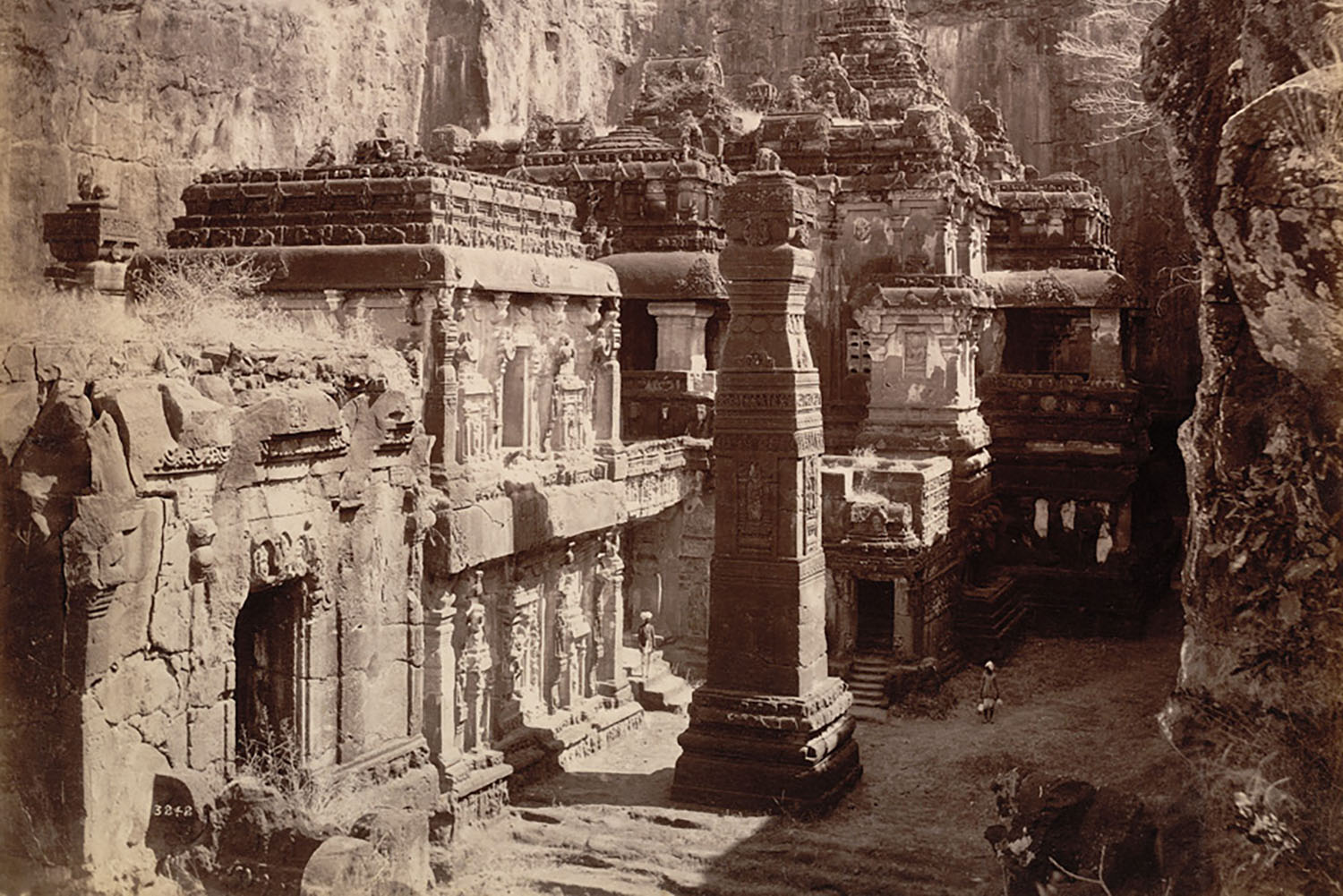
Kailasa Temple symbolized Rashtrakuta imperial might and Shaiva devotion, strategically located along ancient trade route connecting northern India with Deccan ports. Multi-faith Ellora complex (Buddhist Caves 1-12, Hindu 13-29, Jain 30-34) reflected religious tolerance.
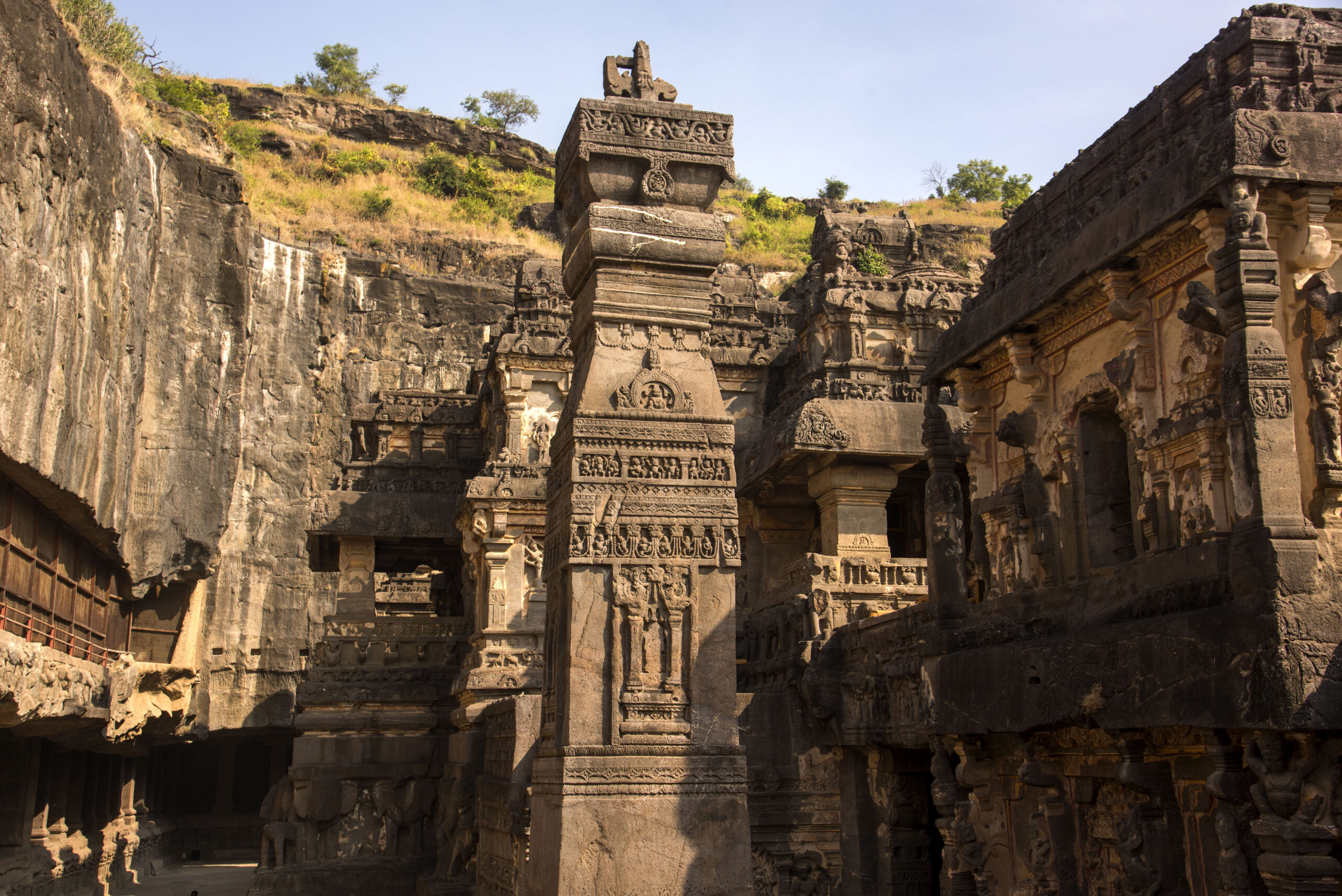
Political Statement in Stone
Unlike additive temple construction, Kailasa’s top-down monolithic excavation demonstrated engineering superiority over Pallava/Chalukya rivals. Temple replicated Mount Kailash (Shiva’s abode), linking king with divine authority through architectural audacity.
Construction Technique: Top-Down Monolithic Marvel
Reverse Engineering Process
Unlike typical cave temples excavated inward, Kailasa began with three deep trenches isolating central rock mass, then carved top-down removing 200,000-400,000 tons basalt over ~18 years. Artisans visualized complete three-story temple within cliff face before single chisel stroke.
First upper levels/shikhara completed, then walls lowered symmetrically creating freestanding structure. This sequential process demanded perfect planning – structural errors impossible to correct once rock removed.
Engineering Logistics
Thousands of laborers used chisels, hammers, iron tools excavating 60m cliff face. Rock debris channeled through trenches forming courtyard boundaries. Water management systems, scaffolding, precise measurements ensured stability during progressive lowering.
Temple Layout: Three-Storey Cosmic Mountain
Main Shrine and Vimana
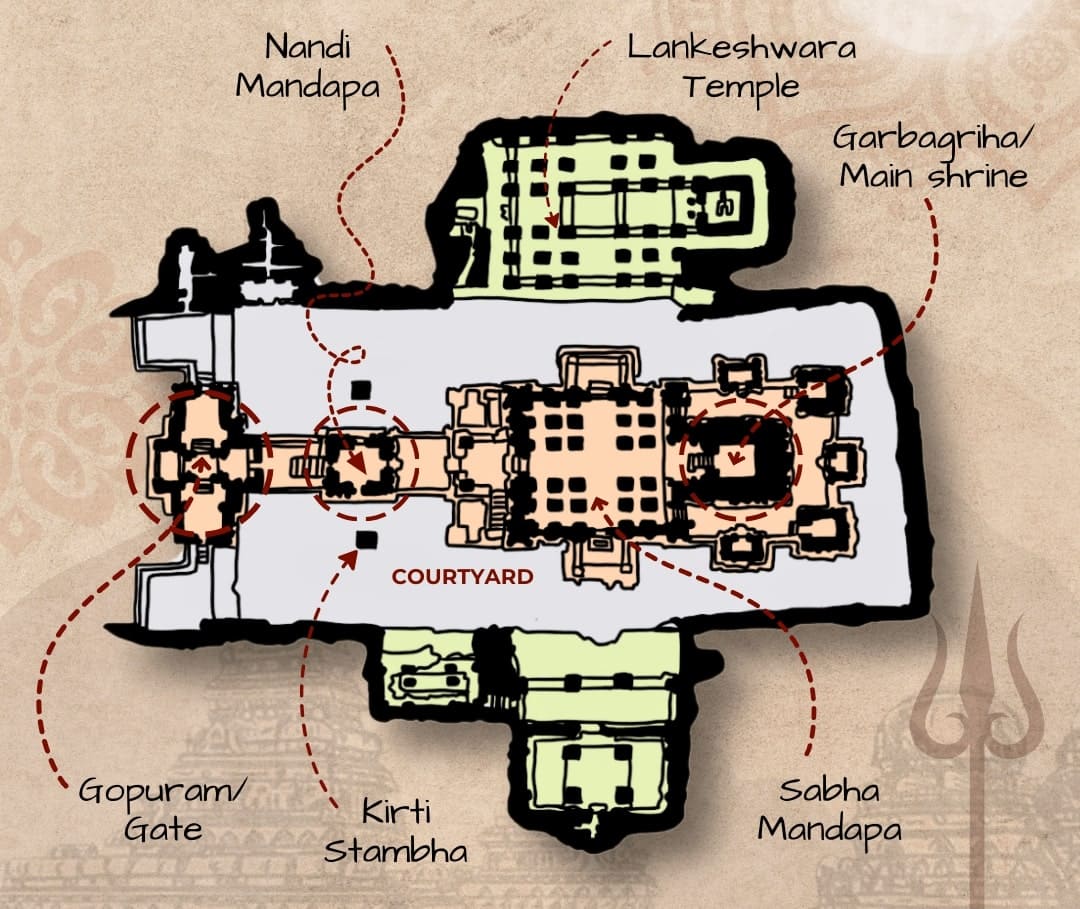
Central shrine (garbhagriha) houses Shiva Lingam within 30m high vimana rising three storeys. Multi-tiered shikhara adorned with miniature shrines, friezes follows Dravidian proportions adapted to rock-cut medium. Gopuram-style entrance gateway leads to colonnaded mandapas.
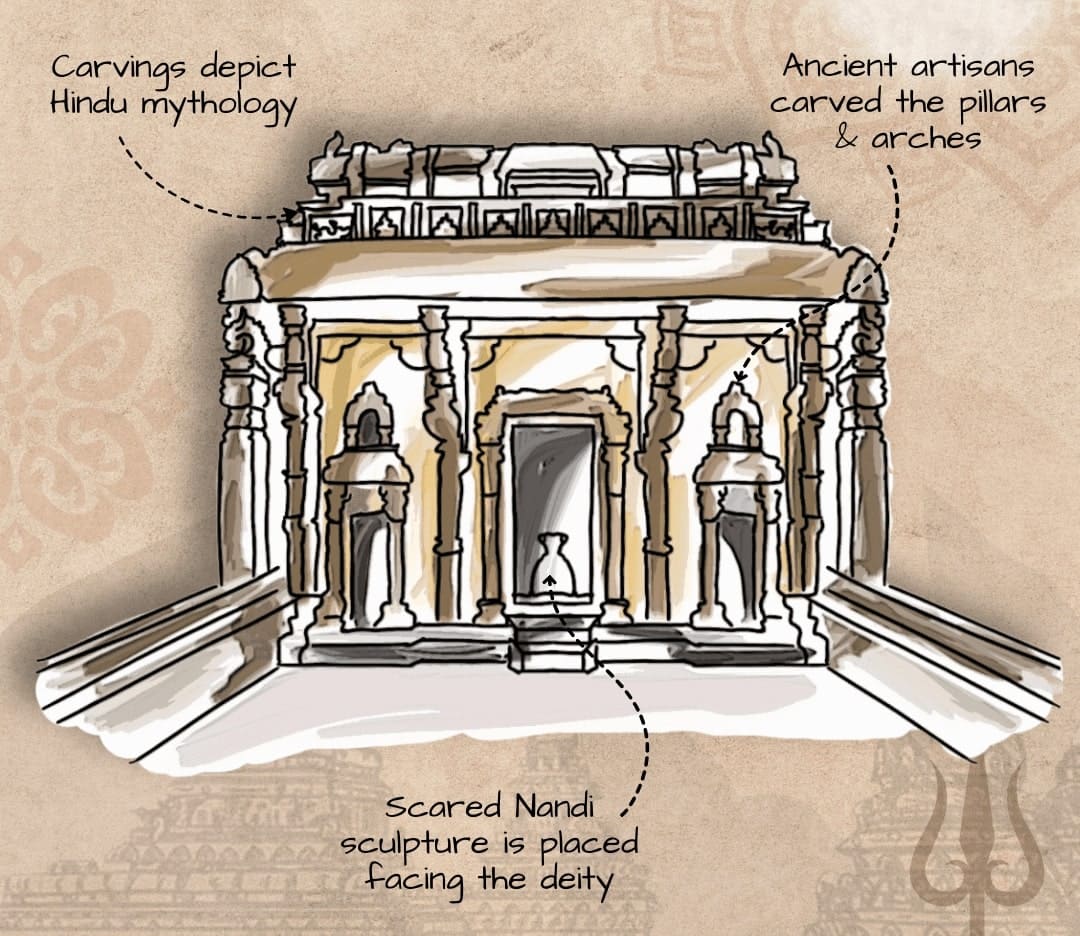
Elephant-lion friezes, victory pillars, court elephants frame sacred complex symbolizing royal power protecting divine abode. Nandi mandapa faces main shrine across sunken courtyard emphasizing axial alignment.
Multi-Level Courtyards and Subsidiary Shrines
U-shaped courtyard surrounded by two-story colonnades contains shrines to Ganesha, Kartikeya, Parvati. Lower levels feature river goddess reliefs, Ravana shaking Kailash sculpture (famous Ravana Anugrahamurti panel). Upper galleries house additional deities, narrative panels.
Sculptural Grandeur: 8th Century Rock Art Masterpieces
Ravana Lifting Kailash Panel
Most famous sculpture depicts ten-headed Ravana attempting to lift Kailash mountain, restrained by Shiva’s toe. Dynamic composition captures demon’s muscular exertion contrasting divine composure – pinnacle of Rashtrakuta narrative relief carving.
Mythological and Dynastic Reliefs
Wall panels illustrate Ramayana, Mahabharata, Shiva legends alongside Rashtrakuta royal iconography. Dancing figures, celestial musicians, mythical beasts showcase rhythmic sculptural vocabulary blending northern Nagara grace with southern Dravidian vigor.
Architectural Style: Dravidian-Vesara Synthesis
India’s temple architecture evolved differently across regions. While Kailasa Temple represents the peak of rock-cut monolithic construction, eastern India achieved similar grandeur through structural stone temples. A notable comparison is the Sun Temple of Konark, designed as a colossal stone chariot dedicated to the Sun God and renowned for its astronomical precision.
Influence from Pallava-Chalukya Models
Kailasa combines Dravidian gopuram proportions, Vesara hybrid ornamentation drawing from Kanchipuram Kailasanatha, Pattadakal Virupaksha temples. Rashtrakutas synthesized southern pyramid vimanas with central Indian curved shikharas creating distinctive Deccan style.
Intricate pillar capitals (makara-torana motifs), bracket figures, miniature shrines demonstrate mastery of rock-cut adaptations of structural stone architecture impossible in freestanding construction.
Religious Symbolism in Design
Temple complex replicates cosmic Mount Kailash – central shrine (Meru), surrounding shrines (Himalayan peaks), courtyard (sacred lake), elephant friezes (cosmic guardians). Multi-faith Ellora context underscores Rashtrakuta ecumenism patronizing Hindu, Buddhist, Jain traditions.
Structural Engineering: Defying Gravity
Kailasa Temple is often compared with other monumental achievements in Indian temple engineering. In South India, the Brihadeeswarar Temple of Thanjavur stands as a parallel marvel, built entirely from granite blocks and crowned with a massive monolithic shikhara weighing over 80 tons.
Monolithic Stability Challenges
Freestanding three-story temple carved from single rock mass required perfect load distribution preventing collapse during excavation. Interlocking stone joints, strategic buttressing, massive plinth foundation counteracted 400,000 tons rock removal stresses.
Vertical trenches forming courtyard walls act as flying buttresses stabilizing main structure. Progressive lowering maintained center of gravity preventing toppling – engineering feat unmatched until modern era.
Preservation Through Centuries
Despite 1,200 years exposure, minimal structural deterioration testifies original engineering excellence. Monsoon protection through overhanging cornices, natural basalt durability preserved intricate carvings rivaling surface sculpture quality.
Religious and Cultural Significance
Living Shiva Temple
Active worship continues with daily pujas, festivals including Maha Shivaratri processions. Temple serves Deccan Shaiva pilgrims alongside Ellora’s Buddhist-Jain heritage sites demonstrating continuous sacred landscape.
Patronage and Artisan Guilds
Krishna I’s inscriptions credit Kokasa architect family, specialized guilds. Massive undertaking employed generations of stone carvers establishing Ellora as Deccan artistic capital influencing Hoysala, Kakatiya, Vijayanagara rock-cut traditions.
Ellora Context: Multi-Faith Sacred Landscape
34 Caves Spanning Three Faiths
Ellora represents religious continuum – Caves 1-12 (6th-8th CE Buddhism), 13-29 (7th-10th CE Hinduism peaking with Kailasa), 30-34 (9th-11th CE Jainism). Sequential pilgrimage route symbolizes spiritual progression through faiths.
Rashtrakuta Religious Policy
Patronage across religions reflected pragmatic governance uniting diverse Deccan populations. Kailasa’s Hindu dominance marked shift from Buddhist caves signaling Rashtrakuta Shaiva revival without suppressing earlier traditions.
Modern Recognition and Conservation
UNESCO World Heritage Status
1983 inscription as “Ellora Caves” recognizes multi-faith significance, Kailasa as crowning achievement. Annual 2-3 million visitors marvel at monolithic audacity inspiring architects, engineers, historians worldwide.
Preservation Challenges
Monsoon erosion, tourist footfall threaten carvings. ASI conservation stabilizes rock faces, controls moisture, limits access protecting 1,200-year-old artistry for future generations while maintaining active worship.
Frequently Asked Questions About Kailasa Temple
1. Who built Kailasa Temple Ellora?
Rashtrakuta King Krishna I (756-773 CE) commissioned temple as imperial Shaiva monument demonstrating Deccan engineering superiority over Pallava/Chalukya rivals.
2. How was Kailasa Temple constructed from single rock?
Top-down excavation – three trenches isolated rock mass, then carved downward removing 400,000 tons basalt over ~18 years using chisels, hammers creating freestanding three-storey complex.
3. How long did Kailasa Temple take to build?
Approximately 18 years during Krishna I’s reign (756-773 CE), involving thousands of artisans in continuous operation – extraordinary speed for 400,000 tons rock removal.
4. What makes Kailasa Temple unique?
World’s largest monolithic temple – complete three-storey Hindu temple complex carved from single basalt cliff using subtractive top-down technique impossible to replicate today.
5. Which architecture style is Kailasa Temple?
Dravidian-Vesara hybrid combining southern gopuram proportions, northern shikhara curves adapted to rock-cut medium – pinnacle of 8th century Deccan architecture.
6. How much rock was excavated for Kailasa?
200,000-400,000 tons basalt removed creating 32m x 18m x 30m freestanding structure – equivalent volume to 10 Parthenons or modern 40-story building foundation.
7. What is famous Ravana sculpture at Kailasa?
Ravana Anugrahamurti panel depicts demon shaking Kailash mountain restrained by Shiva’s toe – dynamic composition showcasing Rashtrakuta narrative relief mastery.
8. Is Kailasa Temple still used for worship?
Yes, active Shiva temple with daily pujas, Maha Shivaratri festivals serving Deccan Shaiva pilgrims alongside Ellora’s Buddhist-Jain heritage sites.
9. Why is Kailasa called monolithic temple?
Entire temple complex (shrine, mandapas, Nandi pavilion, courtyards, sculptures) carved from single continuous basalt rock mass without joints or assembly – ultimate rock-cut achievement.
10. What is Ellora Caves significance?
UNESCO site with 34 caves spanning Buddhism (1-12), Hinduism (13-29 peaking Kailasa), Jainism (30-34) – continuous sacred landscape reflecting Rashtrakuta religious tolerance.
11. How does Kailasa compare to other temples?
Larger than Parthenon, carved from single rock vs constructed stone – engineering audacity surpasses additive temples through subtractive precision and structural daring.
12. Who were temple architects?
Kokasa family architects credited in inscriptions; specialized guilds from Pallava/Chalukya regions synthesized southern Dravidian with Deccan Vesara styles.
13. What tools were used for excavation?
Iron chisels, hammers, picks, wedges – basic hand tools excavated 400,000 tons hard basalt through patient repetitive strikes guided by precise measurements.
14. Why top-down construction method?
Allowed perfect visualization of complete structure before removal; maintained stability during excavation; upper levels supported lower carving preventing collapse.
15. What sculptures decorate Kailasa Temple?
Ravana lifting Kailash, elephant-lion friezes, river goddesses, Ramayana panels, dancing figures, mythical beasts – 8th century rock reliefs rival freestanding sculpture quality.
16. How was structural stability achieved?
Interlocking joints, strategic buttressing, massive plinth, courtyard walls as flying buttresses counterbalanced 400,000 tons removal stresses maintaining equilibrium.
17. What is temple’s religious symbolism?
Replicates Mount Kailash – central shrine (Meru), surrounding shrines (peaks), courtyard (sacred lake), elephants (cosmic guardians) linking earthly temple with Shiva’s celestial abode.
18. How many people worked on Kailasa?
Thousands of laborers, sculptors, engineers across 18 years – continuous operation involving specialized guilds, supply chains, organizational genius.
19. Is Kailasa Temple still structurally sound?
Remarkably preserved after 1,200 years – original engineering excellence, basalt durability, monsoon protection through cornices ensure minimal deterioration.
20. Why called engineering marvel?
400,000 tons rock removal creating freestanding multi-storey temple from single cliff using hand tools in 18 years defies modern engineering logic – ultimate testament to ancient Indian genius.
Conclusion
The Kailasa Temple at Ellora is one of the most extraordinary architectural achievements in human history. Carved entirely from a single rock, it reflects an unmatched level of planning, skill, and imagination. The sheer scale of the project and the precision with which the temple was carved from top to bottom continue to astonish historians, architects, and engineers.
Beyond its physical grandeur, the Kailasa Temple represents the artistic and spiritual depth of ancient India. It shows how devotion, technology, and craftsmanship came together under the Rashtrakuta dynasty to create something truly timeless. Even today, the temple stands as a powerful reminder that ancient Indian builders achieved feats that remain difficult to replicate with modern tools.