Sun Temple Konark History: The Stone Chariot of the Sun God
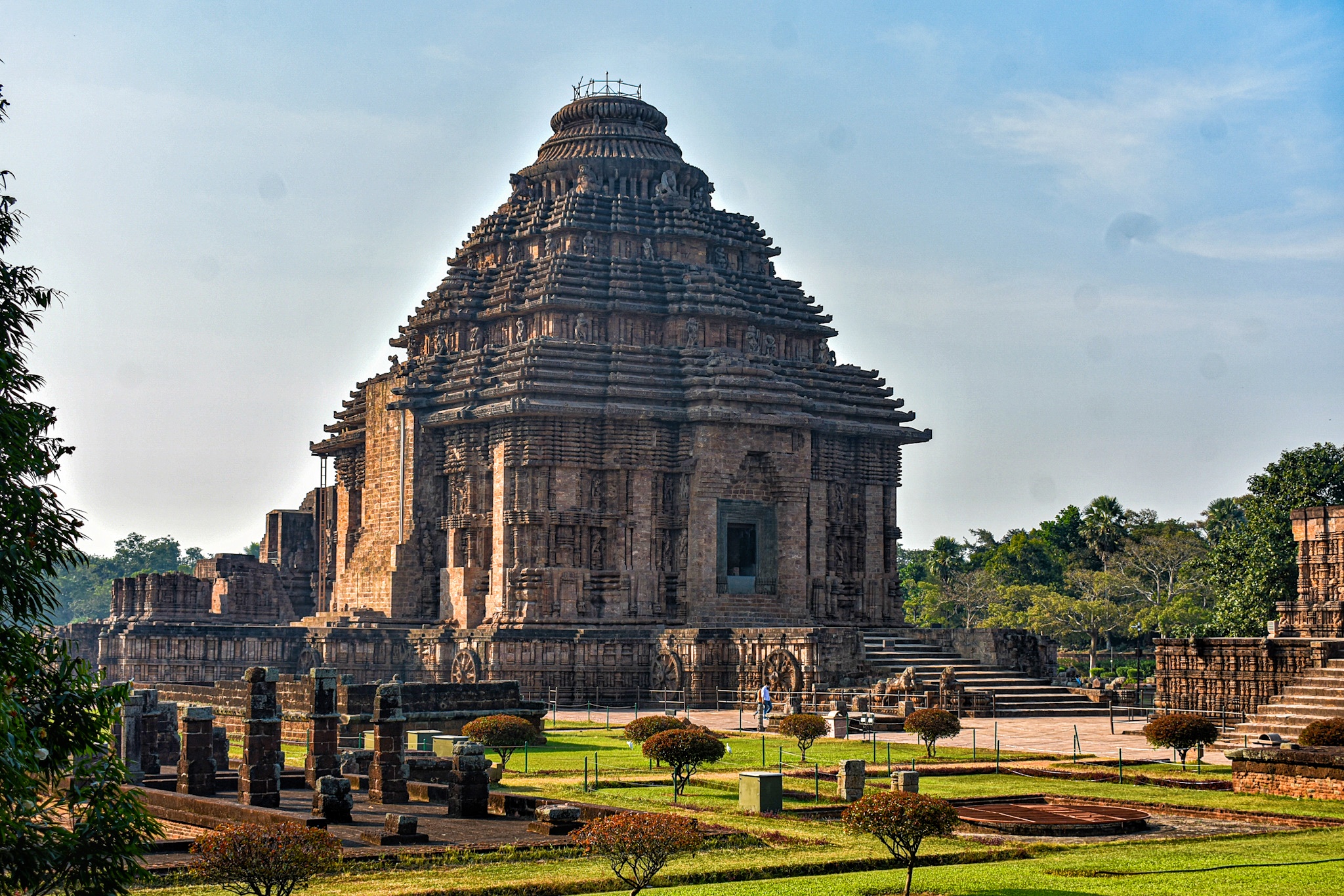
Sun Temple Konark represents the pinnacle of Kalinga architecture and Odisha’s artistic genius, designed as a colossal chariot carrying Surya, the Sun God, across the heavens. Built by Eastern Ganga king Narasimhadeva I in 1250 CE, this UNESCO World Heritage Site features 24 massive wheels, seven rearing horses and intricate erotic sculptures that shocked and fascinated European travelers.
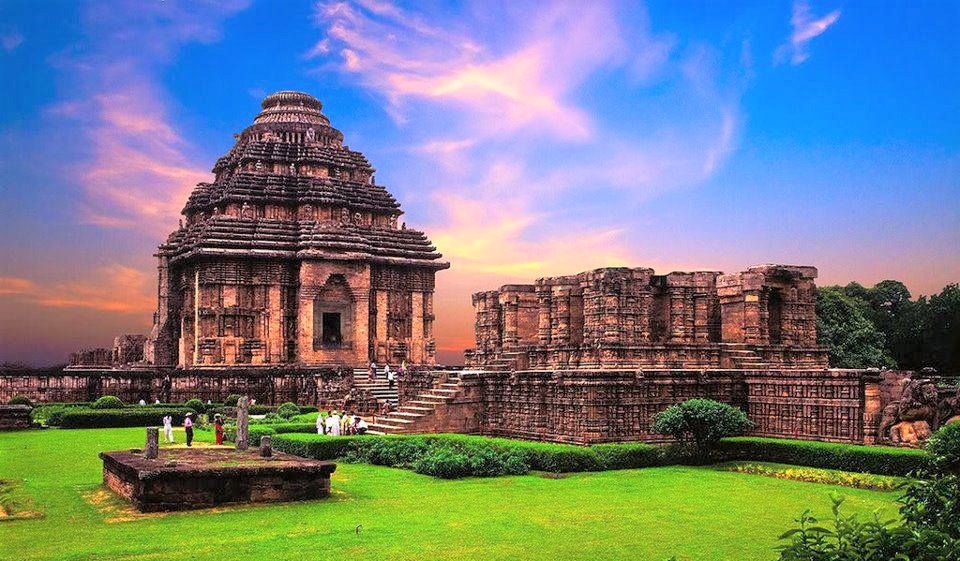
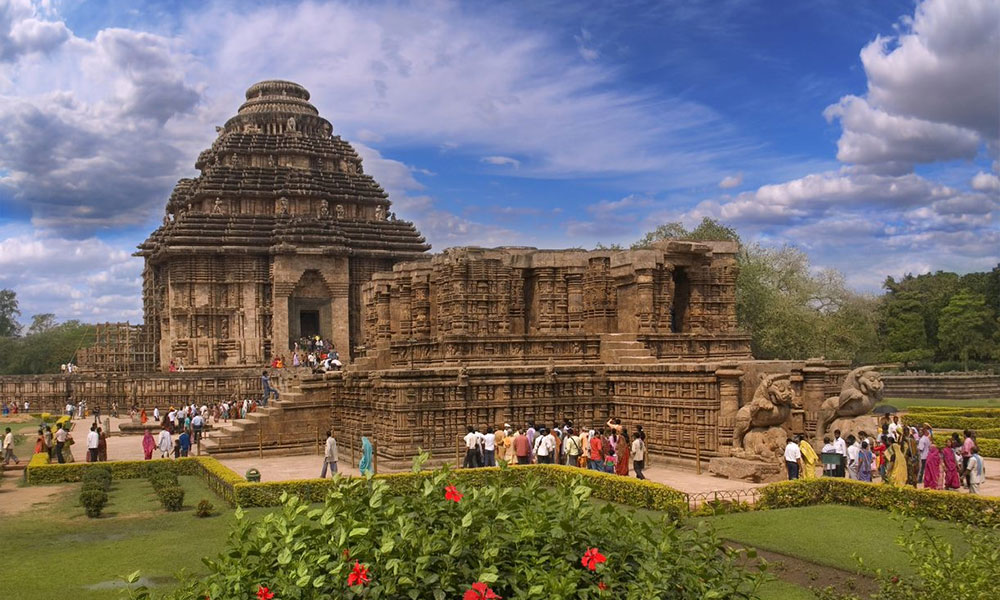
Originally 229 feet tall with a towering shikhara now collapsed, Konark’s surviving jagamohana (audience hall) and scattered chariot wheels embody cosmic movement frozen in stone. Declared “Black Pagoda” by sailors, the temple’s astronomical alignments and sculptural boldness make it one of India’s most enigmatic architectural wonders.
Overview Table of Sun Temple Konark
| Aspect | Details |
|---|---|
| Location | Konark, Odisha (Bay of Bengal coast) |
| Patron | Narasimhadeva I, Eastern Ganga Dynasty |
| Deity | Surya (Sun God) – 12th century image |
| Construction | c. 1238-1250 CE (13th century) |
| Original Height | 229 feet (70m) including shikhara |
| Architecture | Kalinga style – chariot temple |
| Wheels | 24 massive wheels (12 ft diameter each) |
| Horses | 7 rearing horses (10-12 ft tall) |
| UNESCO Status | World Heritage Site (1984) |
Eastern Ganga Empire: Context of Konark’s Creation
Narasimhadeva I’s Golden Reign
13th century Eastern Gangas ruled Odisha from Cuttack, controlling rich coastal trade, temple economy and fertile delta lands. King Narasimhadeva I (1238-64) celebrated Bengal military victories by commissioning Konark as imperial statement rivaling southern Chola temples.
Surya worship peaked in Odisha – Samba Purana legend credits Krishna’s son Samba with establishing solar cults. Konark location chosen as sacred Surya kshetra mentioned in ancient texts, positioned for first sunrise rays illuminating deity.
Cosmic Chariot Concept
Temple embodies Vedic iconography – Surya riding east-to-west across sky in seven-horse chariot representing seven colors of sunlight, 24 wheels symbolizing 24 hours/day or fortnights. Architectural daring asserted Ganga supremacy over Chalukya, Chola, Pallava rivals.
Chariot Architecture: Wheels, Horses and Platform
24 Monumental Wheels
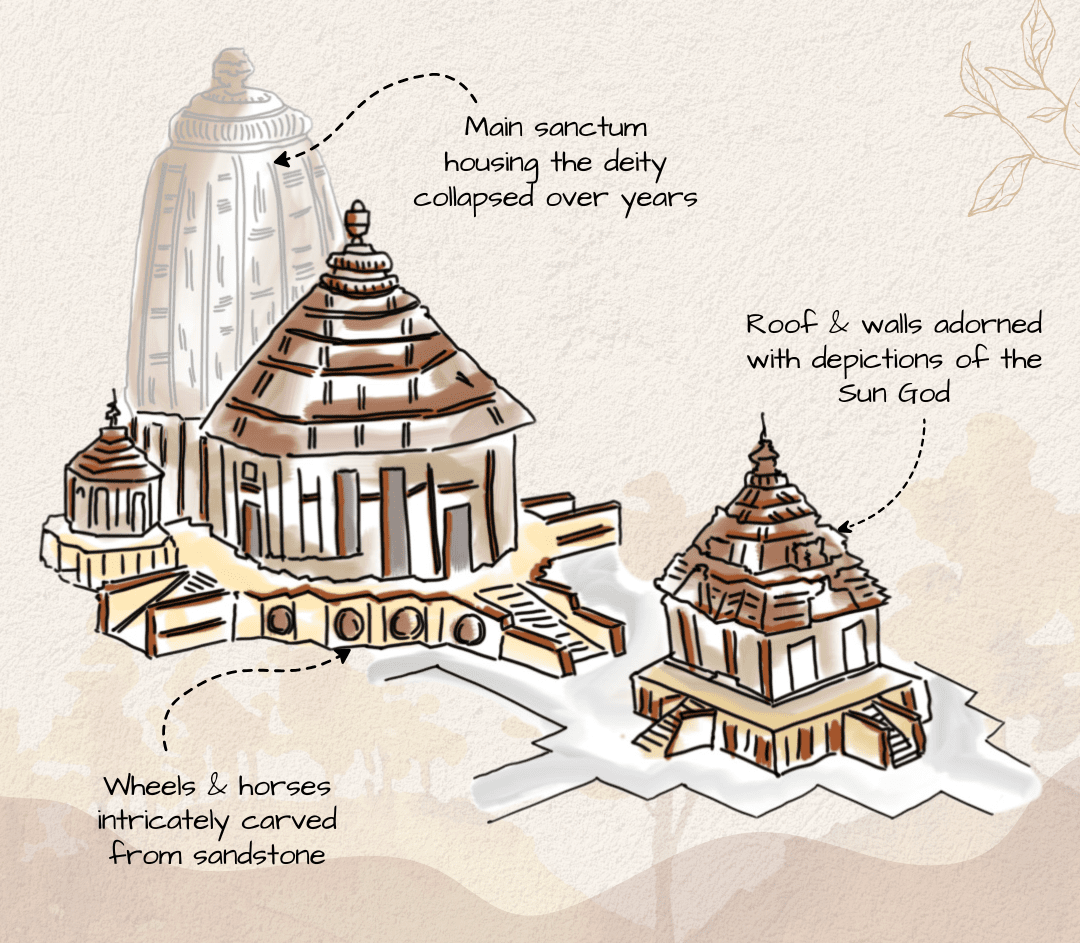
Twelve pairs of 12-foot diameter wheels form massive platform, each intricately carved with spoke patterns, axle guards, hub details mimicking actual chariot wheels. Axle-holes contain iron beams (now corroded) suggesting original rotation mechanism.
Wheel panels depict ascending/descending figures representing life’s journey, time cycles. Lower panels show daily activities, upper celestial beings – wheels double as sundials casting precise shadows tracking time throughout day.
Seven Rearing Horses
Seven life-size horses (10-12 feet tall) strain forward symbolizing solar movement, cosmic energy. Front three horses larger, rear four progressively smaller creating dynamic forward thrust. Carvings capture muscle tension, flowing manes, prancing hooves.
Jagamohana: Surviving Audience Hall
128-foot tall pyramidal jagamohana (audience porch) survives as main structure, originally dwarfed by taller deul (tower). Multi-tiered design with diminishing storeys, decorative motifs follows Kalinga proportions perfected at Lingaraj Temple Bhubaneswar.
Original Temple Design: Lost Deul Glory
India is home to several monumental temples that showcase different architectural traditions. While Konark represents the height of Kalinga architecture, South India witnessed equally grand temple construction under the Chola dynasty. A remarkable example is the Brihadeeswarar Temple of Thanjavur, a UNESCO World Heritage Site known for its massive granite vimana and precision engineering.
229-Foot Tower Configuration
Main deul (tower) rose 229 feet above sanctum housing 10-foot Surya image (now lost). Curvilinear shikhara crowned by amalaka (beehive) and kalasa followed Odia style contrasting southern Dravidian vimanas. Dance hall (natamandir), bhogamandapa completed chariot complex.
European travelers 16th-17th centuries described intact temple visible 30 miles out to sea – “Black Pagoda” navigation marker for sailors. Temple oriented so sunrise illuminated Surya image through eastern entrance.
Sculptural Extravaganza: Erotic and Cosmic Art
Erotic Sculptures Controversy
Konark’s 1,000+ erotic panels shocked Victorian sensibilities – couples in acrobatic poses adorn wheels, walls, ceilings representing Kama (desire) as cosmic force. Mithuna figures symbolize life’s pleasures within temple’s spiritual context, not mere decoration.
Sculptors explored every position from Kamasutra alongside tantric yogic postures, musical modes (ragamala), daily life scenes blending sacred-profane continuum characteristic of mature Kalinga art.
Mythological and Musical Panels
Ramayana, Mahabharata, Surya legends carved alongside Navadurga (nine Durgas), planetary deities, dikpalas (direction guardians). Musical panels depict 128 ragas/raginis with dancers, instruments – oldest surviving Indian musical iconography.
Construction Materials and Techniques
Three-Stone Masterpiece
Khondalite (local sandstone) formed superstructure, chlorite for fine sculptures/doorframes, laterite core/platform. Iron beams/cramps joined stones – magnetic properties legend (unproven). Lime plaster originally coated/painted entire structure.
Engineering Innovations
Foundation below water table prevented subsidence. Wheels designed as sundials – shadows indicated time, solstices. Load-bearing jagamohana survived 700 years while lighter deul collapsed from seismic/erosion forces.
Decline and Destruction: From Glory to Ruin
17th Century Collapse
Main deul/shikhara collapsed ~1830s (cyclone theory) or earlier Portuguese cannon damage (local legend). Kalahandi ruler diverted temple stones for his palace. British “saved” structure by clearing debris but lost original Surya image.
Conservation Efforts
Stella Kramrisch, German architect stabilized jagamohana 1900s. ASI chemical treatment prevents further deterioration. Annual beach sand festival recreates original vibrancy. UNESCO 1984 recognition spurred global conservation attention.
Astronomical Observatory Function
Solar Calendar in Stone
Wheels function as massive sundials – shadow patterns mark equinoxes, solstices, lunar months. Axle shadows indicate time to quarter-hour accuracy. Temple orientation ensures sunrise illuminates sanctum on key festival dates.
Cosmic Timekeeping
24 wheels represent fortnights, 7 horses colors of sunlight, 12 pairs wheels zodiac signs. Planetary deities, nakshatra figures encode astronomical knowledge rivaling Jantar Mantar observatories centuries later.
Cultural Significance: Odia Identity Symbol
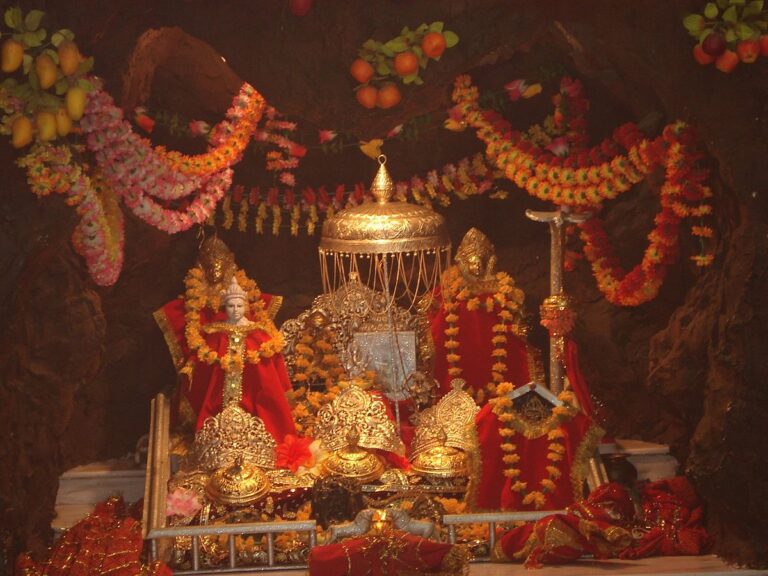
Just as Konark represents the spiritual and cultural identity of Odisha, North India is home to some of the most revered pilgrimage sites in the Himalayas. One such sacred journey is the Vaishno Devi Yatra, a powerful blend of devotion, endurance, and spiritual transformation.
Surya Worship Revival
Konark revived Surya cult fading since Gupta era. Temple economy employed thousands – dancers, musicians, priests, elephant keepers. Annual Chandrabhaga Mela recreates medieval temple festivals at sacred confluence.
Modern Cultural Impact
Inspires Konark Dance Festival, Odissi choreography. Wheels adorn Odisha state emblem, 20-rupee note. Erotic sculptures studied for tantric symbolism, Kamasutra illustrations, medieval sexual culture insights.
Legend and Mystery: Magnetic Temple Myth
Elephant-Sized Loadstone Legend
Folk tale claims massive magnetic stone at peak repelled ships’ compasses (Black Pagoda effect). Portuguese allegedly destroyed magnet causing collapse. Iron beams support theory though scientifically unproven.
Hidden Sanctum Theories
Speculation underground chambers contain original Surya image, secret tantric rituals. Ground-penetrating radar inconclusive. ASI maintains no evidence of hidden structures beyond known complex.
Visiting Konark: Modern Experience
UNESCO Conservation Site
Jagamohana protected by metal scaffolding, wheels roped off preventing vandalism. Sound-light show evenings recreates original glory. Beach 2km away hosts Chandrabhaga Mela February full moon.
Architecture Pilgrimage
Essential stop on Kalinga temple trail – Bhubaneswar Lingaraj, Puri Jagannath. Konark National Museum displays salvaged sculptures. Rising sun silhouettes chariot against ocean backdrop most dramatic viewing experience.
Frequently Asked Questions About Sun Temple Konark
1. Who built Sun Temple Konark?
Narasimhadeva I Eastern Ganga king (1238-64) commissioned 1250 CE celebrating Bengal victories as imperial Surya worship statement rivaling Chola temples.
2. Why called Stone Chariot temple?
24 massive wheels, 7 rearing horses, thick axles designed as Surya’s cosmic chariot frozen mid-journey across heavens – largest architectural sculpture India.
3. What happened to main temple tower?
229-foot deul/shikhara collapsed ~1830s (cyclone) or earlier Portuguese damage. Surviving 128-foot jagamohana testifies original Kalinga engineering stability.
4. Why famous for erotic sculptures?
1,000+ mithuna panels depict Kamasutra positions, tantric yoga representing life’s sacred-profane continuum – shocked Victorian travelers, studied today for medieval sexual culture.
5. How do wheels function as sundials?
Shadows cast by spokes/axles mark time to quarter-hour accuracy, solstices, equinoxes. 24 wheels represent fortnights tracking complete solar calendar cycle.
6. What materials constructed Konark?
Khondalite sandstone superstructure, chlorite sculptures, laterite foundation/platform joined by iron beams/cramps – magnetic properties fuel legends.
7. Why called Black Pagoda?
16th-century European sailors used dark silhouette as navigation landmark visible 30 miles out to sea – contrasted white Puri Jagannath temple.
8. Where is original Surya idol?
12th-century Surya image lost during collapse – replaced by modern image. Archaeological Museum displays salvaged sculptures, fragments.
9. What is Kalinga architecture style?
Curvilinear deul towers, jagamohana porches, intricate friezes perfected at Konark following Lingaraj (Bhubaneswar), Jagannath (Puri) sequence.
10. How many people worked on construction?
Thousands of sculptors, engineers, laborers across decades – temple economy sustained by royal patronage, pilgrim donations, agricultural endowments.
11. What destroyed Konark temple?
Natural decay (khondalite erosion), cyclone (~1830s), Portuguese cannonballs (legend), Kalahandi stone-robbing – gradual collapse over centuries.
12. Are erotic panels tantric symbols?
Yes – mithuna figures represent life’s energies within spiritual context, Kama as cosmic force. Panels follow Odia Agamic traditions blending sensual-divine.
13. What festivals celebrate Konark?
Chandrabhaga Mela (Feb full moon beach festival), Konark Dance Festival showcasing Odissi against chariot backdrop recreating medieval temple arts.
14. Is magnetic stone legend true?
Iron beams/cramps created electromagnetic effects repelling ships – unproven scientifically but explains Black Pagoda navigation role.
15. How accurate was Konark calendar?
Wheel shadows tracked solar year, lunar months, planetary positions rivaling Jantar Mantar – astronomical temple serving priestly calendar needs.
16. What survives of original temple?
Jagamohana (audience hall), 24 wheels, 7 horses, platform, scattered sculptures. Archaeological Museum preserves originals protecting from weather.
17. Why UNESCO World Heritage Site?
Exceptional Kalinga architecture, sculptural narrative power, cosmic chariot conception, astronomical function – invaluable 13th century Odisha testimony.
18. Best time to visit Konark?
November-February cool weather, Chandrabhaga Mela, Dance Festival. Sunrise silhouettes chariot against ocean, wheel shadows demonstrate timekeeping.
19. How does Konark compare Chola temples?
Bold sculptural expressionism vs Chola refinement; chariot form unique; erotic candor surpasses southern conservatism; Kalinga curvilinear towers vs Dravidian pyramids.
20. Konark’s legacy for modern Odisha?
Wheels adorn state emblem, ₹20 note; Odissi classical dance inspiration; symbol Orissa artistic genius rivaling Taj Mahal architectural importance.
Conclusion
The Sun Temple of Konark stands as a brilliant example of ancient India’s ability to merge art, science, and spirituality. Designed as the grand stone chariot of the Sun God, the temple reflects deep knowledge of astronomy, time calculation, and symbolic architecture. Every wheel, carving, and alignment was carefully planned to represent the cosmic journey of Surya across the sky.
Although parts of the temple lie in ruins today, its historical and cultural importance remains undiminished. The Sun Temple continues to inspire awe for its artistic excellence and scientific insight, reminding us of a period when architecture was not just about building structures, but about expressing a profound understanding of the universe and humanity’s place within it.