Hawa Mahal: Jaipur Palace of Winds
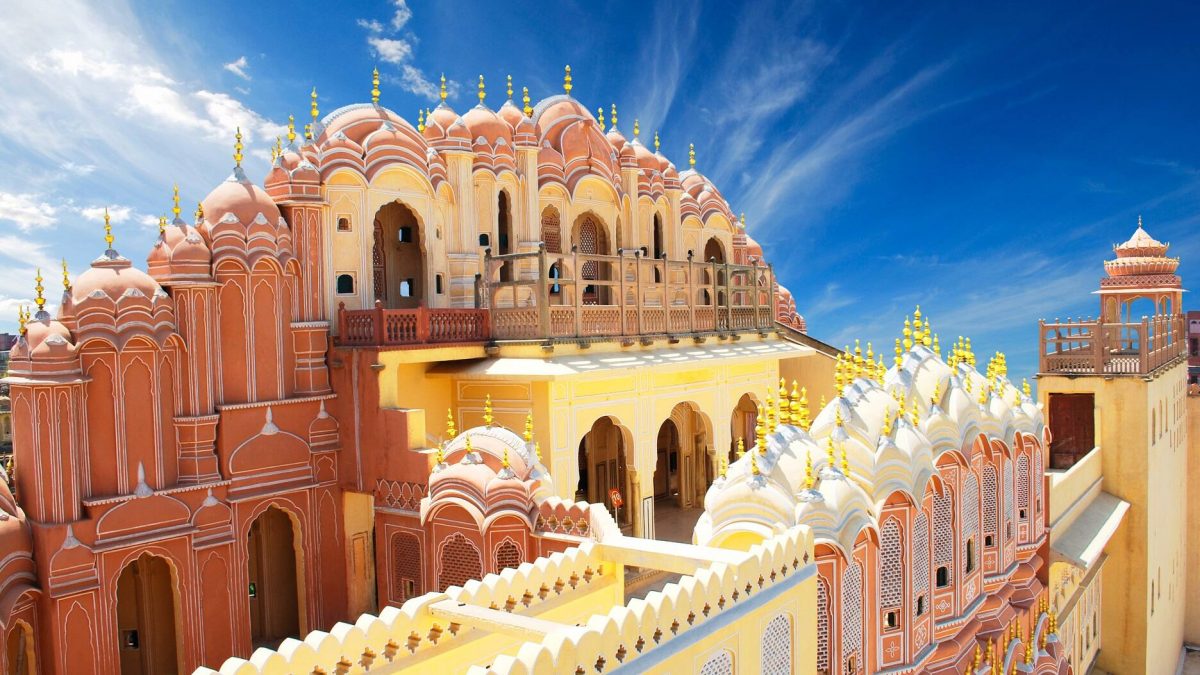
Hawa Mahal stands as Jaipur’s most iconic monument, famous worldwide for its honeycomb-like façade featuring 953 intricately carved jharokhas (latticed windows) that allowed royal women to observe vibrant street life while remaining unseen. Built in 1799 CE by Maharaja Sawai Pratap Singh, this five-storey pink sandstone marvel blends Rajput and Mughal architectural styles while solving the practical needs of purdah-observing zenana women.
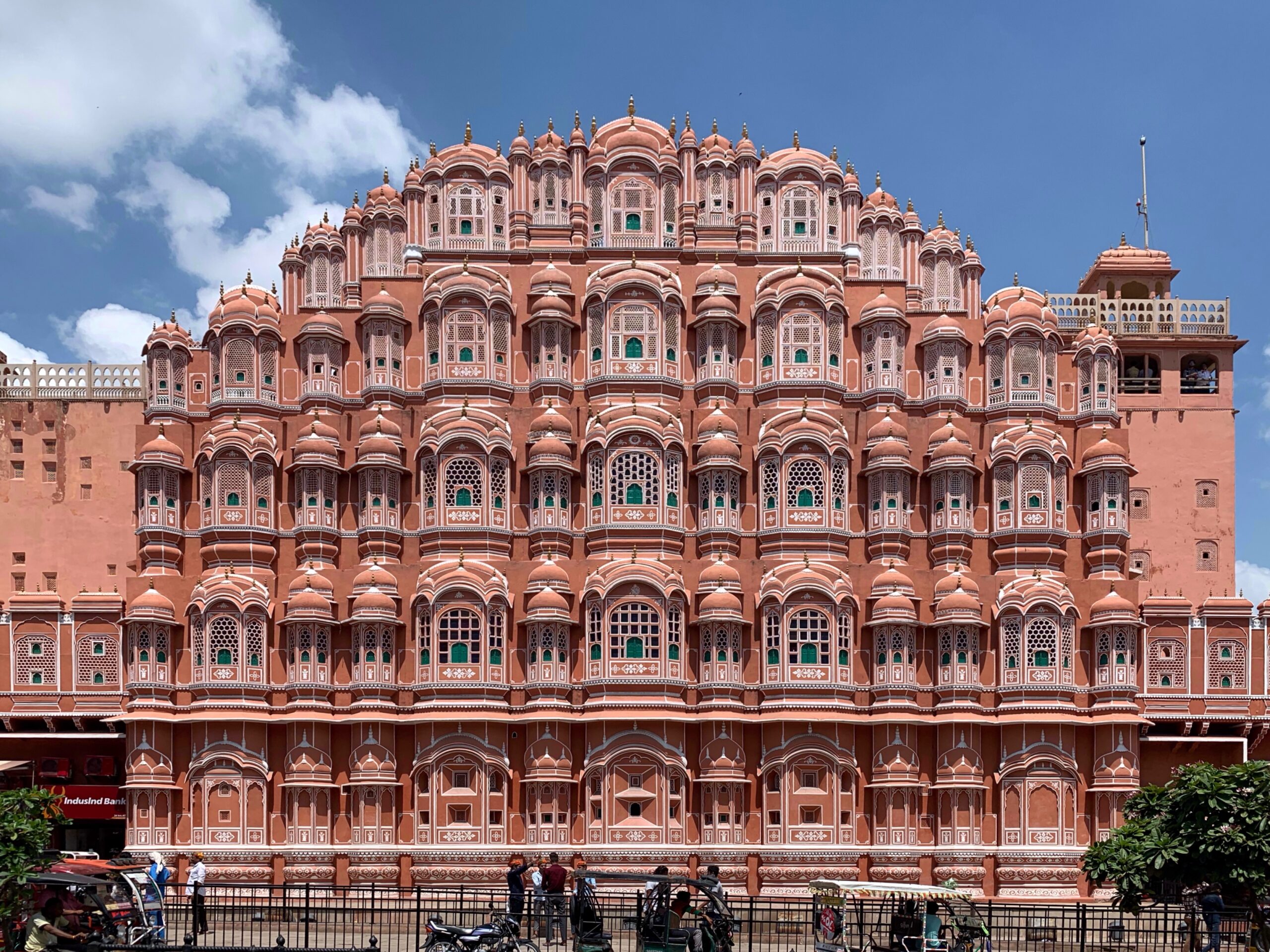
Perfectly positioned on the edge of the old city’s main bazaar street, Hawa Mahal functions as a giant viewing screen – thin perforated walls channeling cooling breezes through the palace while filtering harsh sunlight, earning it the name “Palace of Winds.” This architectural gem symbolizes Jaipur’s planned urban beauty and feminine grace.
Overview Table of Hawa Mahal
| Aspect | Details |
|---|---|
| Location | Badi Chaupar, Jaipur, Rajasthan |
| Builder | Maharaja Sawai Pratap Singh (Kachwaha Dynasty) |
| Year Built | 1799 CE |
| Height | 5 storeys, 50 feet (15 meters) |
| Windows | 953 jharokhas (latticed balconies) |
| Material | Red & pink sandstone |
| Architect | Lal Chand Ustad |
| Purpose | Zenana viewing gallery for royal women |
| Style | Rajput-Mughal fusion |
Historical Context: Jaipur’s Royal Zenana
Maharaja Pratap Singh’s Vision
Maharaja Sawai Pratap Singh (1778-1803), grandson of Jaipur founder Jai Singh II, commissioned Hawa Mahal in 1799 CE inspired by Jhunjhunu’s Khetri Mahal. As extension of City Palace zenana complex, palace solved critical social need – allowing hundreds of royal women observe street life while strictly observing purdah customs.
Strategically positioned facing Sireh Deori Bazaar (main thoroughfare), Hawa Mahal became perfect vantage point for festivals, royal processions, elephant fights, bazaar activities unfolding below.
Pink City Social Architecture
Built during Jaipur’s golden age prosperity, Hawa Mahal reflected planned city’s feminine aesthetic contrasting Amber Fort’s martial architecture. Pink sandstone color (lime-based polish originally) matched 1876 Prince of Wales welcome renovations establishing “Pink City” identity.
Hawa Mahal Architecture: Honeycomb Masterpiece
Five-Storey Pyramidal Façade
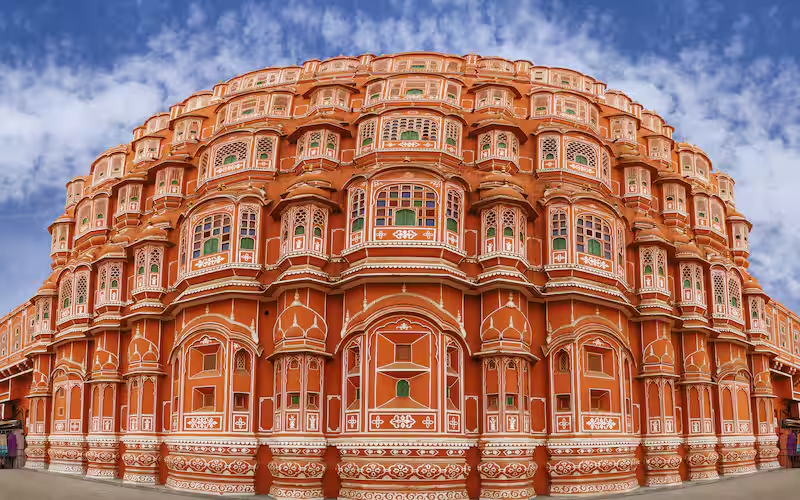
Lal Chand Ustad designed 50-foot (15m) five-storey structure resembling Krishna’s crown (Mukut) reflecting Pratap Singh’s devotion. Pyramidal form narrows upward creating delicate silhouette against Jaipur skyline. Red/pink sandstone glows sunset creating visual spectacle.
Façade functions as giant screen wall – thin perforated exterior (9-12 inches thick) conceals simple interior rooms, staircases, corridors accessed from rear City Palace gate.
953 Jharokhas: Engineering & Artistry
Signature feature: 953 small latticed windows (jharokhas) arranged honeycomb pattern across five levels. Each jharokha uniquely carved with floral motifs, peacocks, hanging lamps creating lace-like texture visible block away.
Functional genius: perforated screens filter 90% sunlight creating soft interiors; cooling breezes channel through honeycomb structure dropping temperature 10-15°F naturally.
Interior Layout: Simple Behind Ornate
Rear Entry & Courtyard
Visitors enter through massive rear gateway (Shahpol) into spacious courtyard surrounded two/three-storey rooms, staircases ascending five levels. Shahi Baithak (royal chamber) hosted private meetings overlooking zenana quarters.
Each floor contains small Krishna/Shiva shrines reflecting religious function beyond viewing gallery. Panoramic rooftop terrace offers 360° Jaipur views including City Palace, Jantar Mantar, Nahargarh Fort.
Ventilation & Light Engineering
Honeycomb screens create chimney effect – hot air rises through jharokhas drawing cool street breezes inward. Strategic window placement captures prevailing winds regardless direction. Interiors surprisingly comfortable despite intense Rajasthan summer heat.
Rajput-Mughal Architectural Fusion
Rajput Elements
Fluted bangala-style columns, chhatris (domed pavilions), jali screens, floral motifs represent mature Rajput architecture perfected Amber/Jaipur schools. Krishna crown shape symbolizes Kachwaha clan devotion.
Mughal Influences
Cusped arches, miniature inlays, overhanging balconies echo Shah Jahan-era Mughal finesse. Latticework techniques adapted Lahore forts. Color scheme, proportions reflect post-Mughal Rajput assimilation.
Pink City Icon: Cultural Significance
Visual Symbol of Jaipur
Hawa Mahal personifies Jaipur’s planned beauty – delicate femininity contrasting Nahargarh’s rugged masculinity. Pink façade refreshed 1876 Prince of Wales visit established permanent “Pink City” identity.
Most photographed Rajasthan monument – appears Rajasthan tourism posters, ₹50 notes, Bollywood backdrops worldwide.
Festival Viewing Platform
Originally hosted Diwali, Gangaur, Teej festivals – royal women watched elephant processions, fireworks, bazaar fairs through jharokhas. Today tourists climb terraces capturing Jaipur Festival, Elephant Festival below.
Restoration & Modern Usage
19th-20th Century Conservation
British Viceroy Curzon ordered 1900s repairs stabilizing structure. Lime plaster restoration revived original pink sheen. ASI maintains preventing sandstone erosion from pollution, tourist wear.
Tourism & Cultural Venue
Attracts 2-3 million visitors annually. Evening light show illuminates honeycomb façade. Rajasthan Foundation hosts classical dance programs terraces recreating royal cultural life.
Engineering for Royal Women
Social Architecture Innovation
Hawa Mahal brilliantly solved purdah constraints – 953 jharokhas provided individual viewing positions for hundreds zenana women simultaneously without compromising modesty.
Natural air-conditioning, diffused lighting created comfortable environment hours-long festival viewing. Rear-only access maintained complete privacy from street level.
Feminine Urban Planning
Visionary placement integrated city fabric – facing main bazaar maximized viewing angles while projecting royal presence. Delicate silhouette softened Jaipur’s fortress-dominated skyline.
Conclusion: Timeless Architectural Ingenuity
Hawa Mahal transcends ornamental façade status – represents brilliant fusion social engineering, climatic response and aesthetic genius solving 18th century royal women’s practical isolation through architectural innovation. Its 953 jharokhas transform purdah restriction into viewing pleasure, cooling breezes, filtered light creating perfect zenana environment overlooking vibrant Jaipur life.
As Jaipur’s enduring symbol, Hawa Mahal demonstrates thoughtful architecture’s power – delicate pink honeycomb silhouette softens fortress city’s martial aesthetic while functionally serving cultural heart. Two centuries later, Palace of Winds continues charming visitors worldwide, proving simple screen wall concept yields one India’s most recognizable architectural icons.
Frequently Asked Questions About Hawa Mahal
1. Who built Hawa Mahal Jaipur?
Maharaja Sawai Pratap Singh constructed 1799 CE as City Palace zenana extension allowing royal women observe street life through 953 jharokhas while maintaining purdah.
2. Why called Palace of Winds?
Hawa Mahal’s honeycomb jharokhas channel cooling breezes through perforated walls dropping temperature 10-15°F naturally – “hawa” (wind) circulates constantly through five storeys.
3. How many windows Hawa Mahal?
Exactly 953 jharokhas – each uniquely carved with floral/peacock motifs creating lace-like honeycomb façade iconic worldwide.
4. What architecture style Hawa Mahal?
Rajput-Mughal fusion – bangala columns/chhatris (Rajput), cusped arches/jali screens (Mughal) resembling Krishna’s crown symbolizing Kachwaha devotion.
5. How tall Hawa Mahal structure?
Five storeys rising 50 feet (15m) in pyramidal form narrowing upward creating delicate skyline silhouette contrasting Jaipur’s forts.
6. Why pink color Hawa Mahal?
Red/pink sandstone with lime polish glows sunset hues. 1876 Prince of Wales welcome renovations established permanent “Pink City” identity.
7. Where enter Hawa Mahal?
Rear Shahpol gateway from City Palace side reveals simple courtyard, staircases – ornate façade conceals modest functional interiors.
8. What view from Hawa Mahal top?
Panoramic 360° Jaipur vista – City Palace, Jantar Mantar, Nahargarh Fort, old bazaars, Sireh Deori Bazaar processions unfolding below.
9. Purpose building Hawa Mahal?
Zenana viewing gallery – royal women watched festivals, elephant fights, bazaar life, royal processions through jharokhas maintaining complete purdah seclusion.
10. Who designed Hawa Mahal?
Lal Chand Ustad architect inspired by Jhunjhunu Khetri Mahal created honeycomb screen solving ventilation/privacy challenges simultaneously.
11. How Hawa Mahal stays cool?
Honeycomb jharokhas create chimney effect – hot air rises drawing cool street breezes; screens filter 90% sunlight creating natural air-conditioning.
12. Hawa Mahal part City Palace?
Yes – eastern extension connected rear gateway serving as zenana screen wall overlooking main bazaar thoroughfare.
13. Best time photograph Hawa Mahal?
Sunset creates golden-pink glow illuminating jharokhas; morning soft light reveals carving details avoiding harsh midday shadows.
14. Any temples inside Hawa Mahal?
Each floor contains Krishna/Shiva shrines reflecting religious function beyond secular viewing gallery.
15. How thick Hawa Mahal walls?
Exterior screen walls 9-12 inches thick perforated honeycomb – surprisingly thin supporting five storeys through lattice engineering.
16. Hawa Mahal entry fee timings?
₹50 Indians/₹300 foreigners; 9AM-4:30PM daily (shorter summer). Rear entry only – front façade ornamental screen only.
17. Why resembles Krishna’s crown?
Pyramidal five-storey shape, curved tiers mimic Mukut (crown) symbolizing Pratap Singh’s Krishna devotion – Kachwaha clan deity.
18. How Hawa Mahal affects Jaipur skyline?
Delicate pink honeycomb softens fortress-dominated skyline creating feminine counterpoint to Nahargarh/Amber martial architecture.
19. Restoration efforts Hawa Mahal?
Curzon-era repairs, ASI lime plaster restoration revived original pink sheen preventing sandstone erosion from pollution.
20. Hawa Mahal cultural significance?
Jaipur’s visual symbol – tourism posters, ₹50 notes, Bollywood backdrops worldwide representing Pink City feminine grace.
Conclusion: Timeless Architectural Ingenuity
Hawa Mahal transcends ornamental façade status – represents brilliant fusion social engineering, climatic response and aesthetic genius solving 18th century royal women’s practical isolation through architectural innovation. Its 953 jharokhas transform purdah restriction into viewing pleasure, cooling breezes, filtered light creating perfect zenana environment overlooking vibrant Jaipur life.
As Jaipur’s enduring symbol, Hawa Mahal demonstrates thoughtful architecture’s power – delicate pink honeycomb silhouette softens fortress city’s martial aesthetic while functionally serving cultural heart. Two centuries later, Palace of Winds continues charming visitors worldwide, proving simple screen wall concept yields one India’s most recognizable architectural icons.