[india_weather]

Ajanta Caves: The Ancient Buddhist Paintings of Maharashtra
On 28 April 1819, a British cavalry officer named John Smith was out hunting a tiger above the Waghora river in Maharashtra when he saw an arched opening cut into the cliff across the ravine. What he had found were the Ajanta Caves, thirty Buddhist halls and monasteries carved into a horseshoe-shaped basalt cliff and left empty for more than a thousand years. Today they are a UNESCO World Heritage Site, and their wall paintings are the finest that survive from ancient India.
What are the Ajanta Caves?
Ajanta is a group of thirty rock-cut Buddhist caves. Five are chaityas, or prayer halls, each with a stupa at the far end. The other twenty five are viharas, monasteries where monks lived, studied and meditated, with small cells opening off a central hall.
The caves are numbered from one end of the cliff to the other, not in the order they were made. That is why the oldest caves, 9 and 10, sit in the middle of the row, and why the numbering can confuse first-time visitors.
When were the Ajanta Caves built?
The first phase (c. 2nd century BCE to 1st century CE)
The first phase belongs to the early Buddhist tradition usually called Hinayana. About six caves were cut in this period, including the two chaitya halls, Caves 9 and 10. In early Buddhist art the Buddha was not shown in human form, so he appears through symbols such as an empty throne, a footprint, the wheel of dharma or a stupa. Cave 10 keeps fragments of paintings from this period, among the oldest surviving painted interiors in India.
The second phase (c. 460 to 480 CE)
After a long gap, work began again in the Mahayana phase. The art historian Walter Spink dated this burst of activity to roughly 460 to 480 CE, under the Vakataka king Harishena and his ministers and feudatories. Around twenty four more caves were begun, and the walls were covered with the paintings Ajanta is known for.
Then work stopped, with several caves left unfinished. Nobody is entirely sure why. The Vakataka dynasty was breaking up at the time, and patronage for Buddhist monasteries in western India seems to have dried up. The monks left, and the paintings sat in the dark for roughly thirteen hundred years.
The Ajanta paintings and how they were made
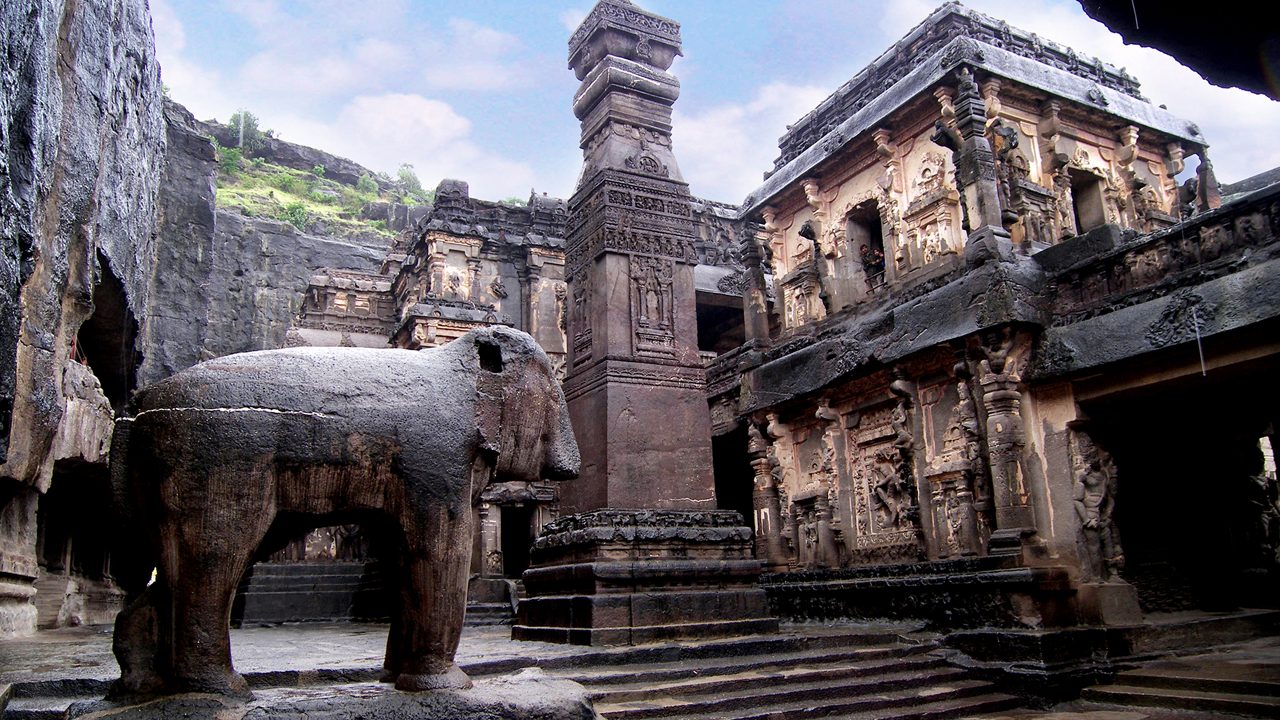
The rock was first covered with a plaster of clay, cow dung and rice husk, then a thin layer of lime. The painters worked in a tempera technique, mixing mineral pigments with a binder and applying them to the dry surface. They used red and yellow ochre, lampblack and lime white, with blue from lapis lazuli that probably came from Afghanistan. The colours have faded, but the outlines and faces still come through clearly.
Most of the paintings tell Jataka tales, stories of the Buddha’s earlier lives, along with scenes from his life as Siddhartha. Cave 17 has the fullest set of Jatakas. Cave 1 has the best-known image at Ajanta, the Bodhisattva Padmapani, holding a lotus and looking down with half-closed eyes; the Bodhisattva Vajrapani is painted on the opposite side of the same shrine doorway.
Look beyond the religious figures, too. The walls are full of royal courts, dancers, musicians, merchants, elephants and ordinary street scenes, and historians use them as one of the best visual records of how people in fifth century India dressed, wore their hair and furnished their homes.
Sculpture and architecture to look for
The sculpture at Ajanta is easy to overlook next to the paintings, but it is just as good. In Cave 26, a reclining Buddha about twenty three feet (seven metres) long shows the moment of his death and entry into parinirvana, with a row of mourners carved below, each face different. Cave 19 has one of the most richly carved chaitya facades in India, with standing Buddhas on either side of the great arched window.
Inside the chaitya halls, a row of pillars runs down each side to the stupa at the end, leaving a path for monks to walk around it in prayer. The ribbed ceilings copy the curved wooden beams of the timber halls that came before them.
How the caves were rediscovered and recorded
The caves were never completely unknown to people living nearby, but they were overgrown and rarely visited. Local accounts say wild animals used them as dens. Smith, of the Madras Army’s 28th Cavalry, scratched his name and the date on a pillar in Cave 10, and the inscription can still be seen.
Over the next century, painters, archaeologists and photographers came to copy what they found. Robert Gill spent years making oil copies in the mid-nineteenth century, though most were later lost in a fire at the Crystal Palace in London. Some early copyists harmed the paintings by touching them, using smoky oil lamps or varnishing the walls to brighten the colours. Serious conservation began only in the 1920s.
Conservation of the Ajanta Caves today
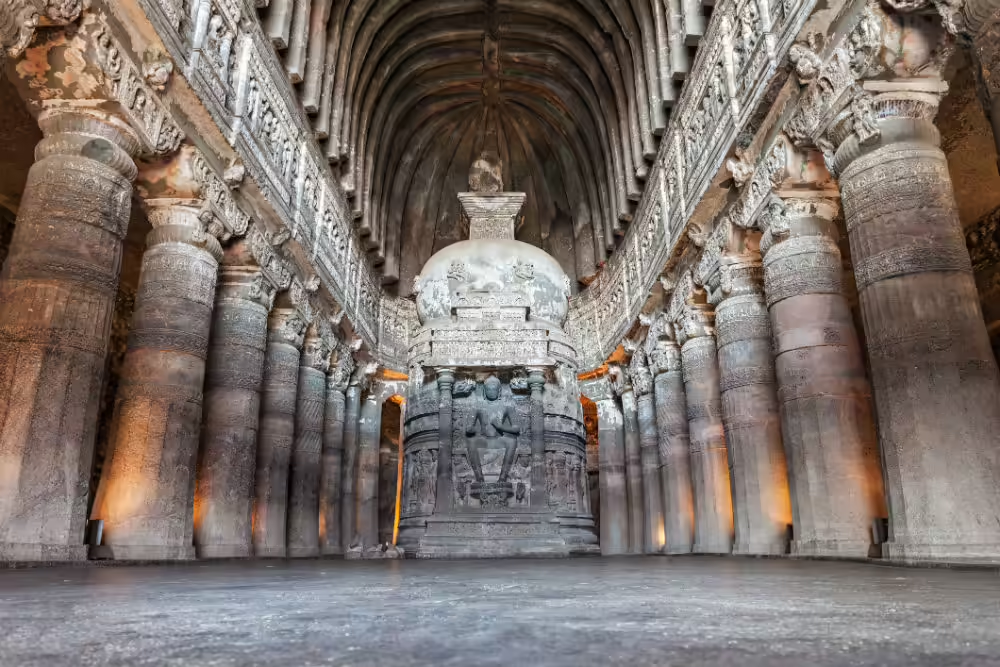
Ajanta was inscribed as a UNESCO World Heritage Site in 1983, and the Archaeological Survey of India now looks after it, with help from international teams. The paintings are very fragile: light, humidity and even the breath of large crowds slowly damage them. Flash photography is banned, visitor numbers inside the painted caves are controlled, and some caves are closed on rotation.
A Japanese team took detailed colour photographs of the paintings in the mid-twentieth century, and more recent digital surveys have recorded the walls in high resolution. Some details that are now very hard to see with the naked eye have been studied from these records.
How to visit Ajanta
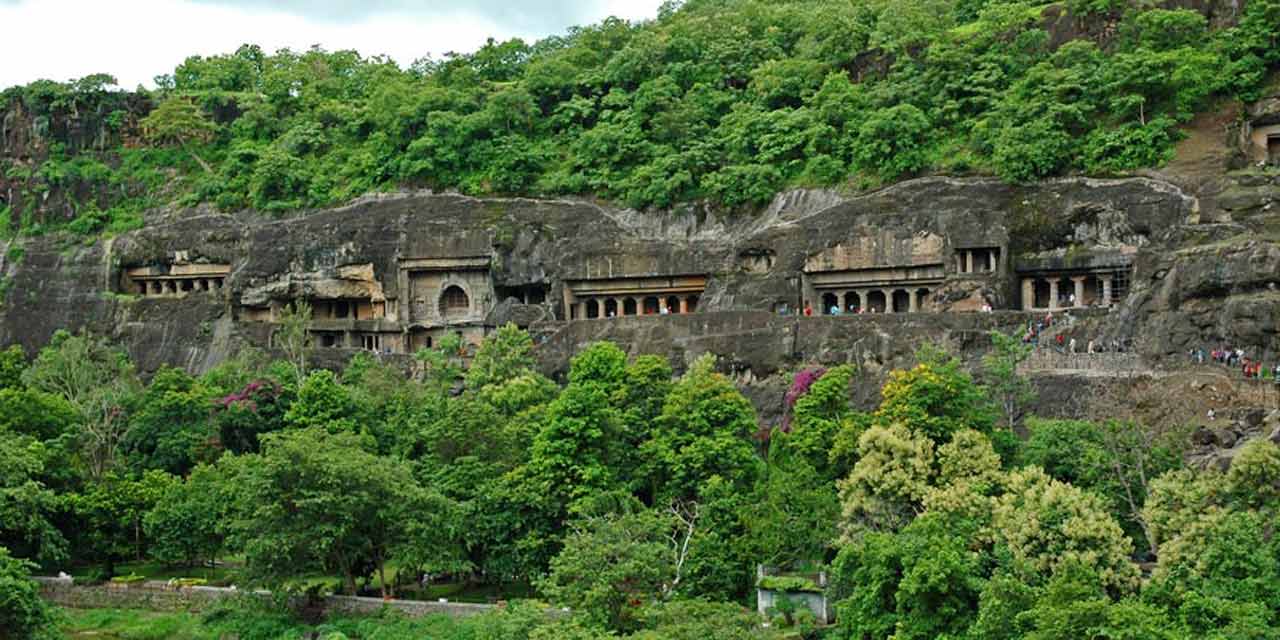
Ajanta is about 100 km from Chhatrapati Sambhajinagar (formerly Aurangabad), which has the nearest airport and major railway station. Jalgaon, on the other side, is about 60 km away and is also on the main rail line. Buses and taxis from Sambhajinagar take around two to three hours.
The caves are open from 9:00 am to 5:00 pm and are closed on Mondays. Entry is about 40 rupees for Indian visitors and 600 rupees for foreign visitors, and online tickets are usually a little cheaper. Private vehicles stop at the visitor centre at the T-junction, and a shuttle bus takes you the last few kilometres to the caves.
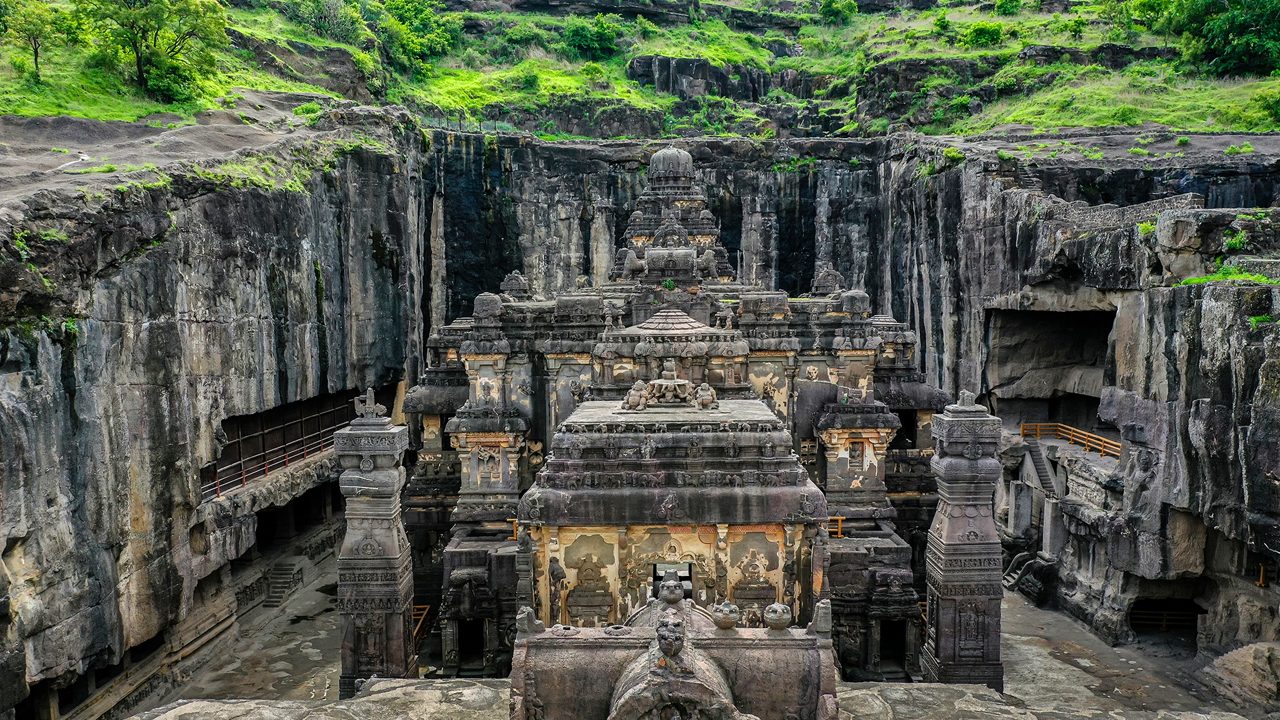
The nearby Ellora Caves are about 100 km from Ajanta, so most people visit the two on separate days from Sambhajinagar. Keep in mind that Ellora is closed on Tuesdays. The best months are November to February; in the monsoon the paths are slippery and the caves damp.
Carry a small torch with a soft beam, as some painted caves are kept dim, and give yourself time in Caves 1, 2, 16 and 17, where most of the major paintings are. If your legs allow, climb to the viewpoint on the opposite side of the ravine, roughly where Smith first saw the caves.
Read Next
- Kailasa Temple Ellora: The Monolithic Wonder Carved From a Single Rock
- Badami Caves: The Early Chalukya Rock Temples of Karnataka
- Gupta Empire History: Golden Age of Ancient India Explained
Frequently Asked Questions
Can you take photographs inside the Ajanta Caves?
Photography without flash is allowed in most caves, but flash is banned and some painted caves may have extra restrictions. Check the notices at each cave entrance.
How many days do I need for Ajanta and Ellora?
At least two full days, one for each site, and three if you want to see both slowly. Remember that Ajanta closes on Mondays and Ellora on Tuesdays.
Are the Ajanta Caves Hindu or Buddhist?
All thirty caves at Ajanta are Buddhist. Ellora, by contrast, has Buddhist, Hindu and Jain caves side by side.
Sources and Further Reading
- Archaeological Survey of India website (asi.nic.in)
- UNESCO World Heritage Centre, Ajanta Caves nomination file, 1983
- Walter Spink, Ajanta: History and Development, Brill
- Vidya Dehejia, Discourse in Early Buddhist Art, Munshiram Manoharlal