South Indian Food: Famous Dishes, Traditional Meals & Authentic Flavors
South Indian food is not just a style of cooking, it’s a way of life shaped by geography, climate, tradition, and centuries of cultural evolution. From the coastal kitchens of Kerala where coconut reigns supreme, to the spice-rich homes of Andhra Pradesh where fiery flavors dominate, South Indian cuisine reflects simplicity, balance, and deep respect for ingredients.
Unlike many other regional cuisines, South Indian food focuses on natural flavors rather than heavy cream or butter-based gravies. If you are curious about how it differs from richer, wheat-based cuisines, you can also explore our detailed guide on North Indian food, famous dishes, culture, and traditional cuisine.
What Makes South Indian Food Unique Compared to Other Indian Cuisines
South Indian cuisine stands apart because of its strong regional identity and distinctive cooking philosophy. Each state has developed its own taste profile, cooking methods, and food traditions over thousands of years.
Key characteristics that define South Indian cuisine:
- Rice as the primary grain instead of wheat, reflecting the region’s tropical climate and abundant water resources
- Fermented foods like dosa, idli, and uttapam that are both nutritious and easier to digest
- Minimal oil usage with an emphasis on steaming, simmering, and tempering
- Coconut and curry leaves as signature ingredients that appear in almost every dish
- Banana leaf service for traditional meals, which is eco-friendly and adds subtle flavor
- Tiffin culture with elaborate breakfast traditions featuring dozens of varieties
The focus is always on digestion, freshness, and harmony of the six tastes (sweet, salty, sour, pungent, bitter, and astringent) recognized in Ayurveda. Every meal is designed as a complete nutritional experience.
The Four Pillars: States That Shape South Indian Cuisine
Tamil Nadu: The Classical Tradition
Tamil Nadu represents the heart of classic South Indian vegetarian cooking. Meals here are rice-based and follow ancient culinary practices documented in Tamil literature dating back over 2,000 years.
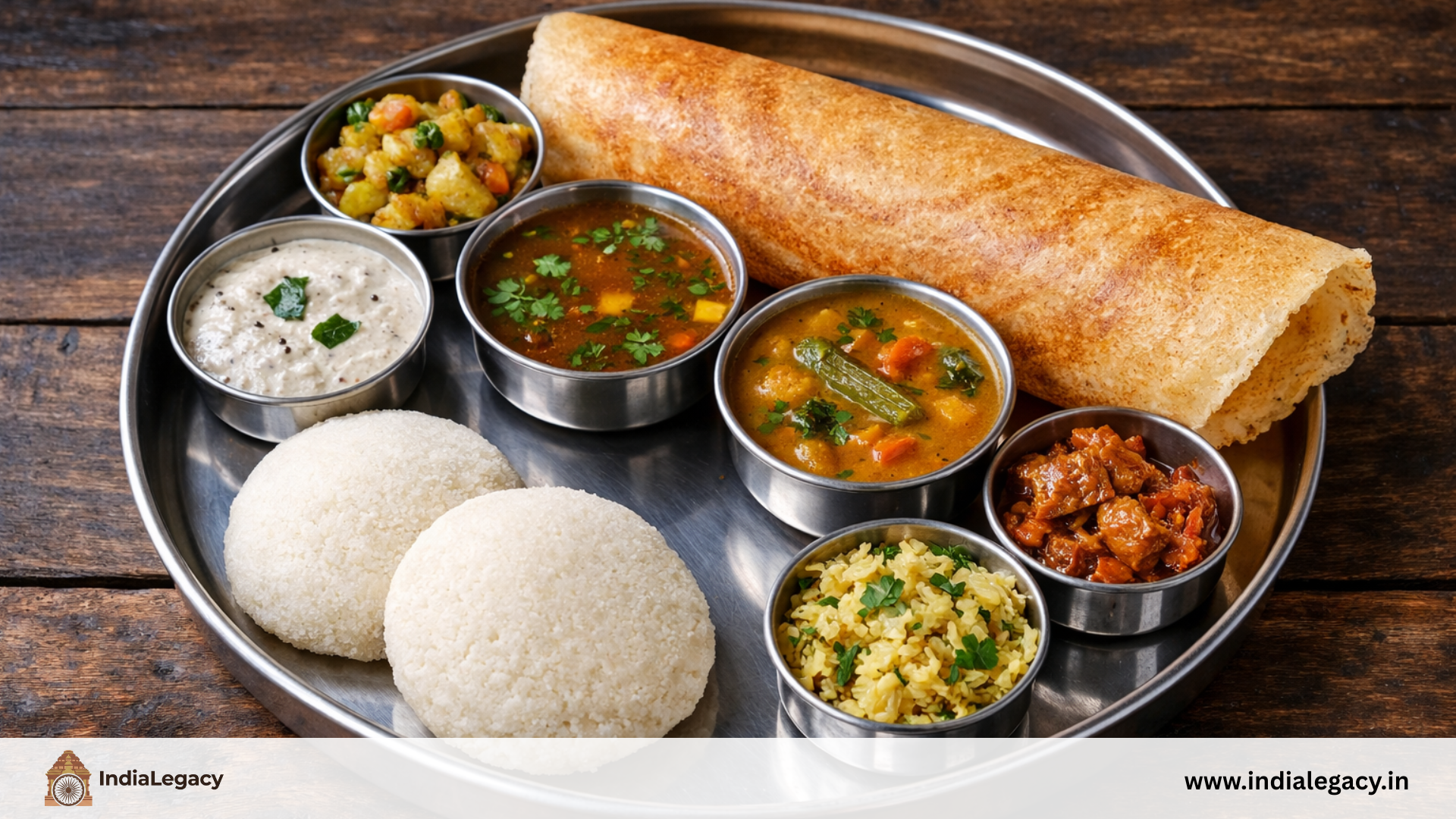
Signature dishes: Sambar, rasam, poriyal (stir-fried vegetables), kootu, mor kuzhambu, and the iconic curd rice form the backbone of daily meals. Breakfast items like idli, dosa, pongal, vada, and appam all have their roots in Tamil cuisine.
Regional variations: Chettinad cuisine from Tamil Nadu is famous for its aromatic spice blends and both vegetarian and non-vegetarian specialties. The region uses sun-dried ingredients and stone-ground masalas that create distinctive flavors.
Kerala: The Land of Spices and Coconut
Kerala cuisine is a beautiful marriage of coastal abundance and spice trade influences. Every part of the coconut—oil, milk, grated flesh, and even the flower—finds its way into Kerala cooking.
Signature dishes: Appam with stew, puttu with kadala curry, avial, olan, thoran, karimeen pollichathu (pearl spot fish), and the legendary Kerala sadya feast featuring 20+ dishes.
What makes it special: The generous use of coconut oil, the balance of spices without overwhelming heat, and the integration of Christian, Muslim, and Hindu culinary traditions create a unique flavor profile.
Karnataka: The Bridge Between Regions
Karnataka food beautifully blends the mild flavors of coastal cooking with the robust tastes of the Deccan plateau. The cuisine varies dramatically from the coast to the interior regions.
Signature dishes: Bisi bele bath, ragi mudde, neer dosa, Mysore masala dosa, and Mangalorean fish curry.
Unique elements: The extensive use of jowar and ragi, the famous Udupi cuisine, and coastal Mangalorean seafood traditions.
Andhra Pradesh & Telangana: The Spice Warriors
This region is known for bold, unapologetically spicy flavors. Red chilies, tamarind, and garlic dominate the cuisine.
Signature dishes: Gongura preparations, Andhra chicken curry, pesarattu, pulihora, and gongura pachadi.
What sets it apart: Pickles and chutneys are central to meals, with noticeably higher spice levels.
South Indian Breakfast: The Crown Jewel
Idli: The Perfect Food
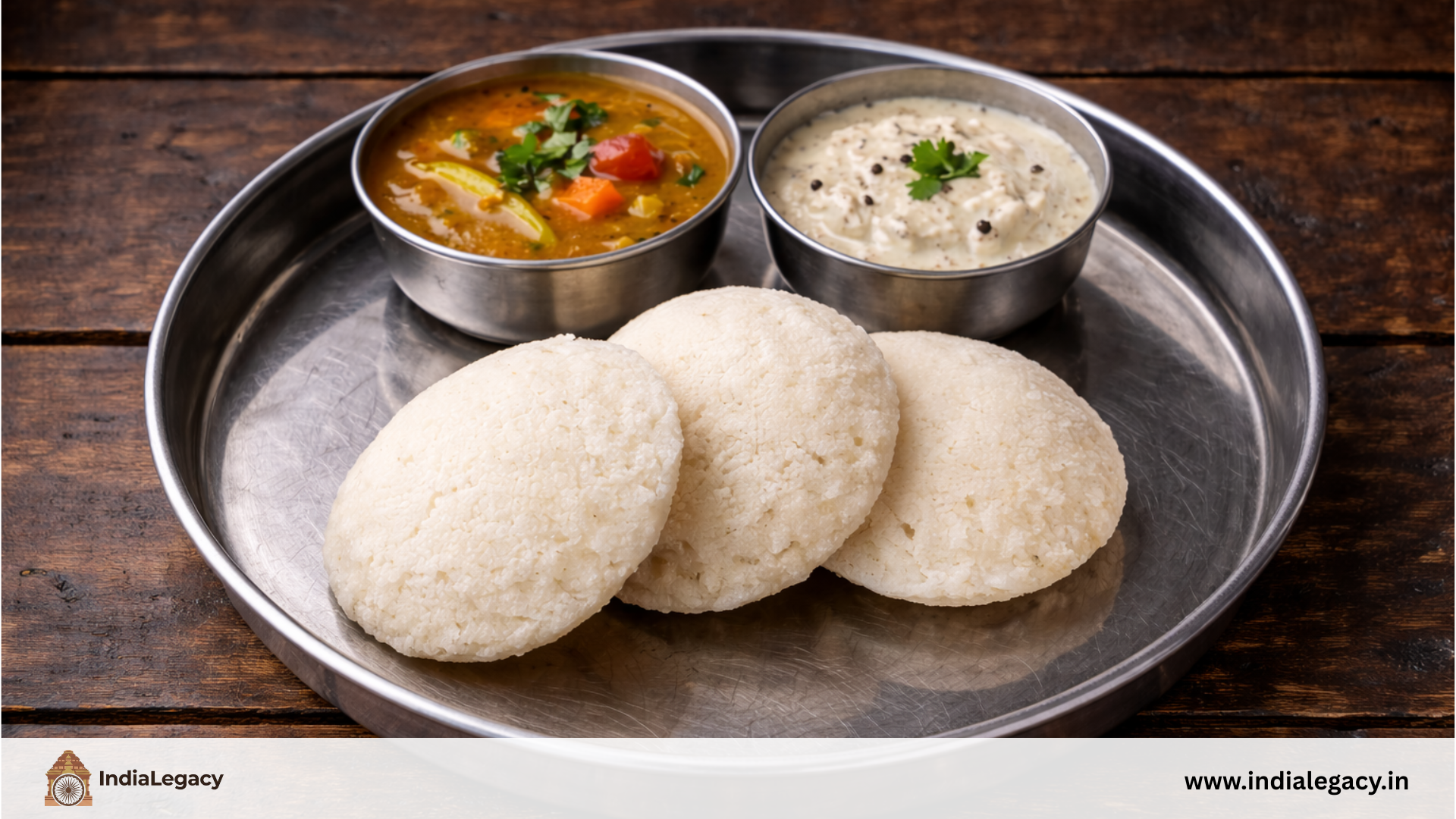
Idli is a soft, pillowy steamed rice cake made from fermented rice and urad dal batter.
Why it’s special: Naturally gluten-free, low in calories, easy to digest, and rich in nutrients.
Variations: Rava idli, kanchipuram idli, button idli, podi idli.
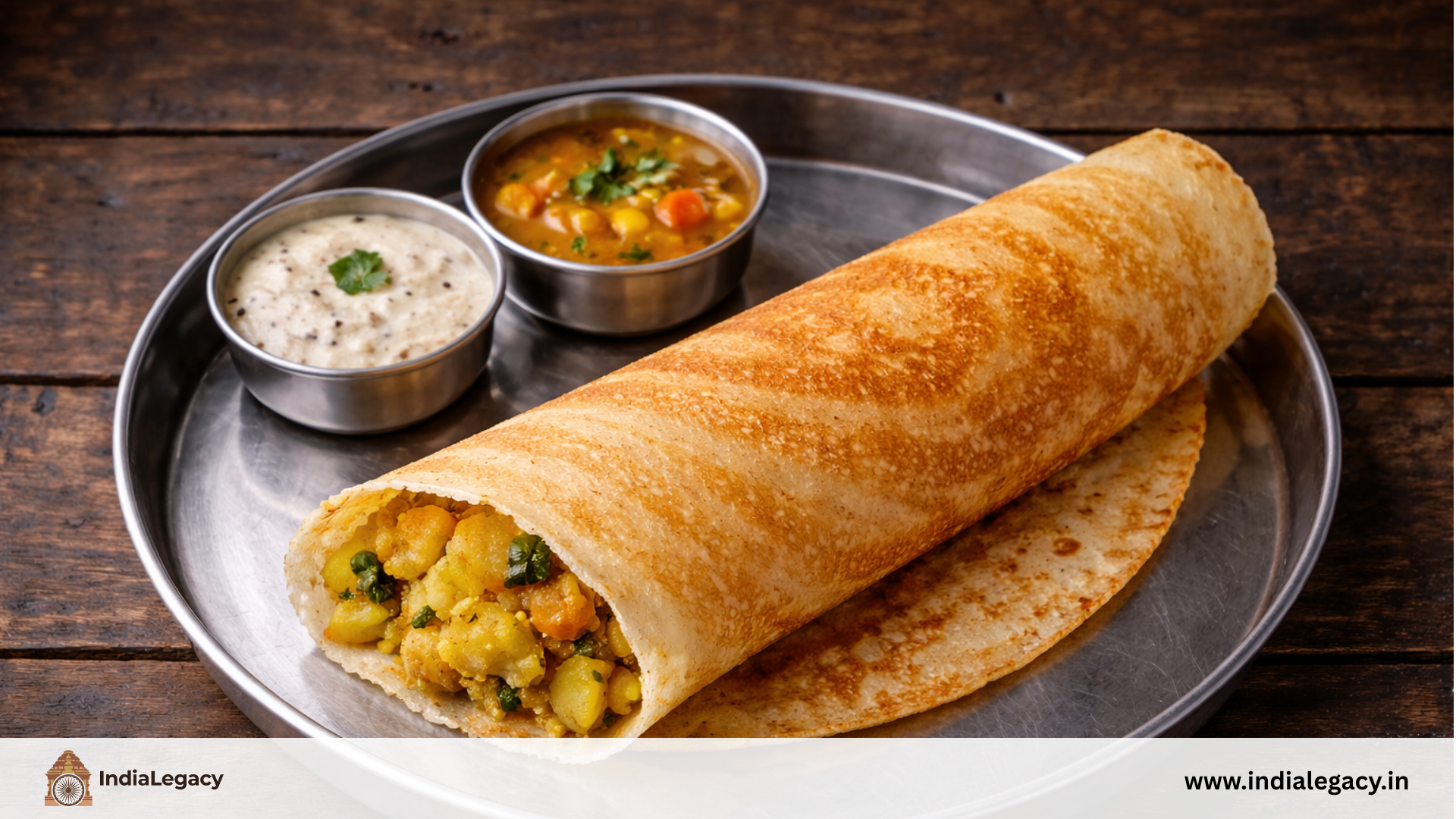
Dosa: The Golden Crispy Canvas
Dosa is a thin, crispy crepe made from fermented batter.
Popular varieties: Masala dosa, rava dosa, set dosa, onion dosa, ghee roast.
Vada: The Crispy Companion
Medu vada is a deep-fried lentil donut that’s crispy outside and fluffy inside.
Upma: The Savory Porridge
Upma is a warm dish made from semolina or rice flour with vegetables.
Other Breakfast Stars
- Pongal
- Uttapam
- Puttu
The Grand South Indian Thali Experience
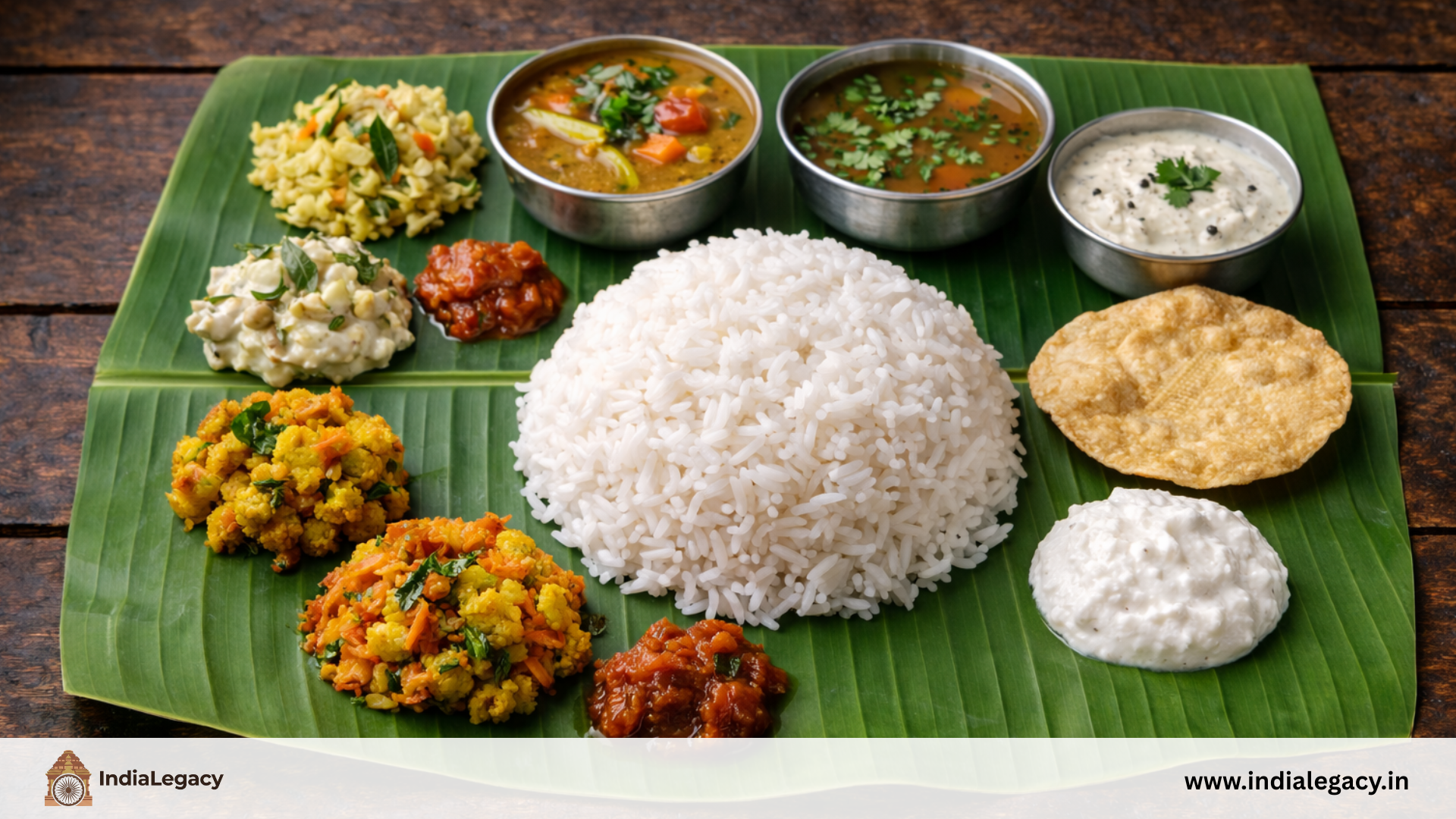
A South Indian meal served on a banana leaf is a complete cultural experience.
Essential Components of a South Indian Meal
- Sambar
- Rasam
- Poriyal
- Kootu
- Pachadi / Raita
- Curd Rice
Famous South Indian Snacks and Street Food
- Murukku
- Banana Chips
- Sundal
- Bonda
- Bajji
- Mixture
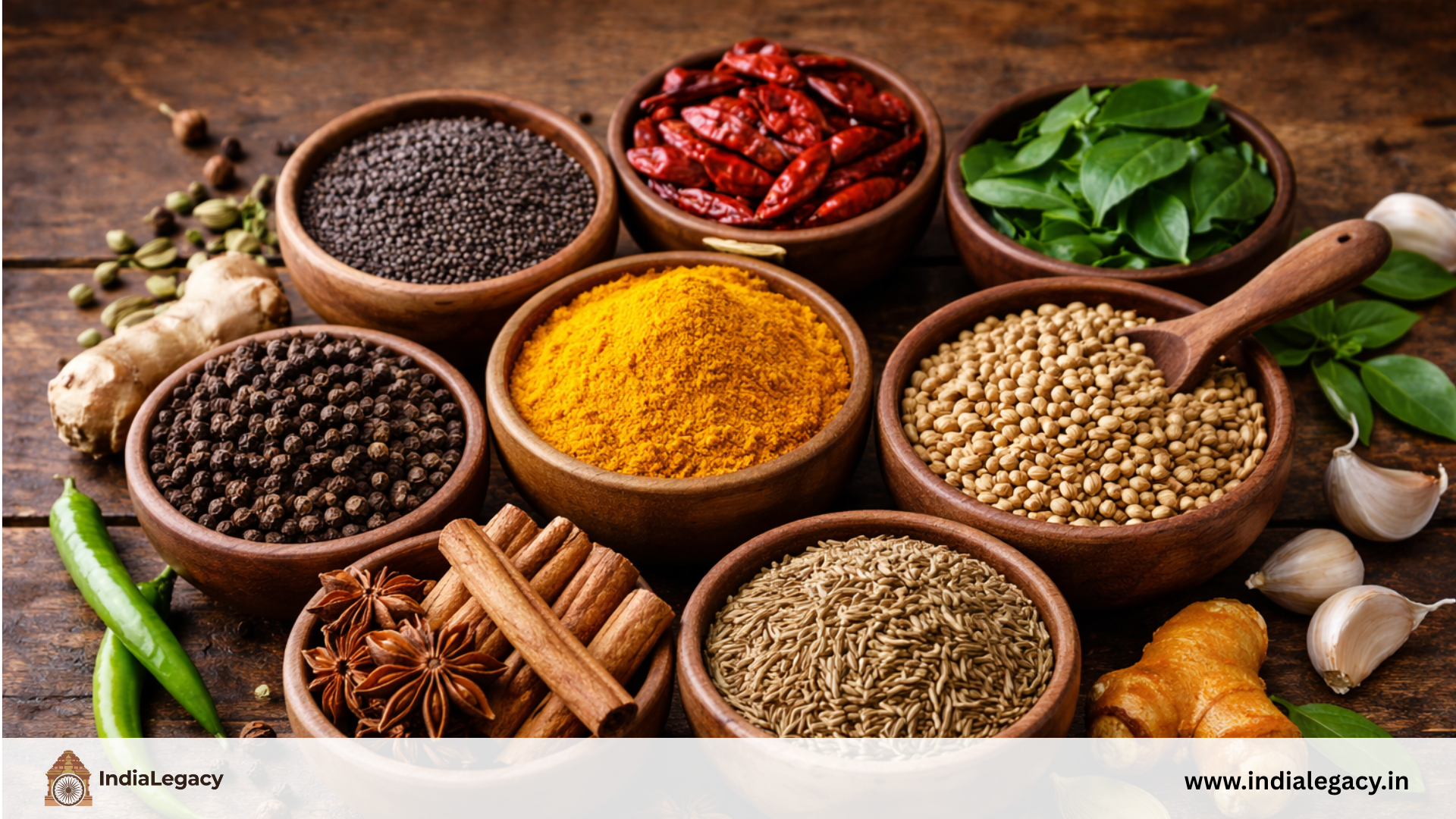
The Spice Philosophy: Balance Over Heat
- Mustard seeds
- Cumin seeds
- Black pepper
- Coriander seeds
- Dried red chilies
- Curry leaves
- Fenugreek seeds
- Asafoetida
Health Benefits: Ancient Wisdom Meets Modern Science
- Fermented foods for gut health
- Balanced macronutrients
- Digestive support
- Anti-inflammatory properties
- Lower saturated fats
- Naturally gluten-free
The Vegetarian-Non-Vegetarian Spectrum
Indian cuisine varies greatly across regions. While South Indian food is known for rice-based meals and fermented dishes, North Indian cuisine is more wheat-focused and rich in gravies. To understand this contrast better, read our complete guide on
traditional North Indian food and its cultural roots.
- Kerala fish curry
- Chettinad chicken
- Andhra mutton curry
- Mangalorean prawn ghee roast
- Karimeen pollichathu
Food Culture, Festivals, and Rituals
- Pongal
- Onam
- Ugadi
- Vishu
- Temple prasadam
Why South Indian Food Conquered the World
- Health consciousness
- Vegetarian variety
- Affordable and satisfying
- The dosa phenomenon
- Adaptability
Modern Innovations While Honoring Tradition
- Fusion dosas
- Deconstructed sambar
- Millet-based dishes
- Vegan adaptations
- Modern plating
Tips for Exploring South Indian Cuisine
For first-timers
- Start with milder dishes
- Gradually explore spice
- Don’t skip curd rice
- Try eating with your right hand
For home cooks
- Use fresh curry leaves
- Master tempering
- Allow proper fermentation
- Build spices gradually
Frequently Asked Questions (FAQs)
1. What is South Indian food famous for?
South Indian food is famous for dishes like dosa, idli, sambar, rasam, curd rice, and traditional banana leaf meals.
2. Which ingredients are commonly used in South Indian cuisine?
Rice, lentils, coconut, tamarind, curry leaves, mustard seeds, and traditional spices are commonly used.
3. Is South Indian food healthy?
Yes, South Indian food is considered very healthy due to fermented foods, minimal oil usage, and balanced nutrition.
4. What is the difference between South Indian and North Indian food?
South Indian food is rice-based and lighter, while North Indian food is wheat-based and richer in gravies and dairy.
5. Is South Indian food always spicy?
No, spice levels vary by region. Kerala and Tamil Nadu dishes are often mild, while Andhra cuisine is spicier.
6. What is a traditional South Indian meal?
A traditional South Indian meal includes rice, sambar, rasam, vegetables, curd, pickle, and papad served on a banana leaf.
7. Why is food served on banana leaves in South India?
Banana leaves are eco-friendly, enhance aroma, and are believed to have antibacterial properties.
8. What are popular South Indian breakfast dishes?
Popular breakfast items include idli, dosa, vada, upma, pongal, uttapam, and puttu.
9. What makes dosa and idli special?
They are made from fermented batter, which improves digestion, enhances nutrition, and adds unique flavor.
10. Is South Indian food vegetarian?
Many South Indian dishes are vegetarian, but coastal regions also have rich seafood and meat-based recipes.
11. What oil is used in South Indian cooking?
Coconut oil is common in Kerala, sesame oil in Tamil Nadu, and groundnut oil in Karnataka.
12. What is sambar made of?
Sambar is made from lentils, vegetables, tamarind, and a special spice blend called sambar powder.
13. What role do spices play in South Indian food?
Spices are used for balance and digestion rather than heat, with tempering as a key cooking technique.
14. Are South Indian foods gluten-free?
Most South Indian foods are naturally gluten-free because they are primarily rice-based.
15. Why is South Indian food popular worldwide?
Its health benefits, vegetarian variety, affordability, and iconic dishes like dosa have made it globally popular.
16. What is Kerala sadya?
Kerala sadya is a grand vegetarian feast served on a banana leaf with more than 20 traditional dishes.
17. What is Chettinad cuisine known for?
Chettinad cuisine is known for bold flavors, freshly ground spices, and both vegetarian and non-vegetarian dishes.
18. What is rasam and why is it important?
Rasam is a tangy, peppery soup that aids digestion and is usually consumed after the main meal.
19. What festivals feature South Indian food traditions?
Pongal, Onam, Ugadi, and Vishu are major festivals where traditional South Indian dishes are prepared.
20. Why is South Indian food considered sustainable?
It relies on local ingredients, seasonal produce, plant-based meals, and eco-friendly serving practices.
Conclusion: A Cuisine of Soul and Substance
South Indian food is a celebration of tradition, flavor, and nutritional wisdom accumulated over millennia. Every dish tells a story of coastal abundance, temple rituals, harvest celebrations, and family traditions passed down through generations.
The beauty of South Indian cuisine lies not in complexity or expensive ingredients, but in the profound understanding that good food nourishes both body and soul.