Christmas Festival in India: A Celebration of Joy, Love, and Togetherness
The Christmas festival in India is one of the most awaited celebrations of the year, bringing people from all backgrounds together in a spirit of joy and harmony. While Christmas is primarily a Christian festival commemorating the birth of Jesus Christ, it has become a secular celebration enjoyed by millions of Indians, regardless of their religious beliefs. From glittering decorations to delicious plum cakes, the festive season fills homes, streets, and hearts with warmth and happiness.
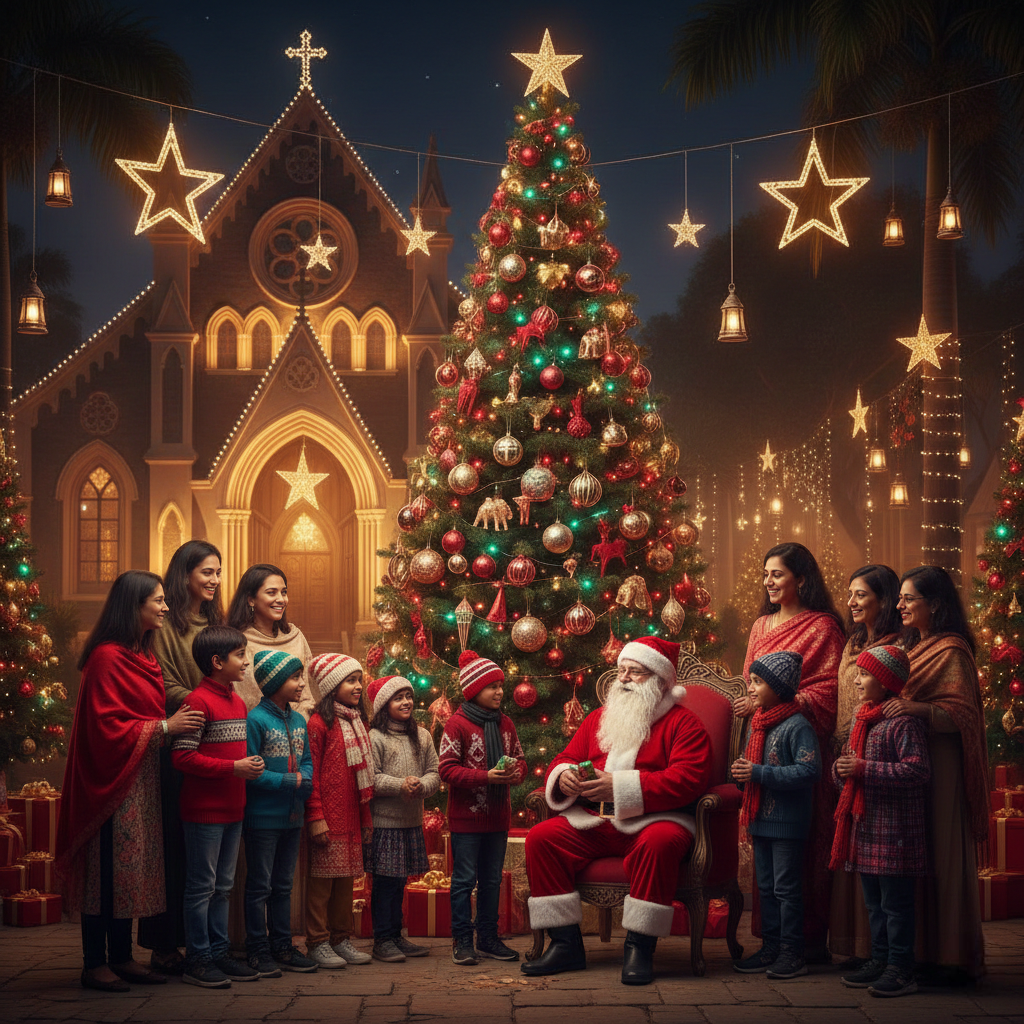
In India, Christmas transcends religious boundaries. It’s a time when families come together, children eagerly await Santa Claus, and communities participate in carol singing and midnight prayers. The festival beautifully blends Western traditions with Indian customs, creating a unique celebration that reflects the country’s diverse culture.
What is Christmas and Why is it Celebrated?
Christmas is an annual festival celebrated on December 25th to honor the birth of Jesus Christ, the central figure of Christianity. Christians worldwide believe that Jesus was born in Bethlehem over 2,000 years ago, and his arrival brought hope, salvation, and divine love to humanity.
The word “Christmas” comes from “Christ’s Mass,” a special church service held to celebrate the nativity. Over centuries, Christmas has evolved from a purely religious observance into a global festival that celebrates love, kindness, family bonding, and the spirit of giving. People exchange gifts, decorate their homes, prepare special meals, and spread joy throughout their communities.
History and Origin of Christmas
The history of Christmas dates back to the early days of Christianity. While the exact date of Jesus Christ’s birth is not mentioned in the Bible, early Christians chose December 25th as the official celebration day around the 4th century CE. This date was likely selected to coincide with existing pagan winter festivals like the Roman Saturnalia and the Germanic Yule celebrations.
Initially, Christmas was a solemn religious occasion focused on prayer and worship. However, as Christianity spread across Europe and other parts of the world, different cultures added their own traditions to the celebration. The tradition of decorating evergreen trees originated in Germany, while the legend of Santa Claus evolved from the story of Saint Nicholas, a 4th-century Christian bishop known for his generosity.
When European missionaries and colonizers arrived in India, they brought Christmas traditions with them. The Portuguese in Goa, the British across India, and various missionary groups established churches and introduced Christmas celebrations. Over time, these traditions were embraced and adapted by local communities, creating the distinctive way the **Christmas festival in India** is celebrated today.
Why Christmas is Celebrated on 25 December
The choice of December 25th as Christmas Day has historical and theological significance. While the Bible does not specify the exact date of Jesus’s birth, early church leaders selected this date for several reasons.
One theory suggests that December 25th was chosen to align with the winter solstice celebrations that were already popular in the Roman Empire. By celebrating Christmas on this date, the church could offer a Christian alternative to pagan festivities. Another belief is that early theologians calculated the date based on the assumption that Jesus was conceived on March 25th (the Feast of the Annunciation), which would place his birth nine months later on December 25th.
Regardless of the historical reasons, December 25th has been universally accepted as Christmas Day for over 1,600 years, making it one of the most important dates in the Christian calendar.
Significance of Christmas in Christianity
For Christians, Christmas holds profound spiritual significance. The birth of Jesus Christ represents God’s love for humanity and the fulfillment of ancient prophecies. Christians believe that Jesus came to Earth to save mankind from sin and offer eternal life through faith.
The nativity story, as told in the Gospels of Matthew and Luke, describes how Mary and Joseph traveled to Bethlehem, where Jesus was born in a humble manger because there was no room at the inn. Angels announced his birth to shepherds, and wise men from the East followed a star to bring gifts of gold, frankincense, and myrrh.
Christmas reminds Christians of core values such as humility, compassion, sacrifice, and unconditional love. The festival encourages believers to reflect on these teachings and extend kindness to others, especially those in need. Church services, prayer gatherings, and carol singing during Christmas deepen the spiritual connection among Christian communities.
How Christmas is Celebrated in India
The Christmas festival in India is a beautiful blend of religious devotion and cultural festivities. While the Christian community leads the celebrations, people from other religions also participate enthusiastically, making it a truly inclusive festival.
Decorations
Indian homes, churches, and public spaces transform into winter wonderlands during Christmas. Streets are adorned with colorful lights, stars, and buntings. Homes feature nativity scenes (cribs) depicting the birth of Jesus, along with fairy lights, bells, and wreaths made from fresh flowers or artificial materials.
Shopping markets overflow with Christmas decorations, ornaments, and gift items. Even non-Christian families enjoy decorating their homes with festive lights and stars, embracing the joyful atmosphere.
Christmas Tree
The Christmas tree is perhaps the most iconic symbol of the festival. Families set up evergreen trees (real or artificial) and decorate them with baubles, tinsel, stars, and lights. The tree-topping star represents the Star of Bethlehem that guided the wise men to baby Jesus.
In India, the tradition of decorating Christmas trees has been widely adopted. While pine trees are not native to most regions, artificial trees are readily available in markets. Some families use mango or banana trees as creative alternatives, decorating them with colorful ornaments and homemade crafts.
Santa Claus
Children across India eagerly await the arrival of Santa Claus, the jolly figure in a red suit who brings gifts. Though Santa Claus originated from Western folklore, Indian children have embraced this tradition wholeheartedly.
During Christmas, shopping malls, schools, and residential complexes organize Santa Claus visits where children can meet him, take photographs, and receive small gifts. Many families leave out cookies and milk for Santa on Christmas Eve, and children wake up on Christmas morning hoping to find presents under the tree or in stockings hung by the fireplace.
Midnight Mass
Midnight Mass is the most significant religious ceremony during Christmas. Churches across India hold special services on the night of December 24th, continuing into the early hours of December 25th. These services include hymns, prayers, Bible readings, and sermons about the nativity.
Christian families dress in their finest clothes and attend these services together. The atmosphere inside churches is deeply spiritual, with candlelight processions, choir performances, and communal worship creating a sense of unity and devotion. After the service, families return home to enjoy festive meals and exchange gifts.
Food and Sweets
No Indian celebration is complete without delicious food, and Christmas is no exception. The **Christmas festival in India** features a delightful array of traditional and fusion dishes.
Plum cake is undoubtedly the star of Christmas feasting. Prepared weeks in advance, this rich, fruit-laden cake soaked in rum or brandy is shared among family, friends, and neighbors. Other popular treats include Christmas cookies, mince pies, gingerbread houses, and chocolate logs.
Traditional Indian sweets like gulab jamun, ladoos, and barfi are also served, adding a local touch to the celebrations. Many families prepare special biryanis, roasted chicken or turkey, and traditional curries to mark the occasion.
Regional Christmas Celebrations in India
India’s diversity shines through in the way different regions celebrate Christmas. Each area adds its unique cultural flavor to the festival.
Goa
Goa, with its strong Portuguese Catholic heritage, celebrates Christmas with unmatched enthusiasm. Churches like the Basilica of Bom Jesus and Se Cathedral host grand midnight masses attended by thousands. Goan homes feature elaborate cribs and decorations.
Traditional Goan Christmas includes kuswar, a collection of sweets and savories like nevris, kulkuls, and dodol. Carol singing, community feasts, and beach parties make Goan Christmas a vibrant and joyful experience. The state’s Christian population ensures that Christmas feels truly special here.
Kerala
Kerala’s Christian community, particularly in cities like Kochi and Kottayam, celebrates Christmas with deep religious fervor. Churches are beautifully decorated with flowers and lights. The tradition of setting up star-shaped paper lanterns called “Pappanji” is unique to Kerala.
Kerala’s Christmas feast, known as “Perunnal Sadya,” includes dishes like appam, stew, fish curry, and traditional rice preparations. Carol singing in Malayalam adds a regional touch to the celebrations. Many churches organize nativity plays and processions that attract large crowds.
Northeast India
In states like Nagaland, Meghalaya, and Mizoram, where Christianity is the predominant religion, Christmas is the biggest festival of the year. The celebrations last several days and include community gatherings, feasts, cultural programs, and sporting events.
Churches organize special services, and villages come alive with music, dance, and traditional performances. The spirit of togetherness is evident as entire communities participate in preparing meals and organizing events. Christmas in Northeast India reflects the region’s rich cultural heritage combined with Christian traditions.
Traditional Christmas Foods in India
Food plays a central role in Christmas celebrations, and Indian families prepare an impressive spread of dishes that combine traditional recipes with local flavors.
Plum Cake remains the most beloved Christmas treat. Families start preparing the cake batter months in advance, soaking dried fruits in alcohol to develop rich flavors. The cake is then baked and distributed among loved ones.
Kulkuls are tiny, shell-shaped sweet snacks popular in Goan and Mangalorean Christian communities. Made from flour, coconut milk, and sugar, these crispy treats are labor-intensive but absolutely delicious.
Christmas Cookies come in various shapes and flavors—gingerbread men, sugar cookies, butter cookies, and chocolate chip cookies. Children love decorating these cookies with colorful icing and sprinkles.
Roasted Meats like chicken, pork, or turkey take center stage at Christmas dinners. These are marinated with Indian spices, giving them a unique flavor profile that differs from Western preparations.
Biryani and Pulao are also popular, especially in South Indian Christian households. The aromatic rice dishes paired with spicy curries create a festive feast that satisfies everyone.
Dodol, a sticky sweet made from rice flour, jaggery, and coconut milk, is another specialty enjoyed during Christmas in coastal regions.
Christmas Traditions Around the World
While we celebrate the Christmas festival in India with our unique customs, it’s fascinating to see how other countries observe this special day.
In the United States and Canada, Christmas is a major holiday featuring elaborate home decorations, Christmas trees, gift exchanges, and festive parades. Families gather for turkey dinners and watch holiday movies together.
European countries like Germany have famous Christmas markets where people shop for decorations, gifts, and traditional foods. The concept of advent calendars and Christmas wreaths originated in Europe.
In Australia, Christmas falls during summer, so people celebrate with beach barbecues and outdoor parties. Santa Claus is sometimes depicted wearing shorts and arriving on a surfboard!
Latin American countries celebrate Christmas with vibrant processions, piñatas, and midnight feasts called “Nochebuena.” Each country adds its cultural music, dance, and food traditions to the celebration.
In the Philippines, Christmas celebrations start as early as September and continue until January, making it one of the longest Christmas seasons in the world. Families display colorful parols (star-shaped lanterns) and attend multiple church services.
Despite these regional differences, the universal themes of Christmas—love, peace, family, and generosity—remain constant across all cultures.
Importance of Christmas for Children and Families
Christmas holds a special place in the hearts of children. The excitement of decorating the tree, writing letters to Santa, and waking up to find gifts creates magical childhood memories that last a lifetime.
For families, Christmas provides a precious opportunity to reconnect and spend quality time together. In today’s fast-paced world, where everyone is busy with work and studies, the holiday season allows families to pause, celebrate, and strengthen their bonds.
Christmas teaches children important values like kindness, sharing, and gratitude. Many families involve children in charitable activities during this season, such as donating clothes, food, or toys to those less fortunate. This instills a sense of compassion and social responsibility from a young age.
The festival also promotes creativity as children engage in activities like making Christmas cards, decorating cookies, and crafting ornaments. These hands-on experiences contribute to their cognitive and emotional development.
Modern Christmas Celebrations and Social Media Trends
The way we celebrate the Christmas festival in India has evolved significantly with technology and social media. Today’s Christmas is as much about digital expression as it is about traditional customs.
Social media platforms like Instagram, Facebook, and WhatsApp overflow with Christmas wishes, photos of decorated homes, and videos of celebrations. Hashtags like #ChristmasInIndia, #ChristmasDecor, and #ChristmasFeast trend during the season as people share their festive moments.
Online shopping has revolutionized Christmas gift-giving. E-commerce platforms offer special Christmas sales, making it convenient to purchase decorations, gifts, and party supplies from the comfort of home.
Virtual celebrations have also become popular, especially after recent years when families couldn’t gather physically. Video calls, online carol singing sessions, and virtual Secret Santa games have added new dimensions to Christmas celebrations.
Food bloggers and influencers share Christmas recipes, decoration ideas, and DIY craft tutorials, inspiring others to try new things. The digital age has made Christmas more accessible and inclusive, allowing people to participate in the festive spirit regardless of their location.
Christmas Quotes and Wishes
Christmas is a time for spreading joy and love through heartfelt messages. Here are some popular Christmas quotes and wishes:
- Christmas is not as much about opening our presents as opening our hearts. – Janice Maeditere
- May your Christmas sparkle with moments of love, laughter, and goodwill.
- Wishing you a season filled with warm moments and cherished memories. Merry Christmas!
- Christmas waves a magic wand over this world, and behold, everything is softer and more beautiful. – Norman Vincent Peale
- May the spirit of Christmas bring you peace, the gladness of Christmas give you hope, and the warmth of Christmas grant you love.
Sharing these messages with friends, family, and colleagues strengthens relationships and spreads the festive cheer that defines Christmas.
FAQs About Christmas Festival in India
1. When is Christmas celebrated in India?
Christmas is celebrated on December 25th every year in India, just like in other parts of the world. The celebrations often begin on Christmas Eve (December 24th) with midnight mass and continue throughout the following day.
2. Is Christmas a public holiday in India?
Yes, Christmas is a gazetted public holiday in India. Schools, government offices, banks, and many private organizations remain closed on December 25th to allow people to celebrate the festival with their families.
3. How do Christians celebrate Christmas festival in India?
Christians in India celebrate Christmas by attending midnight mass, decorating churches and homes, setting up nativity scenes, preparing traditional foods like plum cake, exchanging gifts, and spending time with family. Carol singing and community gatherings are also common.
4. Do non-Christians celebrate Christmas in India?
Yes, Christmas has become a secular festival in India, and people from various religious backgrounds participate in the celebrations. Many non-Christian families decorate their homes, exchange gifts, and enjoy Christmas treats.
5. What are the popular Christmas foods in India?
Popular Christmas foods in India include plum cake, Christmas cookies, kulkuls, dodol, roasted chicken or turkey, biryani, and various traditional sweets. Each region has its own special dishes that add local flavor to the celebrations.
6. Which Indian states celebrate Christmas most enthusiastically?
Goa, Kerala, Nagaland, Meghalaya, Mizoram, and other Northeastern states with significant Christian populations celebrate Christmas most enthusiastically. These regions have rich Christmas traditions and elaborate celebrations.
7. What is midnight mass on Christmas?
Midnight mass is a special church service held on Christmas Eve (December 24th) that continues past midnight into Christmas Day. It commemorates the birth of Jesus Christ and includes prayers, hymns, Bible readings, and candlelight processions.
8. Why do people decorate Christmas trees?
The Christmas tree tradition symbolizes eternal life and hope. The evergreen tree represents life that continues through winter, and the star on top represents the Star of Bethlehem. Decorating trees has become a beloved tradition that brings families together.
9. What is the significance of Santa Claus in Christmas?
Santa Claus represents the spirit of giving and generosity during Christmas. Based on Saint Nicholas, a Christian bishop known for helping the poor, Santa Claus brings joy to children by delivering gifts and spreading happiness.
10. How long do Christmas celebrations last in India?
Christmas celebrations in India typically begin a few days before December 25th and can continue until New Year’s Day. However, the main celebrations occur on Christmas Eve and Christmas Day.
11. What is a nativity scene or crib?
A nativity scene, also called a crib, is a display depicting the birth of Jesus Christ in Bethlehem. It includes figures of baby Jesus, Mary, Joseph, shepherds, angels, and the three wise men, along with animals and a manger.
12. Are Christmas gifts exchanged in India?
Yes, exchanging gifts is a popular Christmas tradition in India. Family members and friends exchange presents as a symbol of love and appreciation. Secret Santa games are also common in offices and social groups.
13. What are Christmas carols?
Christmas carols are religious songs and hymns sung during the Christmas season. Popular carols include “Silent Night,” “Jingle Bells,” “O Holy Night,” and “Joy to the World.” Carol singing groups often go door-to-door spreading festive cheer.
14. How is Christmas different in North and South India?
South India, particularly Kerala and Goa, has larger Christian populations and celebrates Christmas with more traditional religious fervor. North India sees more secular celebrations with focus on decorations, parties, and Santa Claus, though Christian communities maintain their religious traditions.
15. What is the meaning of Christmas colors red and green?
Red symbolizes the blood of Jesus Christ and represents love and sacrifice, while green represents eternal life and hope, derived from the evergreen plants that remain vibrant through winter.
16. Can you visit churches in India during Christmas?
Yes, most churches in India welcome visitors during Christmas celebrations. Many people, regardless of their religion, visit beautifully decorated churches to experience the festive atmosphere and attend midnight mass services.
17. What is the Christmas festival in India called in different languages?
In Hindi, it’s called “Bada Din” (meaning Big Day). In Tamil, it’s “Kirismas Thiruvizha,” in Malayalam “Christmas Thirunaal,” and in Marathi “Natalachi Sann.” Different regions have their own names for the festival.
18. How has commercialization affected Christmas in India?
Commercialization has made Christmas more visible in India with shopping malls, restaurants, and stores offering special decorations, sales, and themed events. While some feel this dilutes religious significance, others appreciate that it makes the festival more inclusive and accessible.
19. What are some unique Indian Christmas traditions?
Unique Indian Christmas traditions include making paper star lanterns in Kerala, preparing kuswar (a variety of sweets) in Goa, using banana or mango trees as Christmas trees in some regions, and incorporating Indian spices into traditional Christmas recipes.
20. Where can you experience the best Christmas celebrations in India?
The best Christmas celebrations in India can be experienced in Goa (especially Old Goa churches), Kerala (Kochi and Kottayam), Kolkata (Park Street decorations), Mumbai (Bandra area), and Northeastern states like Shillong, Kohima, and Aizawl, where Christmas is celebrated with tremendous enthusiasm.
Conclusion
The Christmas festival in India is a beautiful celebration that transcends religious and cultural boundaries. It brings people together in a spirit of love, joy, and harmony, reflecting the country’s secular values and diverse heritage.
From the spiritual significance of midnight mass to the excitement of children meeting Santa Claus, from traditional plum cakes to regional delicacies, Christmas in India is a unique blend of Western traditions and Indian customs. Whether celebrated in the churches of Goa, the communities of Northeast India, or the bustling cities across the country, Christmas reminds us of the importance of kindness, generosity, and family bonds.
As we decorate our homes, exchange gifts, and share meals with loved ones, let us remember the true spirit of Christmas—spreading love and bringing joy to everyone around us. May this festive season fill your hearts with happiness and your lives with blessings.
Merry Christmas to you and your family!