The Rise of the Mauryan Empire: How India’s First Great Empire Was Built
The Mauryan Empire (321-185 BCE) transformed India’s fragmented janapadas into the subcontinent’s first centralized superpower, ruling 50 million people across 5 million square kilometers with unprecedented administrative sophistication. Founded by Chandragupta Maurya a lowborn warrior guided by Brahmin strategist Kautilya, this empire stretched from Afghanistan to Bengal, employing 600,000+ soldiers, 30,000+ cavalry, and 9,000 elephants while pioneering statecraft detailed in the Arthashastra.
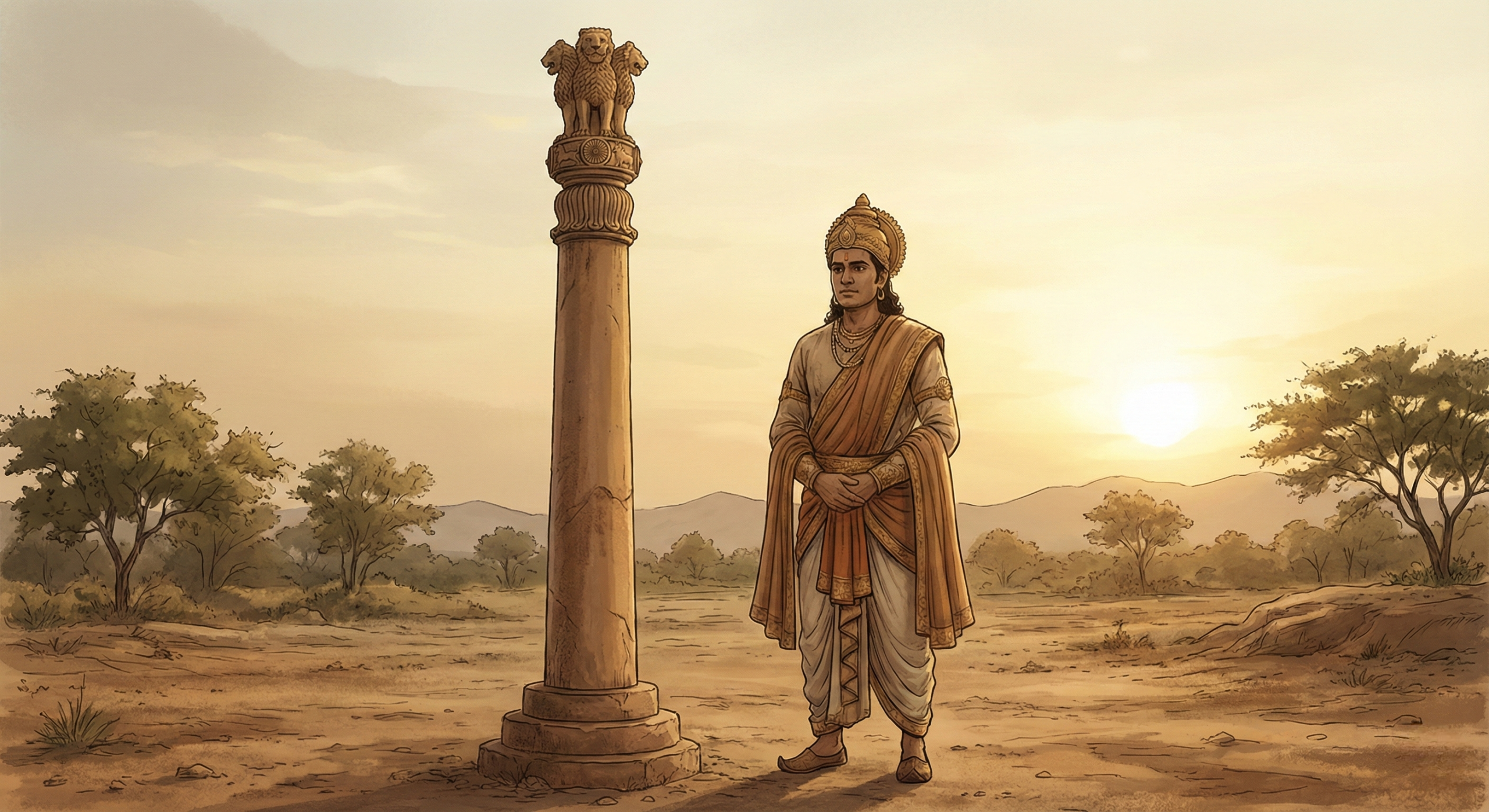
Unlike conqueror-king narratives, Mauryan rise represents India’s first encounter with realpolitik defeating Nanda tyranny, Greek satraps, and jungle tribes through espionage, economic warfare, and hydraulic engineering. Ashoka’s post-Kalinga transformation from bloodthirsty emperor to dharmic ruler created global Buddhism while maintaining imperial structures that influenced Qin China and Seleucid Persia.
From Pataliputra’s wooden palaces to Taxila’s universities, the Mauryans built India’s first golden age, standardizing weights, coinage, and bureaucracy across 4,000+ towns. This comprehensive history explores Chandragupta’s audacious coup, Bindusara’s consolidation, Ashoka’s moral revolution, and the empire’s spectacular collapse.
Mauryan Empire: Timeline & Key Rulers
| Ruler | Reign | Major Achievements | Territorial Extent |
|---|---|---|---|
| Chandragupta Maurya | 321-297 BCE | Nanda overthrow, Seleucus defeat, Arthashastra statecraft | Magadha to Saurashtra |
| Bindusara | 297-273 BCE | Deccan conquest, 16 vassal kings, Tamil alliances | Added Karnataka, Konkan |
| Ashoka | 268-232 BCE | Kalinga War, Buddhist conversion, 30+ rock edicts | Peak: Afghanistan to Bangladesh |
| Dasaratha & others | 232-185 BCE | Decline, partition among brothers | Fragmentation begins |
Pre-Mauryan Chaos: Nanda Tyranny
Magadha’s Nanda dynasty (c. 345-321 BCE) controlled Ganges valley through brute taxation reportedly 1/6th harvest, 1/4th trade but alienated Brahmins, Kshatriyas, and merchants through parvenu arrogance. Mahapadma Nanda’s 100,000+ infantry and 6,000 elephants created power vacuum exploited by Chandragupta, a peacock-tamer’s son from lowly guild.
Alexander’s Failed Invasion (326 BCE)
Alexander’s Porus battle left northwest satraps (Taxiles, Abisares) vassalized but Macedonian retreat created succession crisis. Greek accounts (Megasthenes, Strabo) confirm Chandragupta negotiating with these governors, learning siegecraft while Alexander’s army mutinied at Beas River.
Chanakya’s Masterstroke: The Nanda Coup
Kautilya Chanakya (Vishnugupta), humiliated Taxila professor, swore Nanda destruction after insult. Discovered Chandragupta training guild youths in Taxila, orchestrated seven-stage coup: intelligence networks, treasury sabotage, provincial rebellions, Pataliputra siege. By 321 BCE, 18-year-old Chandragupta captured Magadha’s 500-km² fortress, ending 200-year Haryanka-Shishunaga-Nanda continuum.
Chandragupta’s Empire Building (321-297 BCE)
Northwest Conquest: Seleucus Challenge
Seleucus Nicator’s 305 BCE invasion met Chandragupta’s 600,000 troops. Treaty ceded Afghanistan-Kandahar for 500 elephants, Greek princess marriage, ambassador Megasthenes. Mauryan silver pana coins standardized Indus-Ganges economy; punch-marked technology influenced Kushan-Achaemenid coinage.
Administrative Revolution: Arthashastra Blueprint
Kautilya’s Arthashastra (15 books, 6,000 sutras) created world’s first centralized bureaucracy: 4-tier provincial governors (kumara), 72 taxes, 30 guilds regulated, espionage networks monitoring 4 million officials. Irrigation tanks fed 150,000+ villages; punch-marked coins circulated from Taxila to Tamralipti.
- Espionage: 40+ agent types (wandering nuns, merchants)
- Justice: Dharmasthiya courts, 92 fines/nisargas
- Economy: State monopolies (mines, salt, arms)
- Military: 4-fold army (infantry, cavalry, elephants, chariots)
Bindusara: Deccan Expansion (297-273 BCE)
“Amitraghata” (slayer of foes) conquered Karnataka, Konkan through 16 tributary mahamatras. Tamil Sangam literature confirms Mauryan suzerainty; Greek ambassadors (Deimachos) report 500+ court eunuchs, 10,000+ wives signaling imperial splendor.
Ashoka: From Conqueror to Dharmachakra (268-232 BCE)
Kalinga Catastrophe (261 BCE)
Ashoka’s conquest of Kalinga killed 100,000+, enslaved 150,000, widowed thousands rock edict 13 confesses “remorse which knew no bounds.” Converted to Buddhism under Upagupta, issued 30+ edicts in Prakrit, Greek, Aramaic across empire.
Dhamma Revolution: Non-violent imperialism through dharma mahamatras (moral officers), animal hospitals, 84,000 stupas, third Buddhist council. Greek kings (Ptolemy, Antigonus) received dhamma envoys; edicts found in Kandahar bilingual inscriptions.
Mauryan Achievements: Engineering Golden Age
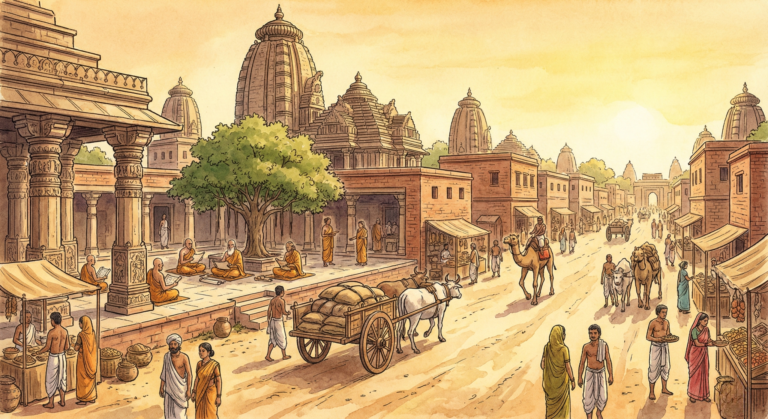
- Urban Planning: Pataliputra’s 15-km wooden palisade, 570 towers (Megasthenes)
- Roads: 2,400-km Uttarapatha from Kabul-Tamralipti
- Irrigation: 100,000+ tanks, Sudarshana lake (Gujarat)
- Universities: Taxila (10,000 students), Pataliputra libraries
Spectacular Collapse (185 BCE)
Pushyamitra Shunga assassinated last Mauryan Brihadratha during military parade. Weak successors, Brahmanical revival, provincial governors independence, Shaka invasions fragmented empire into 9 kingdoms. Mauryan model influenced Gupta, Chola, Mughal revivals.
Global Legacy: First World Empire
Mauryan achievement unifying 30% world population under single administration astonished Greek observers, inspired Chinese emperor Shi Huangdi’s centralization. Ashoka’s dhamma exported Buddhism to Sri Lanka, Southeast Asia, creating civilizational arc enduring 2,000 years.
Frequently Asked Questions: Mauryan Empire
1. Who founded the Mauryan Empire?
Chandragupta Maurya (321 BCE) overthrew Nanda dynasty with Kautilya Chanakya’s guidance, capturing Pataliputra after 7-year campaign.
2. What is Arthashastra?
Kautilya’s 15-book treatise detailing statecraft, espionage (40 agent types), economics (72 taxes), military (4-fold army) world’s first political science.
3. Why did Ashoka convert to Buddhism?
Kalinga War (261 BCE) killed 100,000+, enslaved 150,000 rock edict 13 confesses remorse, converted under Upagupta, became dhamma champion.
4. How large was Mauryan Empire?
5 million sq km, 50 million people (30% world population) Afghanistan to Bengal, Himalayas to Deccan plateau under single administration.
5. What made Mauryan administration unique?
4-tier bureaucracy (kumara governors), dharmasthiya courts, punch-marked pana coins, irrigation tanks feeding 150,000 villages.
6. Who was Megasthenes?
Seleucid ambassador to Chandragupta’s court; Indica describes Pataliputra’s 15-km palisade, 7-casteless society, philosopher-kings.
7. Why did Mauryan Empire collapse?
Pushyamitra Shunga assassinated Brihadratha (185 BCE); weak successors, Brahmanical revival, Shaka invasions fragmented into 9 kingdoms.
8. What were Ashoka’s rock edicts?
30+ inscriptions (Prakrit, Greek, Aramaic) across empire promoting dhamma non-violence, tolerance, animal welfare, moral officials.
9. Mauryan military strength?
600,000 infantry, 30,000 cavalry, 9,000 elephants, 8,000 chariots Seleucus ceded territory for 500 elephants (305 BCE).
10. Chandragupta’s background?
Peacock-tamer’s son from Moriya guild; trained Taxila under Chanakya, led youth rebellion against Nandas aged 18.
11. What is Kalinga War significance?
Ashoka’s 261 BCE conquest killed 100,000+ triggered remorse, Buddhist conversion, dhamma policy abandoning violent conquest.
12. Mauryan economy features?
State monopolies (mines, salt, arms), 72 taxes, punch-marked silver pana coins, guild regulations, irrigation-supported agriculture.
13. Pataliputra description?
15-km wooden palisade, 570 towers, 64 gates (Megasthenes); Ganges-split island capital housed 400,000+ population.
14. Bindusara achievements?
“Amitraghata” conquered Deccan, ruled 16 vassals, received Greek ambassador Deimachos, allied Tamil kingdoms.
15. Mauryan road network?
2,400-km Uttarapatha (Kabul-Tamralipti), rest-houses every 14 miles, tree-lined highways facilitating trade-administration.
16. Ashoka’s global influence?
Dhamma missionaries to Greek kings (Ptolemy II), Sri Lanka (Mahinda), Southeast Asia created Buddhist civilizational arc.
17. Mauryan coinage innovation?
Punch-marked silver pana (3.4g) four symbols (sun, 6-arm wheel, elephant, tree) standardized economy across 4,000 towns.
18. Role of women in Mauryan society?
Megasthenes notes female bodyguards, ascetics, merchants; Arthashastra regulates 10+ women professions including spies.
19. Mauryan architectural legacy?
84,000 stupas (Sanchi prototype), Ashokan pillars (140-ton monoliths), rock-cut caves survive despite wooden palace perishability.
20. Why study Mauryan Empire?
First Indian golden age centralized administration, ethical governance (Ashoka), Arthashastra realpolitik influenced world statecraft 2,300 years.
Conclusion: India’s Imperial Prototype
Mauryan Empire’s rise proves lowborn genius (Chandragupta-Chanakya) triumphs hereditary incompetence (Nandas) through ruthless realpolitik evolving into moral universalism (Ashoka). Arthashastra’s 2,300-year relevance from espionage to taxation demonstrates timeless statecraft while edicts represent world’s first human rights proclamation.
From jungle guerrilla to dharmachakra, Mauryans built administrative DNA shaping Indian polity for 2,000 years centralized yet decentralized, imperial yet tolerant, martial yet dharmic. Their ruins whisper: empires rise through intellect, fall through complacency.