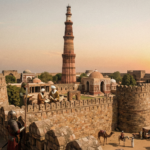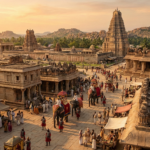
Ashoka the Great: From Warrior to Peaceful Emperor
In 1837 a British mint official in Calcutta named James Prinsep worked out how to read a script that had been dead for a thousand years. What the unlocked inscriptions said surprised everyone. Carved on rocks and polished sandstone pillars from Kandahar to Karnataka, they were the words of one man, an emperor who called himself Devanampiya Piyadasi, “Beloved of the Gods”. He had ruled most of the subcontinent in the third century BCE. He had conquered a neighbouring kingdom at horrific cost. And then, in full public view, he had said sorry.
For decades nobody could say for certain who this Piyadasi was. The Sri Lankan chronicles used the same title for a king they called Asoka, but proof only arrived in 1915, when a gold-prospecting engineer noticed an inscription at Maski, in Karnataka, that used the name Asoka itself. The forgotten emperor had, in effect, signed his work.
Ashoka at a glance
| Reign | c. 268 – 232 BCE (third Mauryan emperor) |
|---|---|
| Dynasty | Maurya — grandson of Chandragupta, son of Bindusara |
| Capital | Pataliputra (modern Patna, Bihar) |
| Defining event | Kalinga War, c. 261 BCE, and his public remorse after it |
| Known for | The Ashokan edicts; state patronage of Buddhism; the policy of dhamma |
| Primary sources | Major & Minor Rock Edicts, Pillar Edicts; Ashokavadana; Sri Lankan chronicles (Dipavamsa, Mahavamsa) |
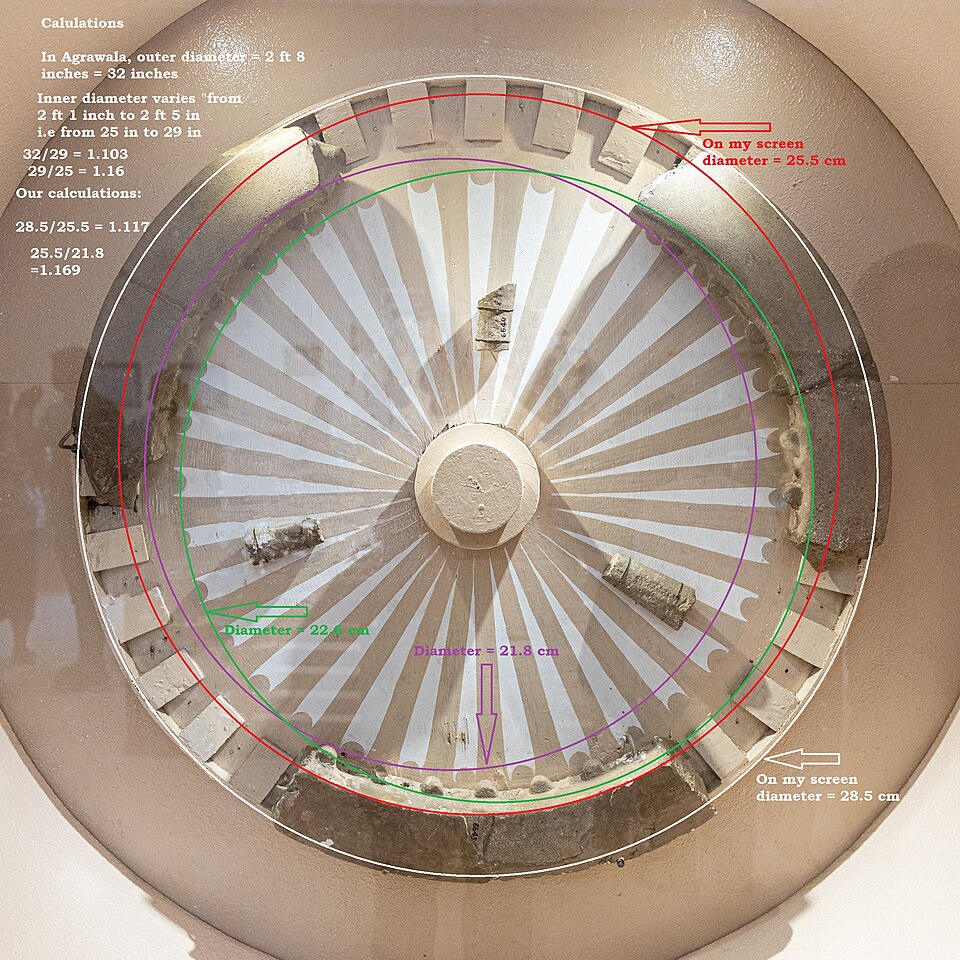
| Legacy today | Lion Capital of Sarnath (national emblem); Ashoka Chakra on the Indian flag |
The prince who almost wasn’t emperor
Ashoka was not the obvious heir. The Ashokavadana, a cycle of Buddhist legends written some four centuries after his death, remembers him as one of Bindusara’s many sons: rough-skinned, disliked by his father, and packed off to govern distant provinces, first Taxila in the northwest and later Ujjain in Malwa. When Bindusara died around 272 BCE the succession turned ugly. The Sri Lankan chronicles claim Ashoka fought and killed his brothers (ninety-nine of them, in the tradition’s telling, which tells you something about the tradition) and was only formally consecrated about four years later, around 268 BCE.
Those same texts paint the young king as “Chandashoka”, Ashoka the Cruel, complete with a purpose-built torture house in Pataliputra. Historians are suspicious of all this. The stories were written by monks with a sermon to preach, and the blacker the sinner, the brighter the conversion. Romila Thapar, whose 1961 study remains the standard work on the reign, reads them as moral literature rather than biography. Strip the legend away and the hard evidence says something simpler: Ashoka inherited the enormous, tightly run state his grandfather Chandragupta had built with Chanakya (we’ve told that story in our article on the rise of the Mauryan Empire), and in the ninth year of his reign he took it to war.
Kalinga, 261 BCE: the war that changed him
Kalinga, roughly modern Odisha, was a prosperous coastal kingdom that had stayed outside the empire’s grip. Around 261 BCE Ashoka crushed it. What makes the war famous is not the victory itself but the way we know about it. No court poet sang of the triumph. What survives instead is the conqueror’s own confession, cut into rock in Major Rock Edict XIII:
“One hundred and fifty thousand people were deported, one hundred thousand were killed, and many times that number perished… After the Kalingas had been conquered, Beloved-of-the-Gods came to feel a strong inclination towards the dhamma, a love for the dhamma and for instruction in dhamma. Now Beloved-of-the-Gods feels deep remorse for having conquered the Kalingas.”
— Major Rock Edict XIII (tr. Ven. S. Dhammika)
Should the numbers be taken literally? Probably not. Ancient inscriptions round their figures freely, and “many times that number” is rhetoric, not arithmetic. The remorse is another matter. No other ruler of the ancient world left behind a public apology for a war he had won. The edict even speaks to Ashoka’s sons and grandsons directly, asking them not to think new conquests worth having; the only conquest worth the name, it says, is “conquest by dhamma”. We’ve written about the campaign itself, and the debate over its scale, in our separate piece on the Kalinga War.
What Ashoka actually meant by “dhamma”
The one-line summary you’ll hear is that Ashoka “converted to Buddhism and renounced violence”. His own inscriptions complicate both halves of that sentence.
Read the edicts and you will find almost no Buddhist doctrine in them. No Four Noble Truths, no nirvana. The dhamma Ashoka preached to his subjects was closer to a code of public decency: obey your parents, be generous to friends and ascetics, spend modestly, speak carefully, treat servants and animals with kindness. And respect the other man’s religion. Rock Edict XII insists that all sects “deserve reverence for one reason or another”, and adds a warning that anyone who praises his own sect too loudly ends up harming it.
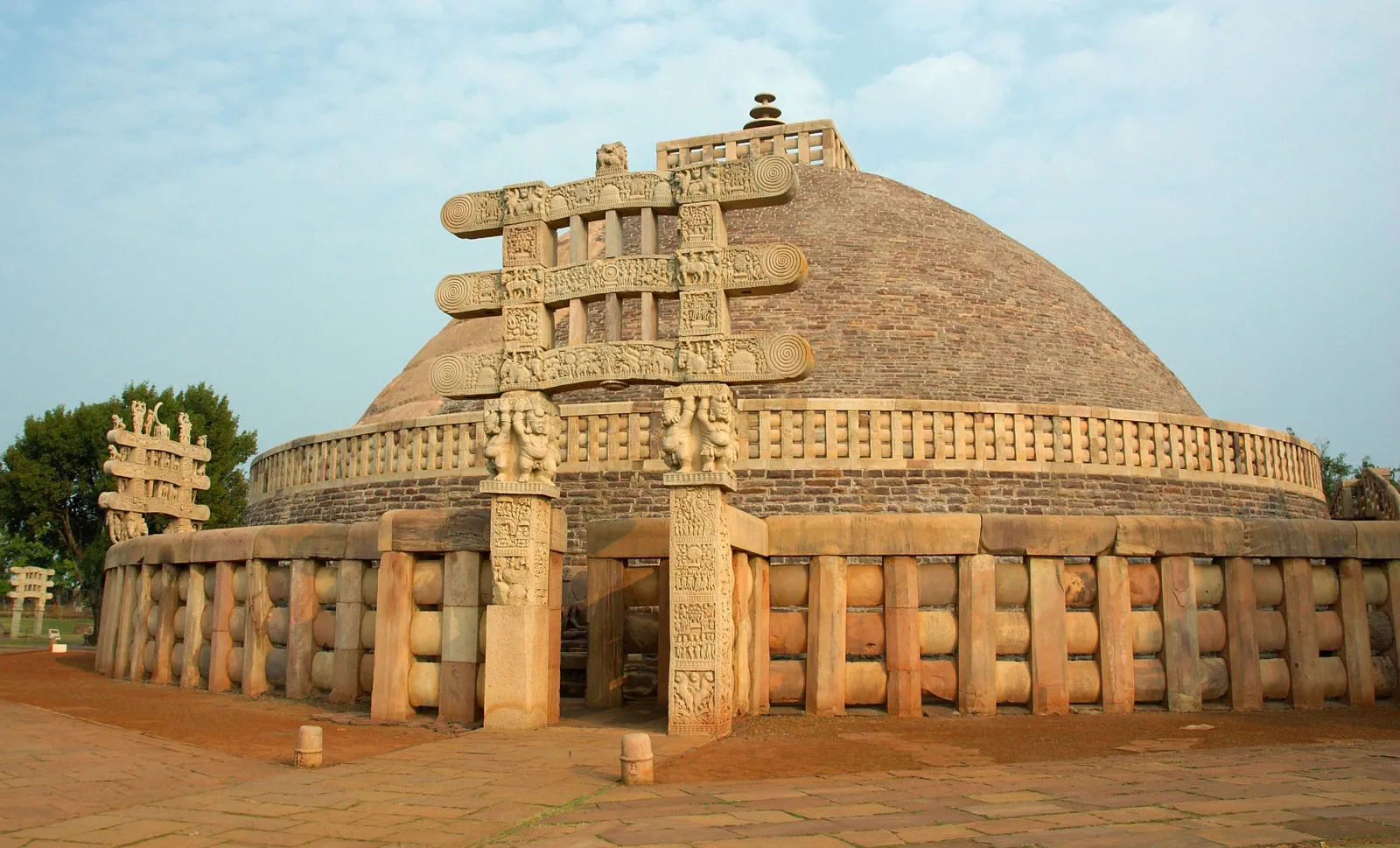
Privately, Ashoka was a committed Buddhist layman. The Minor Rock Edicts trace his deepening involvement with the sangha, and Buddhist tradition credits him with backing the Third Buddhist Council at Pataliputra and despatching missionaries abroad, among them his own son Mahinda and daughter Sanghamitta, who the chronicles say carried Buddhism to Sri Lanka. Whatever the historical details of that mission, this is roughly the moment Buddhism stopped being an Indian sect and started becoming a world religion.
He did not turn pacifist in any modern sense, either. The army stayed. Rock Edict XIII carries a blunt notice to the forest tribes that the king, remorseful or not, still has the power to punish. What changed was what the power was said to be for.
Governing by inscription: a welfare state in stone
The edicts double as a government report card, and parts of it read surprisingly well two thousand years on:
- Medical care: Rock Edict II records medical treatment for people and animals, and the planting of medicinal herbs across the empire, even in neighbouring kingdoms.
- Roads and rest: Pillar Edict VII mentions banyan trees planted for shade, mango groves, wells at regular intervals, and rest houses for travellers.
- A new civil service: the dhamma-mahamattas, officers Ashoka created to promote good conduct and look after prisoners, the elderly and religious communities (Rock Edict V).
- Animal welfare: Pillar Edict V lists protected species and restricts forest burning; Rock Edict I notes that the royal kitchen, which once slaughtered hundreds of animals a day, was down to two peacocks and a deer, “and the deer not regularly”.
Whether all of this happened as advertised, nobody can now check. An inscription is a press release, not an audit. Still, a state that chose to boast about planting shade trees rather than piling up enemy skulls was doing something genuinely new in the ancient world.
How the edicts survived, and were forgotten
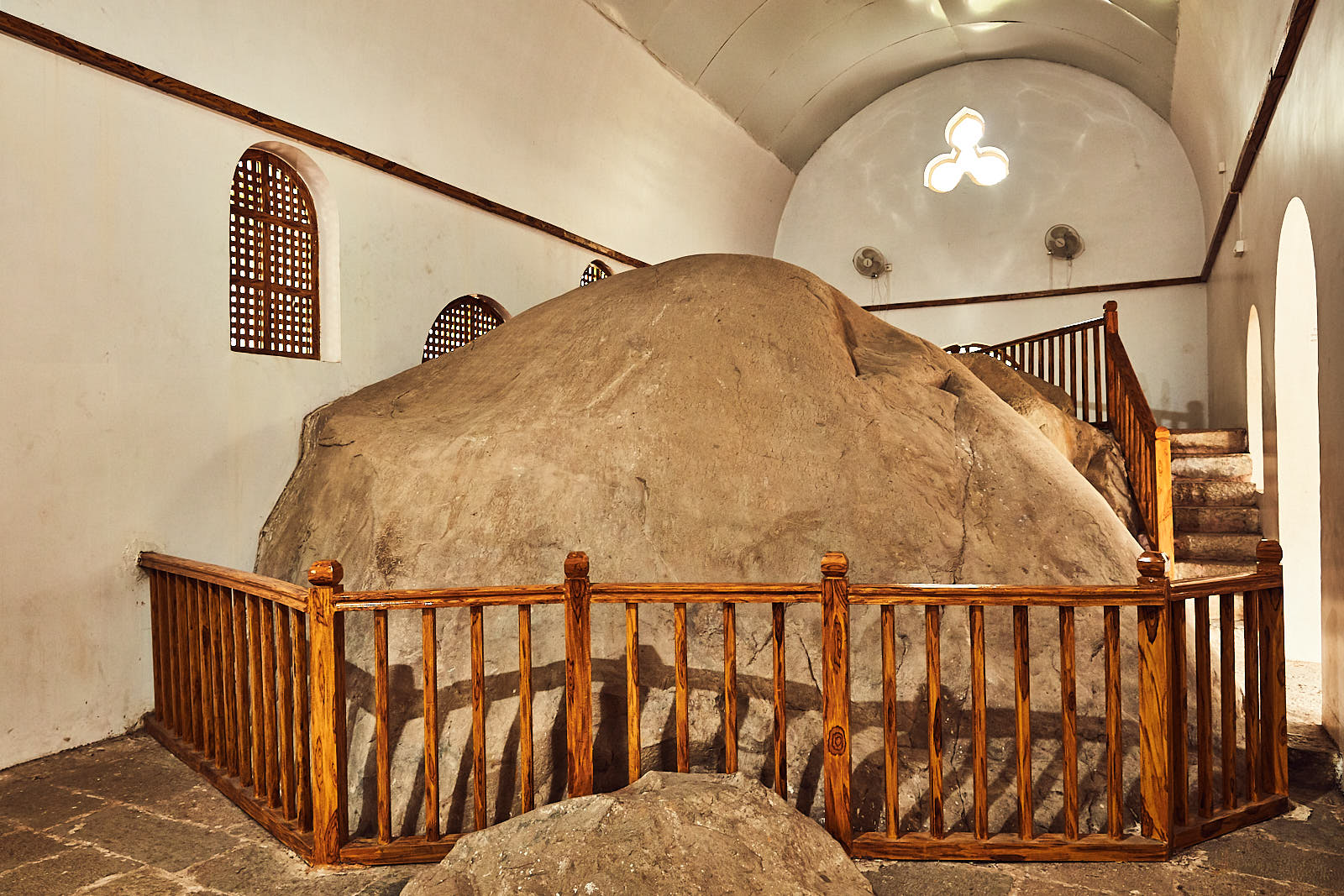
Ashoka’s inscriptions stand at more than thirty sites across India, Nepal, Pakistan and Afghanistan. Most are in Prakrit, written in Brahmi; the northwestern ones use Kharosthi, and at Kandahar there is a bilingual edict in Greek and Aramaic for the frontier’s Hellenistic population. Then Brahmi died out, and with it the ability to read any of them. For centuries people saw the pillars without knowing whose voice they carried. Firoz Shah Tughlaq was impressed enough by one in the 1350s to haul it to Delhi on a specially built forty-two-wheel cart, but neither he nor any scholar at his court could read a word of it. Prinsep’s decipherment in 1837 gave the emperor his voice back; the Maski edict of 1915 gave him back his name.
Death, decline, and a 2,000-year afterlife
Ashoka died around 232 BCE, after some thirty-six years on the throne. The empire barely outlived him. Within half a century it had shrunk to its heartland, and the last Mauryan emperor was overthrown by his own general around 185 BCE. Ashoka’s memory survived mainly outside India, in Sri Lankan chronicles, in the accounts of Chinese pilgrims who came looking for his monuments, in legends told across Buddhist Asia. India itself, having lost the script he wrote in, largely forgot him.
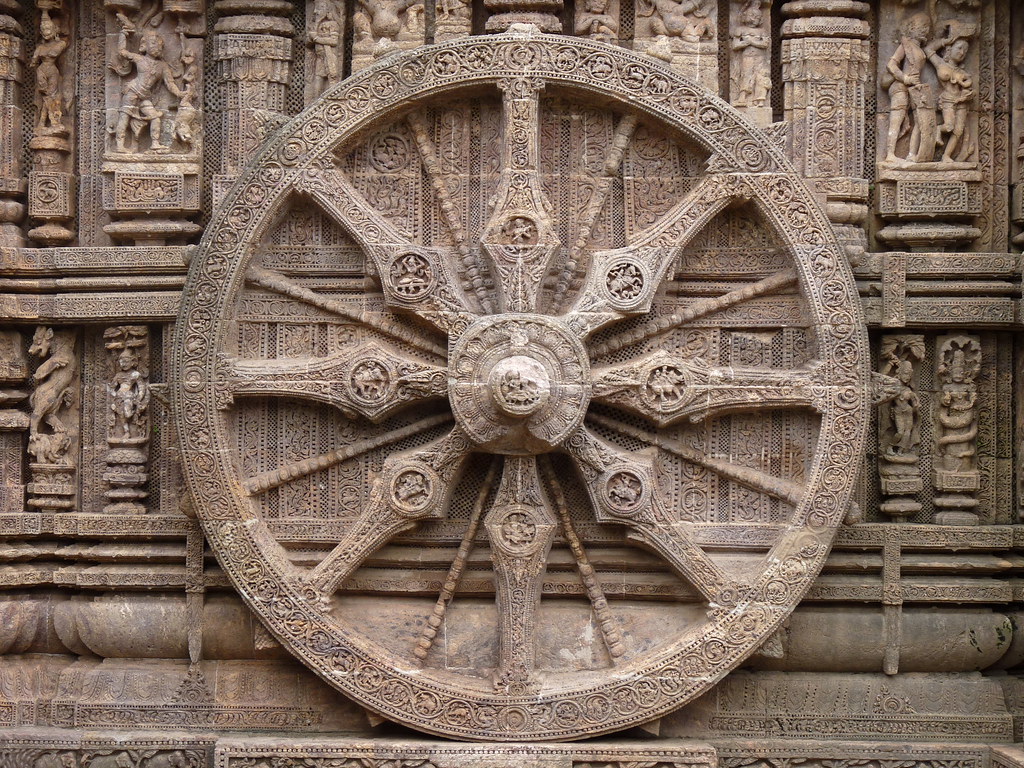
The rediscovery turned him into something no one in 1837 could have predicted: a founding father reclaimed across twenty-one centuries. In 1947 independent India put the Lion Capital of Sarnath on its state emblem and the Ashoka Chakra, the dhamma wheel from the same capital, at the centre of its flag. H.G. Wells had already written the epitaph: among the tens of thousands of monarchs that crowd history, “the name of Asoka shines, and shines almost alone, a star.”
Frequently asked questions
Was Ashoka really as cruel before Kalinga as the legends say?
The torture-chamber stories come from Buddhist legends written centuries after his death, and their job was to make his conversion look dramatic. His own edicts admit the slaughter at Kalinga and say nothing of the rest.
Did Ashoka make Buddhism India’s state religion?
No. He supported the sangha personally and sent Buddhist missions abroad, but the dhamma of his public inscriptions is non-sectarian. Rock Edict XII asks for respect towards Brahmins, Jains, Ajivikas and every other sect.
How do we know the edicts are really Ashoka’s words?
Most inscriptions use the title Devanampiya Piyadasi. Minor edicts at Maski and Gujarra add the personal name Asoka, and the Sri Lankan chronicles use both names for the same king. The identification has been settled since 1915.
Where can I see Ashokan edicts today?
Dhauli and Jaugada in Odisha, near the old Kalinga battlefield; Girnar in Gujarat; Sarnath near Varanasi; and the two pillars Firoz Shah Tughlaq brought to Delhi in the 1350s. The Lion Capital itself is in the Sarnath Museum.
Did Ashoka give up war entirely?
He gave up wars of conquest, not the army. Rock Edict XIII warns the forest tribes that the state could still punish wrongdoing. It was a policy of restraint, not disarmament.
Sources & further reading
- The Edicts of King Asoka, translated by Ven. S. Dhammika (Buddhist Publication Society, 1993) — accessible full translation of the edicts.
- E. Hultzsch, Inscriptions of Asoka (Corpus Inscriptionum Indicarum, Vol. I, 1925) — the standard scholarly edition.
- Romila Thapar, Aśoka and the Decline of the Mauryas (Oxford University Press, 1961; 3rd ed. 2012).
- Nayanjot Lahiri, Ashoka in Ancient India (Harvard University Press, 2015).
- John S. Strong, The Legend of King Aśoka: A Study and Translation of the Aśokāvadāna (Princeton University Press, 1983).
- Archaeological Survey of India — site information on Sarnath and the Ashokan pillar sites (asi.nic.in).
- UNESCO World Heritage Centre — Buddhist Monuments at Sanchi.
Continue reading