Nirmal Jit Singh Sekhon: 1971 India-Pakistan War Ke Shaheed Veer Jo Aakhri Saans Tak Lade
Every generation has its heroes. But some heroes stand apart — not because they sought glory, but because they chose duty over survival without a moment’s hesitation. Flying Officer Nirmal Jit Singh Sekhon was one such man.
On 14 December 1971, with Pakistani fighter jets descending on Srinagar airbase and no backup in sight, Sekhon took off alone in his Folland Gnat and flew straight into the fight. He never came back. But the airbase he protected remained standing.
He was 28 years old. He is the only Indian Air Force officer to ever receive the Param Vir Chakra — India’s highest military honour.
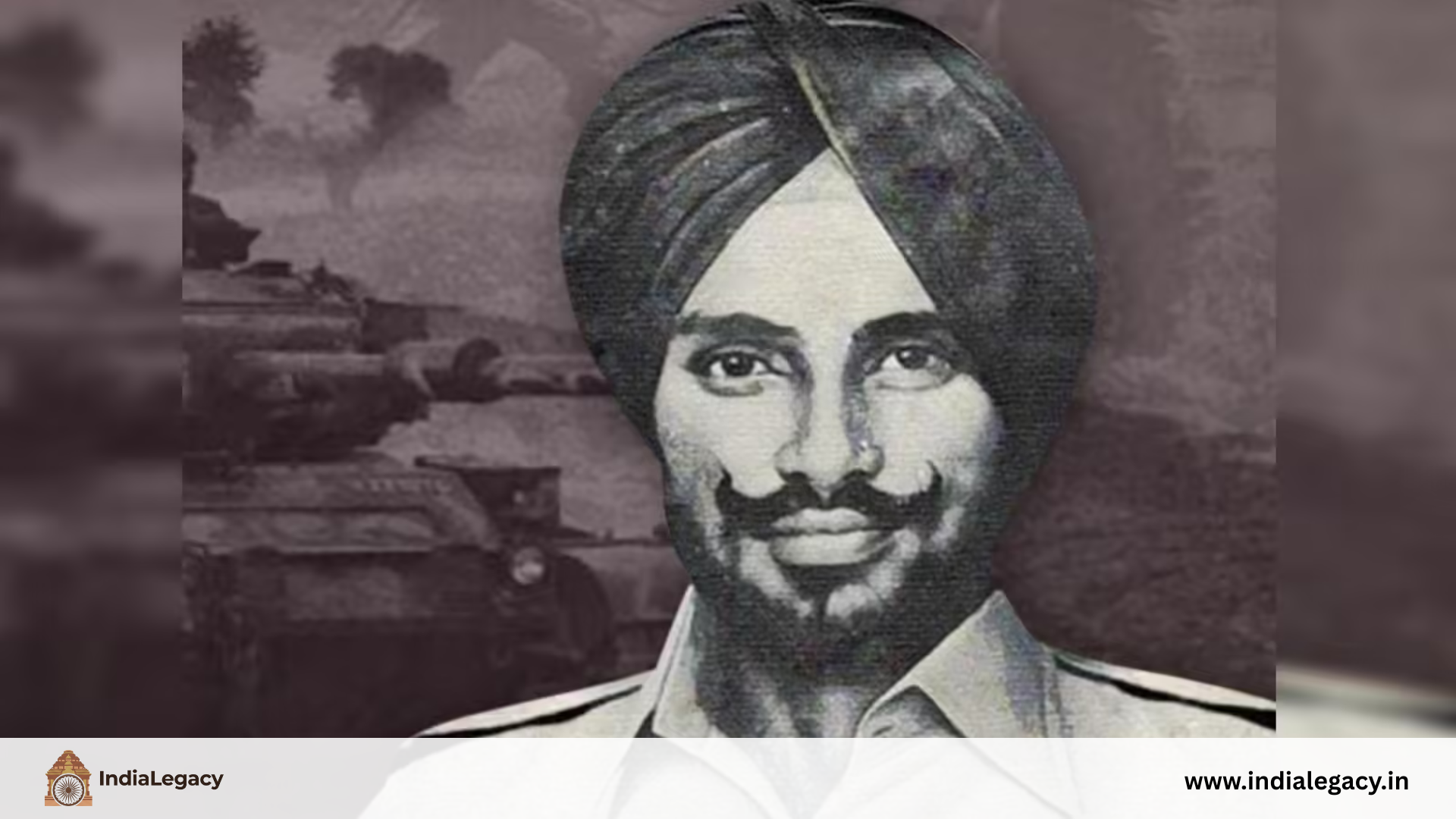
Who Was Nirmal Jit Singh Sekhon?
Nirmal Jit Singh Sekhon was a Flying Officer in the Indian Air Force, serving with No. 18 Squadron during the 1971 India-Pakistan War. Born on 17 July 1943 in Isewal village, Ludhiana district, Punjab, he grew up in a disciplined household where service and integrity were deeply valued.
From an early age, Sekhon showed the qualities that would define his short but extraordinary life — calm under pressure, sharp focus, and an unshakeable sense of responsibility. After completing his education, he joined the Indian Air Force and trained as a fighter pilot, quickly earning a reputation as one of the most capable young officers in his squadron.
Nirmal Jit Singh Sekhon — Key Facts
| Full Name | Nirmal Jit Singh Sekhon |
| Rank | Flying Officer, Indian Air Force |
| Date of Birth | 17 July 1943 |
| Place of Birth | Isewal, Ludhiana, Punjab |
| Date of Martyrdom | 14 December 1971 |
| War | 1971 India-Pakistan War |
| Award | Param Vir Chakra (Posthumous) |
| Aircraft Flown | Folland Gnat Fighter Jet |
| Squadron | No. 18 Squadron, Indian Air Force |
Early Life and Path to the Indian Air Force
Sekhon grew up in Isewal, a small village in Ludhiana district, Punjab. His family was known for its values of hard work and discipline. From childhood, he was drawn to aviation — the idea of flying, of speed, of defending the skies above India.
After completing his schooling, he pursued his dream and was selected for the Indian Air Force. His training period revealed a young man of exceptional skill and composure. Senior officers noted that Sekhon had a natural instinct for aerial combat — the ability to read a situation quickly and respond without hesitation.
By 1971, he was stationed at Srinagar airbase with No. 18 Squadron, one of the IAF’s forward-deployed units along the sensitive Jammu and Kashmir frontier.
The 1971 India-Pakistan War — Air War Context
The 1971 war was not only fought on the ground. Air superiority was a decisive factor, particularly in the western sector along Jammu and Kashmir. Pakistan’s air strategy targeted Indian forward airbases — attempting to destroy aircraft on the ground before they could become operational threats.
Srinagar airbase was a critical forward installation. It supported supply lines, troop movements, and surveillance operations across the Kashmir valley. Neutralising it would have given Pakistan a significant tactical advantage in the region.
It was into this high-stakes environment that Nirmal Jit Singh Sekhon flew on the morning of 14 December 1971.

14 December 1971 — The Last Flight
On that morning, Pakistani Air Force Sabre jets launched a surprise attack on Srinagar airbase. The attack came fast and with little warning. Most Indian aircraft at the base were not in a position to scramble in time.
Sekhon did not wait. He took off alone in his Folland Gnat — a small, highly manoeuvrable fighter jet — and engaged the incoming Pakistani formation without backup.
What followed was a display of aerial courage that has few parallels in Indian military history. Outnumbered and unsupported, Sekhon attacked aggressively, disrupting the Pakistani formation and preventing them from completing their primary objective. The Srinagar airbase, which could have suffered devastating damage, was protected.
In the course of the engagement, Sekhon’s aircraft was hit. He did not survive. He was 28 years old.
The Param Vir Chakra — India’s Highest Military Honour
Following an official inquiry into the events of 14 December 1971, the Government of India awarded Flying Officer Nirmal Jit Singh Sekhon the Param Vir Chakra — posthumously.
The Param Vir Chakra is India’s highest wartime gallantry award, given only in the face of the enemy. It is an honour so rare that in the entire history of independent India, only 21 individuals have received it. Sekhon is the only Indian Air Force officer among them.
This distinction says everything about the scale of what he did on that December morning.

The Folland Gnat — The Aircraft He Flew
The Folland Gnat was a lightweight British-designed fighter aircraft used extensively by the Indian Air Force during the 1960s and 1970s. Small, fast, and highly manoeuvrable, it was well-suited to close air combat — the kind of engagement Sekhon found himself in on his final mission.
Indian Air Force pilots who flew the Gnat during the 1971 war earned it the nickname “Sabre Slayer” — a reference to how effectively it could engage the Pakistani Air Force’s F-86 Sabre jets. Sekhon’s final flight was a textbook example of what a skilled pilot could do in a Gnat against superior numbers.
Why Srinagar Airbase Mattered
Forward airbases like Srinagar were the nerve centres of India’s air operations in Jammu and Kashmir. They allowed the IAF to respond rapidly to threats, support ground forces, and maintain surveillance along the Line of Control.
Had the Pakistani attack on 14 December succeeded in destroying aircraft and runway infrastructure at Srinagar, India’s operational capability in the Kashmir sector would have been severely compromised at a critical stage of the war. Sekhon’s intervention — single-handed and immediate — prevented that outcome.
Legacy and Memorials
Nirmal Jit Singh Sekhon is remembered across India, but especially in Punjab and at the Indian Air Force’s establishments. Several memorials, roads, and institutions bear his name.
At the Indian Air Force Academy and in squadron histories, his name is taught to every generation of new pilots as an example of what the IAF’s values of courage, duty, and sacrifice look like in practice.
In his home district of Ludhiana, he is a source of deep local pride. The young man from Isewal village who flew his Gnat into history is remembered not as a distant military figure, but as a son of Punjab who gave everything.
Sekhon’s Story and Its Relevance Today
In an era where heroism is often performed rather than lived, Nirmal Jit Singh Sekhon’s story is a reminder of what genuine courage looks like. He had every reason to wait — no backup, no orders, no certainty of survival. He took off anyway.
His story is taught in defence academies, referenced in Republic Day addresses, and commemorated on Air Force Day. But beyond the official ceremonies, it speaks to something more personal — the question of what we would do when duty and danger arrive at the same moment.
Frequently Asked Questions
Who was Nirmal Jit Singh Sekhon?
Nirmal Jit Singh Sekhon was a Flying Officer in the Indian Air Force who sacrificed his life on 14 December 1971 while defending Srinagar airbase against a Pakistani aerial attack during the 1971 India-Pakistan War. He was posthumously awarded the Param Vir Chakra — India’s highest military honour.
Why is Nirmal Jit Singh Sekhon famous?
He is famous for single-handedly taking on multiple Pakistani Sabre jets to protect Srinagar airbase during the 1971 war. He is also the only Indian Air Force officer in history to have received the Param Vir Chakra.
Which aircraft did Sekhon fly during his last mission?
He flew the Folland Gnat, a lightweight and highly manoeuvrable fighter jet that Indian Air Force pilots used to great effect during the 1971 war. The Gnat earned the nickname “Sabre Slayer” during this conflict.
How old was Nirmal Jit Singh Sekhon when he died?
He was 28 years old at the time of his martyrdom on 14 December 1971.
What is the Param Vir Chakra?
The Param Vir Chakra is India’s highest wartime military gallantry award, presented for the most conspicuous acts of bravery in the face of the enemy. It is the equivalent of the Victoria Cross in the British system and the Medal of Honor in the American system.
Is Nirmal Jit Singh Sekhon the only IAF officer to receive the Param Vir Chakra?
Yes. As of today, he remains the only Indian Air Force officer to have been awarded the Param Vir Chakra. The award was given to him posthumously following his actions on 14 December 1971.
Where was Nirmal Jit Singh Sekhon born?
He was born on 17 July 1943 in Isewal village, Ludhiana district, Punjab, India.
What was the strategic importance of Srinagar airbase in 1971?
Srinagar airbase was a critical forward installation for the Indian Air Force in Jammu and Kashmir. It supported combat operations, troop supply, and surveillance along the frontier. Protecting it was essential to maintaining India’s operational capability in the region during the war.
Conclusion
Flying Officer Nirmal Jit Singh Sekhon did not set out to become a legend. He set out to do his job — to protect the airbase he was stationed at, to defend the men on the ground below him, and to live up to the uniform he wore.
That he succeeded, at the cost of his own life, is why India remembers him. Not with the hollow language of ceremony, but with the genuine respect owed to a man who, when the moment came, did not look for a way out.
He was 28. He flew alone. He did not come back. And because of that, Srinagar airbase stood.
This article is written for educational and historical purposes and is based on verified Indian defence history sources including official Indian Air Force records and Ministry of Defence documentation.