Badami Caves Karnataka: History and Heritage of India
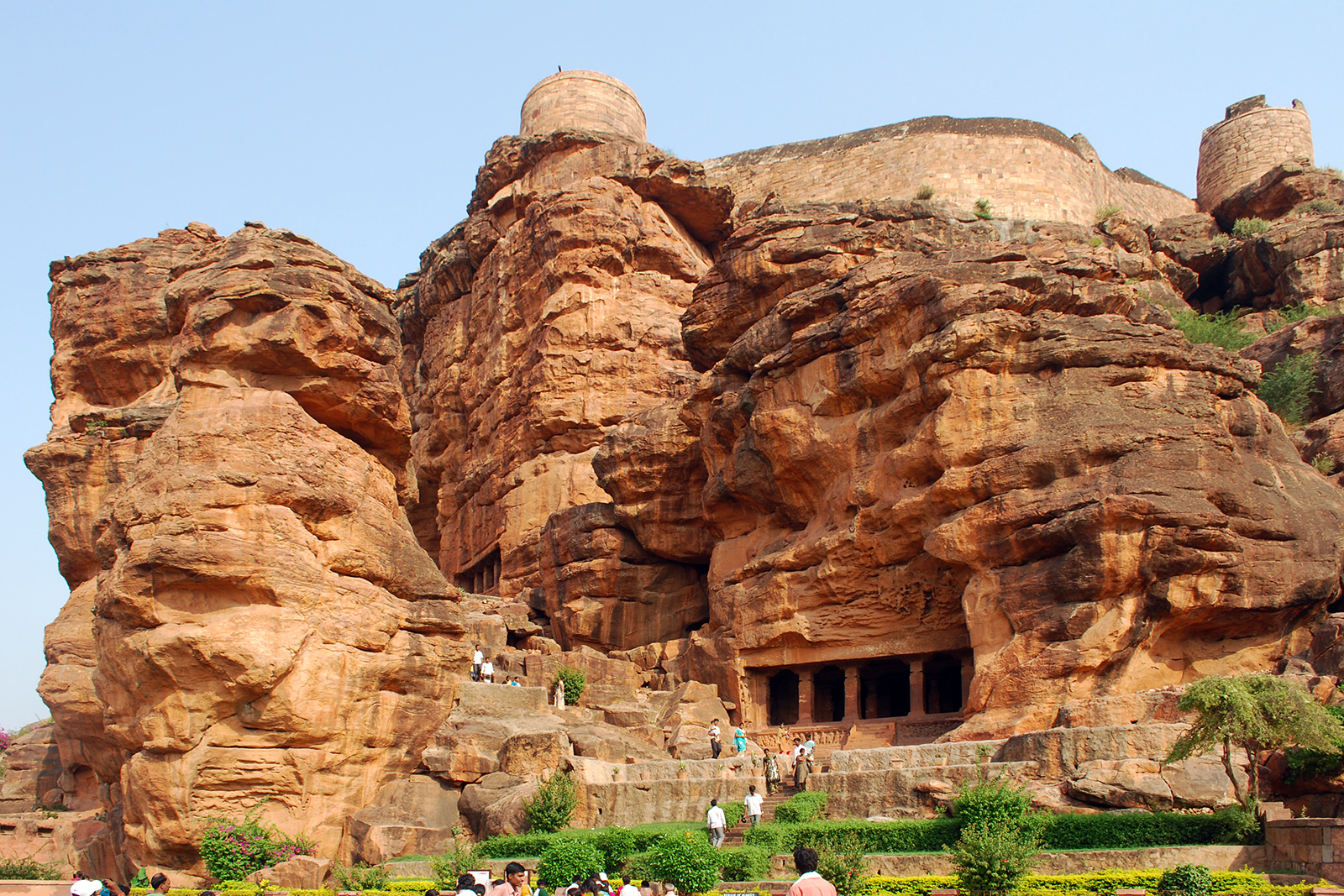
Badami Caves represent the dawn of South Indian rock-cut architecture, carved into dramatic red sandstone cliffs during the 6th-8th centuries CE by the Chalukya dynasty of Badami. This complex of four magnificent cave temples – three Hindu and one Jain – showcases the revolutionary Vesara style blending Northern Nagara and Southern Dravidian traditions, marking the birth of Deccan temple architecture.

Located in Karnataka’s Malaprabha River valley, these UNESCO tentative list caves feature exquisitely sculpted pillars, dancing Shiva Nataraja panels, reclining Vishnu Anantasayana, and Tirthankara figures that influenced Ellora, Pattadakal, and Hoysala masterpieces. Badami’s caves transformed simple monastic retreats into cosmic art galleries frozen in eternal sandstone.
Overview Table of Badami Caves
| Aspect | Details |
|---|---|
| Location | Badami, Bagalkot District, Karnataka (Malaprabha River) |
| Period | 6th-8th century CE (Chalukya Dynasty) |
| Number of Caves | 4 main caves (3 Hindu, 1 Jain) |
| Patrons | Mangalesha (Cave 1), Pulakeshin I (Cave 2), Kirtivarman (Cave 3) |
| Architecture | Vesara style (Nagara-Dravidian hybrid) |
| Rock Type | Red sandstone cliffs |
| Key Sculptures | Nataraja (Cave 1), Trivikrama Vishnu (Cave 2), Anantasayana (Cave 3) |
| Significance | Birthplace of Vesara architecture |
| Status | UNESCO Tentative World Heritage |
Chalukya Dynasty: Architects of Deccan Glory
Badami Chalukya Golden Age
6th-8th century Badami Chalukyas ruled Karnataka’s Malaprabha basin transforming regional power into Deccan empire challenging Pallavas south, Harshavardhana north. Pulakeshin I (543-567 CE) established capital Vatapi (Badami), son Kirtivarman I, brother Mangalesha commissioned cave temples showcasing imperial piety, artistic ambition.
Caves positioned dramatically against blood-red sandstone cliffs overlooking Agastya Lake symbolize Chalukya mastery over nature through rock sculpture. Multi-faith patronage (Hindu, Jain) reflected religious tolerance.
Birthplace of Vesara Architecture
Badami caves created revolutionary Vesara style – hybrid Nagara (northern curvilinear towers) + Dravidian (southern pillared halls) influencing Pattadakal temples (UNESCO), Ellora Kailasa, Hoysala masterpieces. Cave temples bridge wooden vihara architecture to structural stone temples.
The Four Magnificent Cave Temples
Cave 1: Shaiva Masterpiece (578 CE)
Mangalesha’s dedication – finest Badami cave featuring 18-panel Nataraja (Shiva cosmic dance) Dance of Bliss on pillar capitals. Doorway guarded by pot-bellied dwarapalas, ceiling Ardhanarishvara frescoes. Sanctum houses Shiva lingam flanked Parvati, Ganesha sculptures.
Verandah pillars exquisitely carved – Tandava Shiva, Harihara (half Vishnu-Shiva), narrative panels demonstrate early narrative sculpture sophistication.
Cave 2: Vaishnava Glory (Pulakeshin I)
Dedicated Vishnu – features majestic Trivikrama Vishnu (Vamana dwarf striding three paces universe). Varaha (boar incarnation) rescues earth, Harihara composite deity. Octagonal pillars showcase Chalukya lotus capitals, narrative friezes.
Cave demonstrates Vaishnava revival under Chalukyas – Vishnu iconography rivals contemporary Gupta sculpture sophistication.
Cave 3: Vaishnava Magnum Opus (Kirtivarman I, 578 CE)
Largest, most ornate cave – Anantasayana Vishnu reclining serpent Ananta, attended celestial beings. Two-tiered construction with first floor two shrines (Dhanwantari, Nagamula Vishnu), ground floor main Vishnu shrine.
Inscription records Kirtivarman donation. Intricate ceiling lotuses, bracket figures, narrative panels represent Chalukya sculpture peak.
Cave 4: Jain Sanctum (7th Century)
Simplest cave dedicated Mahavira – Parsvanatha (serpent-hooded), seated Tirthankaras. Reflects Jainism’s contemporary presence Badami alongside Shaiva-Vaishnava patronage demonstrating Chalukya ecumenism.
Vesara Architecture: Revolutionary Synthesis
Nagara-Dravidian Hybrid
Badami caves blend Northern Nagara verticality (curved tower profiles) with Southern Dravidian horizontality (pillared halls, verandahs). Square/octagonal pillars exquisitely sculpted – pot-bellied shafts, bracket figures, narrative capitals.
Cave facades feature makara toranas (mythical creature arches), elaborate doorframes with river goddesses (Ganga-Yamuna), pot motifs symbolizing abundance.
Rock-Cut Engineering
Sandstone cliffs naturally stratified facilitated horizontal cave excavation. Precise alignment ensures sunlight illuminates sanctum deities specific times. Interiors surprisingly bright through strategic window placement, light wells.
Sculptural Symphony: Chalukya Art Peak
Dancing Deities Masterpieces
Cave 1’s 18 Nataraja panels – Shiva’s cosmic dance forms (Ananda Tandava) represent sculptural bravura. Each posture uniquely captures rhythm, energy, divinity. Tandava dancer caught mid-leap defies gravity.
Cave 2’s Trivikrama Vishnu – dwarf Vamana’s cosmic stride visualized three dimensions. Varaha boar incarnation muscular dynamism showcases anatomical knowledge.
Mythological Narrative Panels
Pillars narrate episodes – Harihara (Vishnu-Shiva composite), Ardhanarishvara (Shiva-Parvati half-female), Ravananugraha (Ravana worship). Dwarapalas (door guardians), yakshis, gandharvas populate sculptural universe.
Badami’s Sacred Landscape
Agastya Lake and Bhutanatha Temples
Caves overlook Agastya sacred lake flanked Bhutanatha group temples (7th-12th CE) – Shiva shrines dramatically positioned cliffs reflecting lake surface. Cave temples accessed through lakefront steps creating processional approach.
Northern Fort Temples
Upper Shivalaya, Lower Shivalaya temples accessible 500 steps offer panoramic cave views. Fortifications, granaries reveal Chalukya military capital alongside religious center.
Legacy: Mother of South Indian Architecture
Influence on Successor Dynasties
Badami Vesara style perfected Pattadakal temples (UNESCO), inspired Rashtrakuta Ellora Kailasa, Hoysala Halebidu, Vijayanagara Hampi. Cave pillar capitals, facade compositions became structural temple templates.
Artistic Revolution
Chalukya sculpture liberated from Gupta classicism toward dynamic expressionism influencing Pallava Mahabalipuram, Chola Brihadeeswara. Multi-faith patronage model continued medieval India.
Visiting Badami Caves: Practical Guide
Best Season and Logistics
October-March ideal – caves face south receiving perfect sunlight. Early morning golden light illuminates sculptures. 15-minute walk from Badami bus stand across Agastya Lake.
Conservation and Access
ASI maintains pristine condition – no flash photography interiors. Caves 1-4 accessed single path (Cave 3 two levels). Guides essential decoding iconography, chronology.
Frequently Asked Questions About Badami Caves
1. Which dynasty built Badami Caves?
Badami Chalukyas (6th-8th CE) – Mangalesha (Cave 1), Pulakeshin I (Cave 2), Kirtivarman I (Cave 3) created Vesara architecture birthplace.
2. What makes Badami Caves unique?
Vesara hybrid style first time – Nagara curvilinear towers + Dravidian pillared halls. Nataraja 18 panels, Trivikrama Vishnu world’s finest early examples.
3. How many caves Badami complex?
Four main caves (3 Hindu: Shiva/Vishnu, 1 Jain) plus Aihole (70+), Pattadakal (10) forming Chalukya triangle UNESCO sites.
4. Cave 1 famous what sculpture?
18-panel Nataraja (Shiva cosmic dance) pillars – Ananda Tandava forms capture divine rhythm unmatched early medieval sculpture.
5. What Vesara architecture mean?
Hybrid Nagara (northern vertical towers) + Dravidian (southern horizontal halls) – Badami perfected style influencing Hoysala, Rashtrakuta temples.
6. Which cave largest Badami?
Cave 3 (Vaishnava) – two-tiered Anantasayana Vishnu reclining serpent, multiple shrines demonstrate Chalukya architectural ambition.
7. Badami Aihole Pattadakal relationship?
Chalukya Triangle – Aihole experiments, Badami caves refined, Pattadakal temples perfected Vesara style (UNESCO World Heritage).
8. What rock type Badami Caves?
Red sandstone cliffs naturally stratified facilitating horizontal excavation – dramatic blood-red backdrop enhances sculpture vibrancy.
9. Entry fees timings Badami Caves?
₹25 Indians/₹300 foreigners; 9AM-5PM; combine Agastya Lake, Bhutanatha temples single ticket.
10. Best season visit Badami Caves?
October-March – morning golden light illuminates Nataraja panels perfectly. Monsoon transforms Agastya Lake backdrop.
11. Cave 2 dedicated which deity?
Vishnu – Trivikrama (Vamana dwarf cosmic stride), Varaha boar rescuing earth demonstrate Vaishnava revival Chalukya period.
12. How access Cave 3 upper level?
Internal staircase connects ground floor Vishnu shrine to upper tier shrines (Dhanwantari, Nagamula Vishnu) – two-level innovation.
13. Badami Ellora architectural connection?
Badami Vesara influenced Ellora Kailasa Temple – Rashtrakutas direct Chalukya successors refined rock-cut techniques.
14. Which cave Jain Badami?
Cave 4 – Parsvanatha (snake-hooded), seated Tirthankaras reflect contemporary Jainism alongside Shaiva-Vaishnava patronage.
15. Badami Caves UNESCO status?
Tentative World Heritage List – part Chalukya Triangle (Aihole, Badami, Pattadakal) representing Vesara architecture evolution.
16. What Agastya Lake significance?
Sacred tank overlooked by caves, flanked Bhutanatha temples creates dramatic processional approach reflecting Chalukya sacred landscape.
17. Chalukya Pallava rivalry architecture?
Badami Vesara vs Mahabalipuram Dravidian – Chalukyas created hybrid style demonstrating Deccan cultural synthesis.
18. Best caves visit first Badami?
Cave 1 (Nataraja) → Cave 2 (Trivikrama) → Cave 3 (Anantasayana) chronological progression revealing Vesara evolution.
19. How many steps reach caves?
Gentle 50-step ascent from lakefront – accessible elderly despite cliff location. Caves face south receiving perfect sunlight.
20. Badami legacy Karnataka architecture?
Vesara birthplace influenced Hoysala Halebidu, Vijayanagara Hampi – Chalukya genius transformed Deccan rock faces cosmic galleries.
Conclusion: Vesara Dawn in Sandstone
Badami Caves transcend rock-cut curiosity status – represent revolutionary architectural moment when Deccan Chalukyas fused Northern Nagara verticality with Southern Dravidian horizontality birthing Vesara style defining medieval Karnataka temple architecture. Nataraja’s cosmic dance, Trivikrama’s universe-striding step captured eternally red sandstone cliffs testify 6th century sculptural bravura.
As Aihole experiments refined Pattadakal perfection, Badami remains humble origin point – simple monastic caves transformed cosmic art galleries. Chalukya genius liberated divine forms from Gupta restraint unleashing expressive dynamism influencing Ellora, Hoysala, Vijayanagara masterpieces. Badami’s cliffs whisper origins South India’s greatest architectural tradition.