Indian Freedom Struggle: Timeline, Movements and Leaders
The Indian Freedom Struggle was a long, determined, and mass-based movement against British Rule in India.
It united people across regions, religions, castes, and languages with a shared goal of political freedom, self-rule, and national dignity.
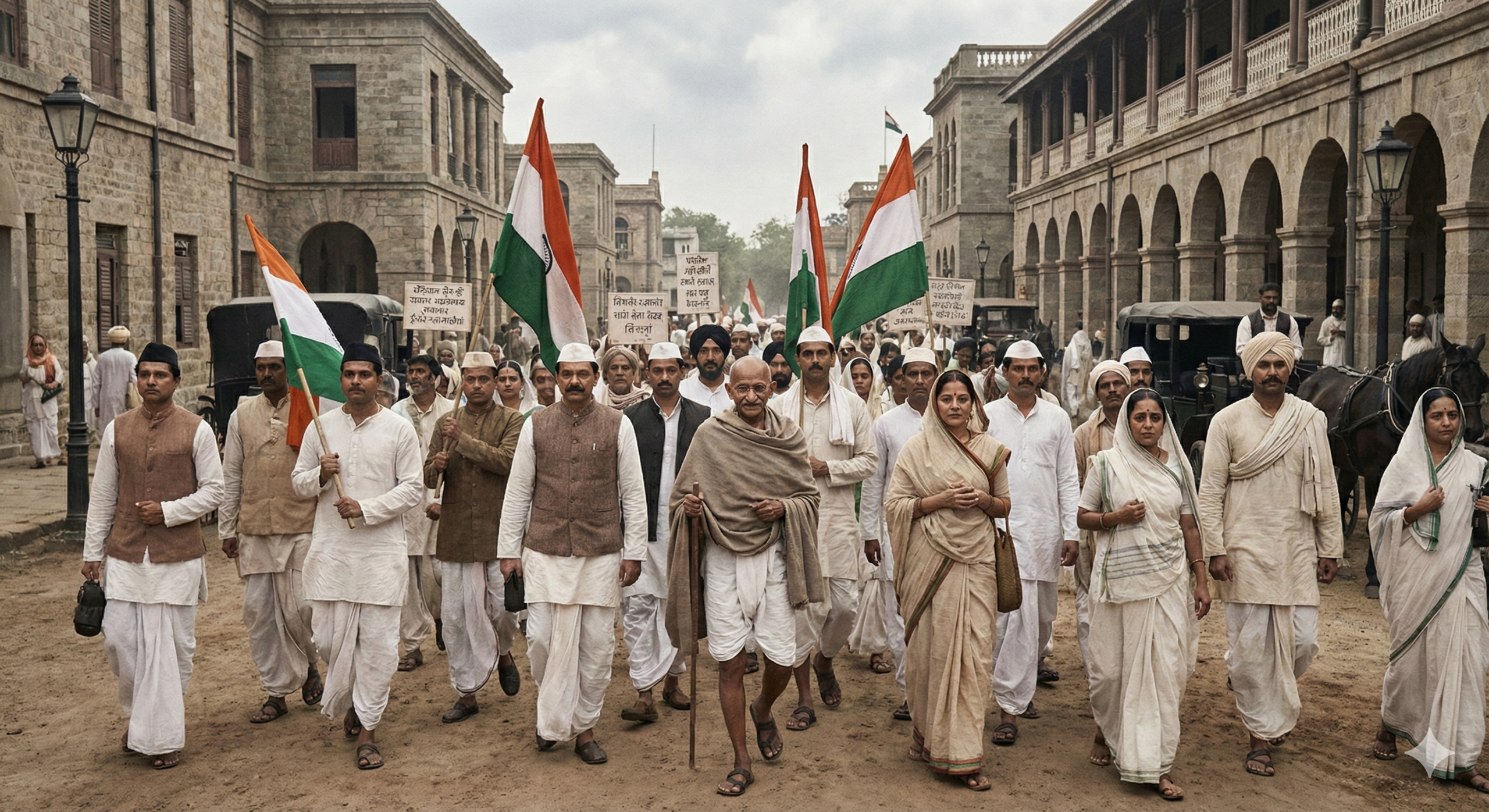
Spanning nearly two centuries, the freedom struggle evolved from early armed resistance to mass non-violent movements, shaping the political foundation of Modern India.
Timeline of the Indian Freedom Struggle
| Year | Event |
|---|---|
| 1757 | Battle of Plassey establishes British political control |
| 1857 | First War of Independence (Revolt of 1857) |
| 1885 | Formation of Indian National Congress |
| 1917 | Champaran Satyagraha |
| 1920 | Non-Cooperation Movement |
| 1930 | Civil Disobedience & Dandi March |
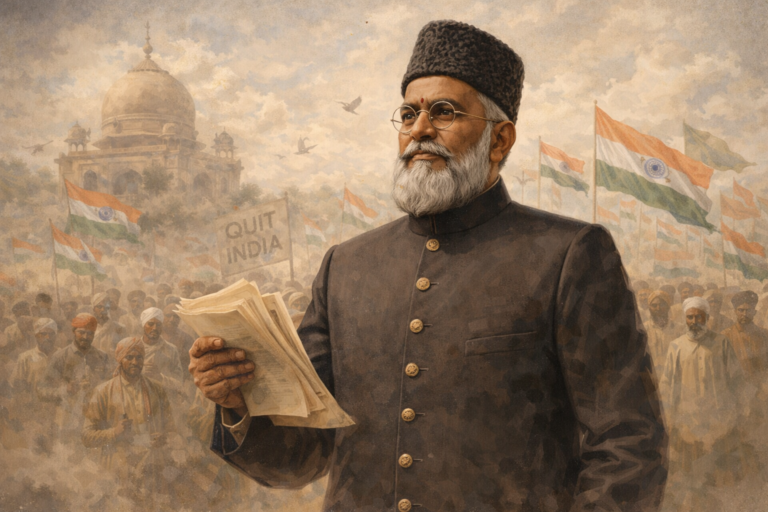
| 1942 | Quit India Movement |
| 1947 | India gains Independence |
Early Resistance Movements
The Indian struggle for freedom began with localized uprisings and resistance movements. The Revolt of 1857 marked the first major collective challenge to British authority, led by Indian soldiers, rulers, and civilians.
Although the revolt failed militarily, it laid the foundation for organized nationalism and exposed the exploitative nature of colonial rule.
Role of Mahatma Gandhi
Mahatma Gandhi transformed the freedom struggle into a mass movement by introducing non-violent resistance based on truth and moral force.
His methods of Satyagraha, Non-Cooperation, Civil Disobedience, and peaceful protest mobilized millions of Indians, including peasants, workers, women, and students.
Major Movements of the Indian Freedom Struggle
- Non-Cooperation Movement (1920–22): Boycott of British institutions, courts, and goods.
- Civil Disobedience Movement (1930–34): Open defiance of colonial laws, including the Salt Law.
- Quit India Movement (1942): Mass uprising demanding immediate British withdrawal.
These movements weakened British control and demonstrated the collective strength of Indian society.
Revolutionary Leaders and Armed Resistance
Alongside non-violent movements, revolutionary leaders adopted armed resistance to challenge colonial authority.
Leaders such as Bhagat Singh, Subhas Chandra Bose, Chandrashekhar Azad, and others inspired youth through acts of sacrifice, revolutionary writings, and armed struggle.
Their contribution complements the broader efforts of Indian freedom fighters
who dedicated their lives to independence.
Independence of India (1947)
After decades of sustained resistance, negotiations, and mass movements, India achieved independence on
15 August 1947, ending nearly 200 years of British colonial rule.
The freedom came with the tragic partition of India and Pakistan, resulting in widespread displacement and loss of life, but it marked the birth of a sovereign nation.
Frequently Asked Questions (FAQs)
1. When did the Indian Freedom Struggle begin?
The struggle began in the 18th century, gaining momentum after the Revolt of 1857.
2. Who is called the Father of the Indian Nation?
Mahatma Gandhi is called the Father of the Indian Nation for his leadership and non-violent methods.
3. What was the Quit India Movement?
The Quit India Movement of 1942 demanded immediate British withdrawal from India.
4. Did revolutionaries play an important role?
Yes, revolutionary leaders inspired resistance and strengthened nationalist sentiment.
5. Why is the Indian Freedom Struggle important?
It laid the foundation for democracy, constitutional governance, and national unity.
Conclusion
The Indian Freedom Struggle stands as a powerful example of unity, sacrifice, and determination.
It shaped the political, social, and moral foundations of modern India and continues to inspire struggles for justice and freedom across the world.