Rural Lifestyle in India: Culture, Traditions, and Village Life
Rural Lifestyle in India sustains 900+ million people across 6 lakh villages, preserving ancient traditions, community bonds, and agricultural rhythms that form India’s cultural backbone. These self-sufficient hamlets from Himalayan foothills to Deccan plateaus blend farming cycles, folk festivals, and joint family systems with modern solar pumps, Jio connectivity, and government schemes.
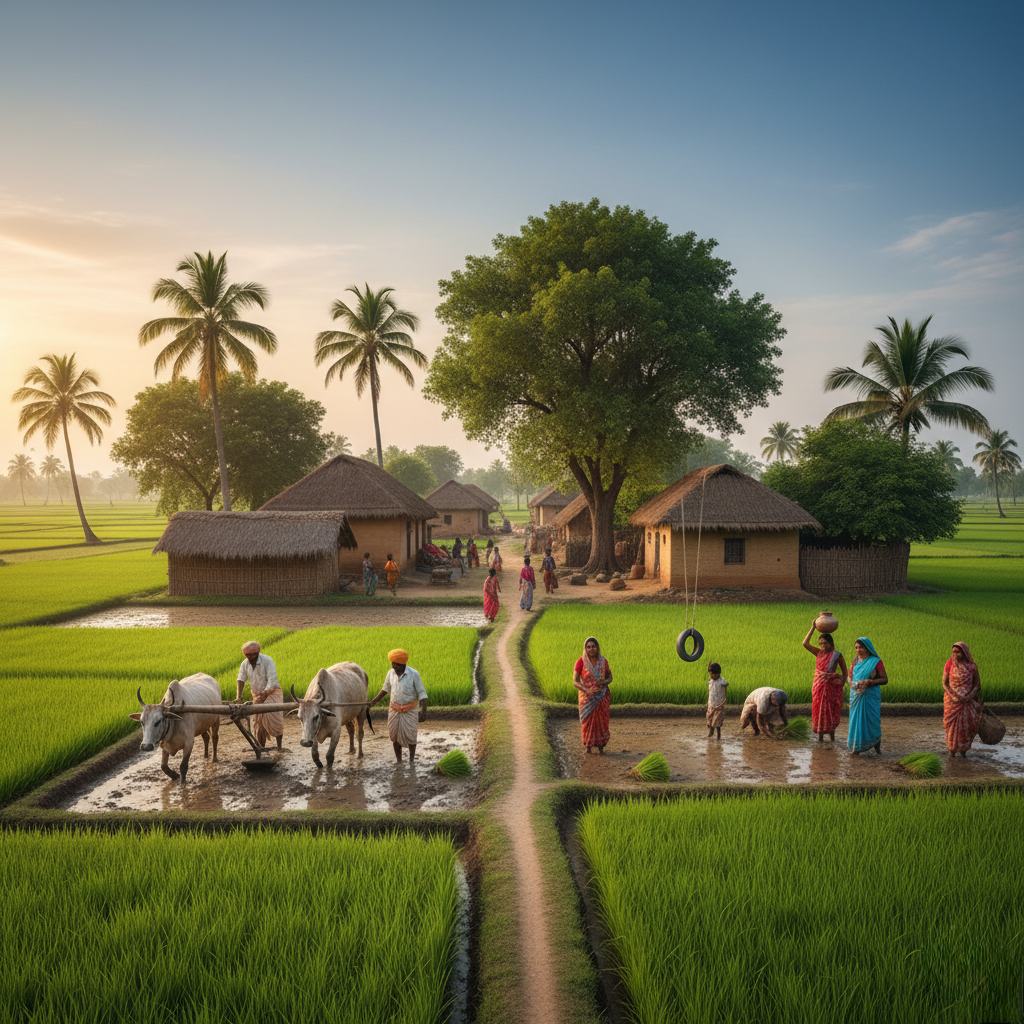
From Punjab’s lush wheat fields and Rajasthan’s mud huts to Kerala’s coconut groves and Bengal’s riverine settlements, village India embodies sustainability, spirituality, and social harmony amidst seasonal monsoons and harvest celebrations.
Overview Table of Rural India Regions
| Region | Key Crops | Lifestyle Features |
|---|---|---|
| Punjab-Haryana | Wheat, Rice, Dairy | Tractor culture, Baisakhi, Haryanvi wrestling |
| Rajasthan-Gujarat | Millets, Cotton, Opium | Mud havelis, camel fairs, tribal embroidery |
| Uttar Pradesh-Bihar | Sugarcane, Pulses, Mango | Joint families, Chhath Puja, Bhojpuri folk |
| Andhra-Telangana | Paddy, Chillies, Tobacco | Thatched huts, Sankranti kite flying, toddy tapping |
| Kerala-Tamil Nadu | Coconut, Rubber, Spices | Nadumuttam courtyards, Onam feasts, Theyyam rituals |
| Maharashtra-Karnataka | Sugarcane, Grapes, Onion | Gaothan villages, Ganpati celebrations, Lavani dance |
| West Bengal-Odisha | Rice, Jute, Fishery | Bauri huts, Durga Puja, Pattachitra art |
| Northeast India | Tea, Bamboo, Pineapple | Long houses, Hornbill festival, Jhum cultivation |
Daily Village Rhythm: Sunrise to Sunset
Cockcrow to Cattle Feeding
4:30AM wake-up with temple bells; women fetch water from handpumps, men feed livestock. Fresh cow dung floors cleaned, rangoli drawn at thresholds invoking Lakshmi’s blessings before farm work begins.
Agricultural Seasons Cycle
Kharif (June-Oct monsoon paddy), Rabi (Nov-Apr wheat), Zaid (summer veggies) dictate life. Tractor plowing replaced bullocks in Punjab but yoke ceremonies persist symbolizing earth reverence in Bihar villages.
Family & Community Structure
Joint Family System
3-4 generations under one roof; grandparents narrate Ramayana, daughters-in-law manage kitchen gardens. Village elders resolve disputes at panchayat chaupals under banyan trees maintaining social order.
Caste & Gotra Networks
Jat farmers Punjab, Yadav herdsmen UP, Bhumihar landowners Bihar form occupational clusters. Inter-caste marriages rising but gotra exogamy preserves clan purity through akhara wrestling, peer pressure.
Festivals: Village Carnival Season
Harvest Celebrations
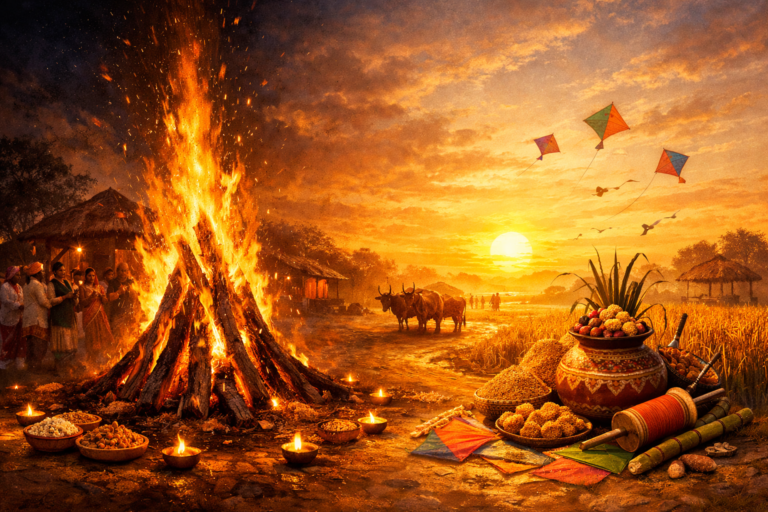
Pongal Tamil Nadu (Jallikattu bulls), Baisakhi Punjab (bhangra dances), Onam Kerala (boat races), Makar Sankranti kites everywhere mark abundance with community feasts, folk songs, cattle decorations.
Religious Melas & Jatras
Kumbh Mela satellite villages host saints, Pushkar camel fair Rajasthan, Tirupati Brahmotsavams draw millions. Temporary bazaars sell brass lamps, clay toys, handloom saris sustaining rural artisans.
Traditional Homes & Architecture
Regional Hut Designs
Rajasthan circular bhungas withstand cyclones, Kerala nalukettu four courtyards for ventilation, Assam chang ghars on bamboo stilts against floods, Konkan tile-roof wadas with tulsi vrindavan central shrine.
Courtyard Culture
Common spaces host sankirtan bhajans, kat-kat gossip sessions, kite festivals. Mud walls cool summers, dung plaster antibacterial; modern cement houses rising but lack acoustic warmth of thatch roofs.
Cuisine: Farm-to-Table Freshness
Seasonal Thalis
Rajdhani dal-baati Rajasthan, ganji khichdi Karnataka fever cure, fish curry-hilsa Bengal monsoon special, coconut-based curries Kerala. Hand-pounded rice, sun-dried mango pickles preserve without refrigeration.
Street Foods & Sweets
Jalebi fairs Diwali, Peda markets UP, Khaja Odisha temples, Ladoo pedas every ritual. Toddy palms climbed mornings, country chicken curries weekends, gur jaggery winters energize farm labor.
Modern Transformations
Digital Village Revolution
Jio 4G reaches 90% villages; UPI payments kharif sales, YouTube farming tutorials, WhatsApp crop prices connect farmers to mandis. PM Awas Yojana 4 crore pucca houses, solar pumps 30 lakh installations.
Migration & Remittances
50M+ Gulf migrants send ₹10 lakh crore yearly building 2-storey homes, Hero bikes, LED TVs. NRI weddings showcase Dubai gold, London suits blending village pride with global aspirations.
Artisans & Crafts Traditions
Handloom & Pottery Hubs
Saree weaving Kanchipuram, terracotta Bankura Bengal, Madhubani paintings Bihar walls, Channapatna toys Karnataka lacquer. GI tags protect Pashmina, Darjeeling tea, Kolhapuri chappals from machine copies.
Folk Arts Alive
Bihu dances Assam tea gardens, Garba Gujarat Navratri, Lavani Maharashtra fairs, Yakshagana Karnataka open-air theatre preserve epics through generational transmission despite TV competition.
Challenges: Urban Pull & Climate Change
Youth Migration Crisis
60% villages aging; youth chase ₹15K city jobs leaving farmlands fallow. MSP delays, water mafia, monkey menace force diversification into poultry, fisheries, agri-tourism homestays.
Climate & Sustainability
Monsoon failures double suicides; drip irrigation, neem pesticides revive organic traditions. Village tankas Rajasthan capture rainwater, cow dung biogas plants power homes sustainably.
Frequently Asked Questions About Rural Lifestyle in India
1. How many villages in India?
6.5 lakh villages house 65% population (900M+); largest Bhatapara Chhattisgarh (15K), smallest Mana Uttarakhand (500).
2. What is typical village daily routine?
4:30AM temple bells-water-cattle feed, 8AM farm work, 1PM community lunch, 5PM cattle return-milking, 8PM dinner-storytelling-sleep.
3. Biggest rural festival?
Chhath Puja Bihar-UP (40 crore celebrate), Baisakhi Punjab harvest, Onam Kerala 4-day feasts, Pongal Tamil bull sports.
4. Average rural income?
₹10K/month farming + MGNREGA; remittances boost to ₹20K. Punjab highest ₹25K, Bihar lowest ₹8K reflecting crop diversity.
5. Most famous village crafts?
Madhubani paintings Bihar, Kanchipuram silk sarees, Bankura terracotta horses, Pattachitra Odisha scrolls, Chikankari Lucknow embroidery.
6. Rural education status?
95% primary schools, 1:35 teacher ratio improving; girls enrollment 95%. Digital classrooms, mid-day meals retain 80% till Class 8.
7. Electrification coverage?
99.9% villages electrified; solar home systems 1 crore off-grid hamlets. DD Free Dish 90% TV penetration brings urban culture home.
8. Traditional village sports?
Kabaddi akharas UP, Gilli-danda everywhere, Kho-kho Bihar, Mallakhamb Maharashtra poles, cockfighting Andhra festivals.
9. Water sources in villages?
Handpumps 80%, wells 15%, Jal Jeevan Mission taps 60% households by 2025; tankas Rajasthan, bawdis Gujarat ancient systems revived.
10. Rural wedding customs?
3-day baraat feasts 500+ guests, turmeric-haldi, mehndi nights, elephant processions Rajasthan, boat weddings Kerala backwaters.
Conclusion
Rural India preserves timeless wisdom, community warmth, and sustainable living anchoring nation’s cultural soul amid modernization.