Lohri and Makar Sankranti: Why These Harvest Festivals Still Matter Today
India’s festivals are not simply occasions for celebration. They are a way of living — a reminder of the rhythms of nature, the value of community, and the wisdom that has been passed down through generations of farmers, families, and thinkers. Lohri and Makar Sankranti are two of the most important examples of this tradition.
Both fall in January, when the coldest part of winter is beginning to ease and the sun starts its northward journey. Nature sends a quiet message at this time — the darkness is retreating, and the light is returning. These two festivals are India’s ancient way of marking that moment and celebrating everything it represents.
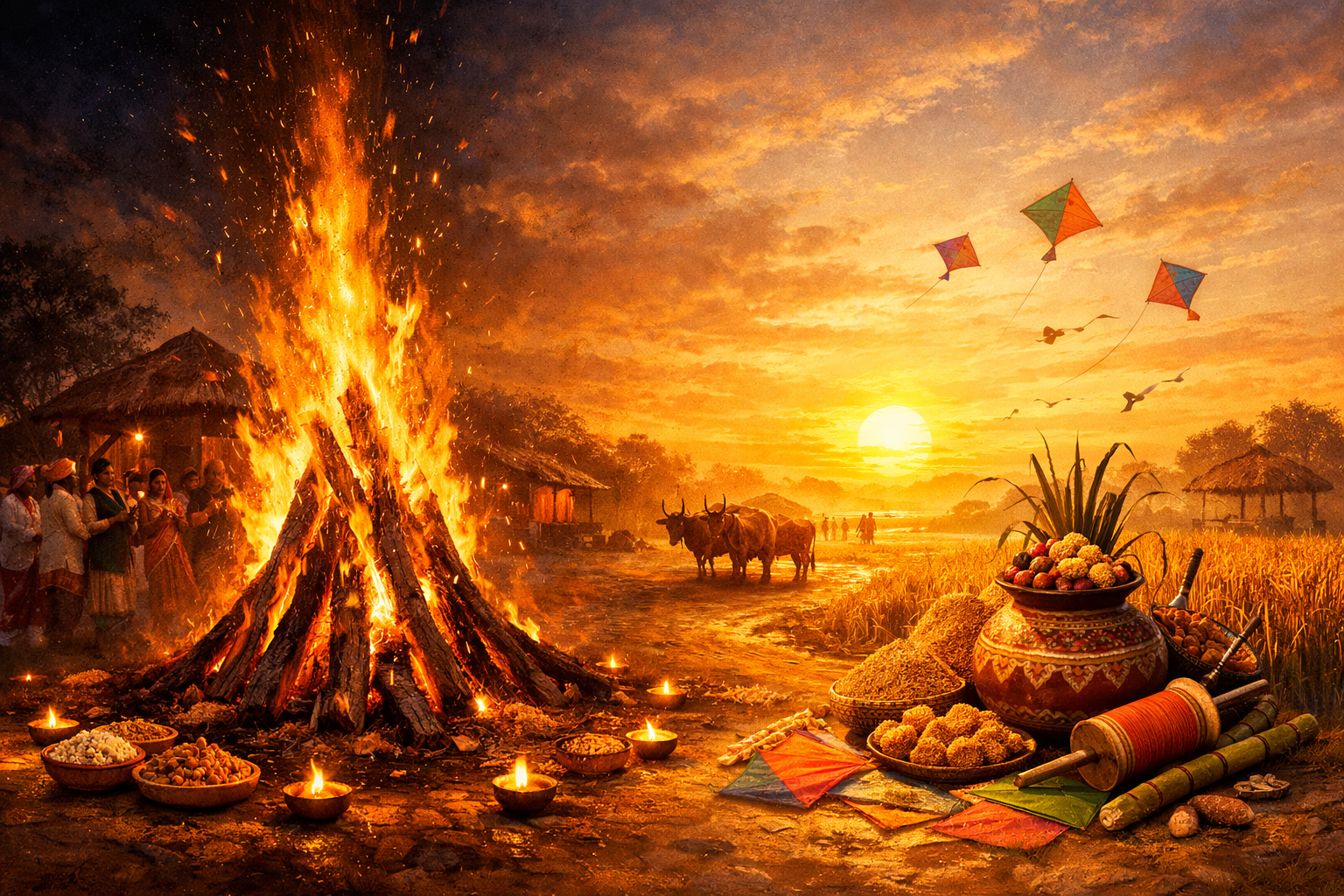
In an age when festivals are increasingly reduced to social media posts and shopping sales, Lohri and Makar Sankranti stand apart. They carry real meaning — rooted in agriculture, astronomy, community, and a philosophy of life that feels more relevant today than ever.
What Is Lohri and Why Is It Celebrated?
Lohri is celebrated primarily in Punjab, Haryana, Himachal Pradesh, and parts of Delhi, typically on 13 January — the day before Makar Sankranti. It is one of North India’s most beloved winter festivals, marking the end of the coldest season and the approaching ripeness of the rabi crop, particularly wheat.
At its heart, Lohri is an expression of gratitude — to nature, to the land, and to the community that works together to sustain life. Farmers gather around bonfires not just for warmth but as a symbolic act of thanks for what the earth has provided and hope for the harvest ahead.
Lohri is not a solitary celebration. It is a communal festival — the entire neighbourhood or village comes together around the fire, sharing food, singing folk songs, and dancing through the night.
The Key Elements of Lohri
- The Bonfire — A symbol of the end of darkness and cold, and the beginning of warmth and light
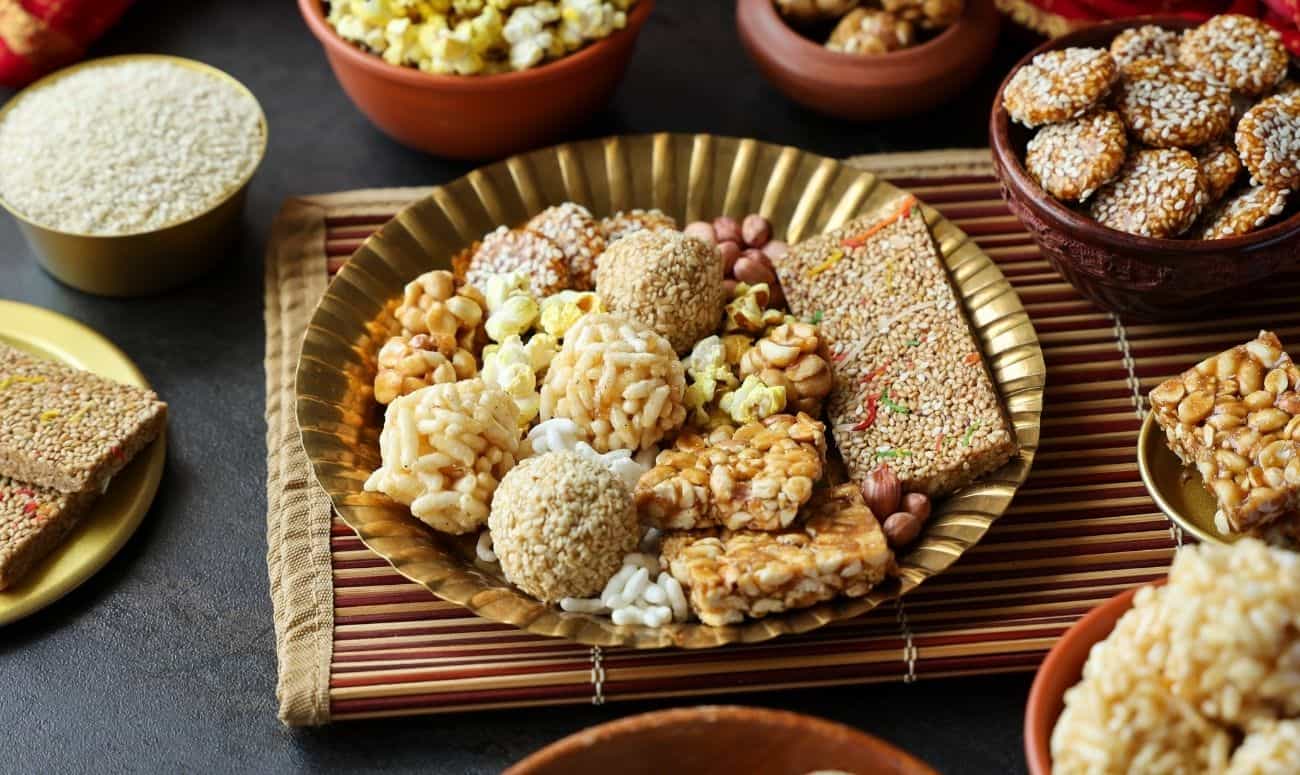
- Til, Jaggery and Groundnuts — Offerings that represent nourishment, energy, and the season’s harvest
- Folk Songs — A living thread connecting communities to their cultural memory
- Bhangra and Gidda — Traditional dances expressing joy, vitality, and collective celebration
Lohri holds particular significance for newlywed couples and families with a newborn child — it is understood as a festival of new beginnings, making it a deeply personal occasion as well as a communal one.
The Deeper Meaning Behind Lohri
Lohri’s true message goes beyond its rituals. At a time when modern life increasingly pulls people into individual, screen-based existences, Lohri insists on something different — that real joy is shared joy, and that community is not optional but essential.
- Living in connection with the people around you
- Honouring the food you eat and the labour that produced it
- Maintaining a sense of balance with the natural world
These are not ancient ideas that have lost their relevance. They are precisely the values that modern life most urgently needs to rediscover.
What Is Makar Sankranti?
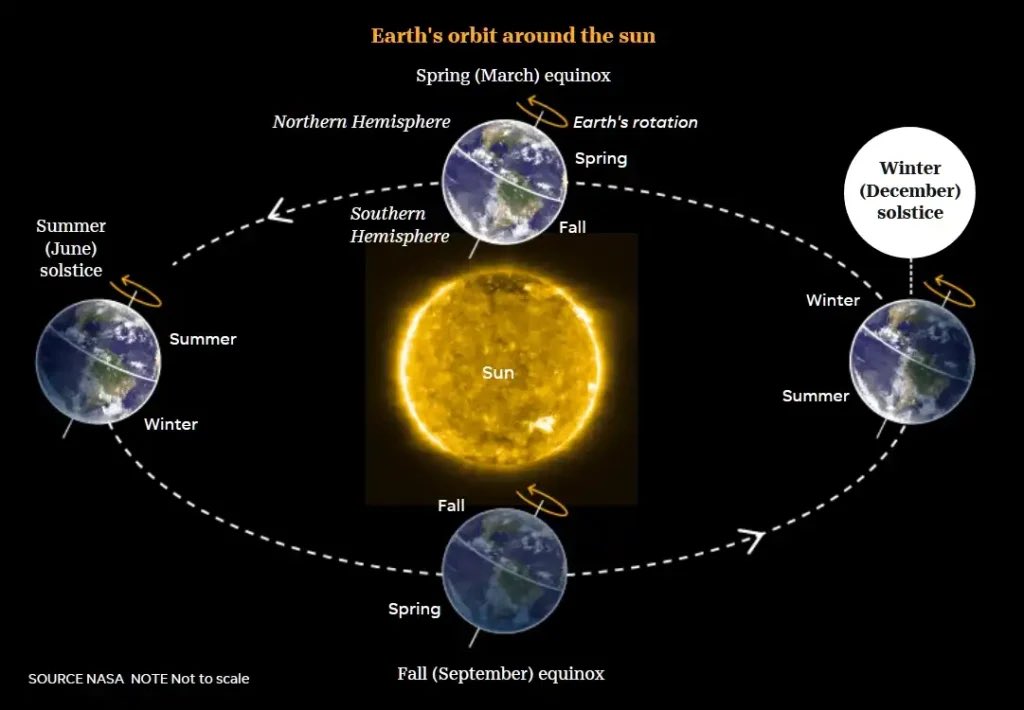
Makar Sankranti is one of the oldest and most scientifically grounded festivals in the Indian calendar. It marks the moment when the sun enters Capricorn (Makara rashi) — a transition that is not based on the lunar calendar like most Hindu festivals, but on the solar one. This is why it falls on roughly the same date every year: 14 January.
From this day onwards, the sun begins its Uttarayan journey — moving northward, bringing longer days, more light, and the gradual warming of the earth. In Indian philosophy, Uttarayan is considered deeply auspicious — associated with knowledge, progress, and the triumph of light over darkness.
How Makar Sankranti Is Celebrated Across India
One of the most remarkable things about Makar Sankranti is how it is celebrated under different names and in different forms across virtually every part of India — demonstrating the country’s extraordinary cultural diversity united by a shared understanding of the natural world.
- Pongal — Tamil Nadu’s four-day harvest festival, one of the most elaborate in India
- Uttarayan — Gujarat’s famous kite-flying festival, filling the skies with colour
- Magh Bihu — Assam’s feast festival marking the end of the harvest season
- Khichdi Parv — Celebrated in Uttar Pradesh and Bihar with the ritual preparation and sharing of khichdi
The names differ. The customs vary. But the spirit is the same everywhere: gratitude for what has been received, and hope for what is to come.
The Spiritual Meaning of Makar Sankranti
In Indian tradition, Makar Sankranti is considered one of the most auspicious days of the year for acts of charity, ritual bathing in sacred rivers, and spiritual reflection. The belief is that deeds performed on this day carry particular significance — a reminder that the external transition of the sun should be accompanied by an internal one.
The custom of sharing til (sesame) and gud (jaggery) on this day carries a beautifully simple message: keep sweetness and warmth in your life and in your relationships.
Makar Sankranti is not only a day of religious observance. It is an invitation to examine one’s behaviour, intentions, and connections — and to begin the year’s brightest chapter with the right spirit.
The Scientific Significance of Til and Jaggery
The traditional foods of Lohri and Makar Sankranti — particularly sesame seeds and jaggery — are not arbitrary choices. They reflect a sophisticated understanding of seasonal nutrition that modern science has since confirmed.
- Sesame seeds are rich in calcium, iron, and healthy fats — providing the body with warmth and energy during the coldest months
- Jaggery supports digestion, provides slow-release energy, and contains iron and minerals that support immunity
- Together, they form a nutritionally balanced combination ideally suited to the winter season
India’s ancestors did not separate tradition from science. The rituals of these festivals encoded practical nutritional wisdom in a form that was memorable, communal, and enduring.
The Connection to Farming and Agricultural Life
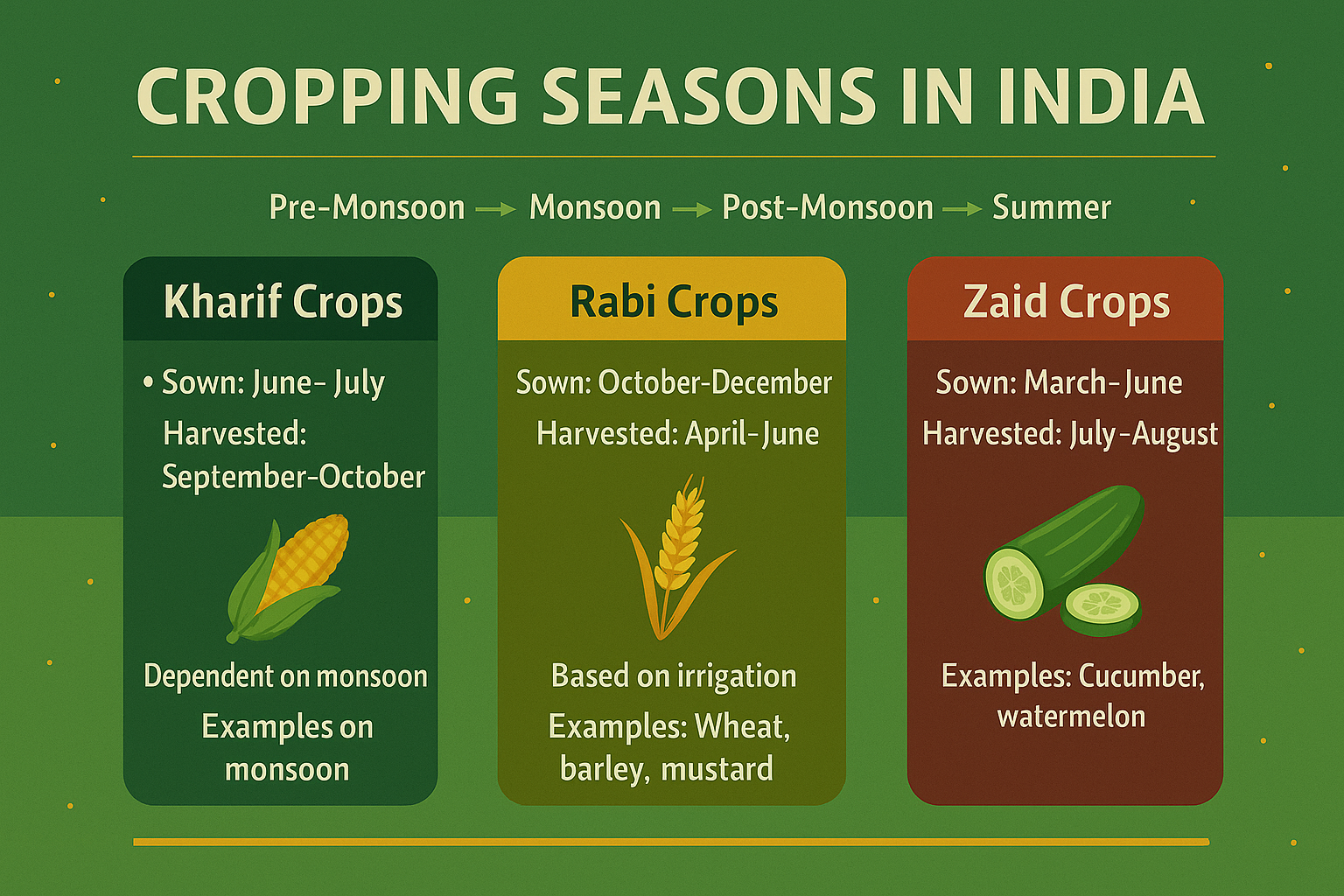
Both Lohri and Makar Sankranti are, at their core, harvest festivals — expressions of the ancient bond between Indian civilisation and the agricultural cycle. Indian farming has always been governed by the rhythms of nature, and these festivals are the cultural acknowledgement of that relationship.
At Lohri, the wheat crop is approaching readiness. The bonfire gathering is a collective act of thanksgiving — farmers and families acknowledging their dependence on the land and on each other. The sharing of food around the fire mirrors the sharing of the harvest itself.
At Makar Sankranti, the tradition of giving food and charity reflects the same philosophy: the grain that sustains us should be shared with those who need it. What the earth gives, society should distribute with generosity.
Social Unity — The Shared Message of Both Festivals
One of the most powerful aspects of Lohri and Makar Sankranti is their insistence on social togetherness. At Lohri, the bonfire draws an entire neighbourhood together — cutting across distinctions of wealth, caste, and age. At Makar Sankranti, the exchange of til and jaggery between neighbours and friends carries the explicit message: speak sweetly, live warmly, and maintain your bonds with the people around you.
In a world where screens increasingly mediate human connection and community ties weaken, these festivals offer a genuine alternative — a day to put down the phone, gather with others, and remember that belonging to a community is one of the most important things a person can have.
Why These Festivals Matter for Children
Children are the carriers of culture. What they learn in childhood — through participation, observation, and experience — shapes who they become and what they pass on. Lohri and Makar Sankranti offer children something that no classroom can easily provide: a felt sense of connection to nature, community, and tradition.
When children sing folk songs around a Lohri fire, fly kites on Makar Sankranti, or learn why til and jaggery are shared on these days, they are absorbing values that will serve them throughout their lives: gratitude, generosity, patience with natural cycles, and the joy of shared celebration.
The Place of Tradition in Modern Life
A common argument is that old traditions have become irrelevant in a modern world. This misses something important. Traditions do not need to be followed blindly — but when their meaning is understood, they offer something that modernity often struggles to provide: a sense of rootedness, continuity, and belonging.
Lohri and Makar Sankranti are not obstacles to modern living. They are a complement to it — an annual reminder that the laws of nature have not changed, that community still matters, and that gratitude is a practice worth maintaining regardless of how connected or disconnected the rest of the year feels.
Nature, Balance and the Philosophy of These Festivals
Indian culture has always placed enormous emphasis on living in balance with the natural world. The worship of the sun at Makar Sankranti is a recognition that human life depends entirely on forces beyond human control. The Lohri bonfire honours fire — one of the five elements that Indian philosophy considers fundamental to existence.
Both festivals carry an environmental message that is urgently relevant today: nature is not a resource to be exploited but a living system to be respected, protected, and celebrated.
Diversity in Celebration — India’s Greatest Strength
The fact that the same astronomical event — the sun’s entry into Capricorn — is celebrated as Pongal in Tamil Nadu, Uttarayan in Gujarat, Magh Bihu in Assam, and Khichdi Parv in Uttar Pradesh is not a sign of confusion. It is a sign of India’s extraordinary cultural richness.
Different forms, different foods, different dances, different names — but the same essential spirit running through all of them. This diversity unified by shared values is, in many ways, the best possible metaphor for India itself.
Frequently Asked Questions — Lohri and Makar Sankranti
1. Why is Lohri celebrated?
Lohri is celebrated to mark the end of winter, honour the approaching wheat harvest, and express gratitude to nature. The bonfire at the centre of the festival symbolises the end of cold and darkness, with fire as a witness to the community’s thanks.
2. In which states is Lohri celebrated?
Lohri is traditionally celebrated in Punjab, Haryana, Himachal Pradesh, and parts of Delhi. It is most deeply rooted in Punjabi cultural tradition and is considered one of the most important festivals of the region.
3. What does the Lohri bonfire represent?
The Lohri bonfire symbolises the end of the darkest, coldest part of winter. Fire also represents purification and new beginnings in Indian tradition — making the bonfire a powerful symbol of transition and hope.
4. Why are til and jaggery offered at Lohri?
Sesame seeds and jaggery provide warmth and energy during winter. Their inclusion in Lohri offerings reflects the ancient Indian practice of aligning food with seasonal needs — and their sweetness carries a social message about maintaining warmth and kindness in relationships.
5. What is Makar Sankranti?
Makar Sankranti is the Hindu festival marking the sun’s entry into Capricorn (Makara rashi), which signals the beginning of Uttarayan — the sun’s northward journey. Unlike most Hindu festivals, it is based on the solar calendar and falls on approximately 14 January each year.
6. Why is Makar Sankranti called Uttarayan?
From Makar Sankranti onwards, the sun moves northward — a direction considered auspicious in Indian philosophical tradition, associated with light, knowledge, and positive progress. This northward movement is called Uttarayan.
7. On which date is Makar Sankranti celebrated?
Makar Sankranti is celebrated on 14 January in most years. Because it is based on solar calculations rather than the lunar calendar, the date remains consistent year after year.
8. What is the significance of charity on Makar Sankranti?
Giving on Makar Sankranti reflects the belief that what the earth provides should be shared with the broader community. It is an expression of gratitude and social responsibility — reinforcing the idea that individual prosperity is inseparable from collective wellbeing.
9. By what names is Makar Sankranti celebrated across India?
It is celebrated as Pongal in Tamil Nadu, Uttarayan in Gujarat, Magh Bihu in Assam, and Khichdi Parv in Uttar Pradesh and Bihar — each with its own regional customs but sharing the same underlying significance.
10. What is the difference between Lohri and Makar Sankranti?
Lohri is a regional harvest festival rooted in North Indian — particularly Punjabi — agricultural tradition, celebrated on 13 January. Makar Sankranti is a pan-Indian solar festival celebrated across the country on 14 January, marking the sun’s astronomical transition into Capricorn.
11. What is the connection between these festivals and farming?
Both festivals are directly tied to the agricultural cycle. Lohri marks the approaching wheat harvest, while Makar Sankranti is associated with the completion of the harvest season in many parts of India. Together they celebrate the relationship between human effort and the generosity of the natural world.
12. What message do til and jaggery carry?
The tradition of sharing sesame seeds and jaggery on Makar Sankranti carries a simple but profound message: maintain sweetness, warmth, and generosity in your relationships. It is a reminder to begin the new solar year with kindness and good intentions.
13. Why are these festivals important for children?
These festivals teach children values that are difficult to convey in a classroom — gratitude, community, respect for nature, and the joy of shared celebration. Participating in Lohri and Makar Sankranti from a young age helps children develop a felt connection to their cultural heritage.
14. What is the significance of folk songs and dance at Lohri?
Folk songs and traditional dances like Bhangra and Gidda are living expressions of cultural memory — ways of passing down stories, values, and a sense of communal identity from one generation to the next. They transform the festival from a ritual into a celebration.
15. Why is the sun worshipped at Makar Sankranti?
The sun is the source of all energy and life on earth. Worshipping the sun at Makar Sankranti is an acknowledgement of this fundamental dependence — a recognition that human flourishing is inseparable from the natural systems that sustain it.
16. What is the scientific significance of these festivals?
Both festivals encode genuine scientific knowledge. The foods eaten — sesame, jaggery, groundnuts — are nutritionally appropriate for winter. The astronomical basis of Makar Sankranti reflects sophisticated solar observation. The timing of Lohri aligns with natural agricultural cycles. These are not superstitions but evidence-based traditions.
17. How are these festivals relevant in the modern world?
In an era of digital disconnection and environmental strain, Lohri and Makar Sankranti offer a meaningful counter-message: slow down, gather with people you love, respect the natural world, and practise gratitude. These values are as urgently needed today as they have ever been.
18. Are these festivals purely religious?
No. While both festivals have religious dimensions, they are equally rooted in agricultural, social, and environmental values. People of diverse backgrounds participate in and appreciate these festivals for their cultural and human significance, not only their religious one.
19. What is the central message of Lohri and Makar Sankranti?
Gratitude, community, and new beginnings. Both festivals remind us to honour the effort that produces our food, to celebrate with the people around us, and to approach each new cycle of the year with hope and intention.
20. How can we preserve these festivals for future generations?
By understanding their meaning rather than just performing their rituals. By explaining to children why these festivals exist. By celebrating them with genuine participation rather than merely documenting them for social media. And by recognising that these traditions carry wisdom that the modern world genuinely needs.
Conclusion
Lohri and Makar Sankranti are not simply traditional festivals. They are a mirror held up to the Indian way of life — reflecting its deep respect for nature, its commitment to community, and its understanding that human beings flourish when they live in balance with the world around them.
Lohri teaches us to honour fire, effort, and the warmth of shared celebration. Makar Sankranti invites us to align our lives with the movement of the sun — to welcome light, practise generosity, and begin each new cycle with clarity and purpose. Together, they carry a message that is as relevant in a M