Indian Wedding Traditions and Rituals Explained
Indian wedding traditions represent the world’s most elaborate and spiritually profound marriage ceremonies, transforming unions into cosmic events spanning 3-7 days with 50+ rituals encoding Vedic philosophy, regional customs, and family genealogies. Unlike Western weddings’ 2-hour ceremonies, Indian marriages follow 5000-year-old scriptures Rig Veda’s sapta padi (7 steps), Manusmriti marriage codes where each ritual activates divine energies for progeny, prosperity, and dharma.
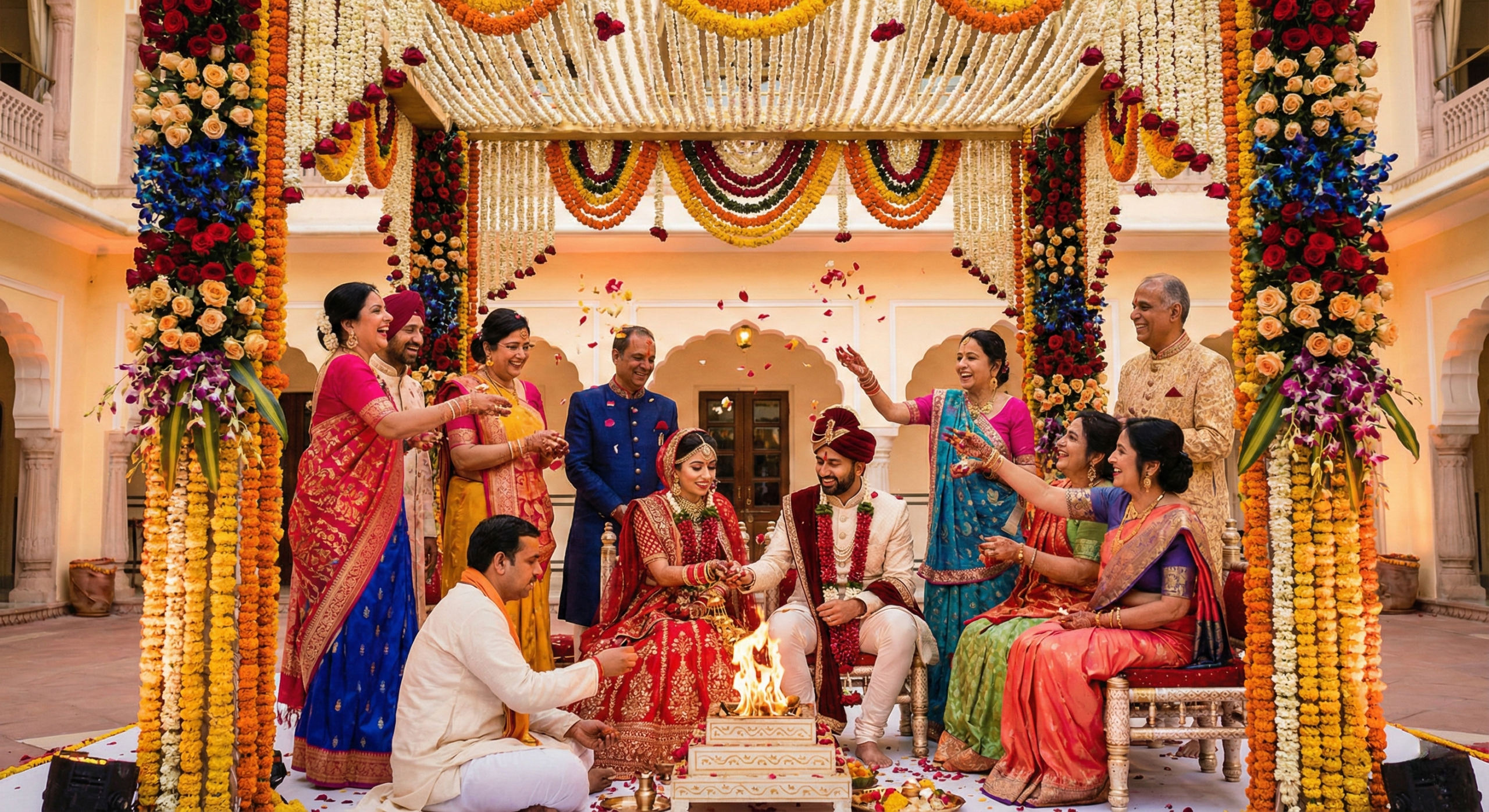
From North India’s multi-day baraat processions to South India’s minimalist temple kanyadaan, 28 states celebrate 15+ million weddings annually (₹10 lakh crore industry) featuring 100+ regional variations. Hindu weddings dominate (80%), followed by Muslim nikah, Christian church ceremonies, Sikh anand karaj, blending spirituality, community, and opulence.
More than marriage contracts, Indian wedding traditions function as spiritual initiations aligning 7 chakras through 7 pheras, invoking 33 crore deities via mantras, creating karmic bonds spanning 7 lifetimes. This comprehensive guide decodes major rituals, regional differences, and profound cosmic significance behind India’s most sacred celebrations.
Indian Wedding Traditions: Complete Ritual Timeline
| Ritual | Timing | Significance | Regional Variations |
|---|---|---|---|
| Sagai/Engagement | 6-12 months prior | Family alliance, ring exchange | Tilak (North), Nischitartham (South) |
| Haldi | 2 days before | Turmeric purification, evil eye removal | Mango leaves (South), Sandalwood (Bengal) |
| Mehendi | 1 day before | Henna prosperity symbols, bride’s artistry | Arabic (Muslim), Rajasthani (Hindu) |
| Sangeet | Evening before | Music, dance, family bonding | Punjabi bhangra, Rajasthani ghoomar |
| Baraat | Wedding morning | Groom’s procession, community welcome | Horse (North), Elephant (South royalty) |
| 7 Pheras/Saptapadi | Main ceremony | 7 vows around sacred fire | 4 pheras (some sects), Tamil 3 circuits |
| Kanyadaan | Main ceremony | Father gives daughter away | Kasi yatra (South), symbolic escape |
| Sindoor & Mangalsutra | Post-rituals | Marital symbols, 7-lifetime bond | Thaali (South), Sakha-Pola (Bengal) |
| Vidaai | Post-wedding | Bride departs to new home | Tearful, rice-throwing prosperity |
| Grihapravesh | Day after | Bride enters groom’s home | Aluminum pot (evil eye), cow dung |
Pre-Wedding Rituals: Sacred Preparations
Sagai/Roka: Binding the Alliance
Sagai (engagement) formalizes family unions 6-12 months prior through ring exchanges, sweets, and astrologer-approved muhurat (auspicious timing). North Indian tilak features groom’s forehead marking; South Indian nischitartham exchanges betel leaves, coconut, silk.
Haldi: Golden Purification
Haldi ceremony (2 days before) applies turmeric-sandalwood paste removing evil eye, purifying skin for marriage. Brides/grooms wear yellow; families sing folk songs. South uses mango leaves, curd; Bengal adds halud bata (pounded turmeric).
Mehendi: Henna Prosperity Art
Mehendi (henna night) adorns bride’s hands/feet with 50+ motifs lotus (fertility), paisley (life), groom’s name hidden for games. Rajasthani thick paste lasts 3 weeks; Arabic bridal mehendi covers arms. Symbolizes shringar (beautification), prosperity prayers.
Main Wedding Day: Cosmic Union
Baraat: Groom’s Royal Procession
Baraat (groom’s arrival) features horse/dholi processions with dhol beats, fireworks, dancing uncles. Bride’s family welcomes with garlands, tilak, sweets. Punjabi baraatis demand juta chupai (shoe hiding) games; royal weddings use elephants.
7 Pheras: Seven Sacred Vows
Saptapadi (7 steps) around Agni (sacred fire) constitutes legal marriage per Hindu Marriage Act. Each phera vows nutrition, strength, prosperity, family, progeny, health, friendship. Priest chants mantras; fire witnesses eternal contract.
- Phera 1: Nourishment
- Phera 2: Strength
- Phera 3: Prosperity
- Phera 4: Family happiness
- Phera 5: Progeny
- Phera 6: Health
- Phera 7: Friendship (most sacred)
Core Vedic Rituals: Spiritual Core
Kanyadaan: Gift of Virgin
Kanyadaan (father gives daughter) transfers spiritual responsibility father washes groom’s feet, places bride’s hand in his. South Indian kasi yatra features mock groom escape (symbolizing renunciation) before family persuasion.
Sindoor & Mangalsutra: Marital Seals
Groom applies sindoor (vermilion) in bride’s hair parting kundalini activation. Mangalsutra (sacred necklace) symbolizes 7-lifetime bond. Regional: Tamil thaali (gold disc), Bengali shakha-pola (coral-conch bangles).
Post-Wedding: New Beginnings
Vidaai: Tearful Departure
Vidaai (bride’s farewell) features emotional rice-throwing (prosperity to natal home), tearful car departure. Symbolizes Lakshmi leaving one home for another; bride throws handfuls backward ensuring ancestral blessings.
Grihapravesh: Welcoming Lakshmi
New bride enters husband’s home kicking rice pot (auspicious), circumambulating tulsi plant. Aluminum kalash wards evil eye; cow dung swastika purifies threshold.
Regional Wedding Variations
North India: 5-day extravaganzas, baraat focus, phulkari lehengas; South India: Temple simplicity, silk Kanjeevaram, banana leaf feasts; Bengal: Gaye Holud (turmeric exchange), fish curry symbolism; Rajasthan: Royal processions, ghoomar dances; Punjabi: Bhangra sangeet, jutti games.
Other Faith Wedding Traditions
Muslim Nikah
Nikah features mehr (dowry contract), nikahnama signing, rukhsat (bride’s farewell). Henna, fireworks parallel Hindu rituals.
Sikh Anand Karaj
Anand Karaj (“bliss ceremony”) circles Guru Granth Sahib 4 times; no priest, equal partners.
Modern Trends & Wedding Industry
₹10 lakh crore industry features destination weddings (Udaipur palaces), celebrity planners, 5000-guest extravaganzas. Live streaming unites diaspora; eco-weddings reduce 10-tonne waste. Core rituals remain unchanged despite opulence.
Spiritual Significance: 7 Lifetime Bond
Indian wedding traditions create saptapadi vows binding 7 lifetimes per Vedic cosmology. Fire witnesses unbreakable contract; mantras invoke 33 crore deities. Modern couples maintain rituals despite love marriages, preserving cultural DNA.
Frequently Asked Questions About Indian Wedding Traditions
1. What are the 7 pheras in Hindu wedding?
7 pheras (saptapadi) vow nourishment, strength, prosperity, family, progeny, health, friendship around sacred fire legal marriage per Hindu law.
2. What happens in haldi ceremony?
Turmeric-sandalwood paste applied to bride/groom purifying skin, removing evil eye; yellow attire, folk songs precede wedding by 2 days.
3. Why is sindoor applied in hair parting?
Sindoor (vermilion) activates kundalini, marital status marker; falls with widowhood symbolizing life’s impermanence.
4. What is kanyadaan ritual?
Father symbolically gives daughter away, washing groom’s feet, placing her hand in his transferring spiritual responsibility.
5. Describe baraat procession?
Groom’s royal arrival on horse/dholi with dhol fireworks; bride’s family welcomes with tilak, garlands, juta chupai games.
6. What does mangalsutra symbolize?
Sacred necklace binds 7 lifetimes; regional: Tamil thaali (gold disc), Maharashtrian mangalasutra (black beads).
7. Why is vidaai emotional?
Bride departs natal home (Lakshmi leaving), throws rice backward (prosperity return); tearful yet auspicious transition.
8. What is mehendi significance?
Henna designs invoke prosperity darker color = deeper love; groom’s name hidden; lasts 3 weeks post-wedding.
9. How many days does Indian wedding last?
3-7 days: sagai (months before), haldi/mehendi/sangeet (2 days prior), main ceremony, vidaai, grihapravesh, reception.
10. What is sangeet ceremony?
Pre-wedding music-dance evening; Punjabi bhangra, Rajasthani ghoomar; families bond through performances, antakshari.
11. Why 7 vows specifically?
7 pheras align 7 chakras, 7 colors of spectrum, 7 notes of music, 7 days week Vedic cosmology of completeness.
12. What is grihapravesh ritual?
Bride enters new home kicking rice pot (auspicious), circumambulates tulsi, aluminum kalash wards evil eye.
13. Regional differences in weddings?
North: opulent baraat; South: temple simplicity; Bengal: fish symbolism; Punjabi: bhangra; Rajasthani: ghoomar.
14. Muslim wedding rituals?
Nikah: mehr contract, nikahnama signing, rukhsat farewell; parallels Hindu henna, feasts.
15. Sikh wedding ceremony?
Anand Karaj: 4 circumambulations Guru Granth Sahib; no priest, equal partners, gurdwara setting.
16. What is juta chupai game?
Bride’s sisters hide groom’s shoes during baraat; ransom negotiated classic North Indian wedding banter.
17. South Indian kasi yatra?
Groom mock-flees to Kashi (renunciation); family persuades return to marriage symbolic dharma choice.
18. Wedding industry size India?
₹10 lakh crore annually; 15M weddings, 5000-guest averages, destination palaces, celebrity planners.
19. Eco-friendly wedding trends?
Seed bombs replace fireworks, banana leaf plates, khadi attire, virtual ceremonies reducing 10-tonne waste.
20. Legal validity of Hindu wedding?
Saptapadi (7 steps) constitutes legal marriage per Hindu Marriage Act 1955; fire witnesses unbreakable contract.
Conclusion: Cosmic Love Contracts
Indian wedding traditions elevate marriage from contract to cosmic sacrament 7 pheras aligning 7 chakras, sindoor awakening kundalini, kanyadaan transferring atman guardianship. Each ritual encodes 5000-year wisdom ensuring progeny, prosperity, dharma across generations.
In globalization’s melting pot, these ceremonies assert cultural sovereignty baraat beats drown disco, 7 vows trump registry signatures. Witnessing saptapadi, one understands: Indian weddings don’t merely unite couples; they realign universes.