Kalinga War History: Ashoka’s Turning Point Explained
The Kalinga War stands as one of the most transformative military conflicts in ancient history, not because of the territory it secured or the wealth it generated, but because of the profound psychological and spiritual transformation it triggered in one of India’s greatest emperors. Fought in 261 BCE between the Mauryan Empire under Emperor Ashoka and the independent kingdom of Kalinga, this war resulted in unprecedented bloodshed that would ultimately redirect the course of Indian civilization, Buddhism, and the concept of ethical governance.
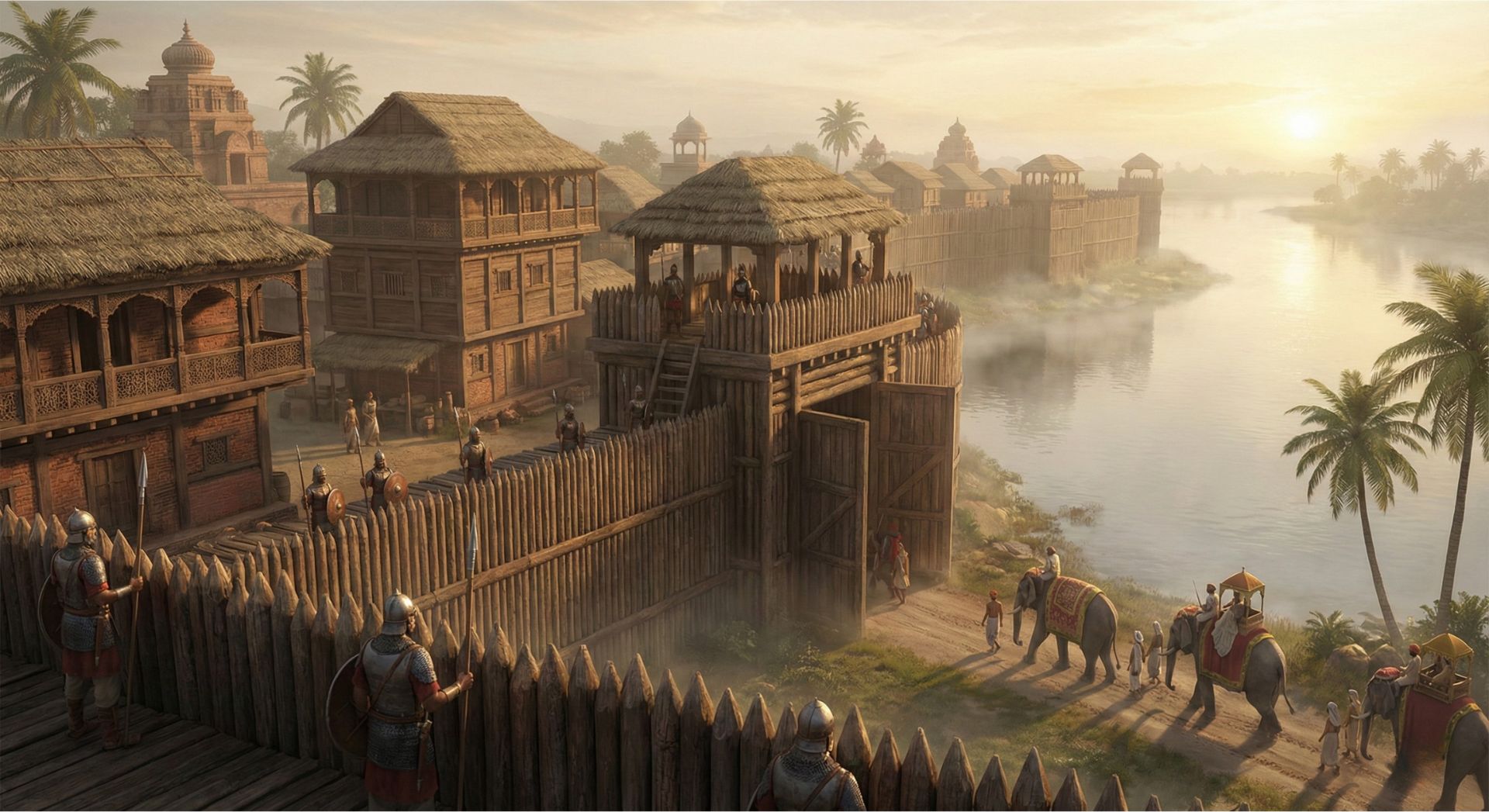
What makes the Kalinga War uniquely significant in world history is not the battle itself, but its aftermath. Emperor Ashoka, who had earned the title “Chandashoka” or “Ashoka the Fierce” for his ruthless military campaigns, emerged from this conflict as “Dharmashoka” or “Ashoka the Righteous.” The transformation from a bloodthirsty conqueror to Buddhism’s greatest patron represents one of history’s most remarkable personal conversions.
The Mauryan Empire Before Kalinga
To understand the significance of the Kalinga War, we must first examine the Mauryan Empire at the height of its power. Founded by Chandragupta Maurya in 322 BCE, the Mauryan dynasty had established the largest empire the Indian subcontinent had ever seen.
This period of expansion laid the foundation for the rule of Ashoka the Great, whose reign would later redefine imperial governance in Ancient India.
Causes of the Kalinga War
The Kalinga War was driven by Ashoka’s desire to expand the Mauryan Empire and secure control over strategically important coastal trade routes. Political resistance from Kalinga and the Mauryan policy of territorial expansion made conflict inevitable.
The War Begins: 261 BCE
In 261 BCE, Emperor Ashoka launched his military campaign against Kalinga, marking the bloodiest episode of Mauryan expansion. This conflict would later be remembered not for conquest, but for its moral consequences.
The Battle: Unprecedented Carnage
The people of Kalinga resisted fiercely. The scale of violence shocked even the victorious Mauryan forces.
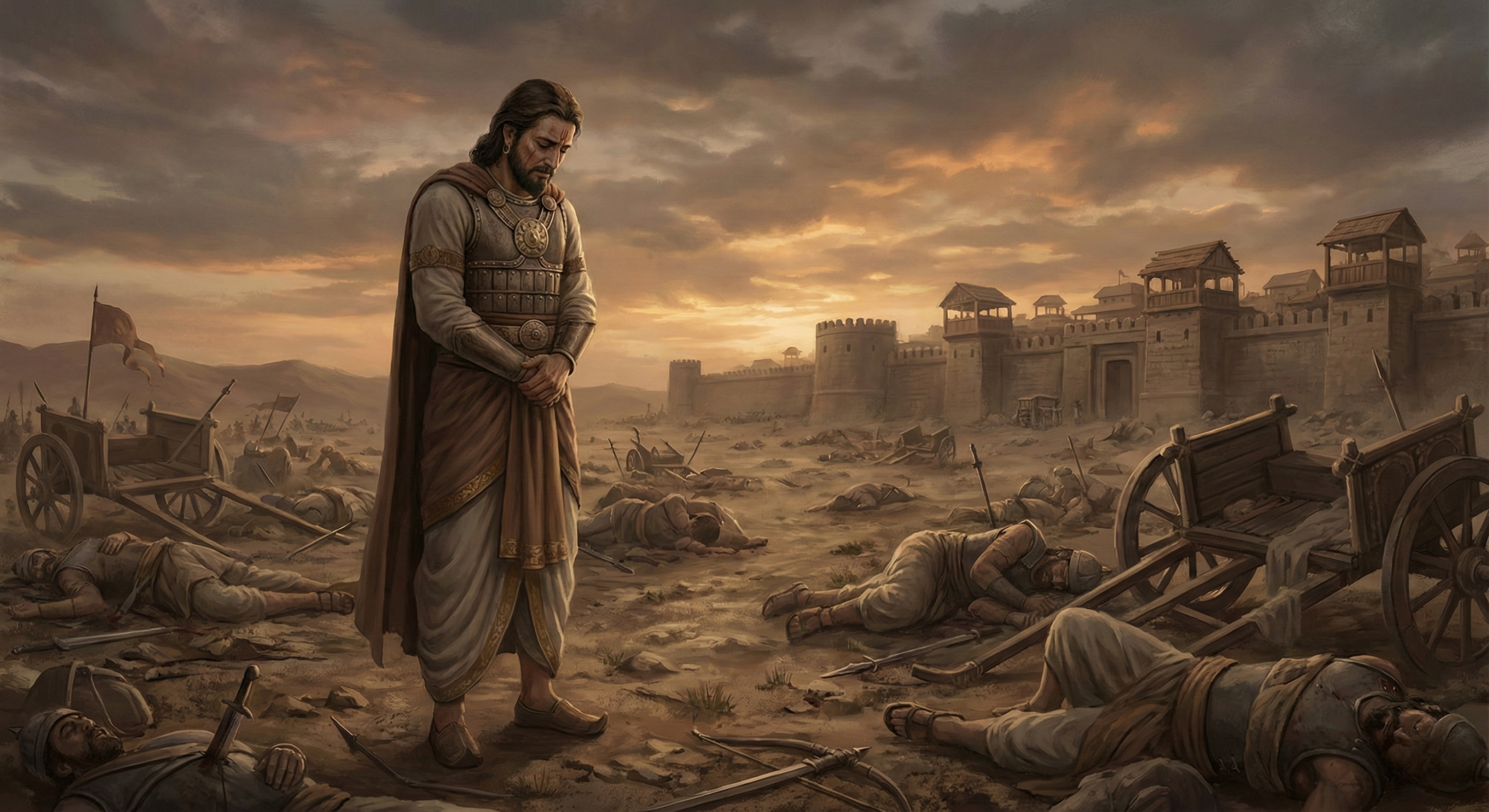
Impact of the Kalinga War on Ashoka
The devastation of the Kalinga War deeply affected Emperor Ashoka. Witnessing massive loss of life led to a profound transformation that altered the moral direction of the Mauryan state.
This change would later influence how power and governance were perceived across Indian history, standing in sharp contrast to later conflicts such as the Battle of Panipat.
Spread of Buddhism After the Kalinga War
Following the war, Ashoka actively promoted Buddhism through missionary work, construction of stupas, and moral edicts. His efforts transformed Buddhism into a global religion.
This spiritual shift reshaped not only the Mauryan Empire but the broader cultural framework of
Ancient Indian civilization.
Frequently Asked Questions About the Kalinga War
1. When did the Kalinga War take place?
The Kalinga War was fought in 261 BCE, approximately eight years after Emperor Ashoka
ascended to the Mauryan throne around 268 BCE. This places the conflict in the middle of the third century
before the common era, during the height of Mauryan power in ancient India.
2. Where is Kalinga located in modern times?
Ancient Kalinga corresponds roughly to the modern Indian state of Odisha, along with parts
of northern Andhra Pradesh and southern Chhattisgarh. The primary battlefield was near Dhauli, located about
8 kilometers from present-day Bhubaneswar, Odisha’s capital city.
3. How many people died in the Kalinga War?
According to Ashoka’s own rock edicts, approximately 100,000 people were killed during the
Kalinga War, with another 150,000 captured and deported. Many more died subsequently from
wounds, disease, and famine. These casualty figures represent one of the highest death tolls of any ancient
conflict relative to population levels of the time.
4. Why did Ashoka invade Kalinga?
Ashoka invaded Kalinga for several reasons: strategic control over important trade routes, economic benefits
from Kalinga’s prosperous ports and fertile lands, completion of territorial unification of the Indian
subcontinent under Mauryan rule, and enhancement of his prestige as a military conqueror equal to his
grandfather Chandragupta Maurya.
5. What made Ashoka change after the Kalinga War?
Ashoka was profoundly affected by the unprecedented scale of death and suffering caused by
the war. Walking through the devastated battlefield and witnessing the human cost of his conquest triggered
a deep moral crisis. This led him to embrace Buddhist principles of non-violence and compassion,
transforming from a ruthless conqueror into an advocate for peace and ethical governance.
6. What is Dhamma and how did Ashoka implement it?
Dhamma (Dharma in Sanskrit) was Ashoka’s moral and ethical code based on Buddhist
principles but designed to be universally applicable across all religions. He implemented Dhamma through
rock edicts, administrative reforms, appointment of special Dhamma officers, construction of hospitals and
rest houses, animal welfare measures, religious tolerance policies, and reforms to the justice system
emphasizing compassion over punishment.
7. What are Ashoka’s rock edicts?
Ashoka’s rock edicts are inscriptions carved into rocks and stone pillars throughout his
empire and beyond. Written in multiple languages including Prakrit, Greek, and Aramaic, these edicts
proclaimed moral principles, announced policies, and documented Ashoka’s transformation after the Kalinga
War. They provide invaluable historical evidence about Mauryan governance and Buddhist philosophy.
8. What happened to Kalinga after it was conquered?
After conquest, Kalinga was integrated into the Mauryan Empire but treated with unusual
compassion for the era. Ashoka appointed officials specifically tasked with ensuring Kalingan welfare,
rebuilding infrastructure, and respecting local customs. The region’s economy recovered under Mauryan
protection, with its ports continuing to facilitate trade with Southeast Asia.
9. Did Ashoka give up war completely after Kalinga?
While Ashoka expressed deep remorse for the Kalinga War and committed to non-violence, he
did not completely disband his military or renounce the use of force in all circumstances.
He maintained his army and warned potential rebels in some edicts. However, there is no historical record of
him conducting any further wars of conquest after Kalinga.
10. How did the Kalinga War affect the spread of Buddhism?
The Kalinga War was instrumental in Buddhism’s transformation into a world religion.
Ashoka’s conversion led him to become Buddhism’s greatest patron. He convened the Third Buddhist Council,
sent missionaries across Asia including his own children to Sri Lanka, built thousands of stupas and
monasteries, and provided institutional support that enabled Buddhism’s expansion throughout Asia.
11. What is the Dhauli Peace Pagoda?
The Dhauli Peace Pagoda (Shanti Stupa) is a Buddhist monument constructed in 1972 by
Japanese Buddhist organizations near the site of the Kalinga War battlefield. This gleaming white structure
serves as a memorial to war victims and a symbol of peace, attracting pilgrims and tourists while
commemorating Ashoka’s transformation from warrior to peace advocate.
12. What does “Chandashoka” and “Dharmashoka” mean?
Chandashoka means “Ashoka the Fierce” and refers to the emperor during his violent early
reign characterized by ruthless conquests and harsh justice. Dharmashoka means “Ashoka the
Righteous” and describes him after his Buddhist conversion, when he dedicated himself to ethical governance
and spreading moral principles.
13. What was the Mauryan Empire?
The Mauryan Empire (322-185 BCE) was the largest and most powerful empire in ancient Indian
history. Founded by Chandragupta Maurya with guidance from strategist Chanakya, it unified most of the
Indian subcontinent. Under Ashoka, it reached its greatest extent, stretching from Afghanistan to Bengal and
from the Himalayas to the Deccan Plateau.
14. How was Ashoka’s story rediscovered?
Ashoka’s story was largely forgotten after the Mauryan Empire’s collapse until British scholar
James Prinsep deciphered the Brahmi script in 1837, unlocking the meaning of edicts found
on rocks and pillars across India. This breakthrough revealed Ashoka’s remarkable transformation and his
role in spreading Buddhism, sparking renewed interest in Mauryan history.
15. What is the significance of the Sarnath Lion Capital?
The Sarnath Lion Capital is a sculpted capital that topped one of Ashoka’s pillars. It
features four lions standing back to back, symbolizing the spread of Dhamma in all directions. This
masterpiece of ancient Indian art was adopted as independent India’s national emblem in 1950, linking modern
India to Ashoka’s legacy of ethical governance and cultural achievement.
16. Did Ashoka’s transformation last after his death?
While Ashoka’s political empire declined rapidly after his death around 232 BCE, his moral
and cultural legacy endured. Buddhism continued to flourish and spread across Asia. The ideal of righteous
governance influenced Indian political philosophy for centuries. However, his successors lacked his moral
authority, and the empire fragmented within fifty years.
17. Was the Kalinga War the bloodiest battle in ancient India?
The Kalinga War was one of the bloodiest conflicts in ancient Indian history based on
documented casualty figures. With 100,000 killed and 150,000 displaced, it ranks among the deadliest ancient
battles globally relative to population size. Its exceptional brutality was a key factor in triggering
Ashoka’s moral transformation.
18. How did Ashoka influence Mahatma Gandhi?
Mahatma Gandhi found inspiration in Ashoka’s transformation and embrace of non-violence.
Gandhi saw Ashoka as historical proof that non-violent principles could guide powerful leaders and nations.
He frequently referenced Ashoka when articulating his philosophy of ahimsa (non-violence) and his vision for
independent India’s moral foundation.
19. What languages were Ashoka’s edicts written in?
Ashoka’s edicts were written in multiple languages to reach diverse populations across his empire. Most were
in Prakrit using Brahmi script, but edicts in the northwest used Greek and Aramaic to
communicate with those populations. This multilingual approach demonstrated sophisticated governance and
respect for local cultures.
20. Can we visit the Kalinga War battlefield today?
Yes, the Dhauli hills near Bhubaneswar, Odisha mark the ancient battlefield site. Visitors
can see Ashoka’s rock edicts carved into the hillside, visit the modern Peace Pagoda, explore archaeological
remains, and learn about the war at local museums. The site has become an important pilgrimage destination
for Buddhists and a significant historical tourism location.
Conclusion
The Kalinga War stands as a turning point not only in Ashoka’s life but in world history. From the ashes of devastation emerged a new vision of governance based on compassion, tolerance, and moral responsibility.