[india_weather]

British Rule in India: Causes, Policies and Impact
In 1600 a group of London merchants received a royal charter to trade in the East. A century and a half later, their company was collecting the land revenue of Bengal, and by 1858 the British Crown ruled most of the subcontinent directly. British rule in India lasted, in one form or another, until 15 August 1947. It took over from the declining Mughal Empire and left behind the borders, railways, courts and civil service that independent India inherited, along with famines, deindustrialisation and Partition.
This explainer answers the main questions in order: how the British took power, how they ran the country, what their rule did to India’s economy and society, and how Indians resisted.
How did British rule in India begin?
The East India Company received its charter from Queen Elizabeth I on 31 December 1600. For its first hundred and fifty years it was a trading business, competing with the Portuguese, Dutch and French. It set up a factory at Surat in 1613 and later built up Madras, Bombay and Calcutta as its main bases.
The opening came in the eighteenth century. After Aurangzeb’s death in 1707, Mughal authority weakened and regional powers such as Bengal, Hyderabad, Awadh, Mysore and the Marathas competed with one another. The Company, with its trained sepoy armies, learned to take sides in these rivalries and to extract a price for its help.
Plassey and Buxar: from trade to territory
The turning point was the Battle of Plassey in 1757, when Robert Clive defeated Siraj-ud-Daulah, the Nawab of Bengal, largely because the Nawab’s commander Mir Jafar had been bought over. Seven years later, at Buxar in 1764, the Company defeated the combined forces of the Nawab of Bengal, the Nawab of Awadh and the Mughal emperor Shah Alam II.
Under the Treaty of Allahabad in 1765, the emperor granted the Company the diwani of Bengal, Bihar and Orissa, the right to collect their revenue. From then on, Indian taxes paid for the Company’s trade, its armies and its further wars.
How the Company expanded
Over the next ninety years the Company fought and won the Anglo-Mysore wars against Haidar Ali and Tipu Sultan, the Anglo-Maratha wars and the Anglo-Sikh wars. Alongside war it used two policies. Lord Wellesley’s Subsidiary Alliance made Indian rulers pay for a British force stationed in their state and give up an independent foreign policy. Lord Dalhousie’s Doctrine of Lapse annexed states whose rulers died without a natural heir, including Satara, Jhansi and Nagpur, and Awadh was annexed in 1856 on grounds of misgovernment.
How the British governed India
Parliament began regulating the Company with the Regulating Act of 1773, which created the post of Governor-General of Bengal. After the Revolt of 1857, the Government of India Act 1858 ended Company rule altogether. India was now governed in the name of the Crown, through a Secretary of State in London and a Viceroy in India.
The Indian Civil Service
Day-to-day government was run by the Indian Civil Service. The ICS was efficient by the standards of the time, but its entrance examination was held in London, which kept most Indians out for decades. Satyendranath Tagore became the first Indian to qualify, in 1863. Senior posts stayed overwhelmingly British until the twentieth century, and the racial hierarchy was obvious to anyone dealing with the state.
Divide and rule
Many historians argue that colonial policy deliberately sharpened religious and regional divisions. The partition of Bengal in 1905 and separate electorates for Muslims under the 1909 Morley-Minto Reforms are the examples most often cited. Historians still debate how far these divisions were created by policy and how far they existed already and were simply used.
Economic impact of British rule
British economic policy turned India into a supplier of raw materials such as cotton, indigo, jute and opium, and a market for British manufactured goods. Most economic historians agree that India’s share of world manufacturing fell sharply during this period.
The drain of wealth
Dadabhai Naoroji set out the “drain theory” in Poverty and Un-British Rule in India. His argument was that a large part of India’s revenue left the country without any return, as salaries and pensions of British officials, interest on debt, and the cost of wars fought elsewhere. The idea became central to Indian nationalist economics.
Decline of traditional industries
Indian handloom textiles, once exported across the world, lost out to cheap machine-made cloth from Lancashire, helped by tariffs that favoured British goods. Weavers and artisans in towns such as Dhaka and Murshidabad lost their livelihoods, and many were pushed back onto the land.
Land revenue, cash crops and famine
The Company experimented with several land revenue systems. The Permanent Settlement of 1793, introduced by Lord Cornwallis in Bengal, fixed revenue on zamindars, who passed the burden on to their tenants. The Ryotwari system in Madras and Bombay taxed cultivators directly, and the Mahalwari system in the north-west taxed village communities.
Revenue demands were high and rigid, and in some regions farmers were pushed into growing cash crops like indigo instead of food. When harvests failed, the result could be catastrophic. The Bengal famine of 1770, the Great Famine of 1876-78 and the Bengal famine of 1943 together killed many millions of people, and historians widely blame colonial policy and poor relief for much of the scale of these disasters.
Social and cultural impact
British rule brought new laws, new schools and new ideas, and it also disrupted older institutions. Thomas Babington Macaulay’s Minute on Education of 1835 pushed English-medium education, and universities were founded at Calcutta, Bombay and Madras in 1857.
English education introduced ideas of liberty, equality and representative government, and the educated class it produced later led the Indian Freedom Struggle. Reformers such as Raja Ram Mohan Roy worked with the government on laws like the abolition of sati in 1829 under Lord William Bentinck. Traditional schools such as pathshalas and madrasas, meanwhile, lost state support and declined.
Railways and infrastructure: who were they built for?
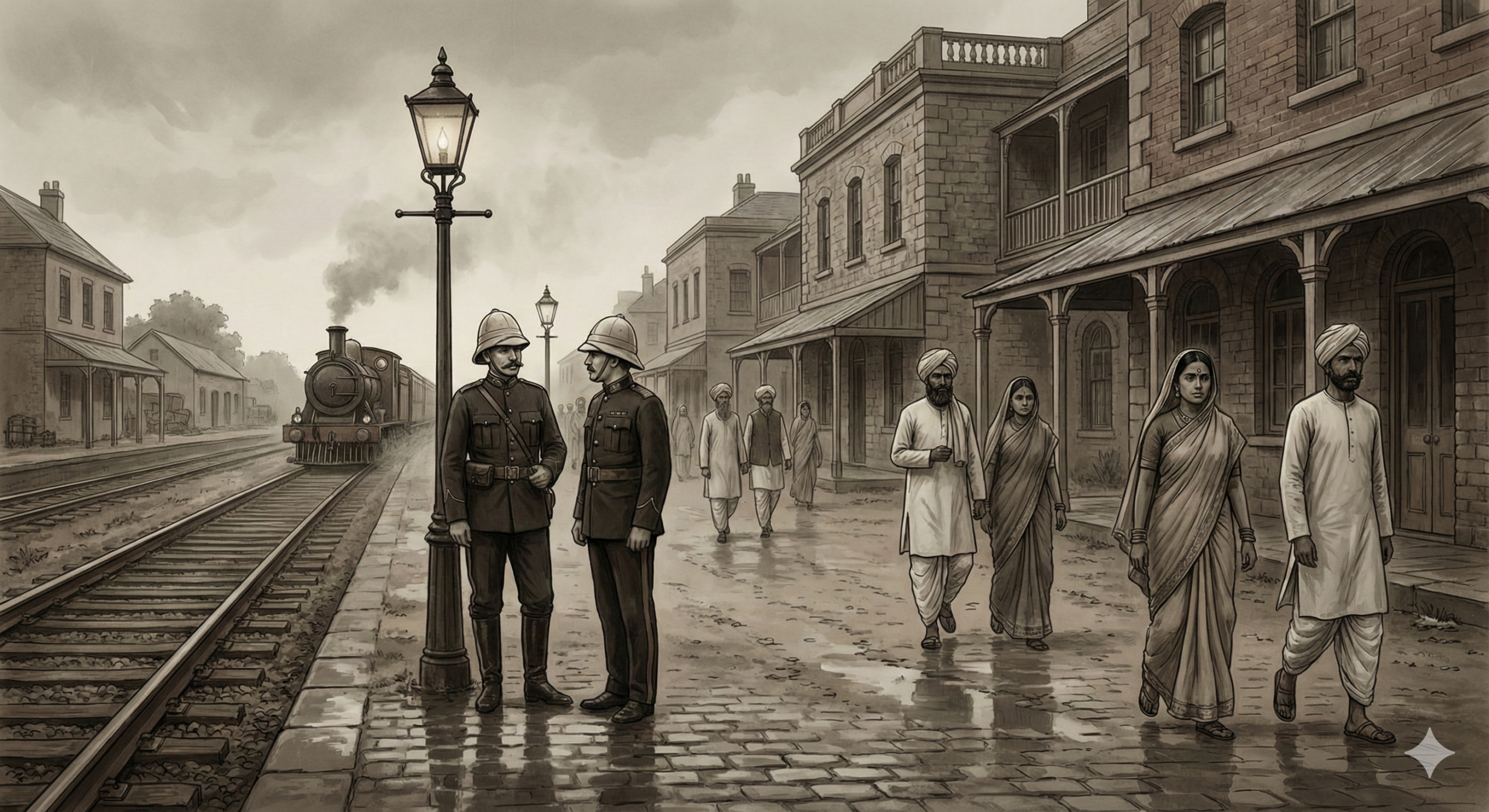
The first passenger train in India ran from Bombay to Thane on 16 April 1853. Railways, roads, telegraphs and ports were built mainly to move raw materials to the coast, carry British goods inland and move troops quickly. Indian taxpayers carried much of the cost, including guaranteed returns to British investors.
The irony is that the same railways and telegraphs let Indians travel, read the same newspapers and organise across regions. The national movement used the infrastructure that was built to control it.
How Indians resisted British rule
The Revolt of 1857 began with sepoys at Meerut and spread across northern and central India. It failed, but it ended Company rule and made the British far more cautious about interfering with Indian princes and religious customs.
Organised politics followed. The Indian National Congress was founded in 1885, and over the next six decades the freedom movement moved from petitions and moderate reform to mass campaigns such as Non-Cooperation, Civil Disobedience and Quit India. India became independent on 15 August 1947, and Partition created India and Pakistan at the same moment. If you want one document from the period to read in full, Naoroji’s Poverty and Un-British Rule in India is still the clearest statement of how Indians themselves understood the economics of colonial rule.
Read Next
- Indian Freedom Struggle: Timeline, Movements and Leaders
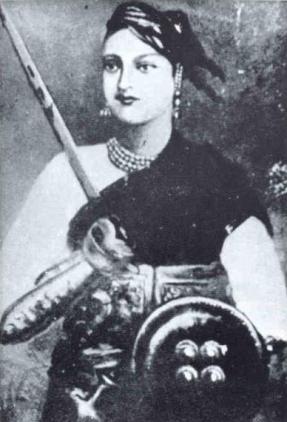
- Rani Lakshmibai of Jhansi: The Queen Who Refused to Kneel
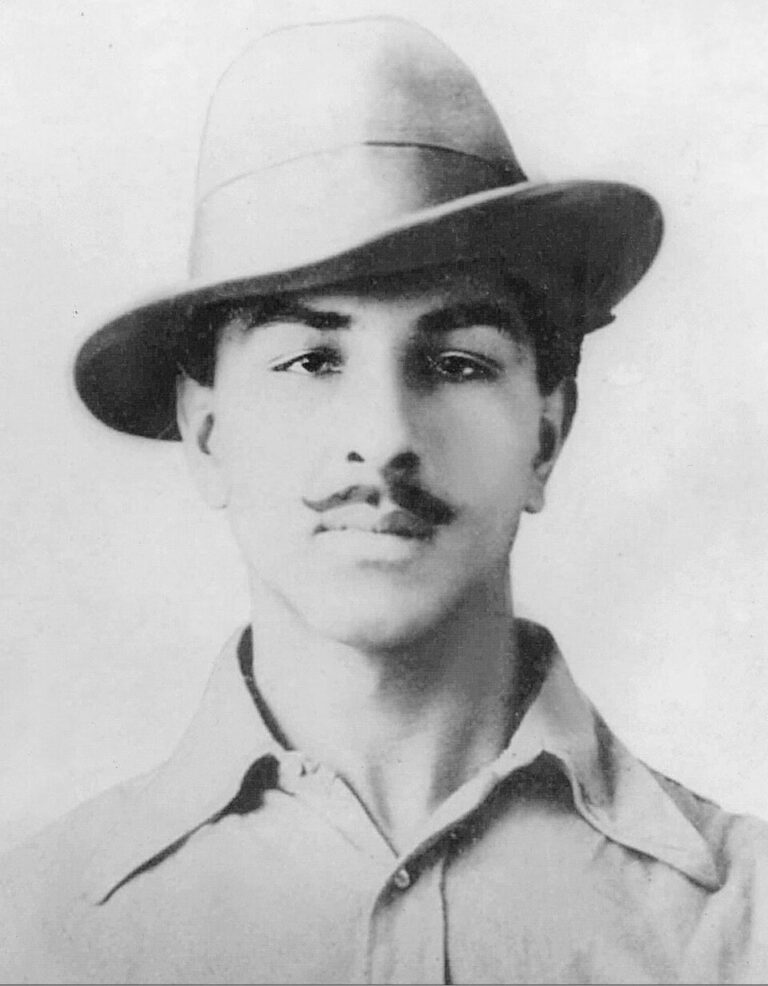
- Bhagat Singh: The Life, Beliefs, and Legacy of a Young Revolutionary
Frequently Asked Questions
How long did British rule in India last?
It depends where you start counting. From Plassey in 1757 to independence in 1947 is 190 years; direct Crown rule ran from 1858 to 1947, a little under ninety years.
Who was the first Viceroy of India?
Lord Canning, who was Governor-General during the Revolt of 1857, became the first Viceroy when the Crown took over in 1858.
Did British rule help India industrialise?
Very little. A few industries such as cotton mills in Bombay and jute mills in Bengal grew, but overall India deindustrialised under British rule, and Indian-owned heavy industry, such as Tata Steel in 1907, came mostly from Indian enterprise.