Traditional Indian Clothing and Its Cultural Importance
Traditional Indian clothing represents one of the world’s most diverse and philosophically rich wardrobe traditions, where every fold, stitch, and color encodes social status, regional identity, marital status, and spiritual aspiration. Unlike Western fashion’s seasonal trends, Indian ethnic wear follows cosmic cycles nine yard sarees for Navratri, white dhotis for mourning, red lehengas for weddings each garment a living calendar of festivals and life stages.
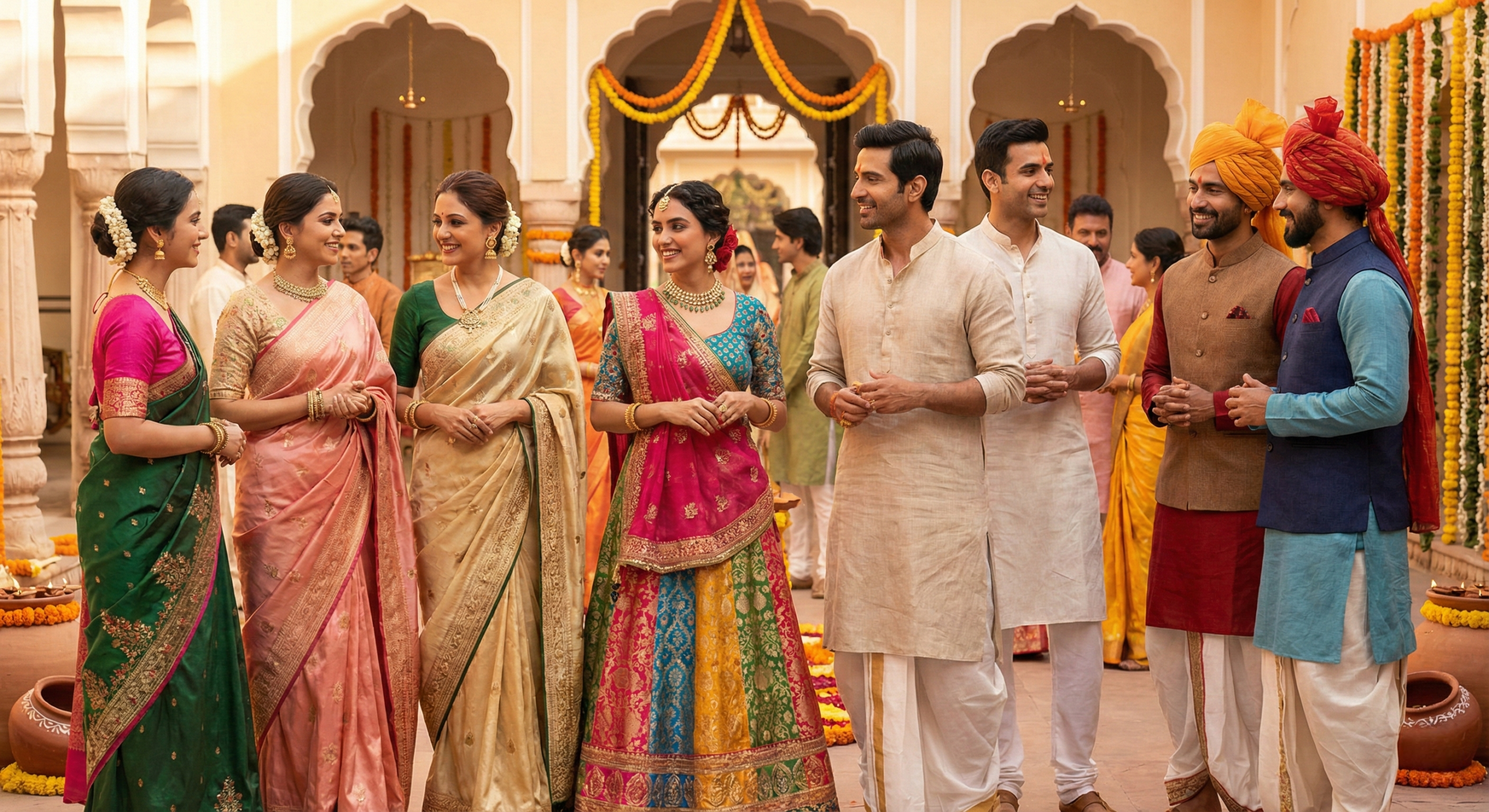
From Kashmir’s pheran to Kerala’s mundu, 28 states produce 500+ distinct costumes using 100+ regional fabrics (Banarasi silk, Chanderi cotton, Patola double ikat) and 50+ embroidery styles (Kantha, Chikankari, Phulkari). These aren’t mere clothes but identity documents announcing caste, community, prosperity, and devotion through precise textile grammars refined over 5000 years.
More than attire, traditional Indian clothing functions as wearable architecture draping bodies into geometric mandalas that align chakras, protect from evil eye, and invoke prosperity. This comprehensive guide explores major garments, regional variations, wedding traditions, and their profound role in preserving India’s pluralistic cultural genome.
Traditional Indian Clothing: Complete Regional Overview
| Garment | Region | Fabric & Drape | Cultural Significance |
|---|---|---|---|
| Saree | Pan-India | 6-9 yards silk/cotton, 80+ draping styles | Marital symbol, 108 upaveeta styles |
| Dhoti/Kurta | North India | Cotton/silk, 5-7 yards wrap, knee-length | Gandhi’s swadeshi, priestly attire |
| Lehenga Choli | Rajasthan/Gujarat | Flared skirt, cropped blouse, dupatta | Wedding, Navratri garba dance |
| Sherwani/Achkan | North India | Silk brocade, knee-length coat, churidar | Groom’s wedding attire, Mughal legacy |
| Mundu-Kasavu | Kerala | White cotton-gold border, lungi style | Temple wear, Onam festival |
| Mekhela Chador | Assam | Silk, two-piece wrap, geometric motifs | Bihu dance, bridal tradition |
| Pheran | Kashmir | Wool/pashmina, loose robe, phiran | Winter insulation, Sufi spirituality |
| Chaniya Choli | Gujarat | Mirrorwork skirt-blouse, Navratri | Garba-dandiya folk dance |
| Salwar Kameez | Punjab | Phulkari embroidery, straight/pyjama | Sikh wedding, Lohri festival |
| Shari/Lungi | Bengal/Bangladesh | Tant/jamdani cotton/silk weaves | Durga Puja, Poila Boishakh |
Ancient Origins: Vedic Dress Codes
Traditional Indian clothing originates in Rig Veda (1500 BCE) descriptions of nivi (lower garment), uttariya (upper drape), kausheya (silk). Indus Valley figurines wear knotted dhotis; Ajanta murals (2nd BCE) depict 20+ saree drapes. Texts mandate colors by varna white (Brahmins), red (Kshatriyas), yellow (Vaishyas).
Fabric Philosophy: 5000 Years of Textiles
India invented cotton weaving (Mohenjo-Daro, 2500 BCE), silk rearing, block printing. Regional specialties encode ecology: desert Bandhani tie-dye, Himalayan pashmina, Coromandel Kalamkari. Khadi (handspun) symbolizes swadeshi independence; 108 sacred threads (upaveeta) worn by married women.
Saree: 80+ Draping Grammars
Nine Yards of Cosmic Geometry
The saree (Sanskrit: shari) drapes 6-9 yards into 108 regional styles Bengali (red-white tant), Maharashtrian nauvari (9-yard warrior), Gujarati (seedha pallu), Kerala’s settu mundu (two-piece). Seedha pallu (front drape) signifies South Indian matrilineal clans; seedha pallu (back drape) patrilineal North.
Banarasi brocades (zari gold thread) require 6 months weaving; Kanjeevaram silk withstands 1000 temple oil washes. Bridal sarees feature 72 motifs invoking 72 tithis (lunar days). Daily wear follows lunar calendar white Mondays (Shiva), red Fridays (Lakshmi).
Regional Masterpieces:
- Kanjeevaram: 120-count silk, temple zari (Tamil Nadu)
- Banarasi: 6-month brocade, Mughal jangla floral (UP)
- Kanchipuram: 57 colors natural dyes (TN)
- Dharmavaram: Gold zardosi sarees (AP)
Dhoti, Kurta, Sherwani: Masculine Drapes
From Vedic to Independence
Dhoti (5.5 yards) wraps left-over-right for Brahmins, right-over-left for householders. Gandhi’s khadi dhoti symbolized swadeshi; priests wear 24-momme mulmul maintaining ritual purity. Kurta-pajama evolved from Mughal jamas; Lucknowi chikankari shadow work cools 45°C summers.
Sherwani (knee-length silk coat) fuses Pathan achkans with Rajput angarkhas bridal staple with 50+ buttons, churidar leggings. Jodhpuri bandhgala (band collar) signifies royalty; Hyderabadi sherwani features gold kalamkari.
Men’s Formals:
- Dhoti-angavastra (priestly cotton)
- Kurta-churidar (everyday ethnic)
- Sherwani-safa (wedding formal)
Lehenga, Anarkali, Salwar: Festive Femininity
Lehenga choli (flared skirt, cropped blouse, dupatta) dominates weddings Rajasthani gota patti, Punjabi phulkari, Bihari sequin work. Anarkali suits cascade 5+ meters evoking 16th-century courtesans. Salwar kameez (Punjab) features 100+ phulkari stitches; Pathani salwars worn by both genders.
- Chaniya choli: Navratri mirrorwork (Gujarat)
- Sharara: Mughal flared pyjamas (Hyderabad)
- Gharara: Tapered Lucknowi elegance
Regional Masterpieces: State Costumes
Kerala Mundu: White-gold kasavu borders denote Namboodiri Brahmins; Assam Mekhela: Muga silk geometrics for Bihu; Kashmiri Pheran: Pashmina traps 20°C insulation; Bengali Shari: Jamdani muslin weaves 1000 motifs/saree. Each encodes caste, region, occasion through precise textile dialects.
Wedding Attire: Cosmic Marriage Garments
Bridal lehenga weighs 20kg (zari, stones); groom’s sherwani features 5000 sequins. Seven pheras demand seven costume changes safed (white pre-ritual), laal (red saptapadi), haldi (yellow turmeric). Solah shringar (16 bridal adornments) completes cosmic alignment.
Mangalsutra, sindoor, chooda encode marital vows; regional variations: Maharashtrian mundavalya (pearl strings), Tamil thaali (gold disc), Punjabi chura (ivory bangles).
Headgear: Turbans & Veils
Safa/Pagdi (turbans) signify 50+ communities Sarpanch wears 10m cloth, groom 5m moti safa. Rajasthani angular pagdis denote clan; Odni/Dupatta (veils) preserve modesty while framing embroidered motifs symbolizing 108 gopis.
Cultural & Spiritual Significance
Traditional Indian clothing aligns cosmic energies nine-yard sarees activate nine chakras; red invokes kundalini; gold threads conduct prana. GI tags protect 100+ weaves (Pochampally ikat, Bomkai sarees). Bollywood globalized lehengas (₹10cr Deepika Padukone wedding saree); diaspora sustains ₹1.5 lakh crore ethnic wear industry.
Modern Revival & Sustainability
Slow fashion embraces handlooms Sabyasachi revived Kantha embroidery; Ritu Kumar digitized Patan Patola. Khadi sales surged 300% post-Covid. Wedding market (₹10 lakh crore) favors heritage over fast fashion, preserving 1 crore weaver livelihoods.
Frequently Asked Questions About Traditional Indian Clothing
1. What are the main types of traditional Indian clothing?
Saree, dhoti-kurta, lehenga choli, sherwani, salwar kameez, mundu represent core garments with 500+ regional variations across 28 states.
2. How many ways can a saree be draped?
108+ regional styles nauvari (9-yard Maharashtra), seedha pallu (Gujarat), Bengali aanchal, Kerala’s settu mundu two-piece.
3. What makes Banarasi sarees special?
6-month handloom brocades with zari gold threads, jangla floral motifs, Mughal-era tanchoi technique weaving figure-ground illusions.
4. Why do Hindu priests wear white dhotis?
White symbolizes purity/satva guna; left-over-right drape distinguishes Brahmin priests from householders (right-over-left).
5. What is a sherwani?
Knee-length silk coat fusing Pathan achkan + Rajput angarkha; bridal formal with 50+ buttons, churidar leggings, safa turban.
6. Describe lehenga choli significance?
Flared skirt + cropped blouse + dupatta dominates weddings/Navratri; mirrorwork, gota patti encode prosperity motifs.
7. What fabrics are uniquely Indian?
Banarasi brocade, Kanjeevaram silk, Chanderi cotton, Pochampally ikat, Jamdani muslin, Muga Assam silk, Pashmina cashmere.
8. Why do Indian clothes have embroidery?
50+ styles (Phulkari, Chikankari, Kantha, Zardosi) encode protection mantras, clan histories, 108 auspicious motifs.
9. What is mundu-kasavu from Kerala?
White cotton with gold zari border; kasavu width denotes social status 2.5″ Namboodiri Brahmins, 1″ commoners.
10. Describe Punjabi salwar kameez?
Phulkari floral embroidery (100+ stitches), straight kameez + salwars; worn by both genders during Lohri, weddings.
11. What headgear do Indian men wear?
Safa/pagdi turbans 10m sarpanch, moti safa grooms, angular Rajasthani clan pagdis, Kashmiri fez-style.
12. How does clothing indicate marital status?
Mangalsutra, sindoor, glass bangles, 9-yard sarees, sakha-pola bangles (Bengal), alta foot dye all marital markers.
13. What is the most expensive Indian fabric?
Patan Patola double ikat silk (₹3 lakh/saree)—100 artisans weave 18 months, 300 motifs, never-fading colors.
14. Why do Indian clothes use bright colors?
Vedic color theory red (kundalini), yellow (solar plexus), green (heart chakra); repel evil eye, attract prosperity.
15. What is chaniya choli?
Gujarati mirrorwork skirt-blouse for Navratri garba; 5000+ mirrors reflect light symbolizing 1000 suns.
16. Describe Tamil Nadu bridal wear?
Kanjeevaram 9-yard saree, thaali mangalsutra, maanga tika, 16 shringar completing cosmic marriage alignment.
17. How has Bollywood influenced ethnic wear?
₹10cr wedding lehengas (Deepika), Anarkali revival, Sabyasachi couture popularized heritage weaves globally.
18. What is khadi clothing significance?
Handspun cotton symbolizes Gandhi’s 1920 swadeshi movement; 4 lakh rural jobs, sustainable slow fashion.
19. Can men wear sarees in India?
Kochi sadhus drape lungi-sarees; Kerala men wear mundu (saree equivalent); gender fluidity in temple rituals.
20. Future of traditional Indian clothing?
₹1.5 lakh crore industry grows 15% yearly; GI tags protect weaves; fusion couture balances heritage + modernity.
Conclusion: Wearable Cultural Scriptures
Traditional Indian clothing transforms bodies into walking temples each drape a mantra, each embroidery a yantra, each color a mood. Unlike disposable fashion, these garments outlive generations, carrying family histories through 1000 temple washes and 50 monsoons. Saree’s infinite drapes mirror infinite atman; dhoti’s simplicity echoes advaita non-duality.
In globalization’s homogenizing tide, ethnic wear asserts pluralistic identity Kashmiri pheran warms Sufi hearts, Rajasthani lehengas spin garba revolutions. Drape yourself in heritage; become the tradition.

Great post. I was checking continuously this blog and I’m inspired!
Extremely helpful information specially the last phase :
) I deal with such info a lot. I was seeking this certain info for a long time.
Thank you and good luck.