Gupta Empire History: Golden Age of Ancient India Explained
Gupta Empire (320 – 550 CE) created Indias most glorious classical civilization spanning 3.5 million sq km where Sanskrit literature reached Shakespearean heights, mathematics invented zero decimal system, cave art achieved photographic realism, and metallurgy produced 1600year rustproof iron pillars. Chandragupta I Lichchhavi marriage launched dynasty; Samudragupta conquered 35 kings; Vikramaditya Chandragupta II hosted navaratnas (Kalidasa, Aryabhata) while Nalanda University attracted 10,000 global students.
The Gupta rulers built upon earlier administrative traditions established during the Maurya Empire, while introducing new models of governance and cultural patronage.
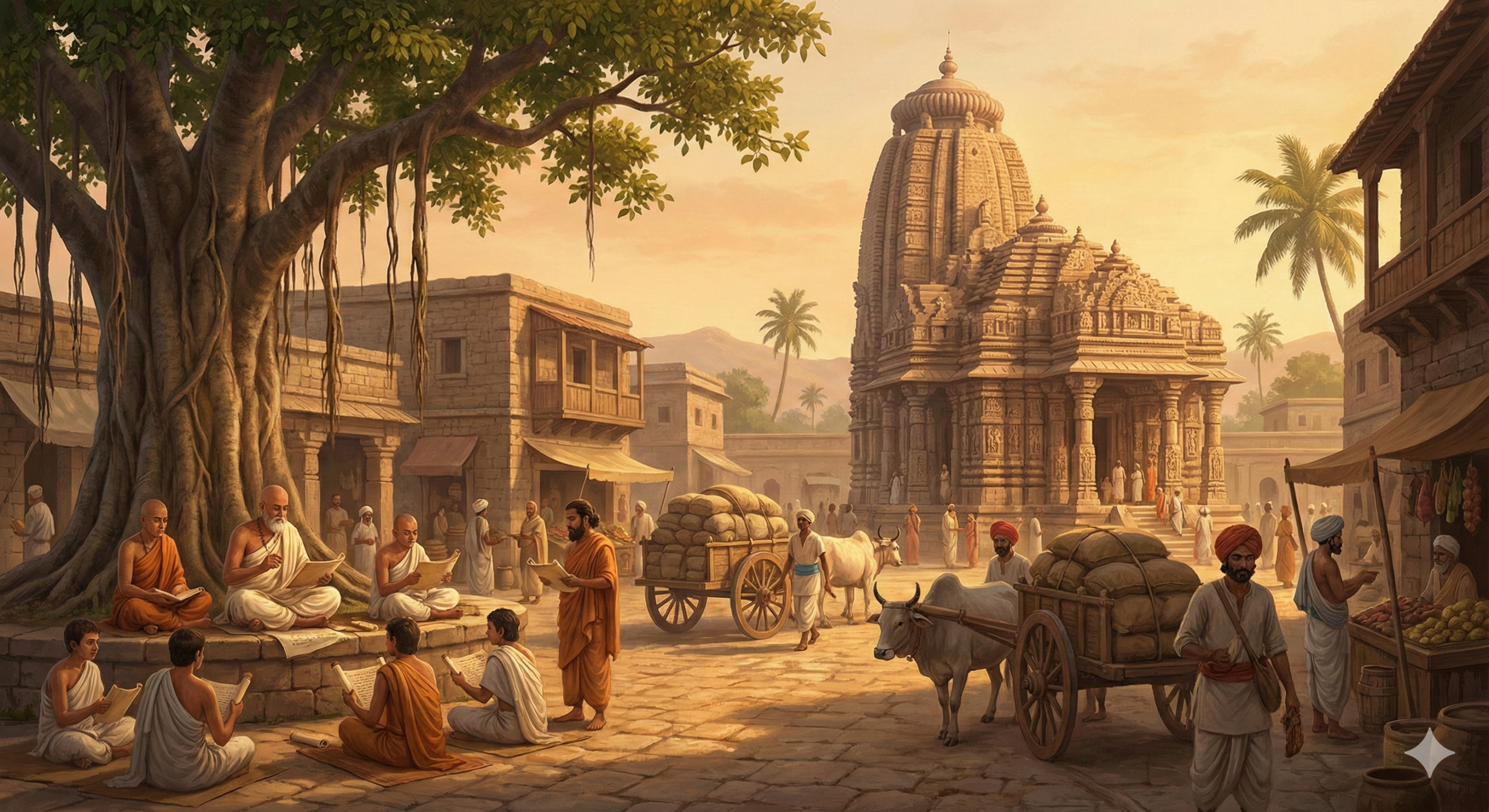
Unlike Mauryan bureaucracy, Guptas perfected decentralized samanta (feudal lord) system maintaining cultural supremacy through 1400 surviving gold dinaras, Puranic Hinduism revival, and Bhakti foundations. This renaissance exported Panchatantra fables worldwide, seeded Southeast Asian temple civilizations, and established mathematical foundations powering modern computing while Ajanta frescoes rivaled Renaissance masterpieces.
Achievements in Science, Art, and Culture During the Gupta Age
The Gupta period witnessed remarkable progress in science, mathematics, art, and literature, making it a golden age in Indian civilization.
These intellectual and cultural developments represented a major phase in ancient Indian civilization, building upon earlier foundations seen in the Harappan Civilization: India’s Oldest Urban Culture.
In mathematics, scholars like Aryabhata introduced concepts such as zero, decimal systems, and accurate calculations of planetary movements. In astronomy, Aryabhata proposed that the Earth rotates on its axis, a revolutionary idea for the time.
Art and architecture flourished with the development of classical Indian styles, evident in Ajanta cave paintings and temple sculptures. Sanskrit literature reached new heights with works by Kalidasa, whose plays and poetry became timeless classics.
The artistic traditions that flourished during the Gupta period later influenced many forms of Indian classical art, including music, sculpture, and movements preserved in Indian Classical Dance Forms: History, Types, and Cultural Significance.
Decline of the Gupta Empire
The decline of the Gupta Empire began in the late 5th century due to multiple internal and external factors. Continuous invasions by the Hunas weakened the empire’s military strength and drained economic resources.
Administrative inefficiencies, reduced central control, and succession disputes further destabilized the empire. As provincial rulers gained independence, the political unity of the Gupta state gradually collapsed, marking the end of its dominance by around 550 CE.
Gupta Dynasty: Complete Timeline & Rulers
| Emperor | Reign | Key Achievements | Territorial Control |
|---|---|---|---|
| Chandragupta I | 320 – 340 CE | Lichchhavi marriage alliance, gold dinara coins, Gupta era calendar | MagadhaPrayagraj core |
| Samudragupta | 340380 CE | 35 kings defeated, Allahabad Pillar Prasasti, veenaplaying conqueror | Gangetic plains to Kamarupa |
| Chandragupta II (Vikramaditya) | 380 – 415 CE | Navaratnas court, Kalidasa, iron pillar, Ujjain capital, Fa Hien visit | GujaratDeccanMalwa |
| Kumaragupta I | 415 – 455 CE | Nalanda University founded, 6th Buddhist Council, empire zenith | 3.5 million sq km peak |
| Skandagupta | 455 – 467 CE | Huna invasions defeated, Bhitari pillar victory, final golden glory | Decline acceleration |
Key Rulers of the Gupta Empire
Chandragupta I: Dynastic Foundation (320 – 340 CE)
Strategic Lichchhavi Marriage
Local vaishya king Chandragupta I married Kumaradevi of republican Lichchhavis gaining Kshatriya legitimacy. Gold coins depicting royal couple established purest ancient currency; Allahabad pillar traces Gupta lineage to Vishnu incarnation establishing divine kingship.
Samudragupta: Indias Napoleon (340 – 380 CE)
Digvijaya World Conquest
Harisenas Allahabad Prasasti immortalizes Samudraguptas campaigns: 12 dakshinapatha southern kings defeated, 9 arya western rulers vanquished, 8 atavika forest chiefs subdued. KamarupaKanchi kings sent tribute; Ceylon ambassador arrived bearing gifts.
Vikramaditya Chandragupta II: Cultural Apex (380 – 415 CE)
Navaratna Nine Gems illuminated Ujjain court: Kalidasa (Abhijnanashakuntalam drama), Aryabhata (mathematician), Varahamihira (astronomer), Amarasimha (lexicographer), Dhanvantari (Ayurveda), Vararuchi (grammar), Ghatakarpara (poet), Shanku (architect), Vetalabhatta (magician).
Western Conquests & Iron Pillar
Shaka satraps defeated; MalwaGujarat annexed; Mehrauli iron pillar (7m tall, 6 tons, 98% wrought iron, phosphorus passivation) rustfree after 1600 monsoons proves unmatched metallurgy. Fa Hien praises vegetarian prosperity, womens safety, nonviolent courts.
MathematicalScientific Revolution
- Aryabhata (476 CE): Aryabhatiya declares Earth rotates daily, pi equals 3.1416, sine table invention, lunar eclipse mechanics
- Brahmagupta (628 CE): Brahma Sphuta Siddhanta defines zero as number, negative solutions, gravity concept
- Varahamihira: Brihat Samhita meteorology treatise, Panchasiddhantika astronomical compendium
Sanskrit Literary Renaissance
Kalidasas Shakuntala (worlds first realistic romantic drama), Meghaduta (nature lyric masterpiece), Raghuvamsha (epic perfection); Bhasas 13 plays rediscovered; Vishnusharma Panchatantra fables conquered PersianArabicEuropean courts as BidpaiCalila y Dimna.
AjantaEllora Artistic Glory
30 Ajanta caves frescoes achieve photographic realism through chiaroscuro shading; Padmapani bodhisattva perspective revolution; Ellora Kailasa temple single rock monolith (200,000 tons excavated); Udayagiri Varaha boar incarnation sculpture.
- Sarnath Buddha sermon reliefs
- Bagh caves Deccan Ajanta
- Bamiyan Buddha prototypes
Puranic Hinduism Codification
Vishnu PuranaShiva PuranaMarkandeya Purana systematized 33 crore deity pantheon; Bhagavata Purana Krishna leelas; NagaraDravida temple architecture born; Tirtha pilgrimage circuits established; ShaivaSmartha synthesis.
Nalanda: Worlds First University
Kumaragupta I (425 CE) founded Nalanda attracting ChineseKoreanTibetan students; 10,000 residents, 2,000 professors, nine storey Ratnodadhi Dharma Gunj libraries; Xuanzang studied 5 years; burned 1193 CE destroying irreplaceable knowledge.
Golden Economy: Silk Road Supremacy
1400 surviving gold dinarasrupakas (99.9% pure) circulated TaxilaPataliputraMadurai; 18 guilds regulated commerce; Roman gold imported for Gupta coins; shipbuilding teak exports; spiceivorypearl trade peaked.
Huna Catastrophe & Collapse (467 – 550 CE)
Skandagupta Bhitari pillar victory over Huns temporary; ToramanaMihirakula invasions fragmented empire; samantas (feudatories) declared independence; Magadha reduced to petty kingdom by 550 CE; Harshavardhana briefly restored glory.
Global Civilizational Export
Gupta decimalzero mathematics birthed Arabic numerals; Panchatantra became European Reynard Fox; Angkor WatBali temples emulate Gupta Nagara; Sanskrit grammarPanini influenced linguistics worldwide.
Frequently Asked Questions: Gupta Golden Age
1. Why Gupta Empire Golden Age?
Gupta Empire renaissance fused literature (Kalidasa), science (Aryabhata zero), art (Ajanta realism), metallurgy (rustproof pillar), university (Nalanda 10,000 students).
2. Who started Gupta dynasty?
Chandragupta I (320 CE) Lichchhavi marriage elevated vaishya to maharajadhiraja; gold coins couple portraits established divine kingship legitimacy.
3. Samudragupta Allahabad Prasasti?
Harisena inscription praises 35 kings conquered: 12 south, 9 west, 8 forest chiefs; Ashwamedha performer, veenaplayer Vishnu devotee.
4. Vikramaditya navaratna gems?
Kalidasa, Aryabhata, Varahamihira, Amarasimha, Dhanvantari, Vararuchi, Ghatakarpara, Shanku, Vetalabhatta Ujjain court luminaries.
5. Aryabhata mathematical revolution?
Aryabhatiya (499 CE): Earth rotates, pi=3.1416 accurate 4 decimals, sine table trigonometry birth, eclipse lunar mechanics solved.
6. Mehrauli iron pillar miracle?
400 CE, 7m tall, 6 tons, 98% wrought iron, phosphorus coating passivation rustfree 1600+ monsoons proves Gupta metallurgy unmatched.
7. Kalidasa major works?
Abhijnanashakuntalam (romantic drama), Meghaduta (lyric perfection), RaghuvamshaKumarasambhava (epics), Malavikagnimitram (comedy).
8. Nalanda University scale?
425 CE founded; 10,000 students 2,000 teachers 20 kingdoms; 9storey Ratnodadhi library; Xuanzang 5year study 657 CE.
9. Gupta gold coin purity?
1400 surviving dinarasrupakas 99.9% pure; LakshmiGaruda motifs; Roman gold imports minted Gupta currency standard.
10. Ajanta Caves artistic innovation?
30 caves 2nd 6th CE; Jataka frescoes chiaroscuro shading perspective realism; Padmapani bodhisattva masterpiece.
11. Gupta religion evolution?
Paramabhagavata Vishnu worship; Puranas codified 33 crore deities; Bhakti Ramanuja foundation; temple NagaraDravida born.
12. Fa Hien Gupta observations?
Chinese pilgrim (399 – 414 CE): vegetarian prosperity, women safe midnight streets, impartial courts, UjjainNalanda universities.
13. Huna invasion consequences?
Skandagupta victory temporary; ToramanaMihirakula fragmented empire; samantas independence by 550 CE.
14. Panchatantra global journey?
Vishnusharma fables Persian Bidpai, Arabic Calila y Dimna, European Reynard FoxReynardine influencing AesopLa Fontaine.
15. Gupta vs Mauryan governance?
Mauryan Arthashastra centralization; Gupta samanta feudal decentralization with cultural supremacy gold economy.
16. Varahamihira contributions?
Brihat Samhita meteorologyearthquakes; Panchasiddhantika 5 astronomy systems; Brihat Jataka predictive astrology.
17. Gupta trade prosperity?
Silk RoadTaxilaMadurai hubs; Roman goldspices exchange; shipbuilding teak exports; 18 regulated merchant guilds.
18. ElloraKailasa engineering?
Single rock monolith 200,000 tons excavated topdown; GuptaDravidian fusion; Shaiva shrine architectural marvel.
19. Gupta decimal system origin?
Brahmagupta zero number definition; place value vigesimal; Arabic numerals transmission foundation modern computing.
20. Gupta legacy modern India?
Sanskrit literature, decimal mathematics, Puranic temples, Bhakti spirituality encode Hindu civilizational DNA enduring.
Conclusion: Eternal Golden Template
Gupta Empire encoded Indias civilizational DNA through Sanskrit kavya, decimal vigesimal, Puranic temples, decimal mathematics powering digital age. Vikramadityas court proved enlightened patronage births immortality while iron pillar defies entropy 1600 years.
Golden Age template revived MarathaPeshwaMysoreMaharaja courts; Aryabhatas calculations accurate today; Kalidasa Shakespeare of East. Guptas proved: civilizations conquer eternity through minds illuminated by beautytruthgenius.