Maharana Pratap History: Life, Battles and Legacy
Maharana Pratap (1540-1597 CE) ruled Mewar as its 54th king from the Sisodia Rajput clan, embodying unyielding resistance against Mughal emperor Akbar’s expansion. Born at Kumbhalgarh Fort, he never submitted to Mughal suzerainty despite tactical defeats, reclaiming most of Mewar through guerrilla warfare. His legendary horse Chetak and battles like Haldighati symbolize Rajput valor and independence.
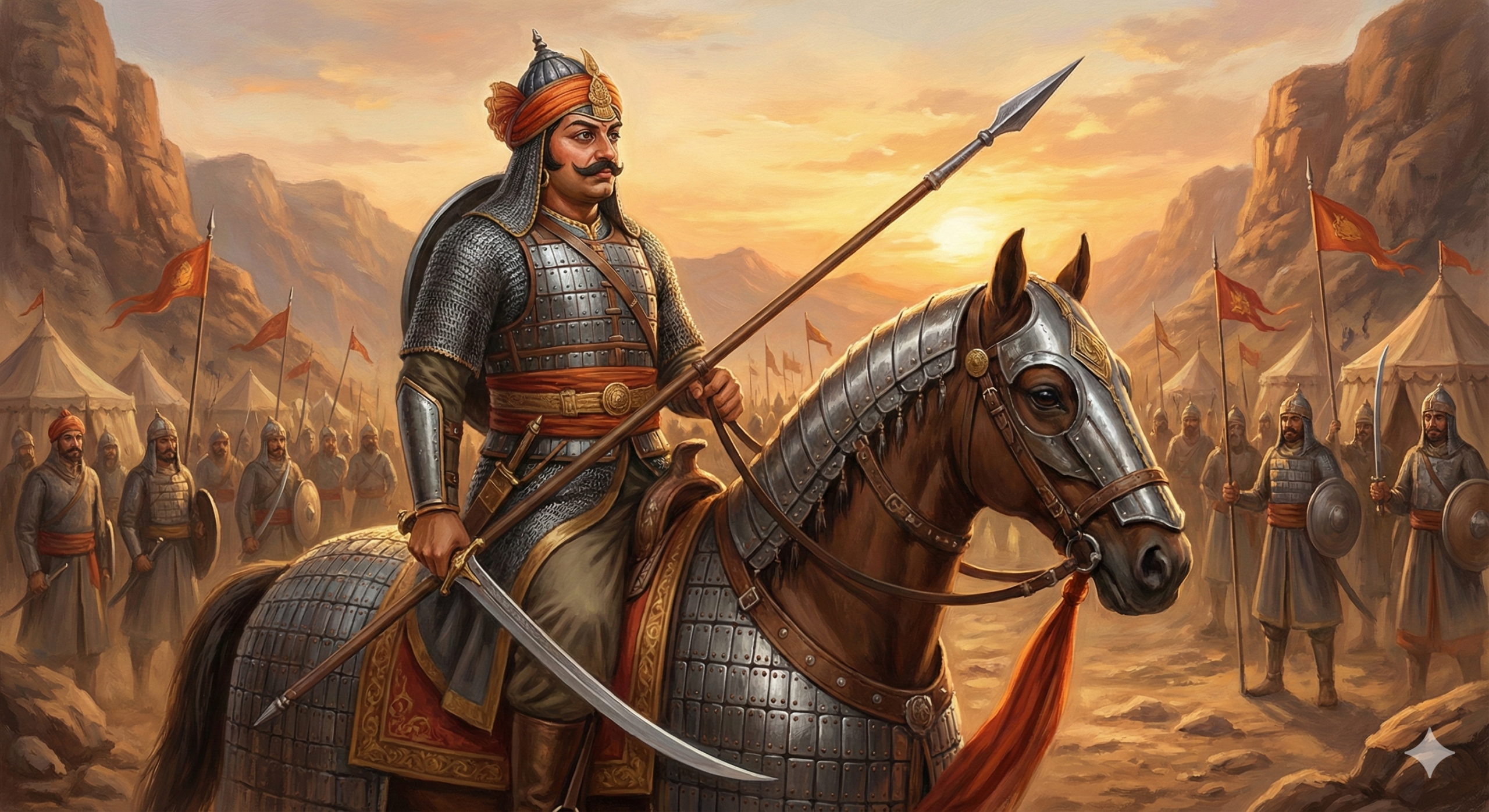
From early training amid Chittor siege to victories at Dewair, Pratap’s 25-year reign transformed Mewar into a symbol of defiance, influencing Rajput pride across Rajasthan.
Overview Table of Maharana Pratap
| Aspect | Details |
|---|---|
| Birth & Death | May 9, 1540 – January 19, 1597 (Chavand) |
| Reign | 1572-1597 (Mewar, Sisodia Dynasty) |
| Key Battles | Haldighati (1576), Dewair (1582) – 36 Mughal posts captured |
| Family | Father: Udai Singh II; 11 wives, 17 sons; Successor: Amar Singh I |
| Allies | Bhil tribes, Bhama Shah, Hakim Khan Sur |
| Symbols | Chetak horse, 80kg sword, spear; Never bowed to Akbar |
| Territories Reclaimed | 85% of Mewar including Kumbhalgarh, Gogunda |
| Legacy | Maharana Pratap Memorial Udaipur, Haldighati Museum |
Early Life: Forged in Siege
Childhood at Kumbhalgarh (1540-1568)
Maharana Pratap, eldest of 25 sons of Udai Singh II and Rani Jaiwanta Bai, trained in warfare, archery, and elephant combat from childhood at Kumbhalgarh. In 1567, during Akbar’s Chittor siege, his family fled to Gogunda, where Pratap defended territories showing early leadership.
Ascension Amid Family Rift (1572)
After Udai Singh’s death, younger brother Jagmal briefly crowned but deposed due to incompetence; nobles installed Pratap as rightful heir at Gogunda. Akbar sent envoys demanding submission, but Pratap rejected, vowing eternal Mewar independence, even after Mughal dominance established following the Battle of Panipat.
Battle of Haldighati (1576): Legend Born
David vs Goliath Clash
On June 18, 1576, Pratap’s 3,000-20,000 Bhil archers and cavalry faced Man Singh’s 5,000-80,000 Mughals in Haldighati pass using terrain advantage.
Chetak’s Heroic Sacrifice
Chetak, the blue Marwari stallion, jumped 26-foot ravine carrying wounded Pratap to safety despite arrow-pierced leg and elephant wound, dying loyally. This feat immortalized Chetak; Pratap mourned deeply, erecting memorials.
Guerrilla Wars & Triumph at Dewair
Exile and Hardships (1576-1582)
Retreating to Aravalli hills, Pratap lived in caves with family, sustained by Bhil allies and Bhama Shah’s donations; conducted hit-run raids on Mughals.
Dewair Victory (1582)
Exploiting Mughal diversions, Pratap captured Dewair outpost, dismantling 36 garrisons; 36,000 Mughals surrendered, reclaiming Kumbhalgarh and western Mewar. Established Chavand capital; Akbar halted campaigns till Pratap’s death.
Administration & Family
Mewar Governance
Pratap maintained Rajput traditions, iqta-like land grants to loyalists, Bhil alliances crucial for intelligence and archery support. 11 queens, 17 sons; Amar Singh I succeeded, eventually allying Mughals.
Death & Succession
Hunting injury in 1597 led to death at 56; last words urged sons to reclaim Chittor fully.
Legacy: Eternal Rajput Icon
Monuments & Memorials
Maharana Pratap Memorial Udaipur features 5m equestrian statue, museum with paintings of battles; Haldighati Museum houses artifacts, Chetak samadhi. Pratap Gaurav Kendra Udaipur preserves sword (80kg), spear.
Cultural Impact
Symbol of resistance; folk songs, statues across Rajasthan; inspired later Indian freedom fighters;
descendants like Arvind Singh Mewar (d.2025) upheld legacy at City Palace.
Frequently Asked Questions About Maharana Pratap
1. When was Maharana Pratap born?
May 9, 1540 at Kumbhalgarh Fort to Udai Singh II; died January 19, 1597 from hunting injury.
2. Who was Chetak?
Pratap’s loyal blue Marwari horse; jumped 26ft ravine in Haldighati saving master, died from wounds symbolizing devotion.
3. Did Pratap win Haldighati?
Tactical retreat but moral victory; inflicted heavy casualties on larger Mughal force led by Man Singh.
4. What was Battle of Dewair?
1582 triumph; captured 36 Mughal posts, 36,000 surrendered, reclaimed 85% Mewar including Kumbhalgarh.
5. Why reject Akbar’s offers?
Rajput dharma forbade submission; vowed eternal Mewar independence unlike other Rajputs who allied Mughals.
6. How heavy was Pratap’s sword?
80-90kg spear and sword at Pratap Gaurav Kendra; displayed immense physical strength in battles.
7. Who were key allies?
Bhil archers, Bhama Shah (financier), Hakim Khan Sur, Jhala Man; crucial in guerrilla warfare.
8. Where is Pratap Memorial?
Udaipur with 5m statue, museum; Haldighati Museum artifacts; Chetak samadhi nearby.
9. Did Pratap regain Chittor?
No, died before; son Amar Singh made peace with Jahangir; Mewar pride intact.
10. Army sizes Haldighati?
Pratap: 3,000-20,000; Mughals: 5,000-80,000; sources vary but Pratap outnumbered.
Conclusion
Maharana Pratap’s defiance forged enduring Rajput legacy of honor and sovereignty, inspiring generations against tyranny.