Indian Classical Dance Forms: History, Types, and Cultural Significance
Indian classical dance forms represent one of the world’s most sophisticated and ancient performing art traditions, blending spirituality, mathematics, poetry, and physical mastery into mesmerizing spectacles.
Rooted in the 2000-year-old Natya Shastra by sage Bharata Muni, these dances transform epic narratives from Hindu mythology into living sculptures through precise mudras (hand gestures), intricate footwork, and profound facial expressions.
Recognized by India’s Sangeet Natak Akademi, eight distinct forms each embody regional aesthetics, linguistic nuances, and philosophical depth while sharing common technical foundations. From Tamil Nadu’s fiery Bharatanatyam to Kerala’s dramatic Kathakali, these dances have evolved through temple rituals, royal courts, colonial suppression, and modern revival to become global cultural ambassadors.
More than mere entertainment, Indian classical dance forms serve as visual philosophy encoding cosmology, ethics, and human psychology through codified movements practiced for 10-15 years before professional performance. This comprehensive guide explores their history, technical anatomy, regional variations, and enduring cultural impact.
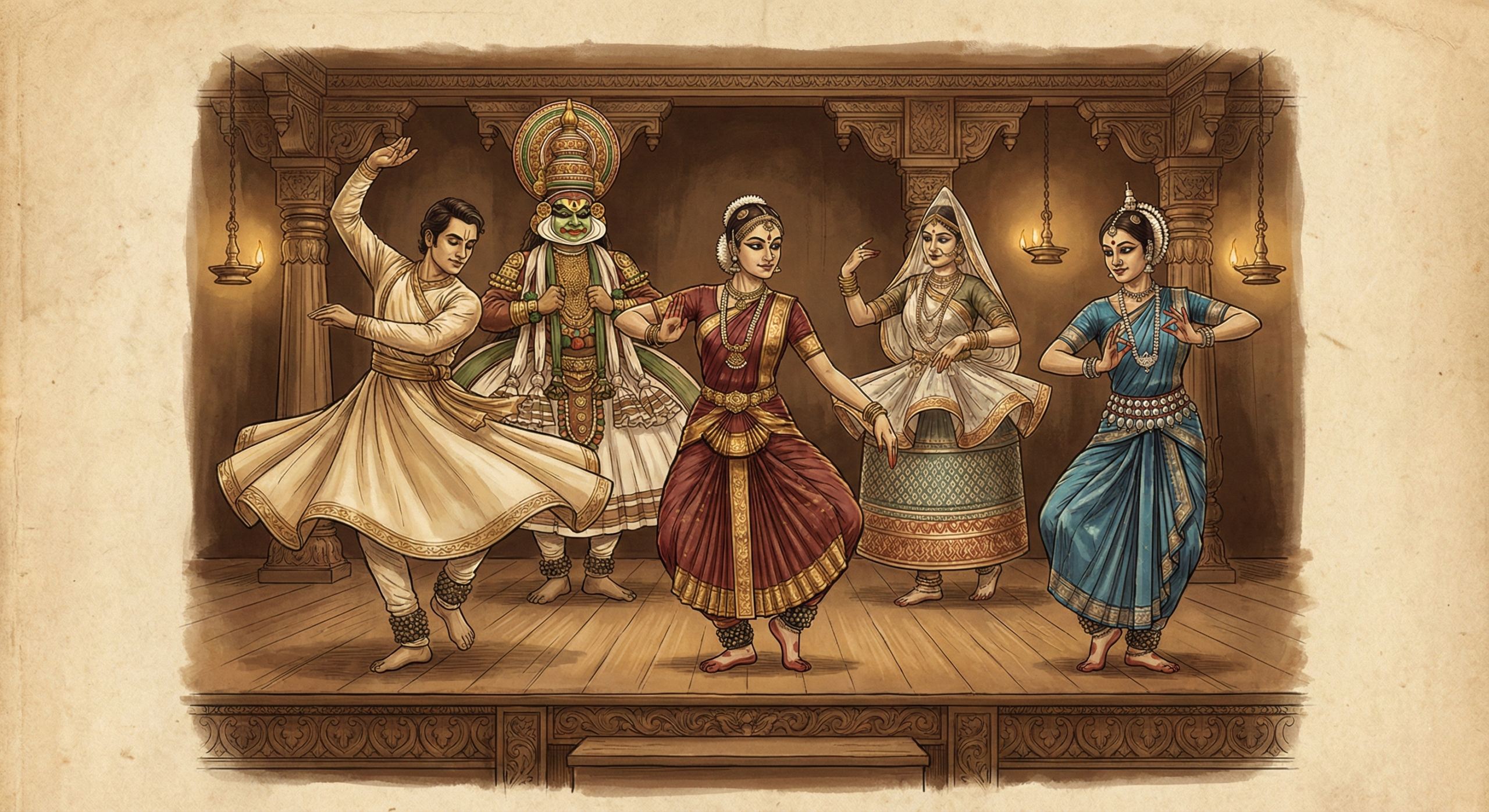
Indian Classical Dance Forms: Complete Overview
| Dance Form | State/Region | Core Characteristics | Primary Themes | Music Style |
|---|---|---|---|---|
| Bharatanatyam | Tamil Nadu | Ardhamandali stance, nritta-nritya balance, expressive eyes | Shiva devotion, Shaivite mythology | Carnatic (mridangam, violin) |
| Kathak | North India (UP) | Chakkars (spins), tatkar footwork, Mughal gat bhav | Krishna leelas, romantic thumri | Hindustani (tabla, sarangi) |
| Kathakali | Kerala | Chutti makeup, all-night performances, navarasa expressions | Mahabharata, Ramayana epics | Sopana (chenda, maddalam) |
| Kuchipudi | Andhra Pradesh | Balancing acts, nritya solos, yakshagana roots | Bhagavata Mela narratives | Carnatic |
| Odissi | Odisha | Tribhanga curve, chauka-triangular stance, mahari tradition | Jagannath devotion, Geetagovinda | Odia classical |
| Sattriya | Assam | Monastic dance-drama, ankiya naat, sword dances | Vaishnavism, Sankardev compositions | Borgeet hymns |
| Manipuri | Manipur | Rasleela focus, lasya grace, pung cholom drums | Radha-Krishna devotion | Pung, cymbals |
| Mohiniyattam | Kerala | Lahari swaying, feminine lasya, Mohini mythology | Enchantress narratives | Sopana (edakka) |
The Ancient Origins: Natya Shastra Foundation
The Indian classical dance forms trace their technical and philosophical foundations to the Natya Shastra (200 BCE-200 CE), the world’s oldest surviving performing arts treatise. Attributed to sage Bharata Muni, this encyclopedic text codifies dance into three streams: nritta (pure rhythmic movement), nritya (expressive narrative dance), and natya (dramatic representation).
Vedic Roots and Temple Codification
Dance appears in Rig Veda hymns describing cosmic dancers and Indus Valley seals showing proto-mudras. Gupta period (320-550 CE) temple sculptures at Khajuraho, Ellora, and Belur preserve 108 karanas (kinetic units) still executed today. Chola bronzes (9th-13th CE) immortalize Bharatanatyam‘s ardhamandali stance, while Odisha’s Konark carvings preserve Odissi‘s tribhanga curve.
Devadasis (temple servants) institutionalized these forms, performing daily rituals and sustaining unbroken lineages until 19th-century colonial “anti-nautch” campaigns disrupted transmission. 20th-century revivalists like Rukmini Devi Arundale (Bharatanatyam), Kelucharan Mohapatra (Odissi), and Birju Maharaj (Kathak) reconstructed these traditions from memory, sculpture, and painting analysis.
Technical Architecture: The 64 Arts
Natya Shastra defines 108 karanas, 32 sandhis (transitional poses), and hundreds of hastas (gestures). Each Indian classical dance form adapts this grammar: Bharatanatyam uses all 28 asamyuta hastas, Kathakali expands to 240, Manipuri softens into lyrical curves. Rasa theory (nine emotions) governs abhinaya (expression), creating psychological depth unmatched in Western dance vocabulary.
Bharatanatyam: Temple Fire Reborn
Sadir to Global Stage
Bharatanatyam, Tamil Nadu’s preeminent form, evolved from Sadir (devadasi temple dance) into modern solo theatre. Rukmini Devi’s 1930s Kalakshetra revival stripped erotic elements, emphasizing spiritual geometry. The margam (path) structure progresses from alippu (invocation) through varnam (central exposition) to tillana (pure rhythm).
Technical hallmarks include ardhamandali (demigod stance), kanakutam (lightning footwork), and abhinaya where eyes convey entire narratives. 28 asamyuta mudras like katakamukha (mirror) and chandrakala (crescent moon) encode poetic imagery.
Costume & Adornments:
- Silk saree draped as dhoti with golden zari temple border
- Vibhuti (sacred ash) forehead markings, red kumkum dots
- Temple jewelry: jhumkas, maanga tikka, vanki (armlets)
- Salangai (ghungroo) ankle bells numbering 50-100
Carnatic music features mridangam bols (“thaiyum thah”) matching dancer’s feet. Repertoire spans Shiva padams (lyrical devotion) to abstract java talam rhythmic cycles.
Kathak: Mughal Grace Meets Krishna Bhakti
Storyteller’s Evolution
Kathak (“story”) emerged from kathakar bards narrating Krishna leelas, absorbing Mughal gat bhav (pure dance) in 16th-century courts. Lucknow gharana emphasizes abhinaya, Jaipur footwork virtuosity, Pandit Birju Maharaj fused both. Signature chakkars (multiple pirouettes) create optical illusion through centrifugal ghungroo sounds.
Tatkar (foot percussion) dialogues with tabla in complex layakari (rhythmic play). Thumri choreography interprets romantic poetry through bol banav (word imagery). Gat nikash reveals character through abstract torso ripples.
Distinct Elements:
- Churidar-kurta, flowing ghagra for women; 100+ ghungroo bells
- Round matka poses contrasting angularity of southern forms
- Hindustani accompaniment: tabla, sarangi, pakhawaj
- Repertoire: Krishna thumri, Shiva stuti, rare Purab ang
Kathakali: Epic Warriors in Vibrant Makeup
Kerala’s All-Night Theatricality
Kathakali transforms Ramayana-Mahabharata into all-male, all-night spectacles with chutti makeup encoding character types: green (noble), red (evil), white (divine). Originating from 17th-century Krishnanattam, it demands superhuman stamina single actors portray entire battles through navarasa facial extremes.
240 codified hastas plus nethradhristi (eye dialect) convey epic dialogue silently. Jatis (martial sequences) mimic Kalaripayattu combat. Training begins age 8, mastering breath control for continuous 8-hour performances.
Signature Features:
- Elaborate costumes: massive headdresses, flared skirts
- Chutti rice paste makeup applied 3-4 hours pre-performance
- Repertoire: Keechaka Vadha, Kaliya Mardana, Duryodhana Vadha
Kuchipudi: Andhra’s Dramatic Virtuosity
Kuchipudi preserves Bhagavata Mela Natakam (17th century), blending solo nritya with group dance-drama. Siddhendra Yogi’s Bhama Kalapam features female roles by male dancers. Signature nritya includes water/deewali lamp balancing on head while dancing intricate jatis.
Unlike Bharatanatyam’s geometric precision, Kuchipudi flows with dramatic nakshatras (star formations). Modern gurus Yamini Krishnamurthy and Vempati Chinna Satyam popularized female performers.
- Carnatic music, veena-dominant
- Saree costumes, male dhoti-angavastram
- Repertoire: Tarangam (dancing on brass plate edge)
Odissi: Odisha’s Sculpted Poetry
Odissi‘s tribhanga (triple curve) mirrors Konark Sun Temple carvings. Revived from mahari (temple) and nartaki (court) traditions by Kelucharan Mohapatra, it alternates chauka (geometric triangle) and abhinaya (fluid expression). Mangalacharan opening salutes Lord Jagannath through floor-touching devotion.
- Sambalpuri saree, silver filigree jewelry
- Odia music: mardala drums, flute
- Pallavi reveals melodic sculpture through stillness-motion
Sattriya, Manipuri, Mohiniyattam: Eastern Elegance
Sattriya (Assam, 2000 recognition) preserves 15th-century Vaishnava monastic tradition of Srimanta Sankardev. Manipuri‘s Rasleela embodies Radha-Krishna mysticism through lasya (feminine) grace and pung cholom (drum dance) vigor. Mohiniyattam (Kerala) sways like monsoon palms, incarnating Vishnu’s enchantress avatar through serpentine lahari movements.
Cultural and Philosophical Significance
Indian classical dance forms encode Advaita Vedanta philosophy through angika (body), vachika (speech), aharya (costume), and sattvika (psychological) abhinaya. They preserve endangered Sanskrit literature, regional languages, and pre-colonial aesthetics while fostering gender fluidity (Kathakali males as heroines) and therapeutic benefits through yogic asanas.
Global diaspora sustains 500+ academies worldwide; UNESCO recognizes Kutiyattam (Kathakali ancestor). Bollywood choreographers like Saroj Khan adapted mudras, creating cultural osmosis. Annual festivals (Khajuraho, Konark, Mamallapuram) generate tourism economies while transmitting intangible heritage.
Learning Pathways and Modern Practice
Arduous 10-15 year training demands guru-shishya parampara (master-disciple). Modern academies like Kalakshetra (Chennai), Nrityagram (Bengaluru) offer structured diplomas. Digital platforms democratize access, though live transmission preserves energetic lineages (shaktipat).
Frequently Asked Questions About Indian Classical Dance Forms
1. What are the 8 recognized Indian classical dance forms?
Bharatanatyam, Kathak, Kathakali, Kuchipudi, Odissi, Sattriya, Manipuri, Mohiniyattam received Sangeet Natak Akademi classical status, each preserving distinct regional aesthetics rooted in Natya Shastra.
2. Which is the oldest Indian classical dance form?
Bharatanatyam traces continuously through Chola bronzes (9th CE) and devadasi lineages, though all forms share Natya Shastra origins (200 BCE).
3. What is Natya Shastra’s role in classical dance?
Natya Shastra codifies nritta (rhythm), nritya (expression), natya (drama) with 108 karanas, 32 hastas, and rasa theory governing all Indian classical dance forms.
4. How many years of training for professional dancers?
10-15 years minimum under guru-shishya system, mastering 1000+ mudras, 100+ karanas, and complex talas before arangetram (debut).
5. What distinguishes Kathak from other forms?
Kathak uniquely blends Hindu kathakar storytelling with Mughal gat bhav, emphasizing chakkars (spins) and tatkar (foot percussion) over southern geometricity.
6. Why is Kathakali traditionally all-male?
Maintaining Rig Veda precedent where males portrayed all roles; extreme physicality and makeup application suit masculine physiology for all-night performances.
7. What is tribhanga pose in Odissi?
Tribhanga (three bends) head, torso, hips creates S-curve echoing Konark sculptures and cosmic wave patterns, contrasting Bharatanatyam’s angularity.
8. Who revived modern Bharatanatyam?
Rukmini Devi Arundale founded Kalakshetra (1936), codifying devadasi Sadir into stage-appropriate repertoire while preserving spiritual essence.
9. What are ghungroo in Kathak?
Ghungroo (ankle bells, 50-200 pairs) amplify tatkar footwork, creating rhythmic conversations with tabla in complex layakari cycles.
10. Which form uses elaborate facial makeup?
Kathakali‘s chutti (rice-paste) makeup encodes character archetypes green (noble), red (demonic), applied 3-4 hours pre-performance.
11. What makes Sattriya unique?
Sattriya, youngest classical form (2000), preserves Assam’s monastic Vaishnava tradition through ankiya naat dance-dramas by Srimanta Sankardev.
12. Why is Manipuri called “ethereal”?
Manipuri’s lasya (feminine grace) and Rasleela focus create dreamlike quality; soft rounded mudras contrast vigorous pung cholom drum dances.
13. What costumes define Mohiniyattam?
Mohiniyattam features white-offwhite sarees with golden borders evoking Mohini avatar, minimal jewelry emphasizing swaying lahari movements.
14. Which form originated in temples?
All trace to temples, but Bharatanatyam (Sadir), Odissi (Mahari), and Sattriya (Sattra monasteries) preserve strongest ritual lineages.
15. What music accompanies Kuchipudi?
Carnatic tradition with veena prominence; distinctive tarangam danced on brass plate edge synchronizes with mridangam rhythmic cycles.
16. Name famous classical dance exponents
Birju Maharaj (Kathak), Yamini Krishnamurthy (Kuchipudi), Kelucharan Mohapatra (Odissi), Asan Garikapati (Kuchipudi), Guru Sharada (Mohiniyattam).
17. How did colonialism impact these forms?
1910s “anti-nautch” campaigns stigmatized devadasis; gurus reconstructed from memory, sculpture study. Post-1947 academies institutionalized transmission.
18. Are women now performing Kathakali?
Modern productions feature female artists, though traditional kalari-trained males preserve authentic vigor and makeup application techniques.
19. What is abhinaya in classical dance?
Abhinaya (carriage) conveys narrative through angika (body), vachika (speech), aharya (costume), sattvika (psychological) modes per Natya Shastra.
20. Can beginners learn classical dance today?
Yes structured academies offer graded courses (6 levels). Digital tutorials accelerate basics, though live guru transmission preserves energetic lineages.
Conclusion: Living Temples of Movement
Indian classical dance forms transcend entertainment, functioning as kinetic scriptures illuminating human consciousness through divine geometry. Each mudra reveals cosmic patterns, each karana encodes evolutionary biology, each rasa maps emotional intelligence. As digital globalization fragments traditions, these dances remain resilient bridges connecting ancient rishis to future generations.
From Bharatanatyam’s laser-sharp precision to Kathakali’s volcanic power, they remind us: the body is temple, movement is prayer, mastery is moksha. Witnessing a dancer transform into deity through practiced perfection reveals why these forms have endured 2000 years, they don’t merely depict divinity; they become it.