[india_weather]

Save Aravalli Movement: Why India’s Oldest Mountains Are Under Threat
The rocks of the Aravalli range are around 1.8 billion years old, more than thirty times older than the Himalayas, yet in a single human generation whole hills in Haryana and Rajasthan have been quarried flat or built over. The Save Aravalli Movement is the loose coalition of activists, scientists, lawyers and ordinary residents trying to stop that loss before it becomes permanent. Here is what the range does, what is damaging it, and where the fight stands.
Where is the Aravalli range?
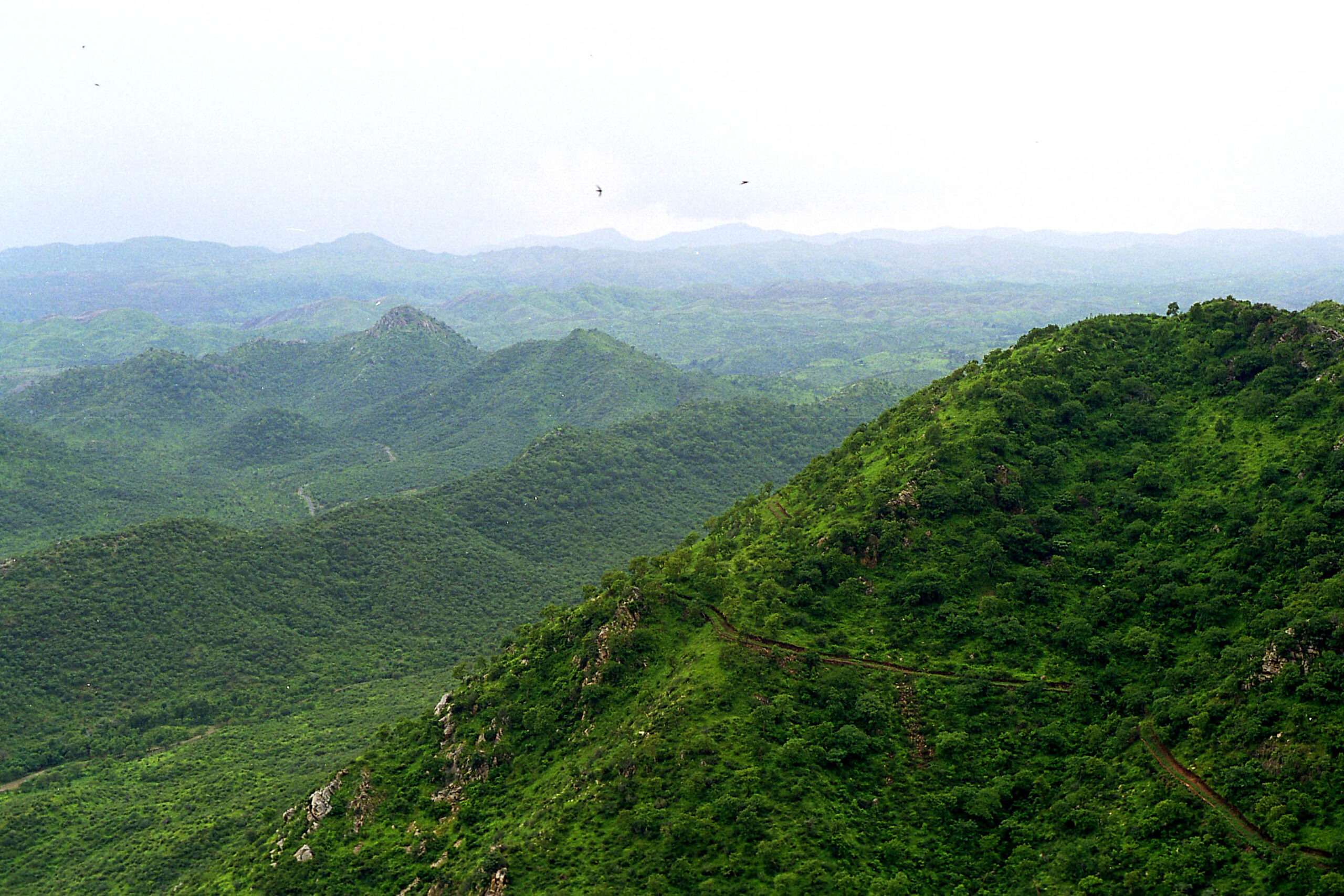
The Aravalli runs for about 690 kilometres, starting near Delhi and heading south west through Haryana and Rajasthan before ending near Ahmedabad in Gujarat. Its highest point is Guru Shikhar at Mount Abu, 1,722 metres above sea level. Most of the range is much lower, worn down by erosion over an enormous span of time.
It is better described as a chain of parallel hills and valleys than as one ridge, and there are gaps in several places. The Delhi Ridge, on which parts of the capital are built, is the northern tail of this system. Jaipur, Ajmer and Udaipur all lie in or near the hills.
The range also carries marble, granite, limestone, copper, zinc and lead. The white marble of the Taj Mahal came from the Makrana quarries in this belt, which shows how long people have been cutting stone out of these hills.
Why the Aravalli matters for north India
The range does four jobs that nothing else in the region can do.
A wall against the Thar Desert
The hills slow the eastward spread of desert conditions from western Rajasthan into Haryana and Delhi. Environmental researchers have linked gaps in the range with pockets of desertification, which is one reason activists worry every time another hill is removed.
Groundwater recharge
The fractured rock lets monsoon rain seep down into deep aquifers, and much of the groundwater used in Delhi, Haryana and eastern Rajasthan depends on that recharge. When slopes are stripped of vegetation and covered in concrete, the water runs off instead of sinking in.
Cleaner, cooler air
The Aravalli forests trap dust and help cool the surrounding area. Delhi’s ridge forest is often credited with keeping parts of the city noticeably cooler than they would otherwise be. In a capital that regularly records some of the worst air quality of any large city in the world, that counts for a lot.
A wildlife corridor
Leopards, striped hyenas, jackals, Indian foxes, sambar, chinkara and hundreds of bird species use the range. Sariska Tiger Reserve and Ranthambore National Park both fall within it. Without the hills linking them, Rajasthan’s wildlife would be cut into small, isolated patches.
What is destroying the Aravalli?
Three pressures do most of the damage, and they often work together.
Mining. Legal and illegal quarrying for building stone, marble and other minerals has removed entire hills. A committee appointed by the Supreme Court reported that many hills in the Rajasthan Aravalli had disappeared altogether over the decades since the late 1960s. Illegal mining, driven by large profits and often protected by local officials, carries on even where courts have banned it.
Real estate. The Delhi National Capital Region has grown fast since 1990, and a good share of that growth has spread onto the hills and forests of the southern Aravalli, especially in Faridabad, Gurugram and Nuh districts of Haryana. Housing complexes, farmhouses, hotels and golf courses now sit on land that was once notified as forest.
Changes in land status. State governments, particularly in Haryana, have used legal and administrative changes to take large tracts out of protected forest status, which opens them up for construction. Environmental groups have challenged these moves in the Supreme Court with mixed results.
What is the Save Aravalli Movement?
There is no single organisation behind it. The Save Aravalli Movement is a network of environmental NGOs, activists, resident welfare associations, scientists and lawyers, some of whom have been at this since the 1980s. Groups named in the campaign include I Am Gurgaon, the Aravalli Bachao campaign, Vasundhara, the Peoples Union for Civil Liberties and many local citizens’ groups in the affected districts. Sunita Narain and the Centre for Science and Environment have kept the issue in the news for years.
The courts have been the movement’s main tool. The best known ruling is the Supreme Court’s 2018 judgment in the long-running M.C. Mehta case, which reaffirmed that the Aravalli is a critical ecological zone, that mining in notified areas must stop and that unauthorised construction must go. The National Green Tribunal has heard dozens of related cases on individual mining leases, building projects and state notifications.
On paper, the courts have mostly sided with conservation. On the ground, enforcement has lagged far behind the orders, and that gap is what most activists spend their time on.
Where the fight stands now
Some parts of the range are reasonably well protected. Around Delhi, the ridge forest has legal protection and is largely intact. In Rajasthan, the core zones of Sariska and Ranthambore are secure, and court orders have officially shut many illegal mining operations.
Elsewhere the picture is worse. Mining continues where it should not, particularly in Rajasthan, and large real estate projects have gone up on former forest land in Haryana. In 2019 the Haryana government amended the Punjab Land Preservation Act in a way that would have opened large parts of the Aravalli to construction, and the Supreme Court stepped in to stop it.
The pressure is not going away. The population of the Delhi NCR is expected to keep growing by millions over the coming decades, and all of those people will need housing and water. Where that housing goes, and where the water comes from, will decide how much of the Aravalli is left.
What the movement is asking for
The core demands are simple to state. Activists want uniform legal protection for all Aravalli land across Haryana, Rajasthan and Delhi, so that a hill does not lose protection just because it sits on the wrong side of a district line. They want illegal mining stopped with real penalties, encroachments removed, and proper funding for reforestation of degraded land. They also want water-hungry projects such as golf courses and luxury townships kept off Aravalli land altogether.
What you can do
Individual action has made a difference in some cases. Reporting illegal mining or construction to the National Green Tribunal or the state pollution control board has led to action before, especially when residents document what they see with dates and photographs.
You can also support local groups that plant native species, rather than eucalyptus or vilayati kikar, which spread fast but do little for groundwater or wildlife. Choosing denser city housing over sprawling suburban plots reduces the pressure to build into the hills. And writing to your MLA or MP to ask whether court orders on the Aravalli are being enforced in your district keeps the issue on the record.
One thing makes this cause different from many environmental problems: it cannot be fixed later. Once a hill is quarried away it does not grow back, and a drained aquifer can take decades to recover. If you live in Gurugram, Faridabad or Alwar, the most useful first step is to find out which hills near you are notified as forest and which are not.
Read Next
- Sundarbans: The World’s Largest Mangrove Forest and Home of the Royal Bengal Tiger
- Amer Fort Jaipur: History, Architecture, and Complete Visitor Guide
- Maharana Pratap History: Life, Battles and Legacy
Frequently Asked Questions
Is the Aravalli older than the Himalayas?
Yes, by a very long way. The Aravalli rocks are around 1.8 billion years old, while the Himalayas are about 50 million years old.
Which states does the Aravalli range pass through?
Delhi, Haryana, Rajasthan and Gujarat. Most of the range lies in Rajasthan.
Where should I report illegal mining in the Aravalli?
You can complain to the state pollution control board or the district administration, and cases can be taken to the National Green Tribunal. Photographs, dates and exact locations make a complaint much harder to ignore.
Why not plant eucalyptus or vilayati kikar to restore the hills?
Both are non-native and spread aggressively, and they do little for groundwater or local wildlife. Restoration groups prefer native Aravalli species.
Sources and Further Reading
- Supreme Court of India, judgment in M.C. Mehta vs Union of India, 2018
- Centre for Science and Environment, Aravalli Bachao campaign material
- Forest Survey of India, State of Forest Report
- Ministry of Environment, Forest and Climate Change, Aravalli land use notifications