The Man Who Held a Country Together
On 15 August 1947, when India became independent, there was no country called India in the shape we know today. On the map, there were around 565 princely states, some huge like Hyderabad and Kashmir, others tiny like the small kingdoms of Kathiawar. Each of them had a treaty with the British Crown that was about to end. Each one was, in theory, free to become an independent country of its own, join India, or join Pakistan.
By 15 August 1948, one year later, only three of those 565 states remained a problem. Every other one had joined the Indian Union. The man who made that happen was Sardar Vallabhbhai Patel. He was sixty two years old, in poor health, and doing the work of ten men. Without him, the map of modern India would not exist.
This is the story of the lawyer from Gujarat who quietly stitched a country together in the year after independence.
The Lawyer from Nadiad
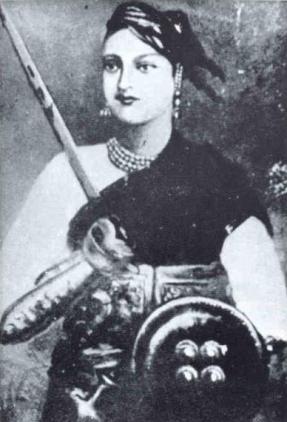
Vallabhbhai Patel was born on 31 October 1875 in Nadiad, Gujarat, into a farming family of the Patidar community. He was the fourth of six children. His father Jhaverbhai had fought in the army of Rani Lakshmibai during the 1857 uprising. Vallabhbhai grew up hearing stories of that time.
He was a serious, quiet boy who studied law by borrowing books because his family could not afford them. He passed his district pleader’s exam and began practising in the small courts of Gujarat. His reputation grew slowly. He was known for two things. He never lost his temper. And he never lost a case that he believed in.
In 1910, at the age of thirty five, he sailed to London and studied at the Middle Temple. He came back to India in 1913 as a barrister and set up practice in Ahmedabad. Within a few years he was the highest earning lawyer in the city.
The Meeting With Gandhi
Patel was not interested in politics at first. When he first met Mahatma Gandhi at a meeting of the Gujarat Sabha, he was polite but distant. He continued to wear English suits, play bridge at the Gujarat Club, and mind his own business.
What changed him was the Kheda Satyagraha of 1918. Farmers in the Kheda district of Gujarat had suffered a bad harvest and could not pay their taxes. The British government refused to give them relief. Gandhi began a campaign of civil disobedience. Patel joined him and led the day to day organisation on the ground. The campaign succeeded. The taxes were suspended.
From that moment, Patel gave up his law practice, gave away his English clothes, and put on the coarse cotton kurta of the freedom movement. He never went back.
The Bardoli Movement
In 1928, Patel led the most famous non violent tax rebellion in Indian history. The farmers of Bardoli taluka in Gujarat refused to pay the government’s newly increased land tax. Patel travelled from village to village, organising the resistance, keeping the people non violent, and negotiating with the British.
The campaign succeeded. The tax increase was rolled back. The farmers of Bardoli gave Patel the title Sardar, meaning chief. From that day, he was known everywhere as Sardar Patel.
The Years of Jail and Politics
Through the 1930s, Patel was in and out of British jails. He served four separate jail terms during the freedom movement. He was arrested during the Salt Satyagraha of 1930. He was arrested during the Individual Satyagraha of 1940. He was arrested during the Quit India movement of 1942. His last long imprisonment lasted three years, until 1945.
Inside the Congress Party, Patel was one of the most powerful figures. He organised the party’s finances. He built its organisational structure across the country. He was the man party workers went to when something needed to get done.
In 1946, when the Congress had to choose its next president, Patel had the most votes from state committees. But Gandhi asked him to withdraw so that Jawaharlal Nehru could become president and later the first Prime Minister of India. Patel withdrew. He never publicly complained. He and Nehru would work together closely for the next four years.
Home Minister of a New Country
When India became independent on 15 August 1947, Patel was appointed Deputy Prime Minister and Home Minister. He was also given charge of the States Ministry, the department responsible for negotiating with the princes.
The task was almost impossible. Some princes wanted to stay independent. Some wanted to join Pakistan. Some wanted to negotiate special terms. Some were already in violent conflict with their own subjects.
Patel handled each one differently. To the smaller states he offered generous financial settlements and privy purses in exchange for signing the Instrument of Accession. He met the rulers personally, over dinners in his official bungalow at 1 Aurangzeb Road. He was patient. He was polite. But he was also very clear. The choice was between joining India honourably now or facing the consequences later.
The Hard Three
Junagadh, Hyderabad, and Kashmir were the three states that resisted.
Junagadh’s Muslim Nawab announced accession to Pakistan even though his state was surrounded by Indian territory and had a Hindu majority population. Patel organised a plebiscite. The people voted overwhelmingly to join India. The Nawab fled to Karachi.
Hyderabad, the largest and richest of the princely states, had a Muslim Nizam ruling over a mostly Hindu population. The Nizam wanted independence. Patel negotiated for a year. When the negotiations failed and the Nizam’s paramilitary force, the Razakars, began attacking Hindu villages, Patel authorised Operation Polo in September 1948. The Indian army entered Hyderabad. Within five days, the state was integrated into India.
Kashmir, the third hard case, remained unresolved during Patel’s lifetime and remains contested today.
The Final Years
By 1950, Patel’s health was failing. He had a heart attack in March. He continued to work through the summer, drafting the language of the Indian Constitution’s provisions on states and citizenship. On 15 December 1950, he died in Bombay at the age of seventy five.
He had held the country together for three years. He had integrated over five hundred princely states. He had built the Indian civil service, the Indian police service, and the entire administrative machinery of independent India. He had done all this while fighting his own poor health and while quietly disagreeing with Nehru on many issues without ever making the disagreements public.
Why India Calls Him the Iron Man
The nickname was given to him by Lord Mountbatten. It stuck because it described exactly what Patel was. Firm. Unbending. Practical. Utterly without vanity. He did not care who got the credit as long as the job got done.
The Statue of Unity, unveiled at Kevadia in Gujarat in October 2018, stands 182 metres tall. It is the tallest statue in the world. It shows Patel in a plain dhoti and shawl, looking out over the Narmada River. Whatever one may think of the politics of the statue, the choice of the man is beyond debate. Without Patel, the country the statue overlooks would not exist.
Frequently Asked Questions
When was Sardar Vallabhbhai Patel born?
Sardar Patel was born on 31 October 1875 in Nadiad, Gujarat. His birthday is celebrated across India as Rashtriya Ekta Diwas, or National Unity Day, since 2014.
Why is Sardar Patel called the Iron Man of India?
The nickname was given to him by Lord Mountbatten in recognition of his firm, decisive handling of the integration of 562 princely states into the Indian Union between 1947 and 1949. It captures his blend of political toughness and administrative discipline.
What was Sardar Patel’s role after Indian independence?
Patel served as Deputy Prime Minister of India and as the first Home Minister, from 15 August 1947 until his death on 15 December 1950. He was also in charge of the States Ministry, which handled the integration of the princely states.
How many princely states did Sardar Patel integrate into India?
There were around 565 princely states at the time of independence. By the middle of 1948, Patel had integrated all but three of them. Hyderabad joined after Operation Polo in September 1948. Junagadh joined after a plebiscite. Kashmir’s status remains contested.
Why did Sardar Patel not become the first Prime Minister of India?
In 1946, state Congress committees voted for Patel to be the Congress president, which meant he would have become Prime Minister after independence. Mahatma Gandhi asked him to withdraw in favour of Jawaharlal Nehru. Patel accepted the decision without protest.
Sources and Further Reading
- Krishna, Balraj, India’s Bismarck, Sardar Vallabhbhai Patel, Indus Source Books
- Guha, Ramachandra, India After Gandhi, Picador India
- Menon, V.P., The Story of the Integration of the Indian States, Orient Longman
- Sardar Patel Memorial Trust, Sardar Patel Correspondence, ten volumes, Navajivan Publishing House