[india_weather]

National Mathematics Day: The Life and Legacy of Srinivasa Ramanujan
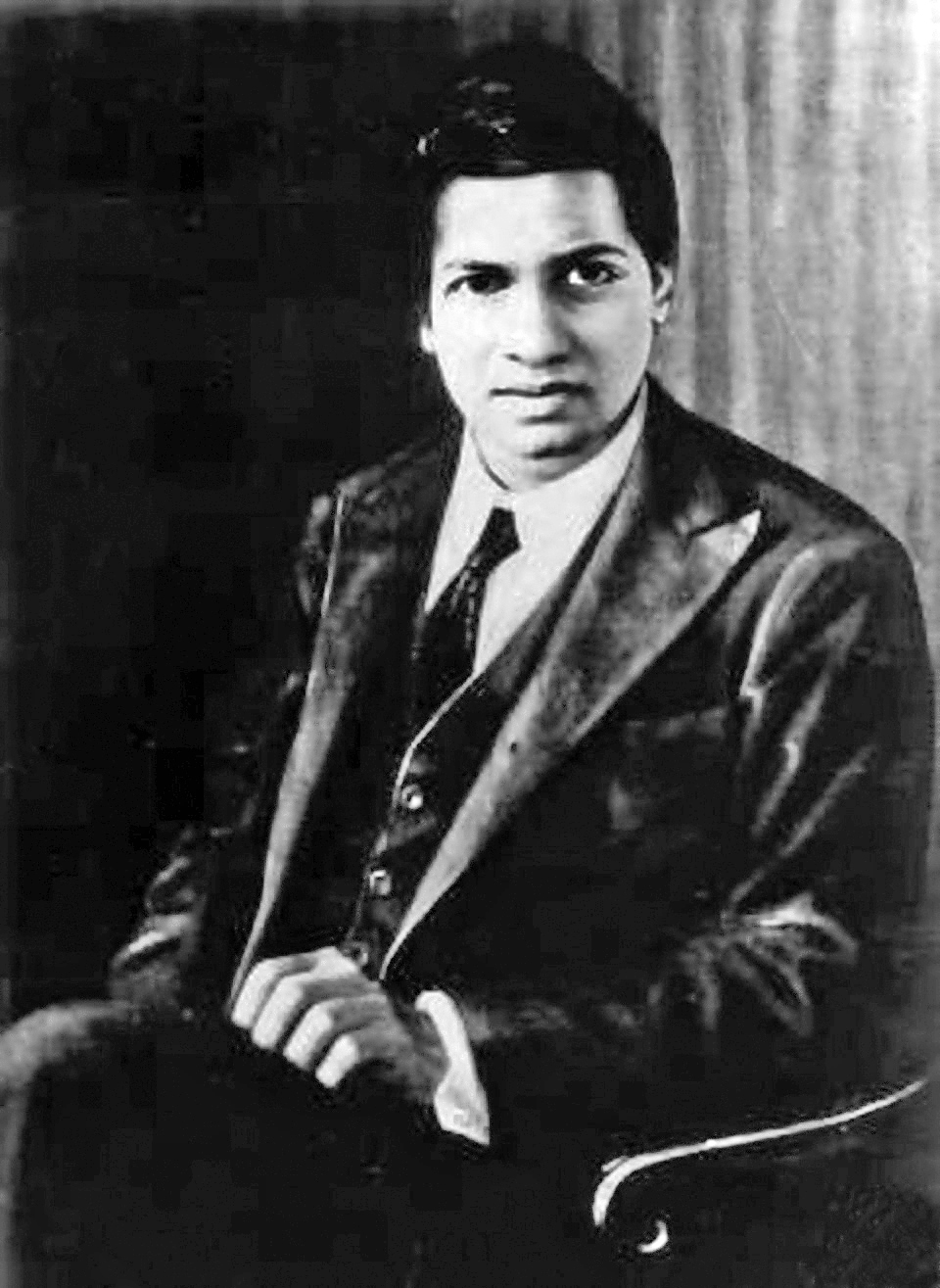
In January 1913, a 25-year-old clerk at the Madras Port Trust posted nine pages of formulas to a professor at Cambridge. That clerk was Srinivasa Ramanujan, and India now marks his birthday, 22 December, as National Mathematics Day. Here is when and why the day began, the story of the man behind it, and how schools and colleges observe it.
When is National Mathematics Day, and why 22 December?
National Mathematics Day falls on 22 December every year. Ramanujan was born on that date in 1887. Prime Minister Manmohan Singh announced the observance in December 2011, at an event in Chennai marking the 125th anniversary of Ramanujan’s birth, and 2012 was celebrated as National Mathematics Year.
The day is meant to do two things: remember one of the most original mathematicians of the twentieth century, and get students to see mathematics as something people discover and argue about, rather than a set of procedures to memorise for an exam.
Ramanujan’s early life in Erode and Kumbakonam
Srinivasa Ramanujan was born in Erode, in present-day Tamil Nadu, and grew up in the temple town of Kumbakonam. His family was a poor, orthodox Brahmin household. His father was a clerk in a cloth merchant’s shop, and his mother sang devotional songs at the local temple for a small payment.
He began working on mathematics by himself around the age of ten. By about thirteen he had worked through S.L. Loney’s book on advanced trigonometry, borrowed from a college student. At around fifteen, a friend lent him G.S. Carr’s A Synopsis of Elementary Results in Pure and Applied Mathematics, a cramming guide with roughly five thousand results listed with little or no proof. Ramanujan worked through them and then went far beyond them, recording his own results in a series of notebooks.
Paper was expensive for the family, so he did much of his working on a slate and copied only the results into his notebooks. This habit, recording conclusions without the steps, would puzzle mathematicians for decades.
The letter to G.H. Hardy
Mathematics took over his studies. He won a scholarship to the Government College at Kumbakonam but lost it because he neglected every subject except mathematics, and later failed at Pachaiyappa’s College in Madras for the same reason. By 1912 he was working as a clerk at the Madras Port Trust, doing mathematics in every spare hour.
People around him saw what he was doing. Sir Francis Spring, chairman of the Port Trust, and R. Ramachandra Rao, the district collector of Nellore who had supported him with a small allowance, encouraged him to send his work to mathematicians in England. In January 1913 he wrote to G.H. Hardy at Trinity College, Cambridge, enclosing about 120 theorems.
Hardy went through the pages with his colleague J.E. Littlewood. Years later he wrote that some of the formulas “defeated me completely. I had never seen anything in the least like them before. A single look at them is enough to show that they could only be written down by a mathematician of the highest class.” He invited Ramanujan to Cambridge.
Five years at Cambridge (1914-1919)
Ramanujan reached England in April 1914, a few months before the First World War broke out, and spent the next five years at Trinity College, working mostly with Hardy. The partnership was unusual. Hardy insisted on rigorous proofs; Ramanujan arrived at results through intuition and pattern, and often could not say how he knew a formula was true.
Together they produced the Hardy-Ramanujan asymptotic formula for the partition function, which estimates the number of ways a whole number can be written as a sum of positive whole numbers. Ramanujan also worked on highly composite numbers, continued fractions, hypergeometric series, modular forms and prime numbers. Several ideas carry his name today, including Ramanujan primes and the Ramanujan theta function. In 1916 Cambridge awarded him a Bachelor of Arts by research for his work on highly composite numbers.
In 1918 he was elected a Fellow of the Royal Society, only the second Indian to receive that honour and one of the youngest Fellows of his time. The same year he was elected a Fellow of Trinity College. He was thirty.
Illness, return to India and the lost notebook
England was hard on him. He was a strict vegetarian in wartime Britain, when suitable food was scarce, and he worked very long hours. He fell seriously ill in 1917 and spent long periods in nursing homes and sanatoriums. Doctors at the time diagnosed tuberculosis; a later medical review has suggested that hepatic amoebiasis, a liver infection he may have caught in India years earlier, is a more likely explanation. The question has not been settled.
He returned to India in 1919 and kept working almost to the end. He died at Kumbakonam on 26 April 1920, aged thirty-two. In his last year he wrote down more than six hundred formulas on loose sheets. These pages, now called the “lost notebook”, were rediscovered in 1976 by the American mathematician George Andrews in the library of Trinity College, and mathematicians have been proving the results in them ever since.
Why is 1729 called the Ramanujan number?
The best known story about Ramanujan comes from his illness. Hardy visited him in a nursing home in Putney, London, and remarked that his taxi had the number 1729, which seemed to him a rather dull number. Ramanujan replied at once that it was a very interesting number: the smallest that can be written as the sum of two cubes in two different ways.
1729 is 1 cubed plus 12 cubed, and also 9 cubed plus 10 cubed. The property had in fact been noted by the French mathematician Bernard Frénicle de Bessy in the seventeenth century. What impressed Hardy was that Ramanujan saw it instantly, from a hospital bed. Numbers of this kind are now called taxicab numbers.
What Ramanujan’s work is used for today
Much of Ramanujan’s work was pure mathematics with no obvious use in his lifetime. Some of it has since found applications. Modular forms, an area he worked in extensively, were central to Andrew Wiles’s proof of Fermat’s Last Theorem in 1994. His mock theta functions, described in his final letter to Hardy, have turned up in physics research on black holes and string theory. His formulas for pi have been used in computer algorithms that calculate pi to very large numbers of digits.
Most of his conjectures have now been proved, largely through the five volumes of Ramanujan’s Notebooks edited by Bruce C. Berndt and later work on the lost notebook. A few problems arising from his work are still open.
How National Mathematics Day is celebrated
On 22 December, many schools hold assemblies, quizzes and talks on Ramanujan’s life, and universities and research institutes organise lectures on his work. Mathematics olympiads and student competitions are often scheduled around the date, and national bodies such as the National Board for Higher Mathematics have supported talks and workshops.
Two places are tied closely to his memory. The house in Kumbakonam where he grew up is preserved as a memorial, and the Ramanujan Museum and Mathematics Education Centre at Royapuram in Chennai displays material on his life. The SASTRA Ramanujan Prize, given each year by SASTRA University in Thanjavur to a young mathematician working in areas influenced by Ramanujan, is announced in the weeks before his birthday.
If you are a teacher planning something for the day, the 1729 story is a good place to start. Ask students to find the next taxicab number, the smallest number that is the sum of two cubes in three different ways, and watch how long it takes.
Read Next
- Gupta Empire History: Golden Age of Ancient India Explained
- Pravasi Bharatiya Divas: The Day India Celebrates Its Global Diaspora
- Lessons From India’s Oldest: Civilizations for Today’s Cultural Identity Debates
Frequently Asked Questions
Is National Mathematics Day the same as Pi Day?
No. Pi Day is an international observance on 14 March (3/14). National Mathematics Day is India’s own observance on 22 December, Ramanujan’s birthday.
Is there a film about Ramanujan?
Yes. The Man Who Knew Infinity (2015), starring Dev Patel as Ramanujan and Jeremy Irons as Hardy, is based on Robert Kanigel’s biography of the same name.
What did Ramanujan believe about the source of his ideas?
He credited his family goddess, Namagiri of Namakkal, with revealing formulas to him, often in dreams, according to accounts collected by his biographers.
Sources and Further Reading
- Robert Kanigel, The Man Who Knew Infinity: A Life of the Genius Ramanujan, Charles Scribner’s Sons
- G.H. Hardy, Ramanujan: Twelve Lectures on Subjects Suggested by His Life and Work, Cambridge University Press
- Bruce C. Berndt, Ramanujan’s Notebooks, in five volumes, Springer
- Ministry of Education, Government of India, announcements on National Mathematics Day