[india_weather]

Konark Sun Temple: The Stone Chariot of Surya in Odisha
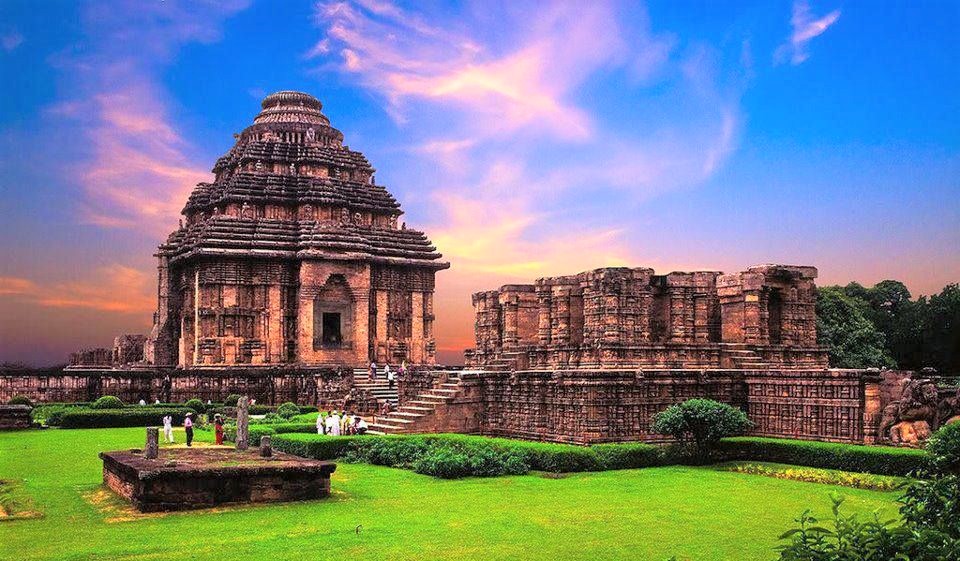
Count the wheels first. Twenty four of them, each about ten feet across, are carved into the base of the Konark Sun Temple, and seven stone horses stand at the front as if about to pull the whole building forward. The temple sits on the Odisha coast, roughly 35 kilometres north of Puri, and it was built in the thirteenth century as a chariot for Surya, the sun god. Even with its main tower long gone, it is one of the boldest buildings of medieval India.
Who built the Konark Sun Temple?
The temple was commissioned by King Narasimhadeva I of the Eastern Ganga dynasty, who ruled Odisha (then known as Kalinga) from 1238 to 1264 CE. He had beaten back the Muslim rulers of Bengal when they tried to push into his kingdom, and he wanted a temple that would mark that success and honour Surya, his patron deity.
The design came straight from Hindu mythology. Surya crosses the sky every day in a chariot drawn by seven horses, and the chariot runs on twelve pairs of wheels, one pair for each month of the year. Narasimhadeva’s builders took that image literally and made it life size in stone, with wheels, axles and horses all in place.
How the stone chariot was built
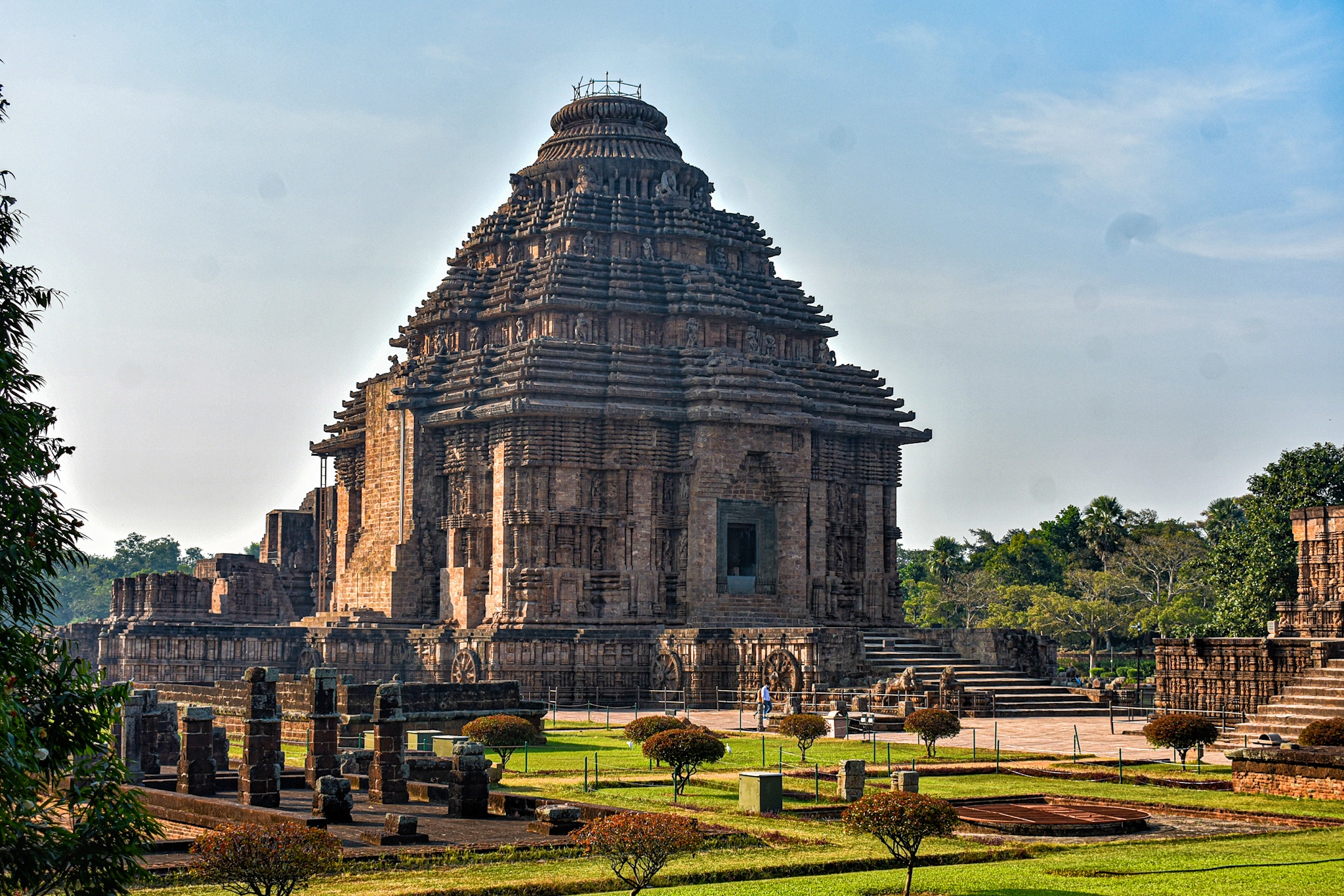
Work began around 1246 CE and went on for about twelve years. The chief architect is remembered as Bishu Maharana, and Odia tradition says some twelve hundred sculptors and artisans worked on the site. Three kinds of stone were used. Khondalite, quarried locally, makes up most of the structure. Chlorite, a finer greenish stone, was kept for detailed sculpture and doorframes, and coarse laterite went into the foundations and the core of the platform.
Local memory also keeps the name of a chief sculptor, Sibei Samantaray, and a story about his twelve year old son, Dharmapada. In the legend, the boy solved the last problem of fitting the crowning stone on the tower after the older craftsmen had failed, and then gave his life in the sea. Historians treat it as legend. Still, families in Odisha tell it about eight hundred years later, which says a lot about how the temple sits in local memory.
The twenty four wheels and the sundial question
The wheels line the base of the main structure, twelve on each side. Each is about ten feet in diameter and has eight major spokes, and the carvers took care over the hubs, axles and outer rims, much as a cartwright of the period would have done with a working wooden wheel. The spokes and rims are also covered with small carved figures and floral bands, so it is worth looking closely rather than just photographing the whole wheel.
Several wheels are often described as sundials. Guides at Konark show visitors how the shadow a spoke throws across the wheel can be read to estimate the time of day. The usual interpretation is that the twenty four wheels stand for the hours of the day, or for the twelve months with two wheels each, and that the eight major spokes divide the day into eight parts. How much of this the builders intended is hard to prove, so treat the sundial reading as a popular interpretation rather than a settled fact. What is clear is that the design brings astronomy, myth and sculpture together.
The seven horses
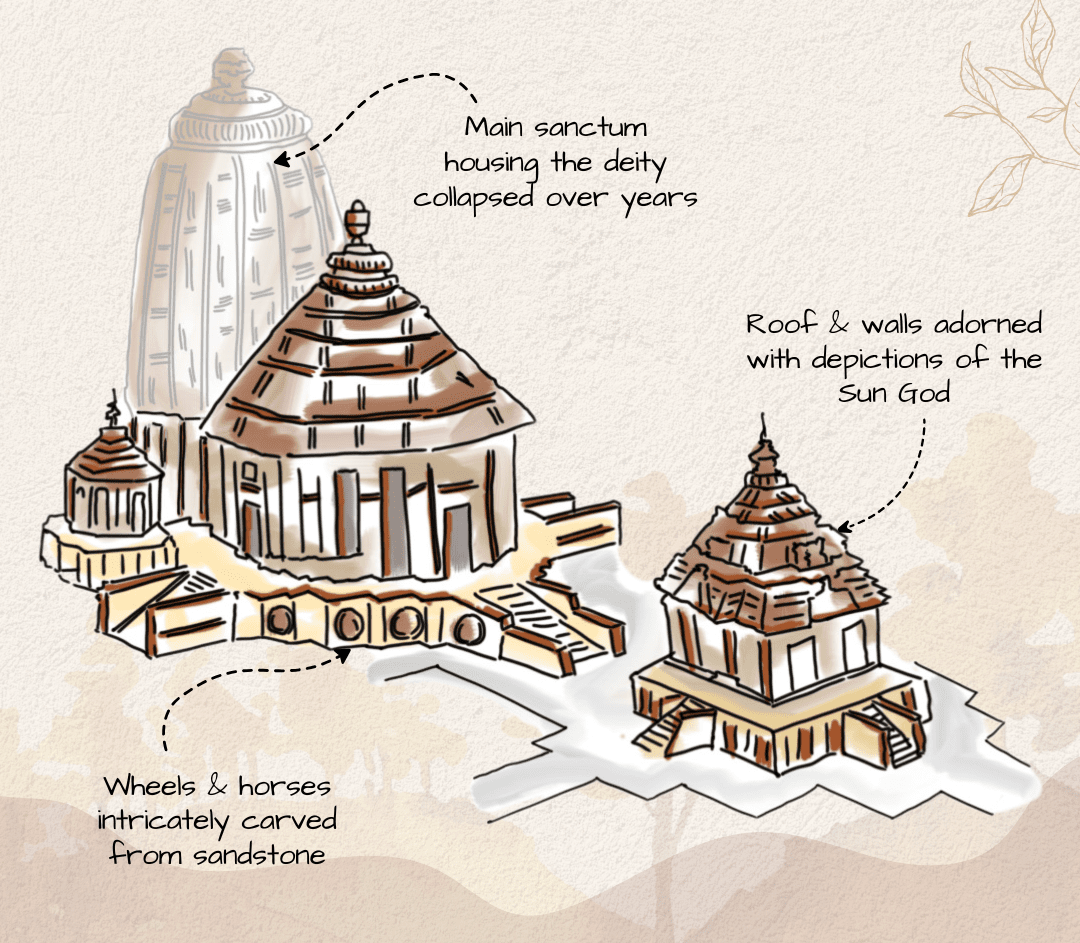
Seven horses are carved at the front of the chariot, rearing forward, four on the south side and three on the north. In different retellings they stand for the seven days of the week or the seven colours of visible light. Erosion has badly damaged six of them.
The one that survives in fair shape gives you an idea of how the full team must have looked. Look at the tension in the neck, the flared nostrils and the muscles of the front legs. Whoever carved it had clearly spent time watching real horses.
What happened to the main tower?
The main tower, the deul, held the image of Surya and is thought to have risen about 229 feet. It no longer exists. What you see today is the jagamohana, the audience hall, still around 128 feet high, and the natya mandapa, the dance hall, which stands separately in front of it.
Nobody knows exactly when or why the tower fell. Some accounts blame raids by the Bengal Sultanate and later Mughal armies. Others point to structural failure, since the temple stands on sandy ground near the sea and the tower may have been too heavy for its foundations. By the sixteenth century the temple was already in serious decay.
In 1903, British engineers filled the surviving jagamohana with sand and stone rubble and sealed it to stop it from collapsing as well. The interior has stayed closed to visitors for more than a century, which is why you can only walk around the outside today.
Why is Konark called the Black Pagoda?
European sailors passing along this coast used the temple’s dark tower as a landmark and called it the Black Pagoda. The name helped them tell it apart from the whitewashed Jagannath Temple at Puri further south, which they called the White Pagoda.
The carvings on the walls
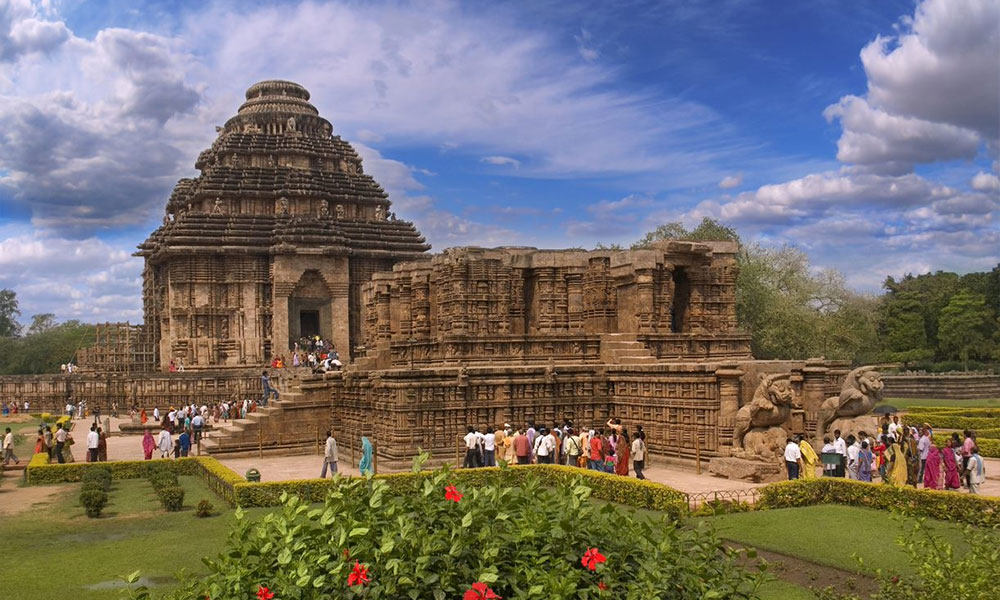
Almost every surface is carved. You will find court scenes with kings and queens, warriors on elephants, and musicians with veenas and drums. There are dancers in poses you can still recognise from classical Odissi dance, along with mythical creatures and hunting scenes.
Some panels show ships and sailors, which are often used as visual evidence of Odisha’s sea trade with Southeast Asia in this period. And there are the erotic sculptures Konark is famous for. They belong to the same tradition seen at Khajuraho, where kama, desire, was accepted as one of the four aims of life alongside dharma, artha and moksha.
Taken together, the walls work almost like a picture record of thirteenth century Odia society. The artists carved what they saw around them, from royal processions to daily work.
Konark Sun Temple today
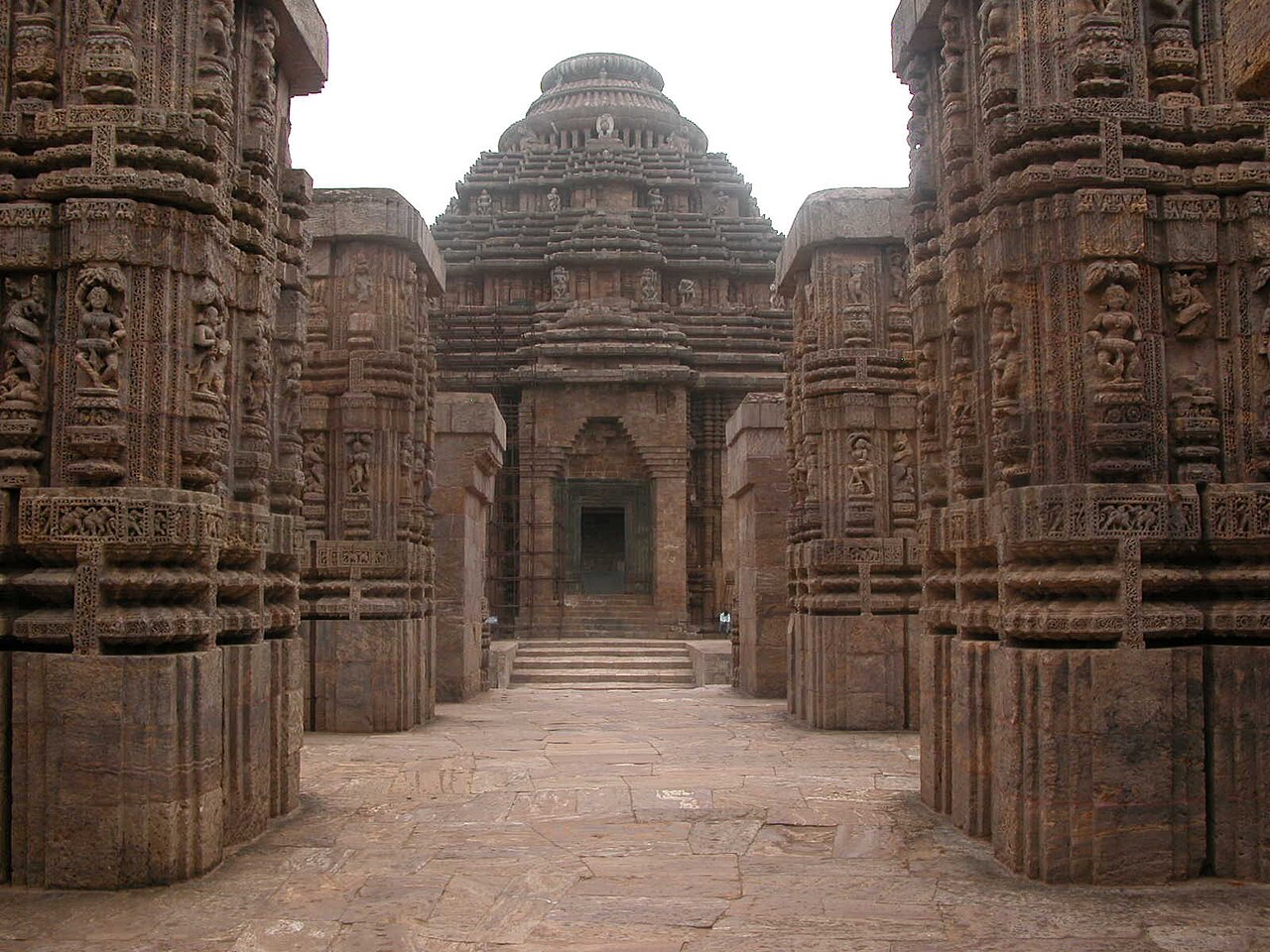
Konark was inscribed as a UNESCO World Heritage Site in 1984, and the Archaeological Survey of India looks after it. Visitors walk through the courtyard, around the wheels and up to the jagamohana, though not inside it. Early morning, when the sun comes up over the Bay of Bengal and lights the eastern face, is the best time to be there.
Every December the Odisha government holds the Konark Dance Festival, with Odissi and Bharatanatyam performers dancing on open-air stages with the temple behind them. If your dates are flexible, it is worth planning a trip around it.
The Konark Museum next to the site holds hundreds of sculptures recovered from the ruins, plus photographs and diagrams of what the complex looked like when the deul was still standing. Visit it before the temple if you can, because it makes the ruins much easier to read.
How to visit Konark
Konark is about 35 kilometres from Puri and 65 kilometres from Bhubaneswar, the state capital. The nearest airport is Bhubaneswar, and both Puri and Bhubaneswar have railway stations. Taxis and buses from either take about an hour.
October to February is the most comfortable time to go, with cool, clear weather. The temple opens at sunrise. Tickets are modest for Indian visitors and higher for foreign visitors, so check the Archaeological Survey of India’s online ticketing page for current timings and fees before you set out.
Many people combine Konark with Puri in a single day, and the coastal road between the two is a pleasant drive. Give yourself at least two hours at the temple, and walk the full circuit of the platform so you see the wheels and the horses on both sides.
Read Next
- Kailasa Temple Ellora: The Monolithic Wonder Carved From a Single Rock
- Brihadeeswarar Temple Thanjavur: The Great Chola Masterpiece
- Chhath Puja: The Ancient Sun Festival of Bihar
Frequently Asked Questions
Can you go inside the Konark Sun Temple?
No. The main tower has collapsed, and the surviving audience hall was filled with sand and sealed in 1903. You can walk around the outside, the wheels, the dance hall and the courtyard.
When is the Konark Dance Festival held?
It is held every December in front of the temple, with classical Odissi and Bharatanatyam performances. Check the Odisha tourism announcements for the exact dates each year.
How much time do you need at Konark?
Two to three hours is enough for the temple and the museum. If you want to see sunrise on the eastern face, stay overnight in Puri or Konark and arrive at opening time.
Sources and Further Reading
- Archaeological Survey of India website (asi.nic.in)
- UNESCO World Heritage Centre, Konark Sun Temple nomination file, 1984
- Behera, K.S., Konarka, The Heritage of Mankind, Aryan Books International
- Fergusson, James, History of Indian and Eastern Architecture, John Murray