The One Day of the Year That Belongs to Married Women
On the evening of Karva Chauth, in city apartments and village courtyards across North India, women dress in red or maroon, apply mehendi on their palms, and step out onto their terraces or into their gardens. They have not eaten or had a sip of water since before sunrise. They are waiting for the moon.
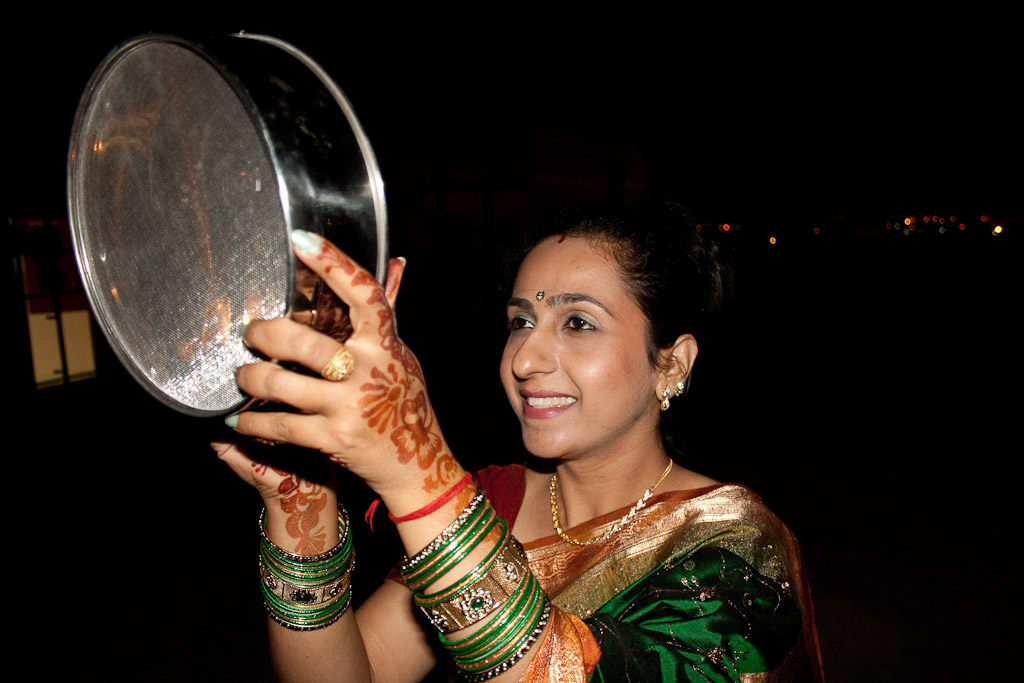
When the moon finally appears, low and honey coloured, each woman lifts a decorated sieve and looks at it first, then at her husband’s face. Only then does she take the first drink of water from his hands, and eat the first bite of food. Karva Chauth is over. The fast is broken. The story it tells has been told again for another year.
Karva Chauth 2026 falls on Friday, 30 October. This is the story of one of India’s most romantic and misunderstood festivals.
What Karva Chauth Is
Karva Chauth is a one day fast observed mainly by married Hindu women in Punjab, Haryana, Delhi, Himachal Pradesh, Rajasthan, and Western Uttar Pradesh. The fast begins before sunrise and ends after moonrise. During the day, no food, no water, not even a fruit or a sip. Women pray for the long life of their husbands.
The name comes from two words. Karva is a small earthen pot used to offer water to the moon. Chauth means the fourth. The festival falls on the fourth day of the waning fortnight of Kartik, the Hindu month that begins in October.
Karva Chauth is not simply about praying for a husband. It is a very old ritual that also brings women together. In its traditional form, the women of a household or a neighbourhood spend the day together, tell stories, exchange gifts of clothes, sweets, and small karvas of sindoor, and share the evening ritual as a group. The idea of a woman fasting alone in an apartment is a modern city version. In the villages, Karva Chauth is a community day.
The Legend of Karva
The oldest story tied to the festival is about a woman named Karva. She was the wife of a brahmin and the mother of seven brothers. One day, while bathing in the river, she was seized by a crocodile. She cried out to Yama, the god of death, to save her and to punish the crocodile. Yama refused. Karva was so angry at his refusal that she threatened to curse him and destroy him with the power of her sati, her spiritual devotion to her husband. Frightened, Yama sent the crocodile to hell and gave Karva’s husband a long life.
From that story, Karva Chauth became a festival of a wife’s power. Not weakness. Not a small ritual of hoping. A day when a woman’s love was believed strong enough to change the mind of the god of death.
The Story of Queen Veervati
The other story often told on Karva Chauth is about Queen Veervati. She was the beloved sister of seven brothers who could not bear to see her going hungry. On her first Karva Chauth after her wedding, they tricked her into breaking her fast early by holding a mirror up to a tree and telling her the moon had risen.
Veervati broke her fast. That same moment, news arrived that her husband had died. Grief stricken, she prayed to Shakti for weeks until the goddess appeared and told her to observe Karva Chauth again, correctly, with faith. She did. Her husband was restored to life. The story is told to explain why the fast must be strict and why the sighting of the moon must be real.
How Karva Chauth Is Celebrated Today
The day begins before dawn with sargi, a meal prepared by the mother in law and eaten before the sun rises. It usually includes matthi, seviyan, dry fruits, fresh fruits, and paranthas. The idea is that this pre dawn meal must last the entire day.
Through the day, women do not eat, drink, or speak of hunger. Many take the day off work. Some spend it applying mehendi. Others gather at a friend’s home for the evening katha, the reading of the Karva Chauth story. Women dress in bridal colours, wear red bangles, apply sindoor, and put on their best jewellery.
In the evening, the women sit in a circle. An older woman reads the katha. Each woman holds her thali of ritual items, a lamp, a karva of water, sweets, mehendi. As the story is read, they pass their thalis to each other in a slow circle. This ritual is called thali pheri.
The last part of the day is the moon sighting. The moon usually rises between 7:30 and 8:30 in the evening in North India. Women step out with their thalis. They see the moon through a sieve or a piece of red cloth. Then they turn to see their husbands. The husband gives his wife the first sip of water and the first bite of food. The fast is over.
The Foods Prepared for Karva Chauth
The sargi eaten before sunrise is designed to hold a woman through the day. Matthi, seviyan cooked in milk, dry fruits, fresh apple or banana, and paranthas are common. The evening meal, eaten after moonrise, is a full celebration. Puri, sabzi, kheer, and mithai are made in many families. In Punjab, families often serve chole bhature or aloo puri. In Rajasthan, dal baati churma is traditional.
Why Karva Chauth Still Matters
People sometimes argue that Karva Chauth is unfair because it asks women to fast for their husbands but not the other way round. That reading misses what the festival actually does in a woman’s life. For one day a year, married women are dressed like brides, celebrated, gifted, and made the centre of the household. They are not cooking. They are not serving. They are being served.
That is a rare thing in any Indian marriage. And in the last twenty years, many husbands have started fasting alongside their wives, quietly, in solidarity. The festival is changing. Its old form was about the fear of widowhood. Its new form is about the strange, difficult, beautiful thing that a long marriage becomes over time.
Frequently Asked Questions
When is Karva Chauth in 2026?
Karva Chauth 2026 falls on Friday, 30 October. The moonrise is expected between 8:00 and 8:30 pm in most parts of North India.
Can unmarried women observe Karva Chauth?
Yes. In recent decades, unmarried women have begun to fast on Karva Chauth for the long life of a future husband, or simply as a personal spiritual practice. The festival was traditionally for married women, but the practice is now more open.
What is sargi and who prepares it?
Sargi is the pre dawn meal eaten by the fasting woman before sunrise. It is traditionally prepared by the woman’s mother in law and sent to her with love. In families where there is no mother in law, the woman prepares it herself.
Do men fast on Karva Chauth?
Traditionally no. In modern urban India, many husbands now choose to fast alongside their wives as a gesture of partnership. There is no rule that says they cannot.
What if the moon is not visible on Karva Chauth?
If clouds block the moon, most families wait until it becomes visible. In some traditions, if the moon is not visible at all, women look at a picture of the moon or listen to the ritual reading of its visibility elsewhere before breaking their fast.
Sources and Further Reading
- Ministry of Culture, Government of India, Festivals of India archive
- Sahapedia, Women Centred Festivals of North India
- Prakash, O.P., Cultural History of India, New Age International