The Day India Burns the Effigy of Ravana
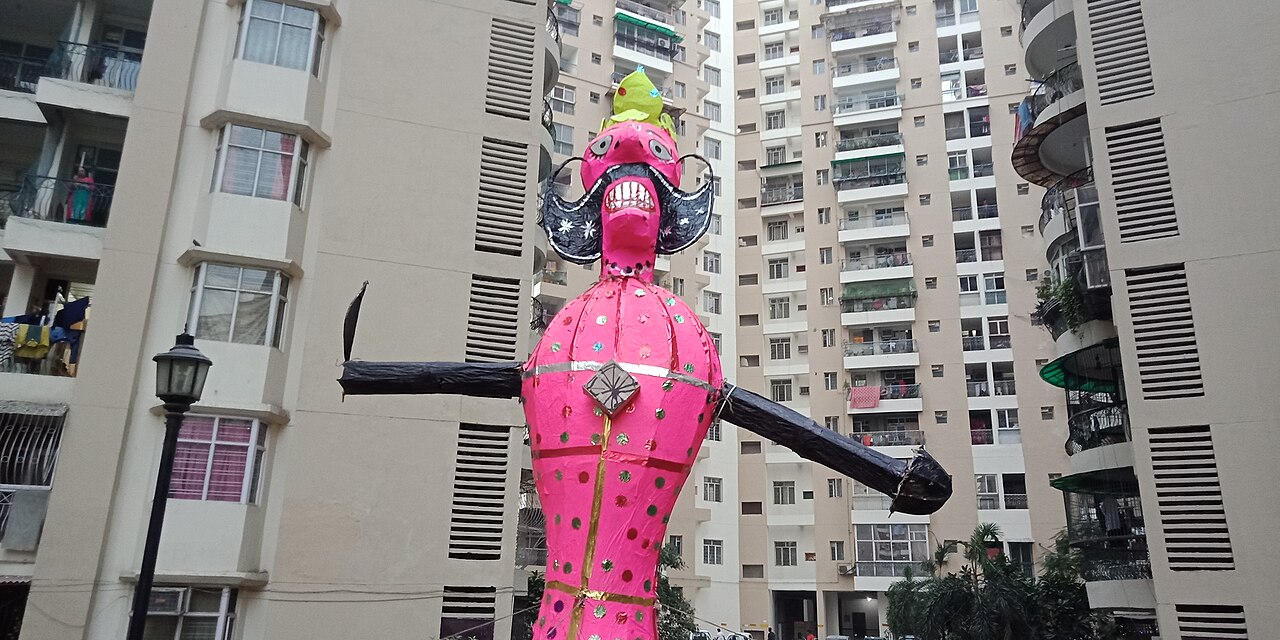
On the evening of Dussehra, in cities and villages across India, tall figures of straw and paper are set on fire. Crowds gather in open grounds. Children sit on their fathers’ shoulders. Someone reads out a short story about the return of a prince and the defeat of a demon king. And then the effigy of Ravana, sometimes three storeys tall and packed with fireworks, goes up in flames.
This is Dussehra, also called Vijayadashami. Dussehra 2026 falls on Tuesday, 20 October. It is the tenth day of Navratri and one of the most widely celebrated festivals in the country. This is the story of what the burning of Ravana really means, why the day is called the victory of the tenth, and how India celebrates it in many different ways.
The Meaning of Dussehra
Dussehra comes from two Sanskrit words. Dasha means ten. Hara means defeat. Together, the name means “the defeat of the ten headed one”, referring to Ravana, the ten headed king of Lanka. Vijayadashami, its other name, means “the victory of the tenth day”.
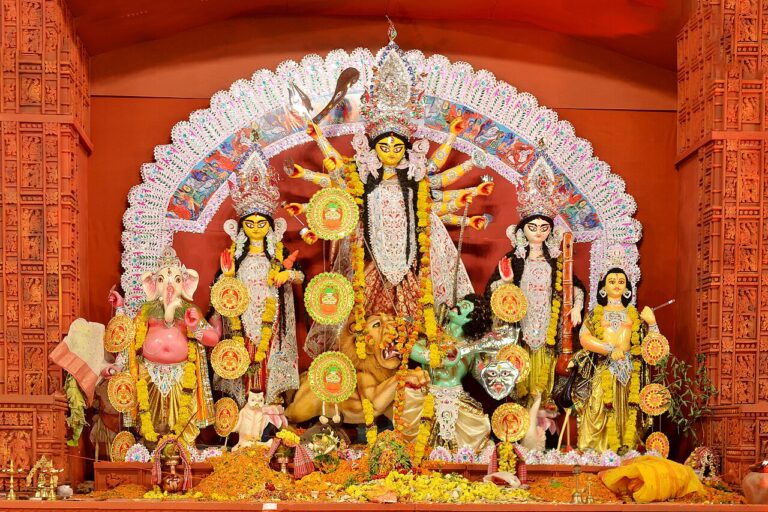
The festival marks two victories from Hindu tradition. Rama’s defeat of Ravana in the Ramayana, and Durga’s defeat of the buffalo demon Mahishasura after her nine night battle. Both stories end on the same day, and both are honoured on Dussehra. In North India, the Rama story is central. In Bengal and eastern India, the Durga story is central. In the south, both are remembered.
The Story of Rama and Ravana
Every Indian child hears the story of the Ramayana in some form. Rama, the crown prince of Ayodhya, is exiled to the forest for fourteen years along with his wife Sita and his brother Lakshmana. Ravana, the ten headed king of Lanka, kidnaps Sita and takes her across the sea to his island kingdom.
Rama gathers an army led by the vanara king Sugriva and his devoted general Hanuman. They build a bridge to Lanka, cross the sea, and fight a great battle. On the tenth day, Rama kills Ravana. Sita is freed. The Ramayana ends with Rama returning to Ayodhya twenty days later, the day India now celebrates as Diwali.
Dussehra is the moment of victory in that story. Not the celebration back home. Just the victory itself, on the battlefield, on the tenth day.
Ramlila and the Burning of the Effigies
In the weeks leading up to Dussehra, cities across North India host Ramlila, a public play that retells the entire Ramayana across several evenings. Ramlila performances in Delhi, Varanasi, and Ayodhya draw huge crowds. Actors take on the roles of Rama, Sita, Hanuman, and Ravana. Some of the productions have been running for over a hundred years.
On the evening of Dussehra, the story reaches its climax. Rama shoots the arrow that kills Ravana. At that exact moment in the play, the giant effigy of Ravana in the field is lit. It burns to the ground while fireworks explode from inside it. Two smaller effigies burn alongside it, of Kumbhakarna, Ravana’s giant brother, and Meghnad, his son.
The Ramlila in Ramnagar near Varanasi, sponsored by the royal family of Kashi, is the oldest and most famous. It runs for thirty one days and covers the whole Ramayana in slow, careful detail.
How Dussehra Is Celebrated Across India
In Mysuru, Karnataka, Dussehra is a royal spectacle. The Mysuru Dasara has been celebrated for more than four hundred years. A grand procession of decorated elephants leads the goddess Chamundeshwari through the streets. The palace is lit with almost a hundred thousand bulbs every evening. Tourists come from across the world.
In Kullu, Himachal Pradesh, Dussehra is when hundreds of village deities are carried down from their local temples on decorated palanquins. They gather in one field, greet Lord Raghunath, the presiding deity of Kullu, and stay for seven days. It is one of the most striking festivals in the Himalayas.
In West Bengal, Dussehra is the tenth day of Durga Puja. This is the day the goddess is taken to the river and immersed. Married women play sindoor khela, smearing red vermillion on each other, before they say goodbye to Durga for another year.
In Tamil Nadu, Karnataka, and Andhra Pradesh, Dussehra is Vijayadashami. Children begin their first lessons in music, dance, or writing on this day. It is considered the most auspicious day of the year to start something new.
Foods of Dussehra
Because Dussehra follows the Navratri fast, food on this day tends to be simple and celebratory. In the north, families eat jalebi with fafda in Gujarat, and pua with kheer in Uttar Pradesh and Bihar. In Bengal, the festival ends with fish, sweets, and street food, since the fasting families end their vrat on Vijayadashami itself.
In Karnataka, Dussehra is celebrated with a full meal of bisi bele bath, obbattu, kesari bath, and chitranna. In Maharashtra, the traditional dish is aapte leaves, which are exchanged between friends and family as a symbol of gold, along with sweets and a good meal.
Why the Story Still Holds
The Ramayana is not history. Nobody claims it is. But its lesson, that light returns even after the darkest years and that quiet virtue eventually defeats loud pride, is one every generation seems to need reminding of.
When we burn Ravana every year, we are not really burning a demon. We are burning the parts of ourselves that we know we have to let go of if we want to live decent lives. Pride, envy, anger, the ten heads of our own worst instincts. That is why the story does not get old. That is why a billion Indians will gather to watch a straw figure burn on 20 October, and feel, for a few minutes, that the world just got a little cleaner.
Related Reading
- Basant Panchami: The Festival of Knowledge and Spring
- Lohri and Makar Sankranti: India’s Harvest Festivals
Frequently Asked Questions
When is Dussehra in 2026?
Dussehra 2026 will fall on Tuesday, 20 October. It is celebrated on the tenth day of Navratri.
Why is Dussehra called Vijayadashami?
Vijayadashami means “the victory of the tenth day”. The name refers to the two great victories the festival marks, Rama’s over Ravana and Durga’s over Mahishasura, both won on the tenth day.
Why are effigies of Ravana burned on Dussehra?
The burning of Ravana’s effigy re enacts the moment Rama defeated him in the Ramayana. Symbolically, it represents the destruction of ego, pride, and the negative qualities Ravana came to stand for.
What is the difference between Dussehra and Diwali?
Dussehra marks Rama’s victory over Ravana on the battlefield. Diwali, celebrated twenty days later, marks his return to Ayodhya after fourteen years of exile.
Is Dussehra a good day to start something new?
Yes. Vijayadashami is considered one of the three most auspicious days of the year in the Hindu calendar to begin a new venture, business, education, or creative practice.
Sources and Further Reading
- Ministry of Culture, Government of India, Festivals of India archive
- Sahapedia, Ramlila Traditions of North India
- Valmiki, Ramayana, translated by Arshia Sattar, Penguin India